

 LinkedIn

Your next citation might depend on a page you don’t own. I used to tell clients to fix their headings, add an FAQ and wait for the crawler. That advice misses the buyer prompt that cites a comparison post, a review site or a Reddit thread instead.
This list is for owners and lean marketing teams tired of rewriting their own pages without appearing in the answer. Run your buyer prompt in ChatGPT and Perplexity, open the citations, then work on the pages that keep showing up. Each entry gives you a source type to check in five minutes and a first move if you find it. I’ve saved the one I would start with for last.
1. Claim the review profile buyers already trust
A claim on your site is a claim. The same point appearing across verified reviews gives an answer another place to check it. In one 959-answer software buying test, G2 appeared in 30 answers and ranked among Perplexity’s top five sources overall, while Capterra appeared in five. Trustpilot held a 1.5% share and 22nd place among ChatGPT’s most-cited sites. The review platform worth your time is the one your prompts cite, not necessarily the one with the biggest name.
Your five-minute check: run a category prompt, open any cited review page and look for your business. Are you in the right category? Are the reviews recent and specific enough to say what you actually do? Fewer than 10 reviews can leave a profile thin and may keep it out of category views; old reviews give an answer less current detail to use.
First step: claim the profile and fix the category. Then ask your last 15 happy customers for honest reviews that name the job you did and, where they can, the outcome in numbers. Don’t script praise. You need usable detail, not 15 versions of “great service.”
2. Answer the Reddit thread your buyer already reads
Reddit gives an answer something vendor pages often don’t: people disagreeing in public about price, fit and tradeoffs. In a 120-question test across 10 AI tools, Reddit was the most-cited source for Google AI and Grok; YouTube led for Perplexity and Wikipedia for ChatGPT. A separate buying-question index found Reddit in 166 answers. Those figures are not a promise that your category works the same way. They are a reason to look.
Run a best, worth it or alternatives prompt and open the cited threads. A useful answer belongs in the conversation; a pitch does not. Promotional posts get removed, which leaves the existing answers, including your competitors’, to do the work.
First step: pick one cited thread with a missing detail you can supply. Answer as yourself, disclose your connection to the business and explain the price range, timeline or bad-fit use case people are asking about. One honest comment in a thread the engine already cites is a better use of an hour than ten new posts nobody reads.
3. Correct the directory listings that disagree about you
For a best service in [city] prompt, the answer may pull hours, service area and contact details from directories rather than your homepage. If Yelp says you close at 6, Google Business Profile says 7, and a trade directory spells your name differently, you have made a basic fact harder to repeat. The category directories that already rank matter more here than another homepage rewrite.
Your five-minute check: run the local or category prompt, open the directories it cites and compare their details with your site. Fix the cited listing first. A perfectly consistent listing on a directory that never appears in your answers can wait.
First step: correct your name, address, phone, hours and service area on the two cited listings. If the same prompt also cites a best-of article that omits you, make that a separate pitch after your facts agree. Editors should not have to settle an argument between three versions of your opening hours.

4. Contribute to the reference page that answers the factual question
Not every buyer asks for a recommendation. Some ask what something costs, how long it takes or what a standard means. Those questions need a reference point. In a software buying set, Wikipedia received zero citations, despite its prominence in broader citation studies. The useful reference in your category may instead be a trade glossary, pricing benchmark, regulator page or specification sheet.
Run one factual prompt and inspect the cited pages. Which one supplies the number or definition the answer repeats? That page is your target, provided you have something accurate to add. A maintained, dated page with real prices, timelines or benchmarks gives the engine a passage it can quote; generic advice does not.
First step: send the page’s editor one specific correction or useful data point, with its context. If the reference is yours to maintain, make the underlying table clear and current. If it is a regulator page, don’t treat it as a guest-post opportunity. Know which kind of page you are looking at before you pitch.
5. Get named on the partner page that explains the fit
Integration marketplaces, supplier directories and partner pages are boring until a buyer asks, “Does this work with that?” Then the page listing the relationship answers the question more directly than your feature page. Practitioners mapping off-site visibility group partner pages and integration marketplaces with review platforms and industry publications for a reason: each can name your business in a context a buyer actually requested.
Your five-minute check: run a compatibility or supplier prompt and open the partner pages in the citations. Look for a listing you should appear on, or one that names you without explaining your use case. A name alone is less useful than a name attached to a clear job.
First step: email the partner the missing listing details: what you do, who you serve and one result with a number you can substantiate. Include the page you want updated. Don’t send a general press kit and ask them to work out where it belongs.
6. Pitch the trade page your buyer already sees
A trade outlet can put your expertise beside other practitioners’ views, rather than leaving it as a claim on your own blog. That makes its existing articles worth checking before you send a quote into the void. One practitioner approach is to run the same buyer prompt across tools, note which outside pages recur and work on those placements while keeping your business facts consistent.
Your check takes minutes: if a trade title or association resource appears twice in your citation map, open the specific pages. What question did each editor answer? What is missing? Pitch the cited page, not the publication you wish the model cited.
First step: offer its editor one useful quote, a price band or a customer example you have permission to share. State why it improves that article. “Thought leadership” is not a reason to update a page. A concrete detail the reader needs might be.
7. Give a niche podcast a transcript worth citing
Audio makes for a good conversation; text makes the details easier to find and quote. That is why founder interviews and podcasts with transcripts belong on an off-site check alongside publications and comparison pages. You do not need the biggest show. You need a relevant one that publishes the full conversation and appears in the prompts you care about.
Run a buyer prompt and open any cited interview or episode page. Does it include a transcript, title and timestamps, or just an audio player? The lasting asset is the specific explanation left on the page, not the fact that you were a guest.
First step: pitch a host one narrow subject you can explain plainly: a price people misunderstand, a timeline nobody mentions or a job you turn down. Before you agree to record, ask whether the episode will have a transcript and where it will live. A 30-minute appearance with searchable text has more to work with than a recording whose useful details stay locked in the audio.
8. Answer the Quora or niche-forum question that keeps resurfacing
Reddit gets the attention. Quora and specialist forums can hold the exact question your buyer keeps asking. In the buying-question index cited above, Quora appeared in 35 answers and Medium in 33. The mechanism is familiar: a specific question and several competing answers give the engine language your homepage may never supply.
Run your how much and is it worth it prompts. If a Quora thread, Stack Exchange answer or vertical forum appears, read its top answers. Are they still useful? Is the price discussion vague? Work on the cited question before you chase a forum that never appears.
First step: post an answer as yourself, disclose your role and supply the missing specifics. Explain where your business is a poor fit as well as where it helps. Helpful answers can remain useful; promotional posts get removed. That is not an argument for hiding your affiliation. It is an argument for answering the question.
9. Make the plain YouTube video that answers one question
In broad tests, Perplexity cited YouTube more than any other source type; Google AI Overviews cited it in 36% of software buying answers. You cannot assume your own buyer prompts will cite video, so check before setting up a camera.
If a video does appear, open it and read the title, description and transcript. Does it answer the prompt directly? Are the price and timeline details easy to find in text? A useful demonstration beats a polished video that dodges the question. A short screen share or shop walkthrough can show the work while its description and transcript preserve the specifics.
First step: record one answer to the question your prompts cite most often. Title it in the buyer’s language, add chapters and a full transcript, then put the relevant price range, timeline and who it suits near the top of the description. If your category never surfaces video, spend that afternoon on a page that does.

10. Place one original number where others can quote it
A price survey, timeline benchmark or table from your own jobs can give a comparison writer something stronger than another vendor adjective. But publishing the number only on your site is not, by itself, an off-site tactic. The off-site move is getting a cited third-party page to use the data, with enough method and context that a reader can judge it.
Run a factual or comparison prompt and find the cited article that needs a number. Does it rely on an old estimate or speak vaguely where you have a relevant table? Real prices, timelines and benchmarks give an author a passage to use instead of another claim to paraphrase.
First step: prepare one table from data you already own. Say you have 50 installs: show the median cost and range, explain what the sample covers, and date the figures. Publish the full method on a page you can maintain, then pitch the useful finding to the two comparison authors already cited for your category. This takes more work than a profile update. It also gives them a reason to name you that does not depend on a sales description.
11. Win the best X for Y post that already gets cited
This is the one I would check first. When a buyer asks for a recommendation, a page that has already compared options can answer in the form the prompt requests. In the cited content-format study, comparison content reached a 95% citation rate on ChatGPT. In a dataset of more than one million citations, listicles accounted for 21.9% and product pages for 13.7%. If a comparison post keeps appearing in your buyer prompts, earning an accurate place on that post is the job.
Start with your own citation map. Pick 20 real buyer prompts: best, cost, compare, for [use case], near me and alternatives. Run them in ChatGPT and Perplexity with citations visible, then log your site, competitors’ sites, review and forum pages, and news or list pages. This is the prompt-check approach practitioners use: inspect the sources for your questions rather than rely on broad averages. In one 959-answer software test, ChatGPT pointed 70% of citations at recommended brands’ own sites, while Google AI Overviews cited Reddit in 50% of answers and YouTube in 36%. Your mix may look different. The map tells you.
For the five-minute check, take one money prompt and open the two or three comparison posts Perplexity cites. Are you missing, listed under old pricing or described without the use case you actually serve? First step: email the author a precise update with current prices, a concrete timeline, a customer result you can substantiate and two sentences they can use. AI search has cited content averaging 25.7% fresher than traditional organic results; a useful update has a better reason to be considered than a generic PR blast.
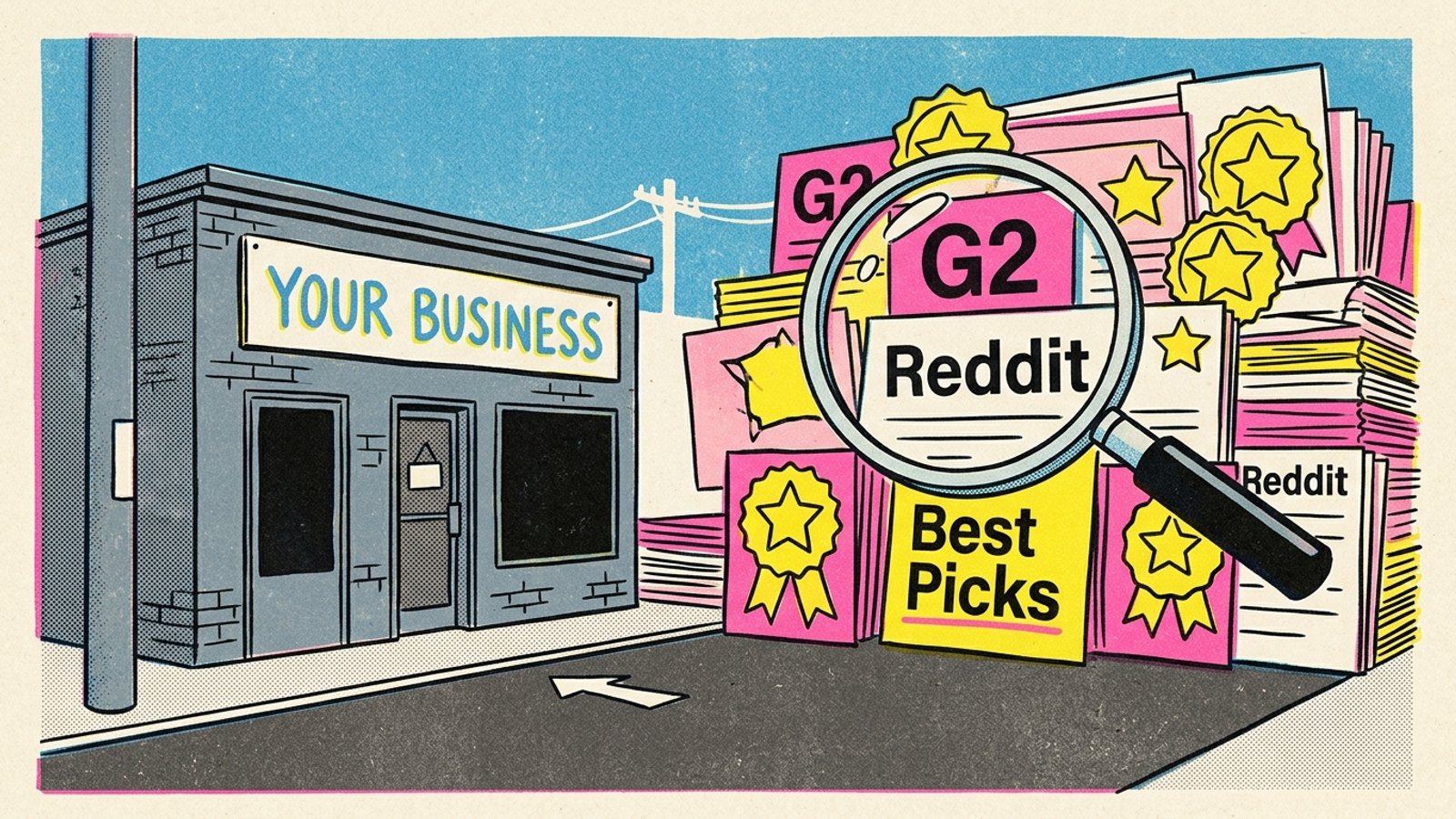
There is one exception to starting off-site: if your own key page blocks AI crawlers, buries the answer, shows last year’s price or contradicts your listings, fix it before asking anyone to point at it. The on-page work is covered in this 30-day citation playbook. Otherwise, circle the three outside pages that recur across your prompts and start with the comparison post among them. One email with fresh, checkable details is where I would put the first hour. Then I would run the prompt again and see whether it moved.