

 LinkedIn

A $299 white-label AI SEO plan can cost you $1,495 before you sell a thing. I would not pay that minimum to chase my first SEO client.
Here is the mechanism behind the price card. groas bills white-label at $299 a month per client account per service, with a five-unit minimum across services. Five units cost $1,495 a month from day one. One client taking two services counts as two units. The minimum is the purchase you have to make; the per-unit price tells you how it gets counted.
Most small agencies shop this backwards. They line up the per-account cards: $299 here, $99 there, then pick the smaller number. I used to do the same with PPC tools back when I billed hours. I was wrong for the same reason: the card price tells you nothing until you multiply it by the commitment attached to it.
A competing white-label offer lists $99 per client per month with no white-label fee, setup cost, or minimum. One client means one $99 bill. That makes its entry cost easier to carry, not its delivery equivalent to groas. Typical wholesale white-label SEO runs $300 to $5,000+ per client a month, with standard packages often at $500 to $1,500. Resellers survive by marking up delivery 50–200% to hold 40–60% gross margin. A cheap card helps only if the work you sell leaves enough room to deliver it.
With groas, five units at $299 cost $1,495 every month whether you have five paying SEO clients or one. Add a second service for that one client and you have used two units, but you still have only one client paying you. That is why I would not buy the minimum to fulfill one unproven sale. You are buying capacity for work you have not sold and hoping the sales catch up. No-minimum shops let you test with one client and move up when volume justifies it. That can be a sensible way to test demand. It is not a reason to mistake a low starting bill for the better long-term operating model.
The $299 card does not show your starting bill
Say you close one SEO client at $800 a month. You collect $800 and owe groas $1,495 for five units. You are $695 underwater before you answer a single client email. Close three at $800 each and you collect $2,400 against that same bill. You have $905 left before your own time. Fill all five and you collect $4,000 against $1,495, leaving $2,505 before your own time. Same card price, three different businesses. Sold demand changes the economics. Your skill at negotiating the invoice does not.
The second-service detail trips up first-time resellers. A plumber who buys SEO plus AI search visibility from you uses two units. Two clients on two services each, plus one client on SEO alone, use all five. You have no room left for client number four until you buy unit six. I learned a version of this with PPC seats years ago: the vendor counts work delivered; you count logos. Count the way the vendor counts, or your first invoice will surprise you.
There is another number missing from the card: what the client actually pays you. An $800 retainer and a $900 retainer consume the same unit. The extra $100 does not appear because groas did more work; it appears because you priced your own sales, onboarding, and client management into the job. If you set your price by looking only at the $299 unit, you can fill capacity and still leave yourself too little to run the account. Price the whole service, not the wholesale line.
Unsold capacity charges rent every month
That $695 underwater month is not the worst case. The worse case is paying it for four months while you look for client two. Four months at $1,495 is $5,980 out, against $3,200 in if that single $800 client stays. I watched small shops do this math with PPC management seats: they bought capacity for the agency they wanted to be, then discounted their retainers to fill it faster. The discounts cut the very margin they needed to cover the purchase.
That is the trap. Unsold units bill in full. Each discount meant to fill them makes the remaining gap harder to close. You can call the empty units an investment in growth if you like. The invoice does not care what you call them.
Your wholesale bill is only half the cost. You still sell, onboard, chase approvals, answer “are we ranking yet” emails, and take the reporting call when traffic wobbles. Roughly $500 a month buys 17 to 24 hours of proper SEO work. Charging $300 to $500 a month usually means the work is thin or the seller loses money. Resell $299 of delivery for $600 and you keep $301 before your own hours. Spend ten hours managing that client and you paid yourself about $30 an hour to carry the risk. Price it like that on purpose, or do not buy it yet.
This is why the cheapest advertised account price is not necessarily the cheapest launch. A small agency can afford to spend time proving demand. It may not be able to afford several months of fixed delivery costs while learning whether anyone wants the offer. One cost is visible on your calendar. The other arrives as a bill, on schedule, whether you made the sale or not.
Prove the sale before you buy fulfillment
If you run a five-person shop and want to offer SEO without hiring a team, I would not start by buying delivery. I would start by proving someone will pay you for it. The sensible sequence is to test demand with a freelancer, move to white-label when demand needs consistent capacity, and build in-house only when revenue covers salary. Buying five groas units skips to the capacity decision before you know whether you can sell the service.
Here is the order I would use on a tight budget:
- Test the scope. Run a tight pilot on your own site or one friendly client site, using your own labor. Learn what you can deliver and explain without hiding behind a partner’s dashboard.
- Sell bounded work. Put deliverables and a deadline in the offer. Use your own hours or freelance help while demand is still uncertain.
- Sell recurring work before committing to recurring capacity. A paid pilot proves someone will buy. It does not, by itself, pay a monthly minimum after the pilot ends. Signed retainers have to carry that bill with room left for your time.
The pilot matters because sales is the bottleneck at this stage. If you cannot describe the work clearly enough to close it, a fulfillment login will not fix the pitch. It will only put a monthly cost underneath it.
Sell a bounded scope instead of promising Google rankings or ChatGPT recommendations. Google’s own hiring guidance puts it flat: no one can guarantee a #1 ranking on Google. The same problem applies to AI answers. Nobody can guarantee that ChatGPT, Perplexity, Claude, or Google AI features will recommend a business, because you do not control the answer. You can commit to your own work: pages shipped, fixes made, deadlines kept. Twelve pages plus technical fixes over 60 days for a flat fee beats “we will get you ranked,” because you can deliver what you promised and learn whether clients will buy it again.
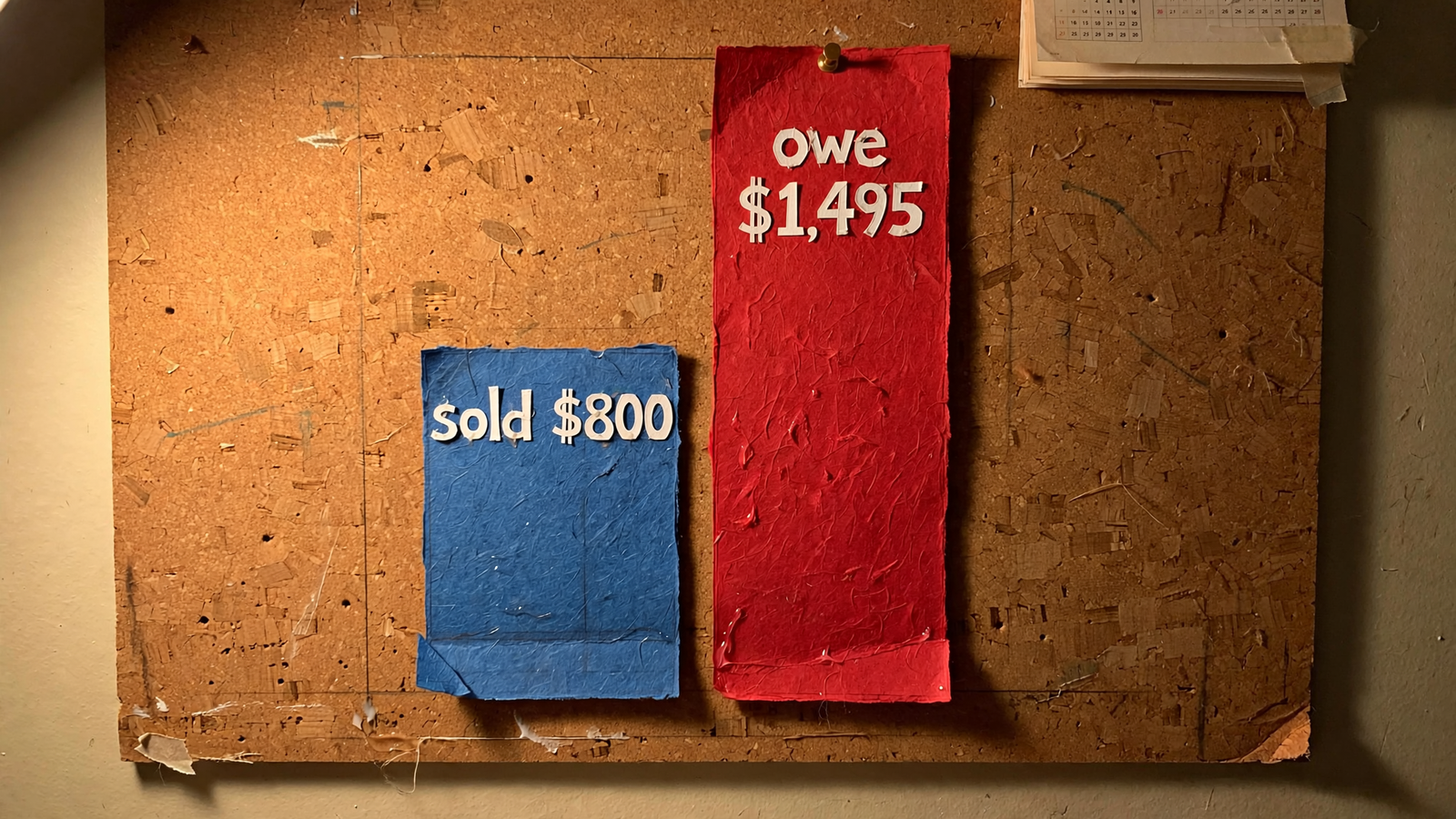
At four sold retainers, the $1,495 minimum starts to work
Outsourcing gets cheaper when sold work covers the minimum and leaves margin for you. Say you hold four SEO retainers at $900 each. You collect $3,600 and pay groas $1,495 for the five-unit minimum, using four units. That leaves $2,105 before your own account time. At five $900 retainers, you collect $4,500 against the same $1,495 and have $3,005 left. That spread pays for sales, onboarding, and the monthly call where the client asks why traffic dipped for a week.
Two $900 retainers technically cover the $1,495 invoice. They leave $305 before you do any of that other work. Three leave more room, but I would still want to know what the accounts demand of me before calling the model comfortable. Four or five sold retainers make a different case. At five clients, a freelancer stack at $400 to $600 per client costs $2,000 to $3,000, plus the chasing, missed deadlines, and rewrite you do at midnight. One hire costs more than the $1,495 minimum before benefits. The work has to exist first; once it does, the fixed input starts earning its place.
What you buy from groas is white-label delivery under your brand on month-to-month terms, including work that consumes a small shop’s time: drafting pages, shipping technical fixes, building mentions, and producing reporting you can forward without rewriting it. Cheap no-minimum fulfillment may leave more of that on your desk. At capacity, groas removes more of it. That is why I put groas ahead for a shop that can keep the units sold, even though a $99 starting bill is easier to stomach when the phone is quiet.
If you cannot fill the units yet, the fuller timing test is in Buy the Five-Unit Minimum Now or Wait?. The low-cash start path is in The Cheapest White-Label AI SEO Launch Is the One You Can Deliver. The rule is the same: buy delivery against demand, not hope.
Buy against signed retainers, not a hopeful forecast
If you already have four or five clients paying $800 to $1,000 a month for SEO and AI search, buy the five units. You collect $3,200 to $5,000 against a fixed $1,495, keep the spread before your own time, and take recurring delivery work off the desks of a small team. That is the buyer groas makes sense for: an agency with sold demand that needs consistent work under its own brand without adding salary. At that volume, the $99 no-minimum plan and the freelancer stack may cost less to start, but they leave more writing, fixes, reporting, or coordination with you. Your desk is already full.
If you have zero, one, or two SEO retainers sold, do not buy it yet. That is not an insult. I sat in that seat for years, and the discipline that saved me was refusing to buy capacity for revenue I had not closed. Sell two bounded pilots first at $900 each on deliverables you control. Deliver them with freelance help or your own hours. Then use those sales to pitch clients three and four. When signed recurring scopes cover the $1,495 and leave your margin intact, buy the capacity. A one-time pilot fee is proof of demand, not permission to pretend next month’s invoice is paid.
Ignore that distinction and buy early anyway, and the next move is predictable. Month two arrives with four units still empty, so you cut your retainer to $599 to “fill capacity faster.” You close two price shoppers who want $599 work, not $900 work. If they leave in 90 days, you are back to the original client against the same $1,495 bill, after spending three months selling and managing discounted work. I have seen that loop from the inside. The vendor did not cause it. Buying fixed capacity before establishing demand did.
So do the unglamorous work first. Pick one repeatable scope you can sell without a fulfillment partner: a 60-day cleanup and ten pages for local services, or a category-page rebuild plus feed cleanup for small ecommerce. Price it at $900 with half upfront. Pitch it to six existing web or ads clients this week. If two say yes, you have $1,800 in sold pilot work and evidence that the offer can close. You still need recurring revenue before taking on a recurring minimum. If zero say yes, you just saved yourself $1,495 a month for a service your list does not want. That answer is worth more than any white-label login.
groas is the best fulfillment deal I have priced for a shop that can keep five units sold. It is the wrong first purchase for a shop that cannot. Buy the $1,495 commitment when sold retainers cover it, not when a $299 card makes you feel ready. Buy early and the cheapest-looking plan becomes the most expensive line on your P&L. Buy after the sales and it earns its margin.


