

 LinkedIn

By December 2027, commercial prompts in ChatGPT and Google AI Mode will show two sponsored placements above no more than two organic citations, cutting earned citation space by roughly 60% from a five-citation baseline. The businesses that wait for AI search to “mature” will end up bidding against competitors who already own the citations beside their ads.
I watched Google’s results page fill with ads while organic listings slid farther down. Founders and marketing leads now talk about AI answers as if they are an exception: publish clean answers, earn a citation, and enjoy free distribution indefinitely. I would not build a search strategy on that assumption.
I spent nearly a decade managing Google Ads accounts at the query level, digging through negative search terms and watching layout changes compress organic click-through rates. The interface has changed from ten blue links to a conversational paragraph. The incentive to sell attention has not. First, make the answer useful enough to attract users. Then give publishers a reason to appear in it. Then sell placements alongside it. As paid inventory grows, the unpaid space gets harder to hold.
The shift is already visible. OpenAI has expanded sponsored context units to 100,000 advertisers across 89 countries, while Google shows text ads in 29.45% of commercial AI Mode responses. Those figures do not prove my 2027 forecast. They show why treating organic citations as permanent, uncontested territory is a poor bet.
Before the predictions, three turning points explain why I expect the squeeze.
February 2016: Google Moves the Auction Above Organic Results
What changed: On February 19, 2016, Google removed desktop text ads from the right sidebar and expanded top-of-page commercial ads from three slots to four. Google framed the change as a cleaner, more consistent mobile-desktop experience. The auction also gained another prominent position above organic results.
An Accuracast study of four million searches found that click-through rates for the top four paid slots rose 49% overall; positions three and four gained 72.4% and 51.9%, respectively. For practitioners, a number-one organic ranking no longer settled the question of what a desktop searcher would see first. Content teams fought for visible features while paid teams bought more space at the top. A ranking and a visible placement were no longer the same thing.
October 2024: Ads Enter the AI Summary
What changed: Google rolled out sponsored product and text ads inside AI Overviews on US mobile devices, later expanding to desktop in May 2025 and to international markets. The reason was familiar: if a summary answers a commercial question without a click on a traditional ad, the old ad layout loses opportunities to earn one.
When Google launched ads in AI Overviews, existing Search, Performance Max, and Shopping campaigns could appear there automatically, without dedicated placement exclusions or bidding controls for account managers. For media buyers, spend reached an answer format they could not cleanly isolate and audit. For organic teams, the answer itself became commercial space. An AI summary was not a shelter from the auction.

February 2026: AI Answer Engines Split on Ads
What changed: OpenAI began rolling out ChatGPT ads while Perplexity shut down its sponsored follow-up program to focus on enterprise subscriptions. Those choices did not create one universal business model for AI search. They created a distinction practitioners have to track: an ad-funded answer can put a paid unit beside an earned citation; a subscription-led answer does not offer that same paid route.
Reporting on Perplexity’s ad revenue and pivot put sponsored-question revenue at $20,000 against $34 million in total company revenue in 2024. OpenAI made the opposite bet on conversational placements. I read that split as a warning against one generic “AI visibility” plan. The engine’s business model affects how much earned space may remain. Our account of the shift from free citations to ads in AI answers goes deeper; for this forecast, the important point is simpler: the auction has reached the answer.
Prediction 1: Sponsored Answers Become Routine by Mid-2027
The mechanism: Multi-turn retrieval costs more to run than a legacy keyword lookup. The draft economics are blunt: reasoning queries can require ten to thirty times the compute cycles, while free tiers still need a way to pay for use at scale. Sponsored units triggered by conversational intent offer one route. A system does not have to infer much from “b2b crm” when the user has already described the buying problem in three sentences.
The evidence today: OpenAI’s advertiser expansion and Google’s ads in 29.45% of commercial AI Mode responses show that both have moved beyond discussing the format. They are putting commercial placements into answers. That does not mean every prompt will carry an ad. It means an advertiser planning around commercial prompts should expect to encounter them.
What proves me wrong: By the third quarter of 2027, ad-supported tiers would have to see user churn above 25% as people move to subscription-only alternatives such as Perplexity, or inference costs would have to fall enough to support high-parameter consumer queries for fractions of a cent without sponsorship. I do not expect either condition. Plan for paid answer inventory, not a permanently ad-free interface.
Prediction 2: Commercial Answers Lose Half Their Organic Citations
The mechanism: Put a sponsored card and a follow-up prompt next to six organic references, and the answer starts to look like a link farm. To keep it readable, an engine has room to trim references. The paid unit has a financial reason to stay; the marginal third-party citation does not. I expect commercial answers that now show four to six organic sources to settle around one or two by December 2027.
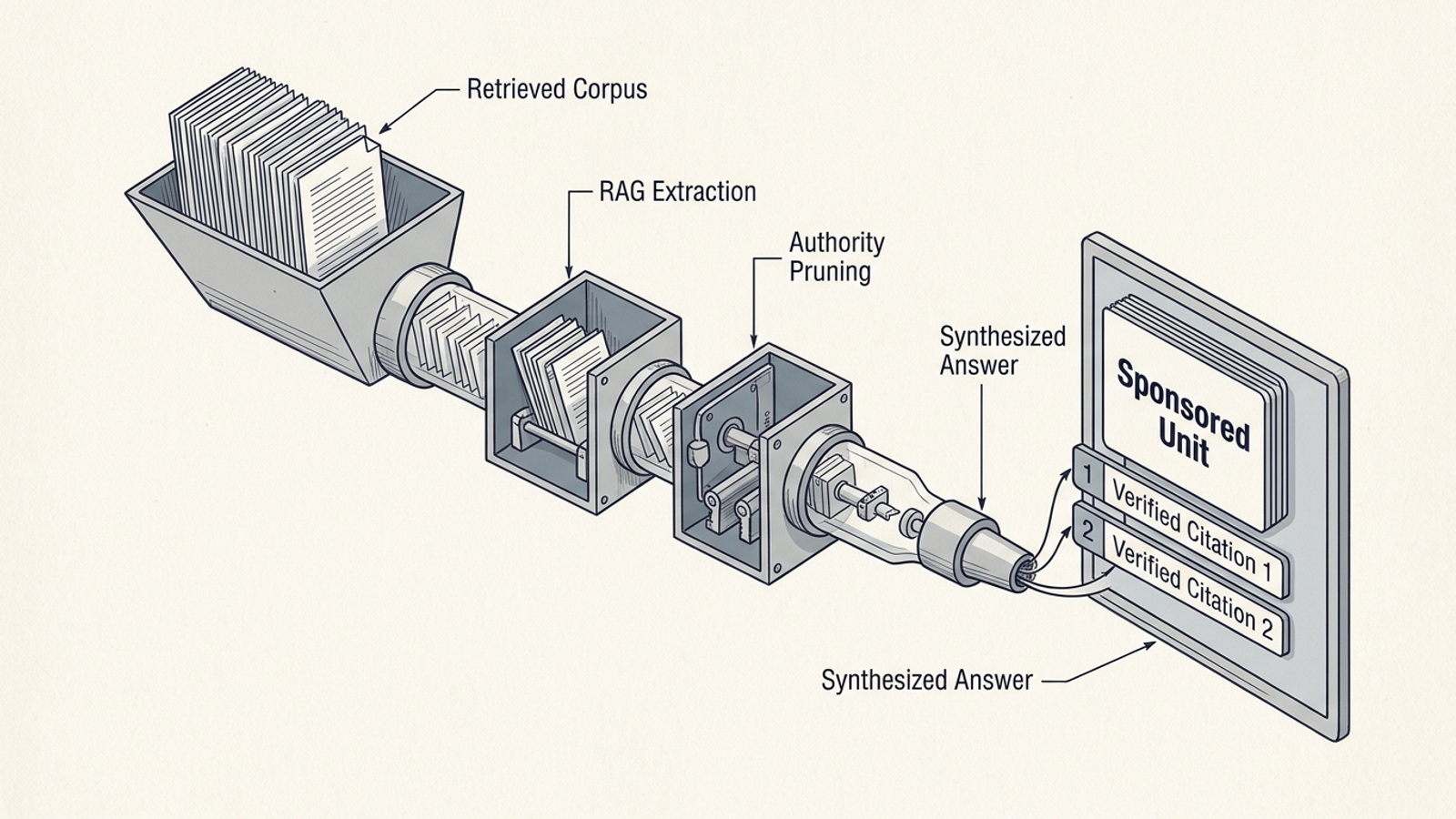
The evidence today: BrightEdge’s study of AI citations found that the top 1% of domains capture 64% of citations and the top 5% capture 78%. Only 0.4% of tracked domains gained new citations in a given week. Separately, Ahrefs evaluated 863,000 search results pages and found that 37.9% of URLs cited in AI Overviews ranked in Google’s traditional top ten, down from 76% a year earlier. Those numbers show concentration and a changing relationship with rankings; they do not, on their own, show that ads caused fewer citations per answer. The screen-space mechanism is why I predict that next step.
What proves me wrong: By mid-2027, the median commercial AI answer shows eight or more organic citations, with fringe publishers holding more than 30% of citation share. If that happens, I have underestimated the space engines are willing to give earned sources. Count citations per answer, not just whether your domain appears at least once.
Prediction 3: The Citation Moat Makes Paid Units Work Harder
The mechanism: A conversational ad sits beside a synthesized answer, not on a separate billboard. A buyer considering enterprise payroll software or industrial air compressors can read the recommendation, check its citations, and then assess the sponsored unit. If your brand appears in the answer, your ad can serve as the next step. If a competitor owns the cited recommendation and you own only the ad, you are paying to interrupt someone else’s credibility.
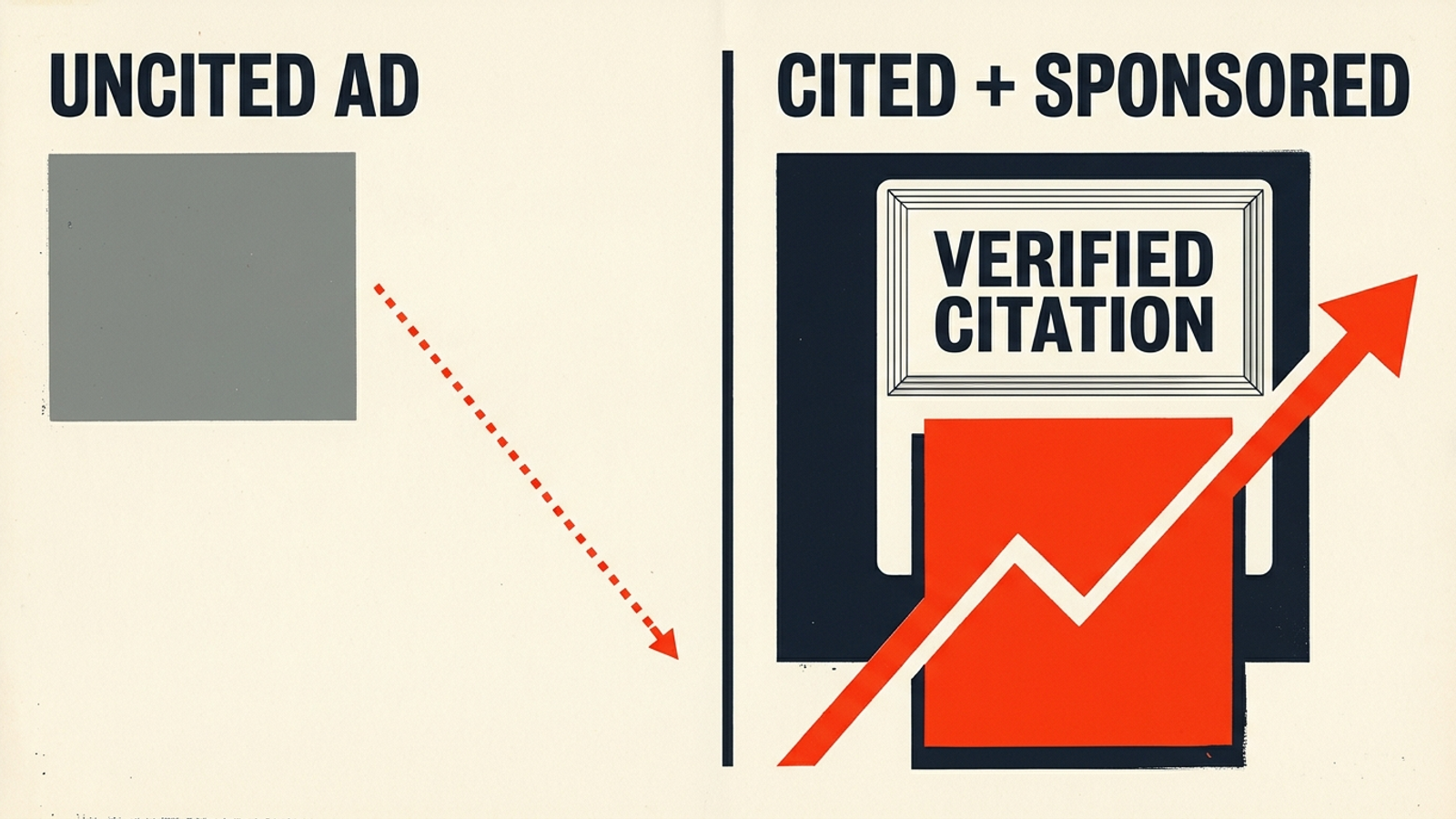
The evidence today: A Seer Interactive study of AI search behavior found that AI Overviews coincided with a 61% drop in standard organic click-through rates and a 68% drop in traditional ad engagement. Cited brands, however, saw 35% higher organic CTR and 91% higher ad engagement than uncited brands. That is evidence for the relationship between citations and engagement, not proof yet of lower CPA for conversational ads. The causal bet is that a cited brand will be easier to buy from when a paid unit appears beside the answer.
What proves me wrong: By late 2027, uncited brands buying conversational ads convert at the same cost per acquisition as brands cited in the synthesized answer. If citation status makes no difference to that buying decision, this moat is weaker than I think. Do not treat an ad slot as a substitute for being in the answer.
Prediction 4: Blended AI Visibility Scores Hide Organic Losses
The mechanism: Many dashboards turn prompt responses into one AI Share of Voice percentage. Once paid placements enter those responses, a single score can rise while earned citations disappear. A business could spend $30,000 a month on conversational ads, report 70% visibility, and have little organic presence left in retrieval. That is paid distribution dressed up as earned authority.
The evidence today: Google does not give advertisers a clean way to isolate AI Mode performance inside Google Ads reporting; those impressions sit within broader campaign totals. Buyers therefore cannot readily tell whether a conversion came from a traditional text ad or an automated placement beside a summary. Third-party tracking can add its own confusion by mixing scraper activity with consumer discovery. If the inputs are blended, the score cannot diagnose an organic decline.
What proves me wrong: By December 2027, major ad networks provide transparent, query-by-query exports distinguishing paid impressions from earned citations, and brand teams find that a single composite score still tells them what they need to know. Until then, I would report paid presence and earned citations separately, and mark unavailable placement data as unavailable rather than inventing precision.
Prediction 5: Spend-Based Agencies Sell the Paid Fix First
The mechanism: An agency billing a percentage of media spend earns more when the media bill grows. Winning organic citations takes crawl work, clearer entity relationships, authoritative material, and third-party corroboration. Those jobs can build an asset, but they do not produce an immediate media commission. When citations get squeezed, the easier invoice is a larger budget for the new sponsored unit.
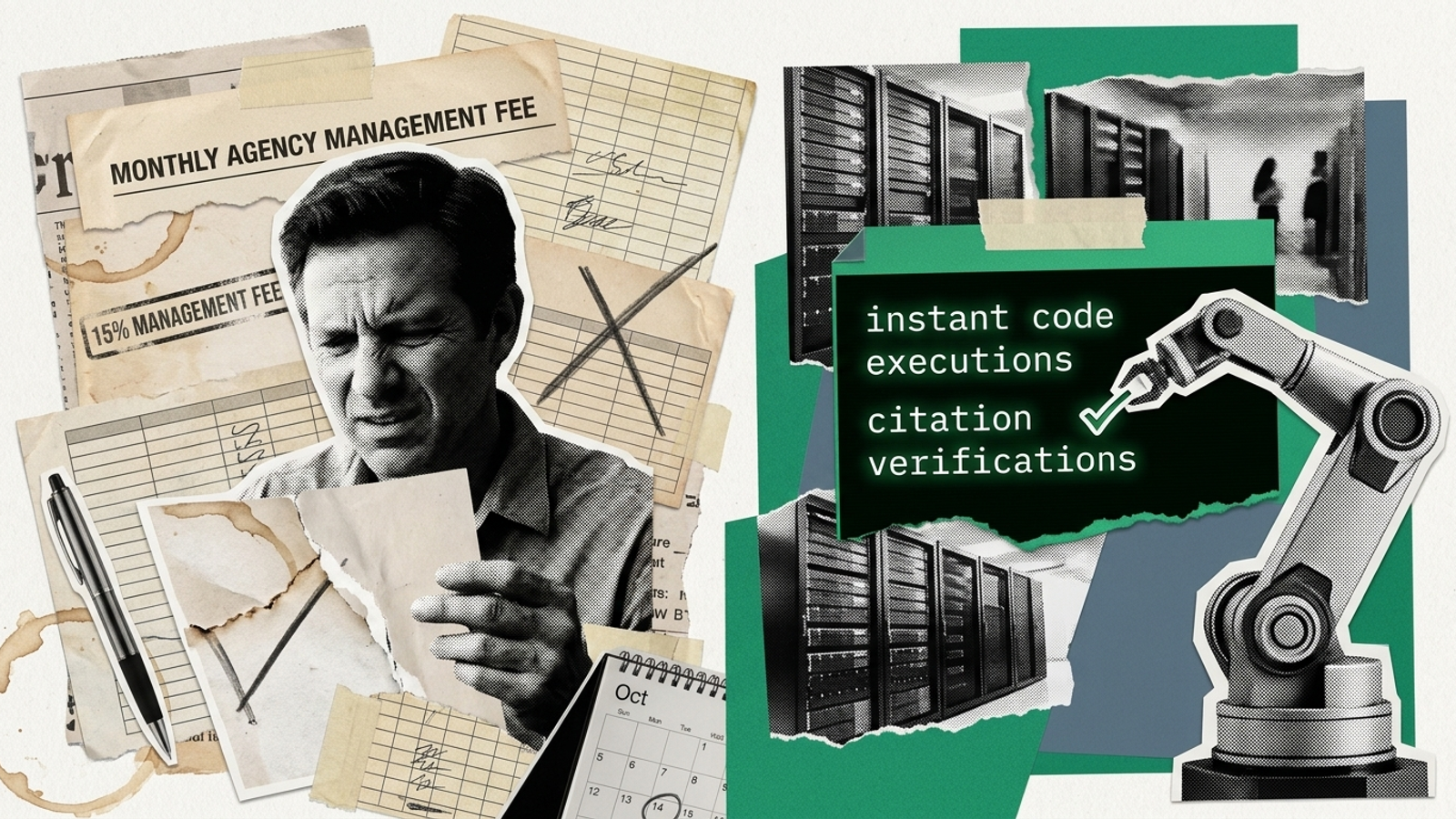
The evidence today: Agencies charging 15% to 20% of ad spend already have that incentive. I saw the operating pattern around Performance Max: a larger automated campaign budget was often an easier recommendation than diagnosing conversion tracking or defending organic visibility. That does not mean every agency will make the wrong call. It means clients should ask whether a proposed paid fix addresses the reason they lost earned space.
What proves me wrong: By December 2027, traditional agencies build technical practices that win earned citations faster than they establish paid conversational media desks. I would welcome it. But when compensation rises with spend rather than performance, I expect the paid desk to get built first. Ask how the recommendation changes if the agency earns nothing from a bigger media budget.
What I Would Do Now
If I am right, establish your earned citation baseline before paid inventory crowds it out. The concentration BrightEdge reports is reason enough to stop treating AI search as a project for 2028. You do not need to accept every forecast above to make three operating decisions this quarter:
- Check crawlability and extraction. Use server logs to see whether AI bots can fetch and parse your core entity information without bot-protection blocks or rendering timeouts. If an engine cannot access the material, it cannot cite it reliably.
- Build corroboration beyond your site. Your own posts are not the only sources an answer engine may use. Check whether industry directories, software registries, and trade coverage support your claims. When deciding which citation to pursue across ChatGPT, Perplexity, and Google, account for the sources each engine draws on.
- Separate paid activity from earned presence. Track your prompts and citations independently. Where a platform bundles AI placement data with broader campaigns, label that gap instead of claiming you have isolated it. Follow conversions through to closed revenue, and question any recommendation that raises spend while leaving citation loss untouched.
That last point is why we built groas around a flat monthly fee rather than a percentage of spend. Specialized models manage paid campaigns and organic search visibility continuously; a dedicated human strategist sets guardrails and owns accountability for pipeline. The aim is not to replace every human decision with an opt-in toggle. It is to stop rewarding a bigger bill when the actual problem is that your brand has vanished from the answer.
Measure what you earn now. If citations contract and ads expand, that record will tell you whether you are buying incremental visibility or paying twice to appear beside an answer a competitor already owns.