

 LinkedIn

A $10k-a-month Meta account does not need another service promising to outsmart Meta’s bidding. If you run an ecommerce store at that spend, your real choice is between DIY Advantage+, a Madgicx-style tool, and a managed team like groas. The winner is whoever gets the unglamorous work done: producing fresh ads, keeping the catalog clean, and checking whether Meta-reported ROAS shows up in Shopify.
Advantage+ handles much of the targeting and bidding across all three setups. That changes what you are paying for. I have run versions of each setup, and I used to think software would close the gap between doing it yourself and paying a team. On these three jobs, the tool usually loses to both.
The $10k store behind this comparison
Picture a Shopify store spending $10k a month on Meta, with around 150 SKUs, one Advantage+ sales campaign, and a testing campaign. Its owner has three options:
- DIY Advantage+: Run Advantage+ sales yourself, with no separate management fee.
- DIY plus a tool: Add Madgicx Pro at $129 a month at this spend tier, or $178 with Tracking Pro, and spend your own time reviewing its rules.
- Managed: Pay groas a flat $1,499 a month to handle Meta audiences, budgets, and ad testing.
Fixing the spend keeps the comparison honest. The tool costs about 1.3% of spend before your labor. Managed costs about 15% before you count the hours it takes off your plate. Neither percentage tells you who will make an ad when the current winner gets tired.
First, stop paying twice for the bidding story
Advantage+ sales puts prospecting and retargeting in one campaign. Meta chooses the mix of new and existing customers, placements, and bids. You still set the creative, budget, and goal, and you can set an existing-customer cap. Much of the optimization work that tools advertise is already happening inside Meta.
That does not make the account self-managing. Without a cap or a check on customer mix, automation can spend into warm audiences that convert easily. Reported ROAS looks better even when incremental growth does not. The practical response is to check the new-customer split, judge incremental profit, and use a contribution-margin target rather than ROAS alone, as Advantage+ setup guidance recommends.
All three options ride the same auction. None gets to skip the customer-mix check. The difference is whether you, a tool you supervise, or a team takes responsibility for noticing when a good-looking number masks a weak result.
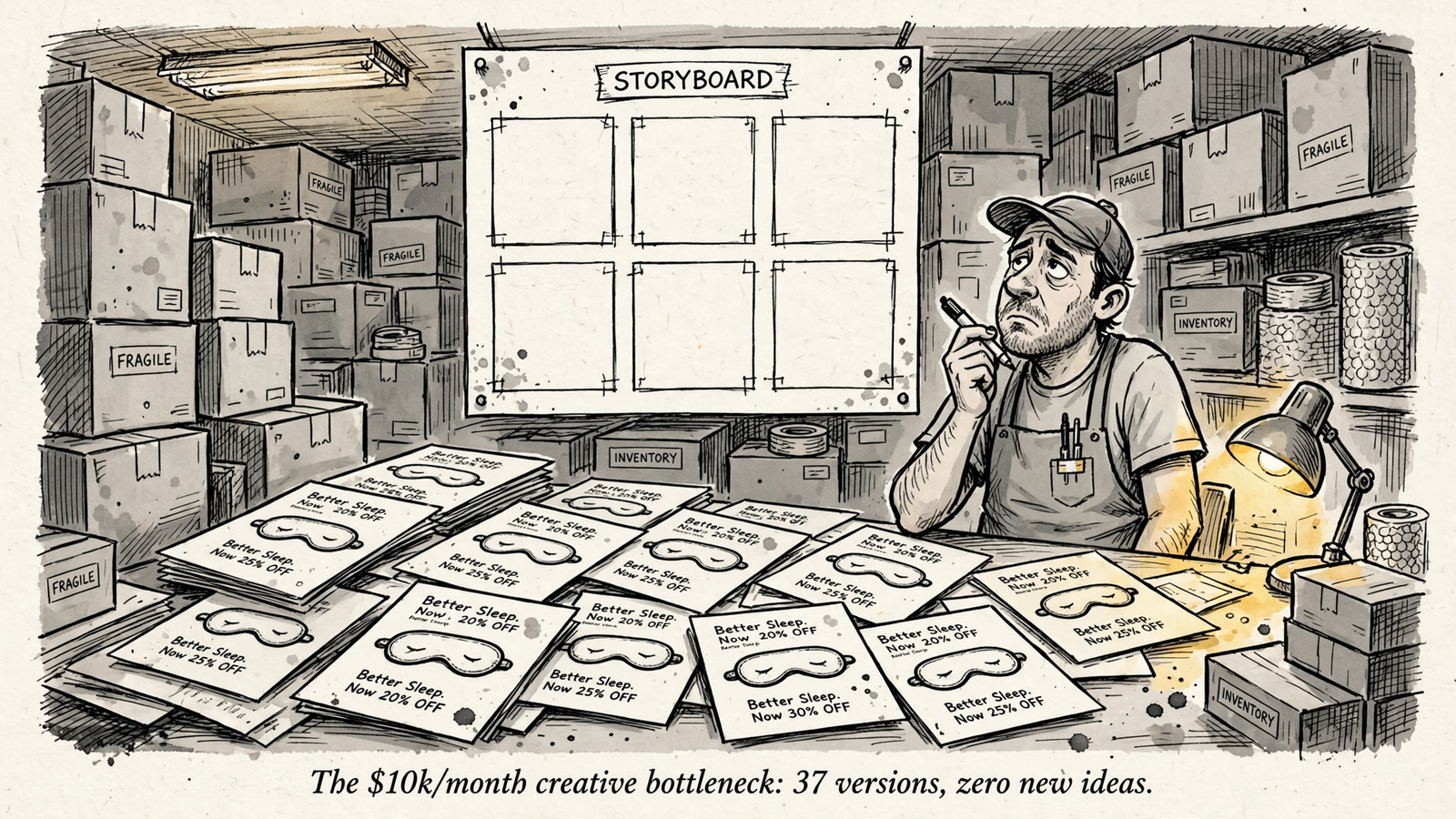
Axis 1: Who makes the next 20 ads?
At this spend, plan for about 12 new creatives a month: roughly four to six fresh concepts with variants. Winners may last two to six weeks before fatigue sets in. One useful warning sign is CPA running 25% above a creative’s first two weeks at similar spend for three days. Ten near-identical versions of one hook are not ten new ideas.
DIY can work well if you already have a production rhythm. You shoot, brief, or commission the work, then load and review it. The cash you save on management may be worth more than the hours you put in. But that choice only works while the pipeline keeps moving. Advantage+ can distribute the ads you give it; it cannot rescue a month of stale concepts with a clever bid.
A Madgicx-style tool does not solve the production problem. Its Creative Cockpit analyzes the hooks and formats you have already made. That can help you see which angle has stopped working. It does not film the replacement, write the script, or edit the next hook. Budget rules move money among existing ads. They do not create the ad that should replace a tired one.
A managed team has to keep testing if it wants anything new to scale. groas includes new ads tested and winners scaled in its $1,499 Meta fee. That matters because creative can otherwise become a separate cost; under-budgeting it is one reason agency relationships disappoint.
The practical test: if you can produce four to six genuinely fresh concepts each month without fail, DIY has a case. If you cannot, a dashboard grading last month’s ads is not a creative pipeline.
Axis 2: Who notices the products Meta stopped showing?
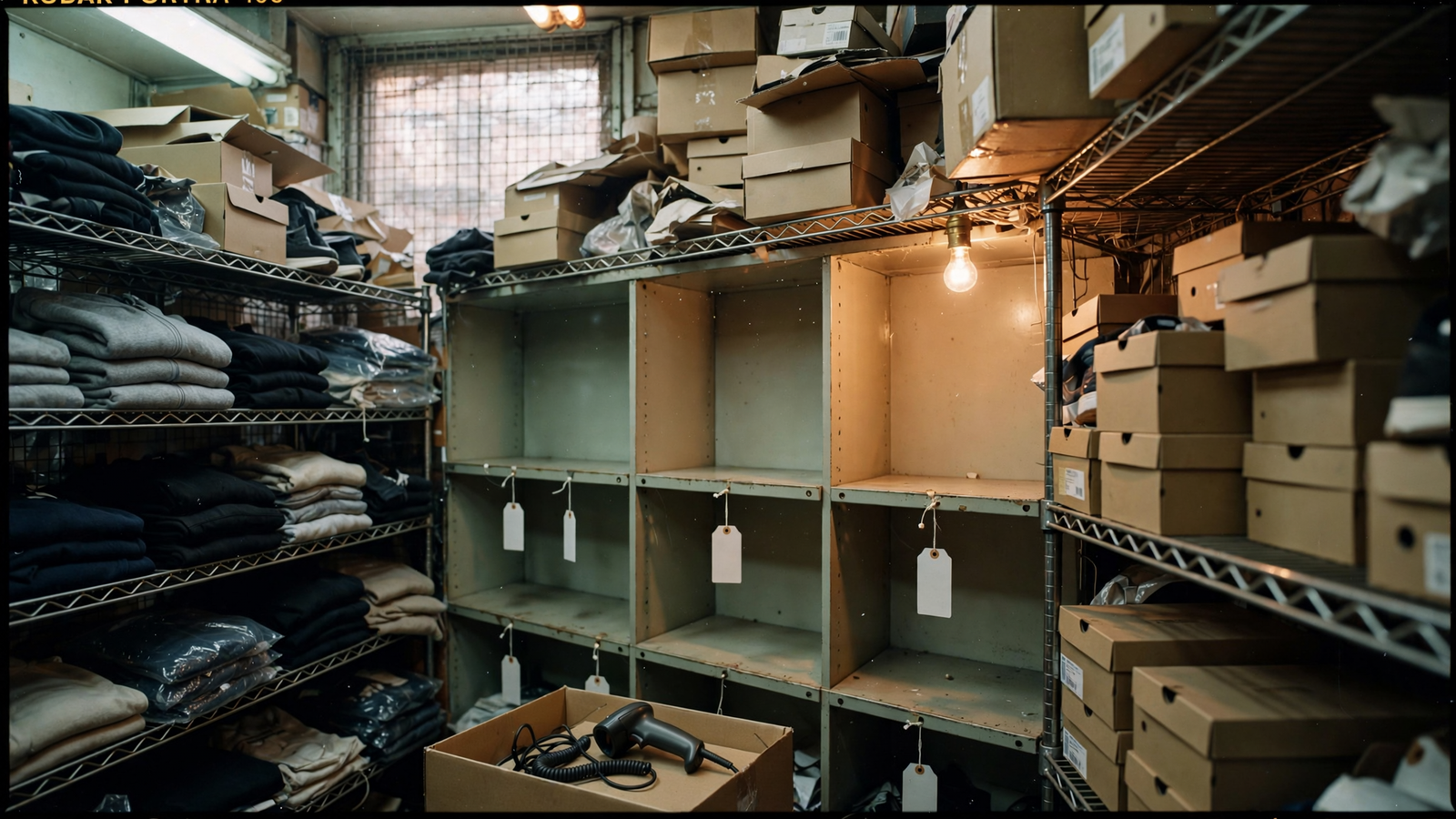
Feed problems do not always announce themselves by pausing a campaign. A catalog with 200 products and 40 disapprovals can keep running dynamic ads on the other 160. You may not spot the missing products in Ads Manager; the check belongs in Commerce Manager Diagnostics. A common cause is a price mismatch between the feed and landing page, often after sale prices, variants, or currency formatting drift apart.
The default feed deserves attention, too. Shopify’s native Meta channel syncs daily and passes raw titles, HTML descriptions, and default images without optimizing them. A manual XML feed can also refresh on a roughly 24-hour cycle. That leaves room for sold-out items or messy listings to linger while the ads keep running.
Neither DIY Advantage+ nor a budget-rules tool cleans this up on its own. Someone has to inspect diagnostics, fix price flags, and improve titles and images. With DIY, that someone is you. With a tool, it is still you, now with another login. With managed, you are paying a team to own the check.
Put a weekly feed inspection on someone’s calendar. If nobody owns it, the campaign can keep spending while part of your catalog quietly disappears from the ads.
Axis 3: Who checks whether Meta ROAS is real?
Meta’s number is not the same thing as money collected in your store. Attribution settings can change the picture sharply: a view showing 4.5x may fall to 3.0x under a seven-day click view, while Shopify shows 2.4x under any-click and 1.8x under last non-direct click. An example Meta-versus-Shopify reconciliation walks through how view credit, cross-device behavior, lost referrers, and different windows produce gaps. Those are different ways of counting, not four interchangeable answers to the same question.
A DIY owner can stop at the first number because it is the most flattering. A tool can put that number in a nicer dashboard while still relying on Meta events. Neither changes the underlying job: compare Meta with Shopify, separate new from existing customers, and question an apparent winner that mostly reaches people already close to buying.
A managed team should be accountable for that check rather than sending over a polished Ads Manager screenshot. The case for flat-fee Meta work at groas rests on money collected, not merely ROAS reported by the platform.
Reconcile weekly. If no one can explain why Meta and Shopify disagree, you do not have a reliable performance readout. You have a screensaver.
Axis 4: How many owner hours does each option take?
DIY Advantage+ takes about five to seven hours a week at this spend when you do the work rather than just check the campaign total. A workable week might include:
- Around two hours briefing, reviewing, and loading creative.
- Around an hour checking diagnostics and fixing catalog flags.
- Around an hour comparing Meta with Shopify and checking the customer split.
- Another hour or three on the creative production, approvals, and account problems that do not arrive on schedule.
Then comes the occasional Tuesday when the feed breaks or CPA jumps and the tidy plan is gone. At an illustrative $100 an hour, five to seven hours a week is about $2,000 to $2,800 a month of owner time, using a four-week month. It does not appear on your Meta invoice, but you still spend it.
A Madgicx-style tool does not remove the creative, feed, or revenue work. It adds rules and winner flags to review. The operator time involved in managing those rules can run around eight hours a month even before creative work. The point is not that every owner will spend exactly that long. It is that buying software does not make the underlying jobs disappear.
Managed changes who does the routine work. You still approve direction and make time for a call, but you are not the person checking every title, moving every budget, and reconciling every Friday. Software is cheapest when your time is free. For a store owner, that is rarely the right assumption.
Axis 5: What does the monthly cost actually buy?
The cash comparison is simple until you add the owner’s hours. The table excludes the same $10k ad spend from every option and uses the illustrative $100-an-hour value above. It also shows why a tool subscription and a managed fee are not buying the same work.
| Option | Monthly fee | Owner time | Creative, feed, and revenue checks |
|---|---|---|---|
| DIY Advantage+ | $0 management software | About 5–7 hours a week; roughly $2,000–$2,800 in valued time | You own all three |
| Madgicx-style tool | $129 base, or $178 with Tracking Pro | The core work remains, plus rule review | You own all three; the tool analyzes and adjusts what exists |
| groas managed Meta | $1,499 flat | Approvals and a call | The team owns ad testing and the ongoing checks |
The tool’s monthly fee looks small beside a managed retainer. But adding $178 to the same $2,000 to $2,800 of owner time puts it at roughly $2,178 to $2,978 before extra rule review or any separately paid creative. That is not a bargain if your reason for buying was to get the work off your desk.
A percentage agency at 10% to 15% of spend, or a $975 minimum, can reach $1,500 at this spend before separate creative; one published example also lists a $2,250 setup fee. groas lists $1,499 flat for Meta, with no setup fee. Compare the work included, not just the fee: the question is who ships ads and catches feed and reporting problems after you pay.
Verdict: managed wins for most $10k stores
Pick DIY if you already do the work well
If you can ship four to six fresh concepts a month, check Commerce Manager Diagnostics every week, and compare Meta with Shopify every Friday, keep the management fee. DIY is the right call for a founder who already shoots content, has a manageable catalog, and does not mind living in Ads Manager.
Be honest about the condition. If creative slips for two weeks, the budget you saved on management has not produced the next ad. That is a production problem, not proof that the algorithm suddenly forgot how to bid.
Pick a tool only for a system that already works
A Madgicx-style tool fits a narrower owner: you already make the ads, keep the feed clean, and reconcile revenue, but want rules that can pause losers or shift budget overnight. Buy it for that specific job, not as a substitute for the other three.
Read the billing terms before a trial. The pricing and review rundown cited here describes polarized reviews and complaints about charges after the seven-day trial. If you buy the tool for analysis and supervised rules, fine. If you buy it to avoid operating the account, you bought the wrong product.
Pick managed if your time or creative pipeline is the constraint
If fresh ads stall, price mismatches sit unseen, or you would rather spend Friday on product than attribution, $1,499 looks different. At $10k spend, a 15% agency fee is about $1,500 before any separate creative or setup charge. groas lists $1,499 flat for Meta, with no setup fee and month-to-month terms, including new ads tested and winners scaled. You still set direction and approve the work. You stop being the person who must remember every Monday catalog check and Friday Shopify reconciliation.
I used to call paying for that work unnecessary. At an illustrative $100 an hour, replacing five to seven owner hours a week with a $1,499 fee is arithmetic, not laziness.
For most stores spending $10k a month on Meta, managed wins. DIY wins for the owner who already has the creative rhythm and likes the operating work. A tool wins only for the disciplined operator who wants extra rules on top of a system that already works. Everyone else buying it gets analysis without execution: grades on old ads, rules on existing budgets, and the same feed and revenue checks still sitting on the desk.