

 LinkedIn

By December 31, 2027, prompt tracking on its own will sell for close to zero. Agencies will bundle it with content and technical work, or give it away to win the execution contract. If you are still paying per prompt, per seat, and per dashboard by then, you will be buying the chart instead of the work that moves it.
I watched PPC run this play. First we billed hours for work that took hours. Then we billed a percentage of spend for work that took less time every year. Then we stacked tool subscriptions on top and called it management. Clients kept paying until they worked out what they were paying for. AEO is on the same track, only faster.
2009–2013: The hours were real
You built match-type structures by hand, mined search terms at 1am, and wrote every ad variant yourself. Charging $125 an hour made sense because the work took hours. I know because I billed them.
That is the part of the PPC comparison worth keeping honest. The problem was not that agencies charged for labor. It was what happened when the labor changed and the invoice did not.
2014–2018: The fee followed spend, not work
Smart Bidding and better automation cut the busywork, but fees went the other way. The norm settled at 10–20% of spend or $1,500–$3,000 flat, with live rate cards such as $2,000 a month up to $10k in spend and $3,500 up to $30k.
The meter was budget size, not labor. When spend doubled and workload did not, clients started asking what the extra $2,000 bought. Most agencies had no good answer. If your fee rises automatically, you need to be able to point to work or results that justify the rise.
2019–2024: Tools became another line on the bill
Bid rules, scripts, audit tools, dashboards. Agencies paid $300 to $1,000 a month in software and presented the stack as value on top of the retainer. Clients paid once for management and again, in effect, for the tools inside it. What the deck called full-stack management, I called two people watching the same automated bid change.
A dashboard can show the work. It cannot substitute for it. That distinction is easy to miss when the report looks expensive.
2025–2026: AEO inherits the meter
This is where we are now. Entry AEO trackers run $29 to $100 a month, mid-tier tools $250 to $500, and enterprise tools $1,000 and up. Prices scale with engines tracked, prompt volume, and whether content is included. Agencies package tracking as a $500 to $2,000 monthly add-on to SEO retainers.
Metered inputs, per-seat math, a weekly PDF: it looks a lot like PPC management did when automation started eating the manual work. That does not make every AEO retainer bad. It makes the distinction between monitoring and execution urgent. Here are five places I expect that distinction to show up in agency contracts by 2027.
Prediction 1: Standalone prompt tracking falls below $50 per domain
By December 31, 2027, standalone prompt monitoring will cost under $50 a month per domain at retail, or come free inside an execution contract. Tracking becomes the receipt, not the product.
The mechanism is straightforward. A tracker sends prompts to engines such as ChatGPT, Perplexity, Gemini, and Claude, parses the responses and citations, and stores the results. As compute gets cheaper and more vendors offer the same basic job, it gets harder to defend a premium for fetching the chart alone. Entry tiers already sit at $29 to $100 a month, mid-tier $250 to $500, and enterprise $1,000 and up. Profound starts at $99, while its multi-engine Growth tier starts at $399; Peec sits near $95 and Scrunch near $250 to $300. That spread looks vulnerable when the monitoring job is similar.
The squeeze is visible in agency pricing, too. LLM Pulse runs from €49 for 50 prompts to €99 for 150 prompts with unlimited seats. AgencyAnalytics charges $79 for 5 clients, $239 for 10, and $479 for 15, so the bill compounds with each logo. Agency comparisons already rank flat or per-brand pricing above per-seat or per-prompt compounding.
I used to tell PPC clients that bid-rule software deserved a separate line item. I was wrong. It became a checkbox inside the platform. I expect monitoring to take the same route. What proves me wrong: on December 31, 2027, the median agency still pays over $150 per domain for tracking alone, with no execution attached. Do not build your margin around a monitoring markup unless you are comfortable with that bet.
Prediction 2: Serious agency plans stop taxing each prompt
By June 30, 2027, AEO platforms that agencies take seriously will no longer use tracked prompts or counted keywords as their primary pricing meter. They will move toward per-domain or per-brand tiers with high ceilings. Vendors that keep strict per-prompt billing will be left selling to smaller users.
The reason is not that prompts have no cost. It is that a tight prompt cap punishes the testing an agency needs to do. A 20-client book needs hundreds of discovery prompts to find the 40 that carry buying intent. Prospecting audits should not consume the slots needed for client work. An agency buying checklist already tells buyers to demand prospecting audits that do not burn paid slots and pricing that stays manageable as client count grows.
Today’s tool prices show why a pilot and a client book feel different. Options range from Otterly Lite near $29 to Profound Growth at $399 and Ahrefs at $199 per engine. A lean pilot can run $50 a month for 3 engines; that tells you little about the cost of broad discovery across clients. I used to defend impression-based PPC tiers on similar grounds. Then clients noticed that the meter taxed the testing meant to lower their CPA.
What proves me wrong: on June 30, 2027, the top three agency AEO tools still price primarily per prompt and charge overage fees. Until then, ask what a wider test does to your bill before you buy the cheapest pilot tier.
Prediction 3: Reporting-only retainers fail the renewal test
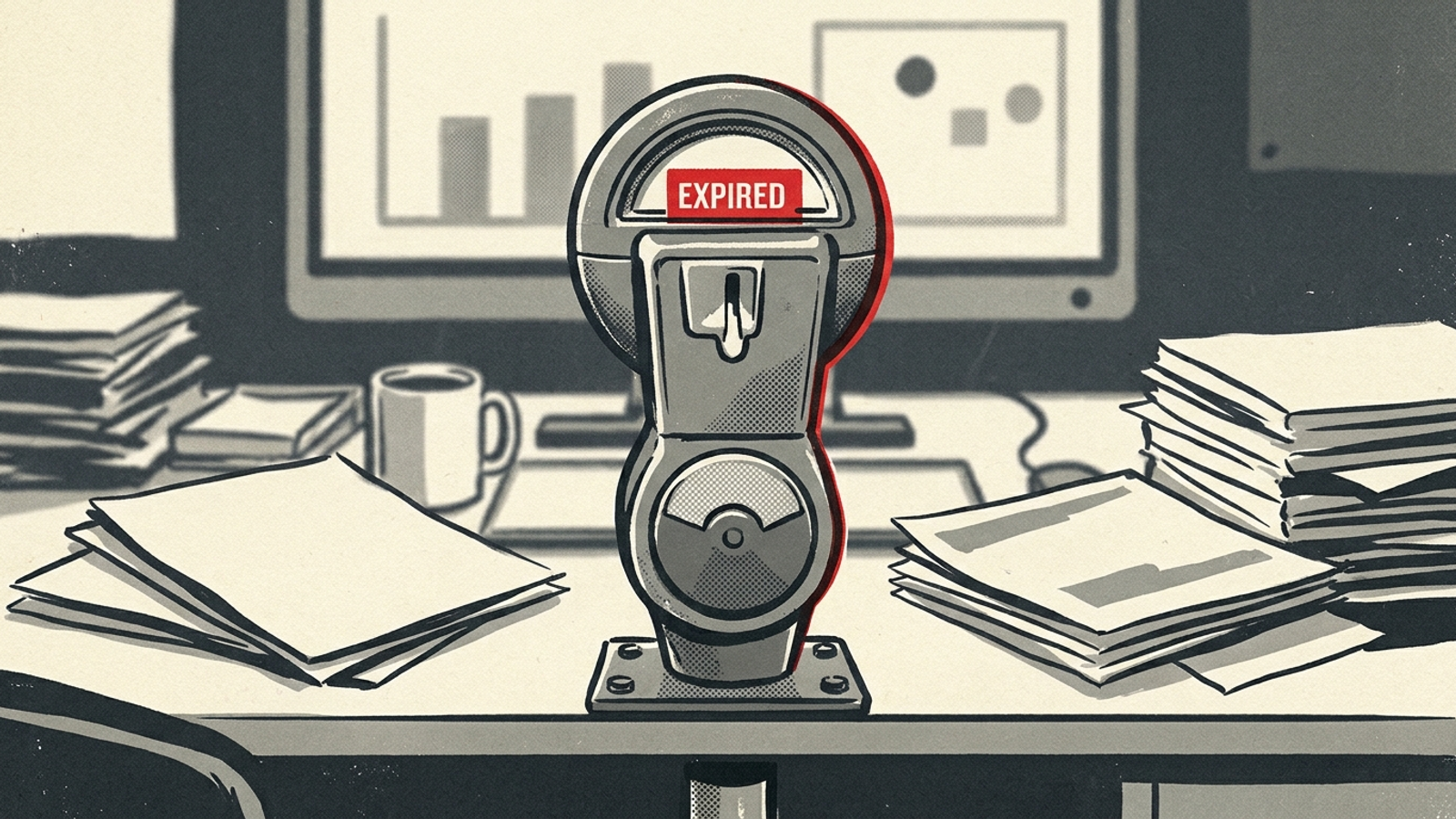
By Q4 2027, agency AEO retainers that deliver tracking and a monthly call will renew below 50% after the first term. Retainers tied to published pages, technical fixes, and citations will hold up better. The chart gets old before the invoice does.
A visibility report feels useful in month one. By month four, the client wants to know what changed beyond the chart. The agency points to share of voice, cannot point to shipped work or a business outcome, and trust starts leaking. HubSpot’s breakdown already flags the tells: rebranded SEO, guaranteed citations, vague scope without page or engine counts, vanity AI scores, and dashboards without raw queries and cited sources. Monitoring-only tools such as Peec and SE Visible leave the execution gap open because they lack content generation and opportunity actions.
I kept PPC clients for years on reports alone until one asked me to tie a single bid change to a closed deal. I could not. That account ended the next quarter. The lesson was not to stop reporting. It was to stop treating a report as proof that the underlying work was good.
What proves me wrong: reporting-only AEO retainers still renew above 70% through 2027. If you sell one now, make the deliverables visible before the first renewal call, not during it.
Prediction 4: White-label buyers choose execution over dashboards
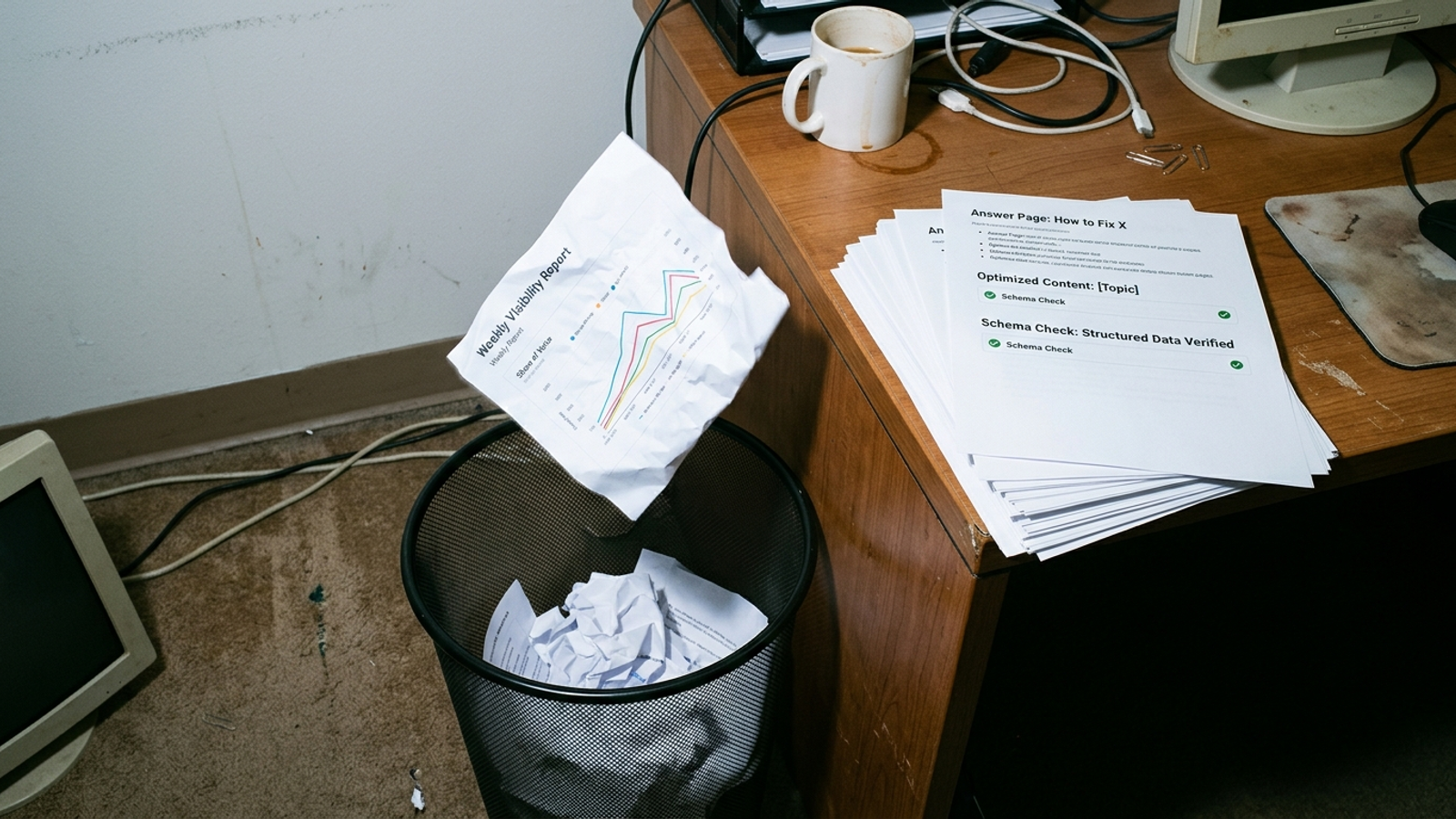
By mid-2027, the white-label vendors agencies keep will be the ones that publish pages, ship schema and entity fixes, build llms.txt infrastructure, and work toward third-party citations. Tracking will come with the work as its receipt. Dashboard resellers will lose their place in the stack.
This is margin pressure from both directions. Wholesale pricing today runs typically $600 to $1,500 a month for a single-brand program and $1,500 to $3,500 for competitive markets, with audits and llms.txt builds priced as projects, then retails at 2 to 3 times that. The spread has a better chance of holding when wholesale buys fulfillment: entity and schema work, extractable content, llms.txt infrastructure, Reddit and editorial citations, and prompt-level testing. Tracking alone wholesales for $300 to $800 and retails for $900 to $2,500. Run 15 clients on that model and you pay for 15 meters while still owing the pages.
Retail expectations point the same way. AEO retainers run $2k to $20k a month, with a $4k to $12k sweet spot for B2B and SaaS. Quotes below about $1,500 a month are often rebranded SEO. A client paying $5,000 expects answer pages to go live, technical blocks to get cleared, and citation work to happen. A vendor that sends only a visibility score leaves the agency holding the labor cost.
What proves me wrong: in December 2027, the largest white-label AEO vendors by client count still sell tracking without publishing rights. Before you sign a wholesale contract, find out who can actually ship the work.
Prediction 5: Flat per-domain fees become the agency default
By December 31, 2027, the standard agency AEO contract will charge a flat fee per client domain, allow unlimited seats, and set a high prompt ceiling. Per-seat billing will read as a red flag.
The mechanism is predictable cost per client. With per-seat and per-prompt meters, adding a strategist or testing more prompts can cut margin even when the work improves. Flat per-brand pricing already does well in agency comparisons against plans such as Scrunch at roughly $500 to custom, Peec at $95 to custom, Profound at $99 to $399, and SE Ranking from $103 as an add-on. Reviewers rank flat and per-brand pricing higher than per-seat or per-prompt compounding because a 20-domain book needs a cost an owner can forecast.
PPC made the warning legible: when fees rose with budgets rather than work, clients questioned the percentage. AEO agencies can avoid that argument by setting one price per domain for a defined scope of tracking, content, technical fixes, and citation work. Flat does not mean unlimited labor. It means the buyer can see what the fee covers without calculating the cost of every prompt and login.
What proves me wrong: in December 2027, the top agency plans still charge per seat as their primary meter. If you are packaging AEO today, make the scope explicit and make the unit of pricing something your client understands.
What could break these predictions
Three things could break the thesis:
- Expensive access: If model providers lock prompt polling behind costly licensed APIs, monitoring may not get close to free.
- Durable reporting demand: If clients keep treating visibility reports as sufficient proof of value, reporting-only retainers could survive renewal.
- A different agency constraint: If headcount matters more than domains to agency buyers, per-seat billing could remain acceptable.
I put low odds on those outcomes. Compute costs keep falling, answers keep changing, and agency owners I know count cost per logo. Still, the dates and thresholds are there so you can check me, not so I can move the goalposts later.

What to buy and package now
Buy an execution layer per domain and sell the work it does. If these predictions are right, the retainer that holds up has three parts:
- A flat per-domain fee that includes tracking, unlimited seats, and a high prompt ceiling.
- A publishing commitment with counts for pages shipped, technical fixes cleared, and citation work completed.
- A renewal conversation about citations and pipeline, not share of voice alone.
Run any vendor through The White-Label AEO Checklist: 22 Checks Before You Sell a Client Retainer before signing, especially its checks on prompt caps, per-domain fees, and who actually publishes. That structure is why groas prices SEO and AI search per client account, with content, technical fixes, and citations included and visibility tracked weekly under your brand. If I am right, you are already packaged for 2027. If I am wrong, you still sold work clients can see.
Sell the work that moves citations, not the chart that shows them. PPC agencies that billed for busywork lost ground to operators who could show what their work did. AEO agencies face the same choice while tracking still carries a price tag. Price per domain, publish every month, and let monitoring ride along. When the chart becomes table stakes, the work is what clients will renew.