

 LinkedIn
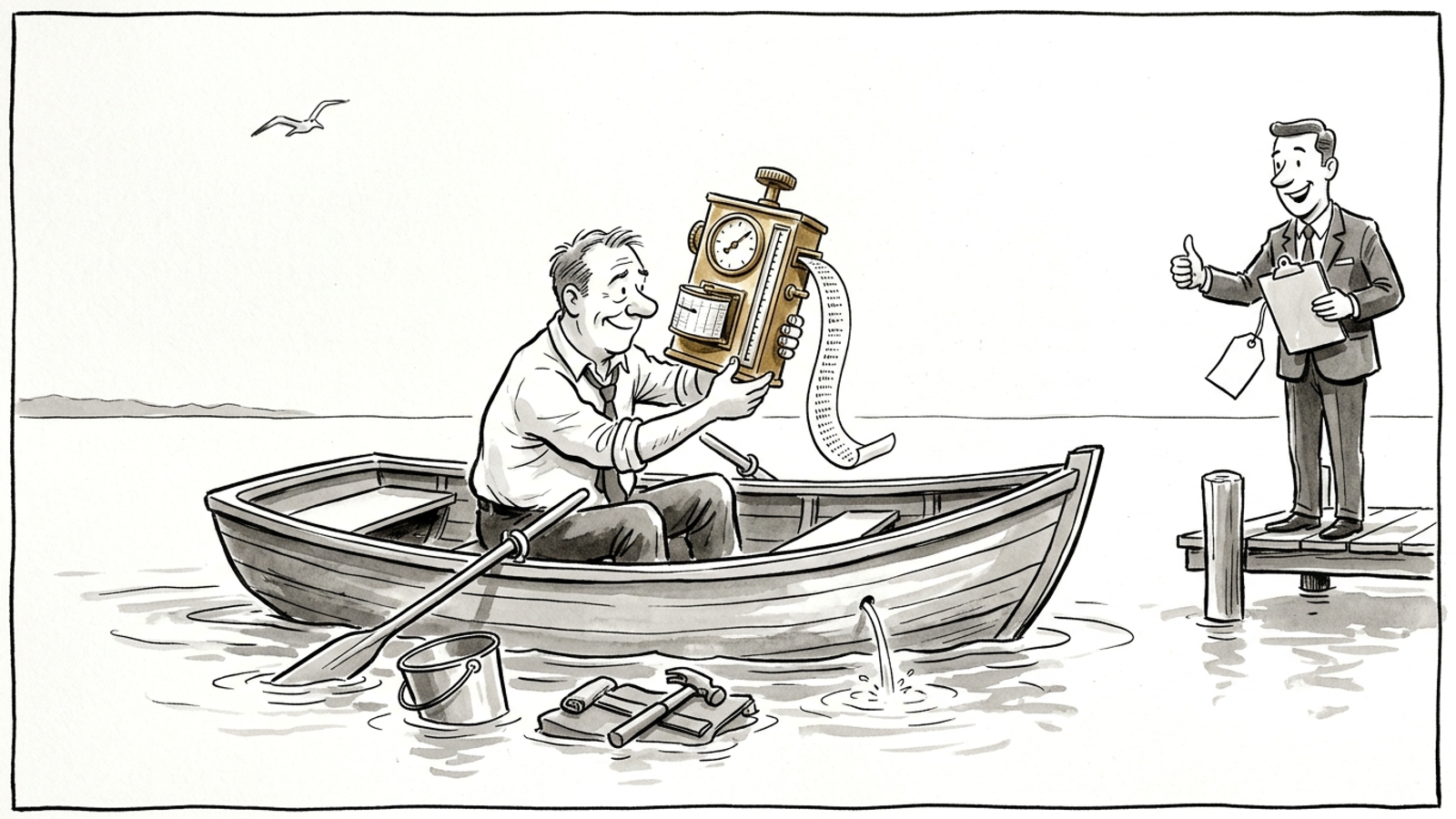
The tracker you bought to get cited in AI answers does not get you cited. It watches. I have sat through enough demos to know the pattern: scheduled prompts, nice charts, zero pages fixed.
My pick is boring by comparison. If you want Google AI Overview citations, start with tools that help keep your pages indexed, linked and readable. If you want ChatGPT and Perplexity citations, build a presence in the places those engines retrieve from. Buy the work that changes the inputs, not the chart that records the outcome.
We asked whether this was a new discipline in Is AEO Just SEO With a New Invoice? My Verdict. This is the second look because the buying question has become more urgent: a whole shelf of AI-visibility software has appeared, and much of it tells you where you stand without changing it. Here are six categories ranked by what they change, not what they report.
How I ranked the tools: inputs before reports
I use three tests. First, does the purchase change something an engine can read—a page, an index entry, a third-party mention—or only describe what happened? Most AI-visibility tools are monitoring-first. They run buyer-like prompts on a schedule and record mentions and citations, but content changes happen after the report. Sona describes that distinction as observation, not action. A report telling you ChatGPT skipped you for the tenth time has not moved you closer to a citation.
Second, which surface does the work help: Google AI Overviews, ChatGPT, Perplexity or more than one? I keep citations, brand mentions and referral traffic separate because Search Engine Land treats them as distinct layers to track. Calling all three “visibility” makes a dashboard tidier. It makes a buying decision worse.
Third, who does the work after you pay? You, a freelancer you hire or the tool itself? If the answer is you, price the software like a to-do list, not like execution. That test pushes some impressive-looking subscriptions to the bottom.
The ranking at a glance
Classic crawl and SEO tools come first because an AI Overview cannot cite a page that is ineligible to appear there. Google Search Central says eligibility does not require special AI markup. Off-site presence comes next because your own site is not the only source an answer engine can use. The tools that only count citations sit at the bottom, no matter how pretty the chart looks.
| Rank | Category | What it changes | Best use | Who does the work |
|---|---|---|---|---|
| 1 | Classic SEO and crawl tools | Indexability, links and content | AI Overviews | You or your SEO |
| 2 | Digital PR, reviews and community presence | Third-party mentions | ChatGPT and Perplexity | You and publishers |
| 3 | Answer-structure and schema helpers | Sometimes, extractable passages | Landing pages and AI Overviews | You |
| 4 | Bot-access and log checkers | Fetchability | Access checks across engines | You, then periodic checks |
| 5 | Citation and share-of-voice trackers | Nothing an engine reads | Reporting | Nobody; fixes remain yours |
| 6 | All-in-one AEO platforms | Depends on what actually ships | One-vendor buyers | Often still you |
1. Classic SEO and crawl tools: the first buy for AI Overviews
This is for a business that wants to be cited in Google AI Overviews. These tools do one thing better than an AEO-branded dashboard: they find reasons a page cannot be used at all. A citation report can tell you the page is missing. A crawl can give you a place to start fixing it.
HubSpot’s 2026 playbook lists the gates I check first: robots.txt must allow Googlebot; no rogue noindex or nosnippet tags; clean canonicals and sitemaps; and the key content present in rendered HTML. A nosnippet tag can make a page ineligible even when it is indexed. None of that is glamorous. All of it matters before you debate the wording of an answer paragraph.
I used to tell clients that a page-one ranking meant they were covered for answer boxes. I was wrong. In an Ahrefs study of 1.9 million citation links, even pages ranking number one landed in the top three cited links only about half the time. Ranking helps; it is not a guarantee. That is a reason to work on eligibility and the page itself, not a reason to ignore rankings.
What rules this category out? Mostly the problem you are trying to solve. Crawl work is slow and unglamorous, and it will not build your Reddit presence. If your site already passes a clean crawl and your money question is ChatGPT rather than Google, move to the next category. Otherwise, fix the page before you pay to watch it be missed.
2. Digital PR, reviews and community presence: the off-site lever
This is for the business whose own site is solid but whose name is missing from ChatGPT and Perplexity answers. Those engines do not assess your homepage in isolation. They can retrieve from sources other people publish, including comparisons and discussions where your feature page is not the only voice.
Off-site sources matter in Google’s answers, too. HubSpot’s 2026 playbook reports AI Overview citations from Reddit at 21%, YouTube at 18.8%, Quora at 14.3% and LinkedIn at 13%, with typical answers drawing on only three to five sources. That does not turn those figures into a ChatGPT recipe. It does show why working only on your own pages leaves a large part of the source landscape untouched.
The useful work is plain: accurate G2 and Capterra profiles; Quora and Reddit threads you are allowed to join and can genuinely answer; partner pages that state your price and limits clearly. This category does one thing your site cannot do alone: it puts your name in independent places an engine may retrieve. If a review site or a useful teardown owns the comparison, another paragraph on your homepage does not replace it.
What rules it out is control. You cannot buy trust by the post. Manufactured praise can backfire, and publishers decide what stays up. If ChatGPT cites everyone except you, examine your off-site footprint before buying another content tool. I put the access-first checklist in How to Get Cited in ChatGPT and Perplexity, because bots that cannot fetch you cannot cite you either.
3. Answer-structure and schema helpers: make a good page quotable
This is for the landing page that has the answer but hides it under six screens of hero copy. These helpers are worth paying for when they improve the passage an engine might extract. An extractable answer still makes sense after it is lifted out of the page: a short answer under a specific H2, a price with its conditions beside it, a comparison in real HTML table rows, or steps in order.
Search Engine Land describes Perplexity’s preference for answer-first, extractable content with source lists and ChatGPT’s preference for clear, structured explanations. That gives this category its advantage over a tracker: a better passage changes the page, not just the report about it. It is useful when the answer exists but the reader, and the engine, has to dig for it.
The deal-breaker is a tool whose advice always reduces to “add FAQ schema” and “write more conversationally.” Google says AI Overviews and AI Mode need no separate markup beyond ordinary eligibility. Schema may help a crawler parse a page. It does not create eligibility by itself, and it will not make ten thin pages worth citing.
Buy this to make one strong page quotable. Skip the monthly fee if your pages already answer the question in the first 100 words. For the fuller distinction between helpers that change retrieval inputs and those that reformat text, see Tools That Help You Get Featured in Google AI Overviews.
4. Bot-access and log checkers: a small job, often free
This is for the site that looks fine in a browser but never gets cited. The failure may be fetchability, not reputation: your server answers Googlebot politely while giving a GPT or Perplexity fetcher a block, a timeout or an empty shell. A log checker can show which bots visited, what they requested and which status codes they received. Its strength is that it turns an access suspicion into a specific check.
The fix is usually a short list, not an ongoing content strategy:
- Check whether robots.txt allows the legitimate fetchers you want to access the site.
- Remove an accidental disallow if one came from a template.
- Confirm the raw HTML contains the answer without requiring JavaScript.
- Check the logs again after a deploy.
What rules this out as a subscription is its size. You do the initial check, fix what fails and revisit the logs when the site changes. Pay for a one-time check or use a free test, not a monthly seat just to admire a passing status. If access is fine and you are still invisible, look at ranking or reputation next.
5. Citation and share-of-voice trackers: buy the scoreboard cheaply
This is for the team that needs a consistent number to report upward. Trackers do one thing well: run the same buyer-like prompts across ChatGPT, Perplexity and AI Overviews, then record whether you were cited, mentioned without a link or absent. Use unbranded prompts. As this visibility-tools comparison notes, asking a model whether it knows your brand inflates the number. In its first-run sample of 40 brands, 12 scored zero and the median was near 15%.
That measurement has a job. It tells you whether the work elsewhere is showing up in the answers you care about. It does not rewrite the page, fix the canonical or earn the Reddit thread. What the deck calls visibility intelligence, I call a scoreboard that never scores. Good reporting is not a substitute for execution.
That is also the reason to rule out an expensive tracker if nobody has time to act on its findings. Vendor-page pricing reported in June 2026 ran from Otterly at $29 a month to Scrunch at $250 a month on an annual plan and Semrush at $99 a month per domain. Buy the cheapest tracker that covers the engines you need. Spend the rest on work that changes the inputs.
6. All-in-one AEO platforms: make the bundle prove it ships
This is for the buyer who wants one vendor and one invoice. The best argument for a bundle is fewer tabs: prompt monitoring, page suggestions and a publishing queue in one place. That convenience is the one thing it can do better than assembling separate tools.
The problem is the handoff. If every suggested edit waits for your team to touch the CMS, and every off-site opportunity waits for you to pursue it, the platform has bundled recommendations rather than execution. On the demo, ask:
- Which change ships without my team touching the CMS?
- Which off-site mention did your last three customers earn because of you, not merely alongside you?
- How do you connect a citation to pipeline when the engine publishes no ranking?
Write down the answers. If they dissolve into prompt counts and health scores, you are buying categories 3, 4 and 5 in a trench coat. A platform earns its fee when work leaves its queue without you.
I left one popular option off the ranking on purpose: bulk AI content generators that promise visibility by volume. More thin pages do not fix fetch failures or missing third-party proof. Volume is not the input I would pay to increase.
Where autonomous execution fits
The gap running through this list is labor. Someone has to make the edits, publish the pages, fix the blocks and keep profiles accurate week after week. That is why I put groas after the six categories rather than pretending it is another citation tracker.
The groas model is for buyers who are done collecting recommendations: specialized models carry out crawl fixes, content changes and citation work continuously, while a named strategist sets direction and guardrails. Actions are logged with their reasoning. You are buying execution rather than another dashboard to interpret or another set of tasks for a junior manager to learn on your budget.
That does not mean everyone needs it. If you have the in-house hours to work this list, buy a cheap tracker and keep the work inside. If you do not, another dashboard adds reading. Buy the engine that ships the fixes.
Before you buy: a 30-minute check
Do this before a demo decides what your problem is. Pick 10 questions a buyer would type before paying you, then make three passes:
- Check which questions trigger a Google AI Overview and whether it cites you.
- Try the same 10 in ChatGPT and Perplexity. Write down which domains appear instead of yours.
- Compare the answers with your organic top 10 for those queries.
If Google cites competitors that outrank you, put your budget toward category 1. If the LLMs cite Reddit, YouTube and review sites where you barely exist, start with category 2. If the answers cite you and buyers still do not convert, your problem may be the offer rather than visibility. Let the gap you find set the spend, not the demo.
The short verdict by business type
- Local and service businesses: Fix crawl and profiles first, then reviews. Google needs to index the location pages, and third parties need to confirm you exist.
- B2B businesses with long sales cycles: Work on off-site proof and one quotable page per use case. A committee looking for a comparison needs the paragraph that answers it, not another homepage slogan.
- Ecommerce and landing-page-heavy advertisers: Test fetchability on templates, then make price, fit and shipping easy to extract. Say you spend $20k a month on paid search: a $29 tracker and two afternoons of fixes are a better buy than a $399 bundle that only watches.
If you skipped to the end, here is the pick. Crawl tools and off-site presence change what can get cited. Structure helpers and access checks fix specific failures. Trackers report the score, and bundles need to prove they do more than bundle reports. Buy work first and the scoreboard last. If nobody on your team will do the work, buy the engine that does it: groas.