

 LinkedIn

If you are the one who spent three years tuning a paid landing page until it converts at 9%, only to see Google’s AI Overviews quote a forum thread instead of your product, I have an uncomfortable answer: the page may be doing exactly what you built it to do. That is also why buying software to polish its AI readiness score is the wrong first move.
Dear owner,
You built a conversion page, not an answer page
I spent the better part of a decade building pages like yours: standalone variants with no navigation, a hard-working headline, a form near the top, a few proof points, and no outbound links. We stripped those pages down on purpose. A paid visitor had clicked an ad; our job was to help that person decide whether to enquire, not send them on a tour of the website.
You can see the tradeoff in the first screen of your own page. It probably says something like “Scale Your Pipeline Faster,” shows three customer logos, and asks for a demo. That can work for a visitor who already knows what they want. It does very little for a system trying to answer a question about your product, its specifications, its price, or how it compares with an alternative.
I am not asking you to regret the page. Keep the page that earns its keep. Just stop expecting one stripped-down asset to serve two different jobs.
AI Overviews need an answer they can find and quote
Google’s AI Overviews do not fill out lead forms. They draw on content Google can find and use to answer a query. In CXL’s analysis of AI Overview citations, 55% of cited passages came from the first 30% of a source page. If the top of your landing page contains a slogan, an image, and “Book a Demo,” the useful answer may not merely be buried. It may not exist on the page at all.
That gap is not something a new button colour will fix. You need to give the answer a place to live.
Your most useful facts may be behind the form
An Otterly.ai analysis of URLs cited across generative search surfaces found that dedicated guide URLs averaged 2.7 citations, compared with 1.5 for transactional and pricing pages. That does not mean your pricing page is worthless. It does mean a page with actual answers gives a search system more to work with than a page built mainly to collect a lead.
If pricing requires a sales call, implementation details sit in a gated PDF, and specifications live in a customer portal, an answer engine cannot quote those facts from your public page. A directory or competitor that publishes them openly has made the easier source. You may dislike that. I would too. But the fix starts with publishing the information you are willing to make public, in text a crawler can reach.
A crawler may not see the page you see
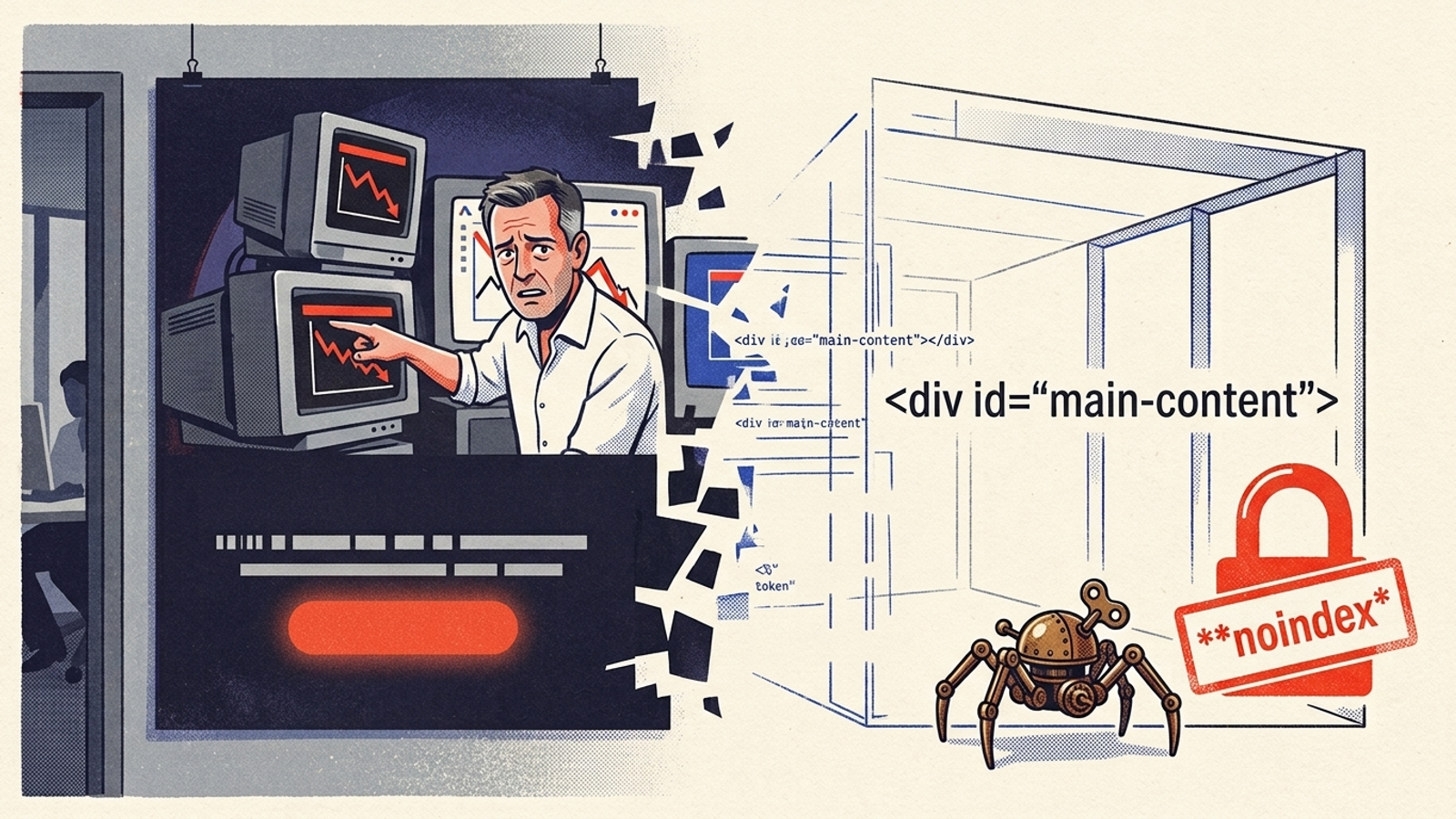
When I built dedicated PPC pages, I often used noindex to keep near-duplicate ad variants out of organic search. Check whether someone made the same choice on yours. Also check for an old Disallow: /lp/ rule in robots.txt. Google’s documentation on generative search ties AI Overview eligibility to its core search systems; a page excluded from Search is not going to become your citation source. Google Search Central’s robots guidance also explains the directives that limit whether content can appear in search results or snippets.
Then inspect the page as a crawler receives it, not just as your browser displays it. Some landing-page builders rely on client-side JavaScript to put their main copy on screen. Google can render JavaScript, but rendering is not a reason to hide your only useful answer in a client-side bundle. Other AI crawlers may not execute it at all. The crawler-request analysis discussed here found no evidence of client-side JavaScript execution by bots such as GPTBot and ClaudeBot. If the initial HTML offers little more than <div id="root"></div>, make the important text available without asking every crawler to assemble the page first.
Check access and visible text before you buy a visibility score.
The software demo can show the gap, not close it
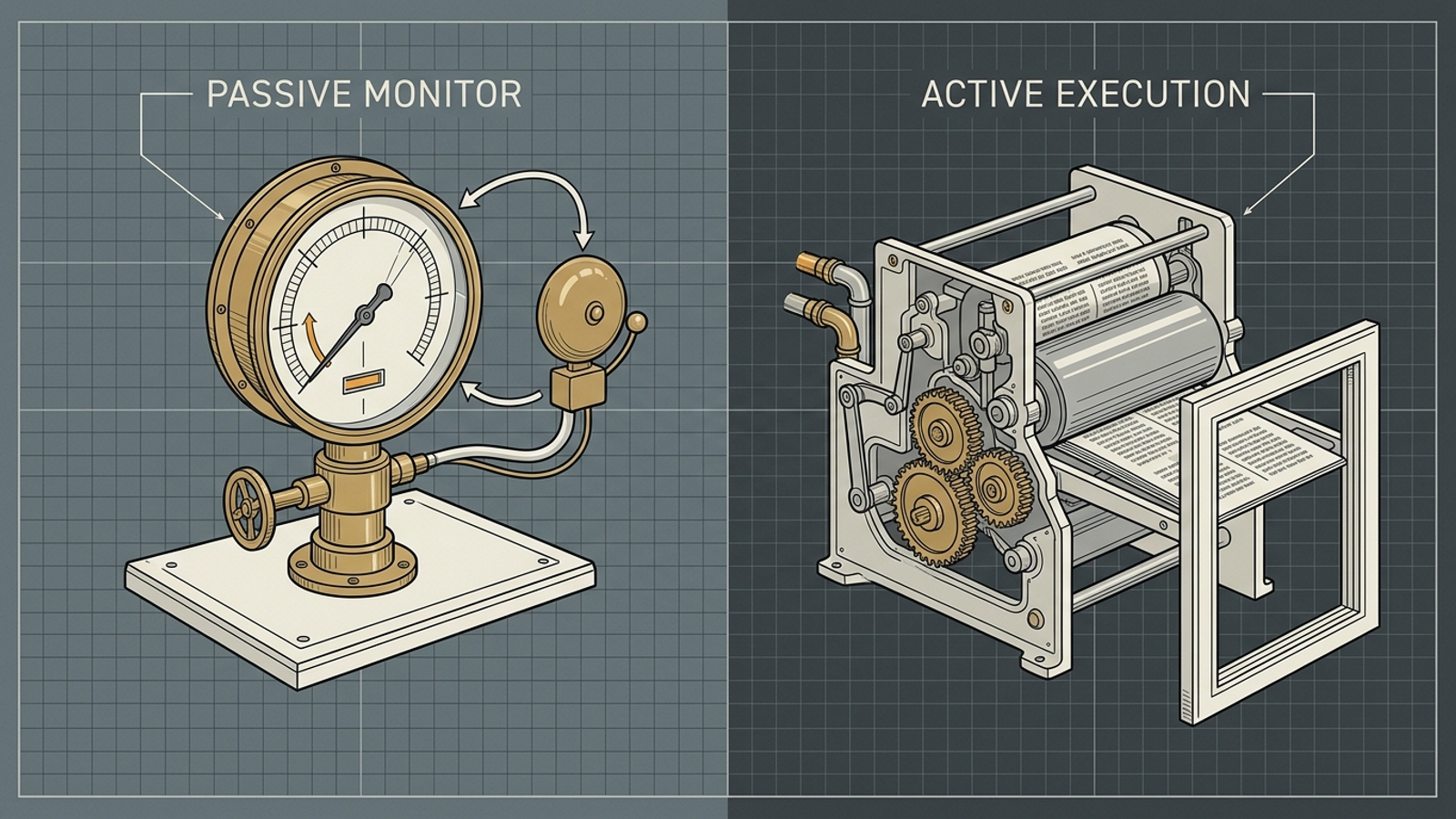
I know the pitch in your inbox: a platform will track generative-search mentions, produce a readiness score, suggest schema, and show you a graph. Some of that can be useful. None of it, by itself, puts an answer on your site or removes a blocking directive. A measurement tool is not an execution plan, however impressive the graph looks on a sales call.
A dashboard records what happened
Many AI visibility tools query services such as ChatGPT, Perplexity, and Gemini, then chart whether your brand appears. The evaluations of AI visibility tools describe that monitoring role; when we ranked tools by what they actually ship, the distinction mattered more than the dashboard design. A tool can tell you that a competitor appeared in an answer. It does not follow that the tool can edit your CMS, change a server response, or publish the missing explanation.
If you need monitoring, buy monitoring with your eyes open. Do not buy it as a substitute for fixing the page.
A better score does not mean a better source
A rep may show you an AI Readiness Score of 42 out of 100 and a list of ways to raise it. Ask what each recommendation changes for a crawler and for a reader. Generic FAQ schema cannot rescue a page with no substantive answer. Adding target terms to a hidden accordion does not remove noindex. A rising proprietary score may describe progress against that vendor’s checklist while your public page stays much the same.
That leaves you paying for a monthly reminder of the work still waiting in your CMS. The work itself is less mysterious than the pitch makes it sound: decide which questions you will answer publicly, publish those answers on an accessible page, and check what your server returns. Start there.
Keep the paid page. Give the answers their own address.
Please do not paste twelve paragraphs of definitions under your lead form because a dashboard says you lack topical depth. I have built those lean pages for a reason, and I would not casually put their conversion job at risk. The paid page and the answer page should have different jobs. Leave your direct-response page focused on the visitor who clicked the ad. Give the person researching a considered purchase a separate, un-gated page that answers the question near the top and provides the relevant detail below it.
That second page should be crawlable, readable in its initial HTML, and connected to the rest of your site. Put the claims you want repeated in plain text, with sources where a claim needs support. Do not make a reader submit a form to learn the basic facts you hope an AI Overview will cite. You can still invite an enquiry once you have answered the question.
There is a commercial reason to care about both paths. Ziptie’s compilation of research on AI Overviews and click share reports lower standard organic click-through rates when Overviews appear, alongside higher organic and paid click share for cited brands than uncited rivals. I would not treat those figures as a promise for your next page. I would treat them as a reason not to let your paid and organic teams make conflicting decisions about what Google can access.
That is the operating problem groas is built to address: paid and organic search managed together, with autonomous execution inside guardrails and a named human strategist responsible for direction and accountability. You still need someone to make the page and technical decisions. A chart of your absence will not make them for you.
Before you sign, check these ten things
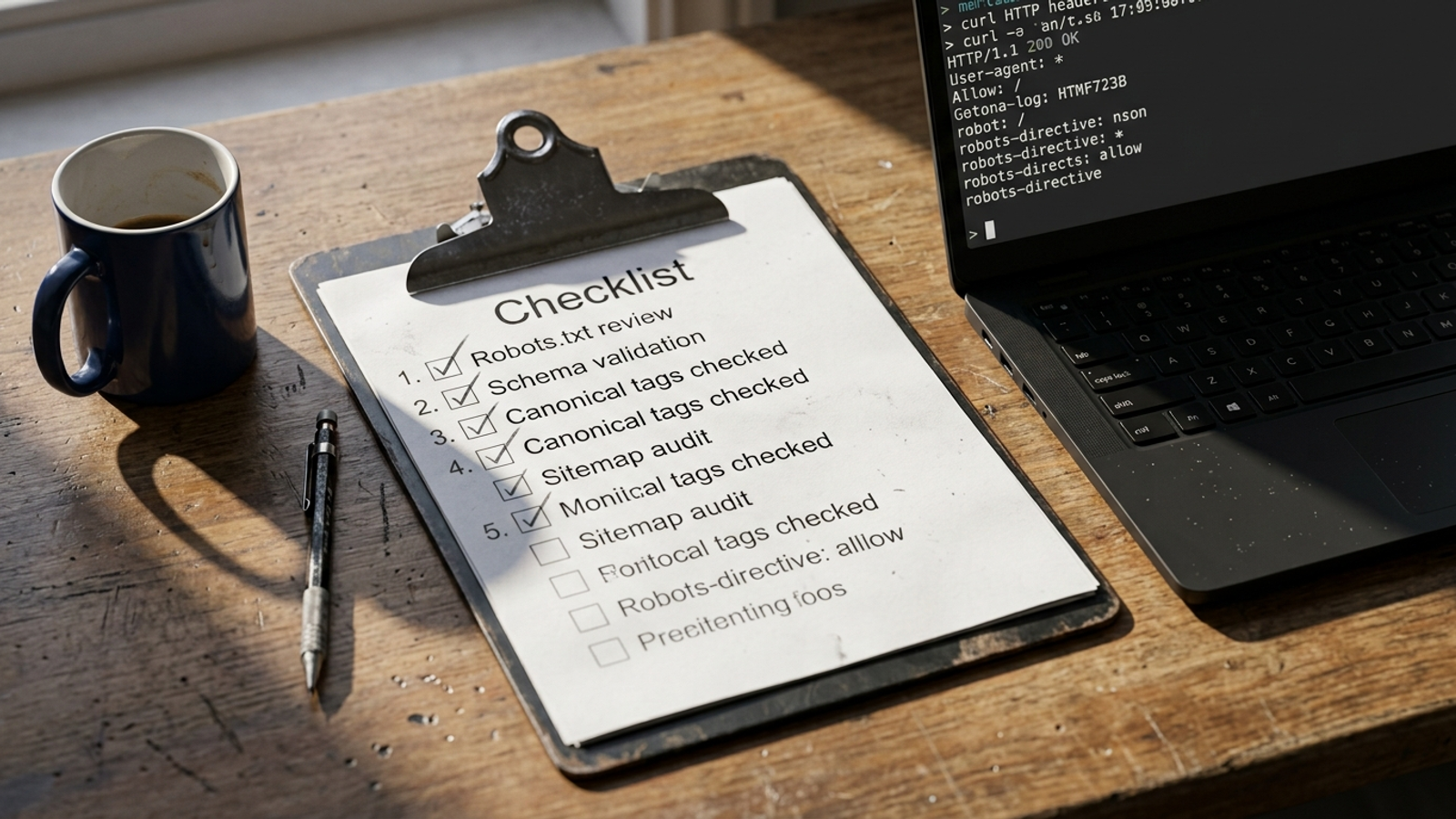
You do not need a synthetic score to start. You need to see what your server sends, what your templates restrict, and whether the page answers a question in public. If you want the longer version, our guide covers technical SEO issues that hurt AI visibility. For now, use this checklist on the answer page you have or plan to build; keep the paid landing page’s separate purpose in mind.
Access and the initial response
- Crawler rules: Check
robots.txtfor blocks affecting the crawlers you intend to allow; our bot-blocking postmortem shows why a toggle deserves a second look. noindexheaders and tags: Inspect the raw response and page source for an unintendedX-Robots-Tag: noindexor meta robots directive.- Canonical target: Confirm that the canonical points to the intended, indexable page rather than a tracking variant or staging URL.
- Internal links: Link to the answer page from your site using a clean URL, without unnecessary session IDs or tracking parameters.
- Initial HTML: Inspect the server response, for example with
curl -s -A "Googlebot" [URL]; make sure the core answer appears without client-side execution.
The answer a reader can actually use
- Answer near the top: Put a direct response beneath the main heading, not below widgets and a lead form.
- Public specifics: Put prices, turnaround times, or technical specifications you choose to disclose in indexable text, not only in a gated download.
- Structured data: Use relevant
Organization,Service, orProductmarkup to describe what is on the page; do not substitute generic FAQ markup for missing copy. - Consistent names: Use the same brand and product names in titles, body copy, and structured data so readers and systems can tell what you mean.
- Snippet restrictions: Check templates for unintended
nosnippetormax-snippet:0directives. This is the easy-to-miss setting that can cost an otherwise useful page its chance to appear in an AI Overview.
This letter may not be for you
If you sell low-consideration goods and your customers go straight from a product listing to checkout, do not redirect engineering time to answer pages just because AI Overviews are fashionable. Protect the shopping campaign and the checkout flow. There needs to be a real question worth answering before you build a page to answer it.
If you sell enterprise software, specialized services, industrial equipment, or another considered purchase, you probably recognise the questions already. Prospective buyers want to understand what they get, how it works, what it costs, and whether it fits. Your paid page can ask for the conversation. Your answer page should help them decide whether to have it.
If you want help coordinating that work with paid search rather than handing it to a monitoring dashboard, groas works across both. But whoever does the work, give them the same brief: leave the converting landing page alone unless there is a reason to change it; publish the answers separately; check access before polishing anything.
Sincerely,
Alexander Perelman