

 LinkedIn

Your brand campaign cruises through August at $0.90 a click. By the second week of September, the same exact keywords cost $1.70, and the budget has not changed. Advertisers started reporting that kind of jump after September 1. The useful question is not whether Google suddenly dislikes your brand. It is which part of the auction changed.
Start with the fact everything else follows from: a brand click has no fixed menu price. What you pay depends on the auction for that search, including the other advertisers eligible to enter it. If costs rise, a settings change, a new bidder or a change in where people click may all be worth investigating. They are not interchangeable explanations, and they do not call for the same fix.
I will use one running example: an advertiser spending $20,000 a month, including $2,400 on brand, whose brand CPC moves from $0.90 to $1.70. We will build the diagnosis one layer at a time. First, who can enter the auction? Then, what else changed on the results page? Finally, what does the account actually show? Speculation is free. Clicks are not.
First principle: your name does not empty the auction
Brand search feels as though it should be cheap. You are the most relevant answer to your own name, and a customer who types it may already know where they want to go. Relevance helps, but it does not guarantee a cheap click. Google determines the price through Ad Rank and the competition in each auction. A rival does not have to win your brand click to make you pay more for it.
I used to call brand campaigns cheap insurance. That description misses the condition attached: they stay cheap while the auctions you need to win stay relatively quiet. If another advertiser starts bidding on your name, the economics change even if your keywords, ads and landing page do not. Brand conquesting can appeal to competitors because brand terms often trade at $3–$8 against $15–$30 for category terms. A rival may tolerate weaker relevance if those auctions still make sense for its budget.
There is another way the auction can change: your campaign starts entering searches it did not previously enter. On September 1, Google began auto-converting Search campaigns using automatically created assets or campaign-level broad match into AI Max settings. AI Max is not a separate campaign type. Its relevant controls cover wider search-term matching, text customization and Final URL expansion. Those controls do different jobs, so do not treat an AI Max label as a diagnosis on its own.
In our $20,000 example, expanded matching could send part of that $2,400 brand budget toward related searches rather than the exact name. A rival bidding on the name could raise pressure on the exact-name auctions. Both could happen at once. The first changes which searches your money enters; the second changes who meets you there. That distinction tells you which report to open next.
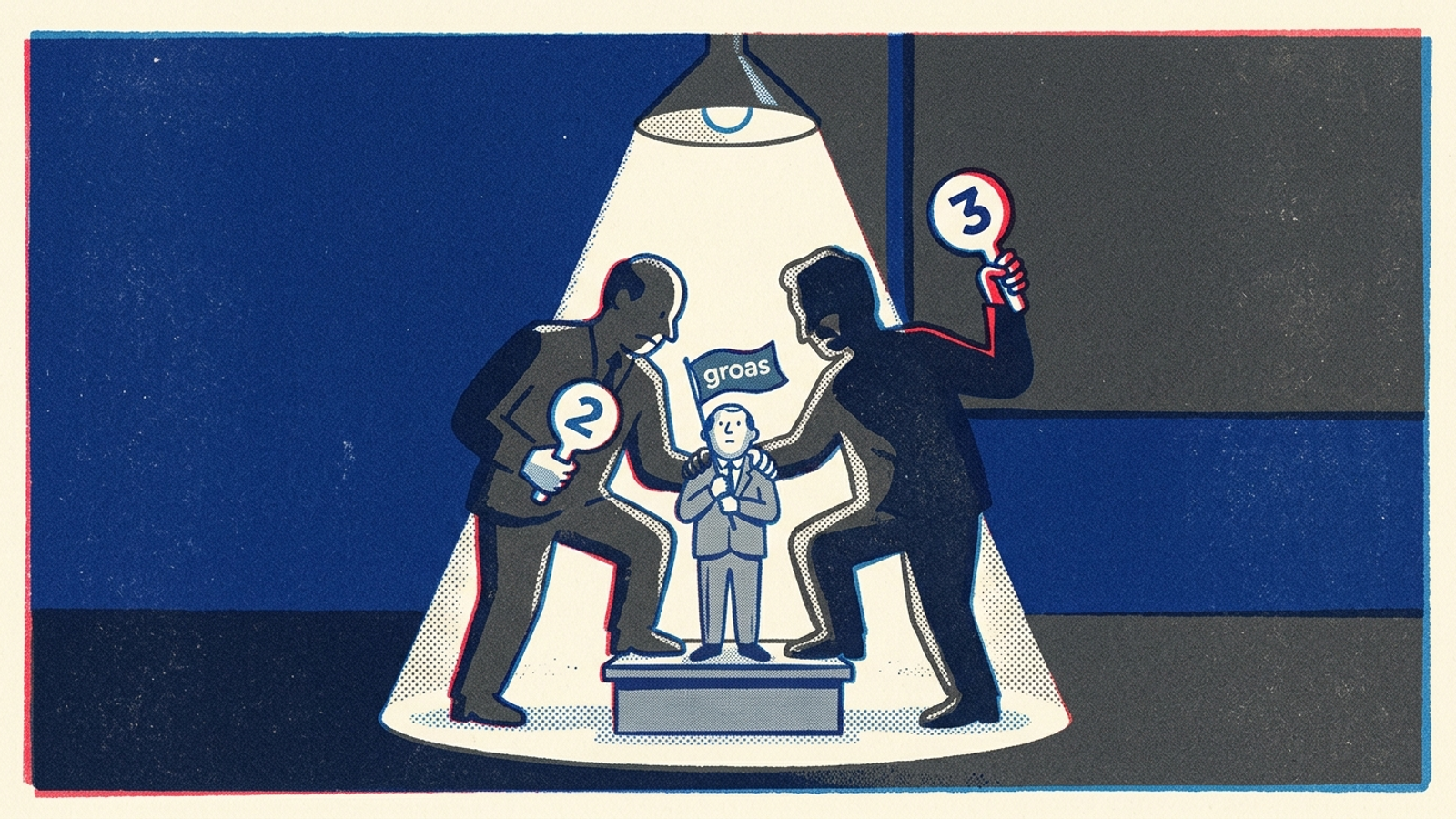
Second layer: an AI Overview changes visibility, not your bid settings
The results page may also look different from the one your August campaign faced. DemandSphere tracked AI Overviews on about 26% of branded queries early in September, 69% on September 26 and 90.48% on September 27, with the share holding above 80% afterward. A separate crawl of 232.8 million US desktop searches found an Overview on 83% of branded searches, appearing in position one in 76.2% of those cases.
That matters because the answer box competes for attention on the same screen as your ad and organic listing. But more AI Overviews do not, by themselves, prove why your CPC rose. They tell you the page people see has changed. They do not tell you whether a competitor entered your auction, whether expanded matching pulled your campaign into different queries, or which clicks account for the new average. Treat layout as context to inspect, not a line item you can read off the invoice.
Broader market data has the same limit. Tinuiti data via EMARKETER shows CPC growth averaged flat from Q3 2025 to Q2 2026, then rose 4% year over year in Q3 2026. Text-ad click growth fell to 4% as the benefit from Amazon’s July 2025 exit from most US Shopping auctions faded. Useful background; not a calculation you can apply to one brand campaign. Multiplying our $2,400 brand spend by that market-wide figure would make a tidy spreadsheet and a bad diagnosis.
So keep the layers separate. The auction explains why competitors and eligibility matter to price. The results page tells you what else may be competing for a searcher’s attention. Your account data has to decide which explanation earns action.
Audit the spike before you touch a bid
Start in Change History. Filter September 1–10 and look for changes you did not make. If search-term matching or text customization switched on, inspect the brand campaign’s AI Max settings directly: matching, text customization and Final URL expansion. A recorded change gives you a lead. It does not prove that every extra cent came from that change.
Check an earlier wrinkle too. From August 17, campaigns limited by budget under Target CPA, Target ROAS or Target CPC hold more firmly to the entered target. If our brand campaign was budget-limited, I would inspect that status before blaming a rival. A campaign can change how it behaves without a new competitor arriving.
Then make the comparison in a fixed order, using the same weekly windows from mid-August through late September. Keep brand separate from non-brand throughout:
- Compare CPC, click volume and impression share. Did the jump sit in brand, or did non-brand move too? A brand-only change points the investigation toward brand-specific queries and competitors. A wider change sends you back to budgets, targets and campaign settings.
- Open Auction Insights for the brand campaign. Compare overlapping domains, overlap rate, outranking share and position-above rate. A new domain alongside falling impression share and rising overlap is stronger evidence of a new bidder than a CPC chart alone.
- Read the search terms, not just the keyword list. Look for close variants, city-and-service phrases or competitor-adjacent queries spending brand money. If they appeared after matching changed, expanded eligibility is a more useful explanation than a theory about the whole market.
- Check the limits of the evidence. Auction Insights requires at least 10% impression share and covers Google Search only. An empty or incomplete view is not proof that nobody is bidding.
This order prevents a familiar mistake: seeing a higher average CPC, raising the brand target, and only later discovering that the campaign started buying searches outside the name. In the running example, the $0.90-to-$1.70 move is the symptom. The search terms and Auction Insights tell you which campaign change, if any, deserves the first fix.
Contain brand spend without hiding the problem
I start with isolation. Brand belongs in its own Search campaign, with exact-match keywords for the name and any close misspellings I choose to buy, a separate budget, and a bidding approach tied to what branded customers are worth. The point is not to pretend an exact-match keyword makes the world perfectly exact. The point is to make unintended spend easier to spot and control.
If the audit finds unwanted expansion, turn off the relevant controls rather than tearing through the whole account. AI Max controls can be managed individually, though managing Final URL expansion depends on text customization being on. Review where the ads can send people as well as which searches can trigger them. Google provides brand inclusions and exclusions, URL controls and text guidelines. Use the controls that match the problem you actually found.
For our $20,000 example, the cleanup is a short, ordered job:
- Keep the brand campaign focused on the name. Add negatives for category or competitor-adjacent searches that the search terms report shows it bought.
- Set brand inclusions for that campaign, then review brand exclusions in non-brand and Performance Max where the goal is new-customer reach. The split helps stop Performance Max from consuming branded search traffic.
- Review text customization and destination controls so brand ads say what you intend and lead to appropriate brand pages.
- Check budget-limited status and the bidding target before changing either. A tCPA is a target for average acquisition cost, not a hard ceiling on each click.
If the report instead shows a rival on the exact-name searches, tidying variants will not make that rival disappear. Keep the brand campaign funded where defending those searches is worth the cost, and work on ad relevance and landing-page match. A trademark complaint is not a substitute for an auction strategy: Google does not block rivals from bidding on your name as a keyword; its restriction on trademark use in ad text is a separate matter.
There is also a point at which defending every click stops making sense. Read the brand-term bidding strategy against what your own account shows. If Auction Insights shows no rival and impression share recovers after you tighten matching, test whether a lower target protects the searches that matter without paying extra for clicks you would have captured anyway. If a rival continues to appear above you, do not call the higher CPC a settings failure. Pay for the defense deliberately, or decide not to; do not pay for accidental expansion on top of it.
Make the audit a routine, not a September project
A clean campaign can get messy again. A rival can start bidding on Tuesday; a new group of variants can begin spending on Thursday. By the monthly review, those $0.90 clicks may have cost $1.70 for weeks. I watch brand and non-brand CPC, impression share, search terms and the top overlapping domain every morning. My working trigger is a brand CPC move above 15% week over week: pull Auction Insights that day, not at month end.

The point of that cadence is not to give someone another dashboard to admire. groas pairs autonomous search execution with human strategic ownership, so the account can be monitored and adjusted continuously rather than waiting for a periodic review. It records bid and budget moves with reasons available in its report of actions taken and why. That makes the decision inspectable: what changed, which search or auction signal prompted it, and whether the brand campaign is still doing the job assigned to it. It also means an unwanted change need not sit unnoticed until next month. That is a better use of automation than asking it to produce a nicer chart of wasted spend.
The practical rule is simple: separate brand, watch the searches it buys, and investigate a price jump before raising a bid. Continuous checks help, but they do not replace the judgment about which clicks are worth defending. That is the part I would rather spend human time on.
Test the model on an October call
Say a home services owner spending $35,000 a month calls in mid-October. Brand exact has moved from $1.10 CPC and 91% impression share in August to $1.85 and 74% in the first two weeks of October. Non-brand CPC sits flat at $8.40. I would not open by promising to get brand back to $1.10. I would ask what changed in the auctions and in the campaign’s eligibility.
Run the layers in order. Change History shows search-term matching switched on September 3. The brand search terms report shows 18% of spend on variants the owner did not buy as keywords: city-plus-service phrases and a competitor comparison. Auction Insights shows a new domain at 34% overlap with a 22% position-above rate. AI Overviews appear above half the brand results the owner checks. Now we have two actionable findings and one piece of layout context. Expanded matching explains why brand money reached unwanted searches. The overlapping domain is evidence of competitive pressure. The Overviews are a reason to keep watching visibility, not proof that they caused the CPC increase.
I would tighten matching first: isolate the name on exact keywords, add the observed city-and-service phrases as negatives, and set brand inclusions to the owner’s name. Then I would review the bidding target against the August branded CPA and the cost of defending against the rival. I would not promise that a target set at August CPA plus 10% brings back a particular CPC; it sets a decision boundary, not an auction price. After two weeks, I would compare search terms, overlap, impression share and CPA again. If overlap drops, I can test a lower target. If the rival persists, I keep funding the brand searches worth defending and improve the ad and page match.
That is the model in a new account: remove the spend you did not intend, then decide what the contested clicks are worth. Brand was not cheap because Google liked the owner. It was cheap while the auctions stayed quiet.