

 LinkedIn
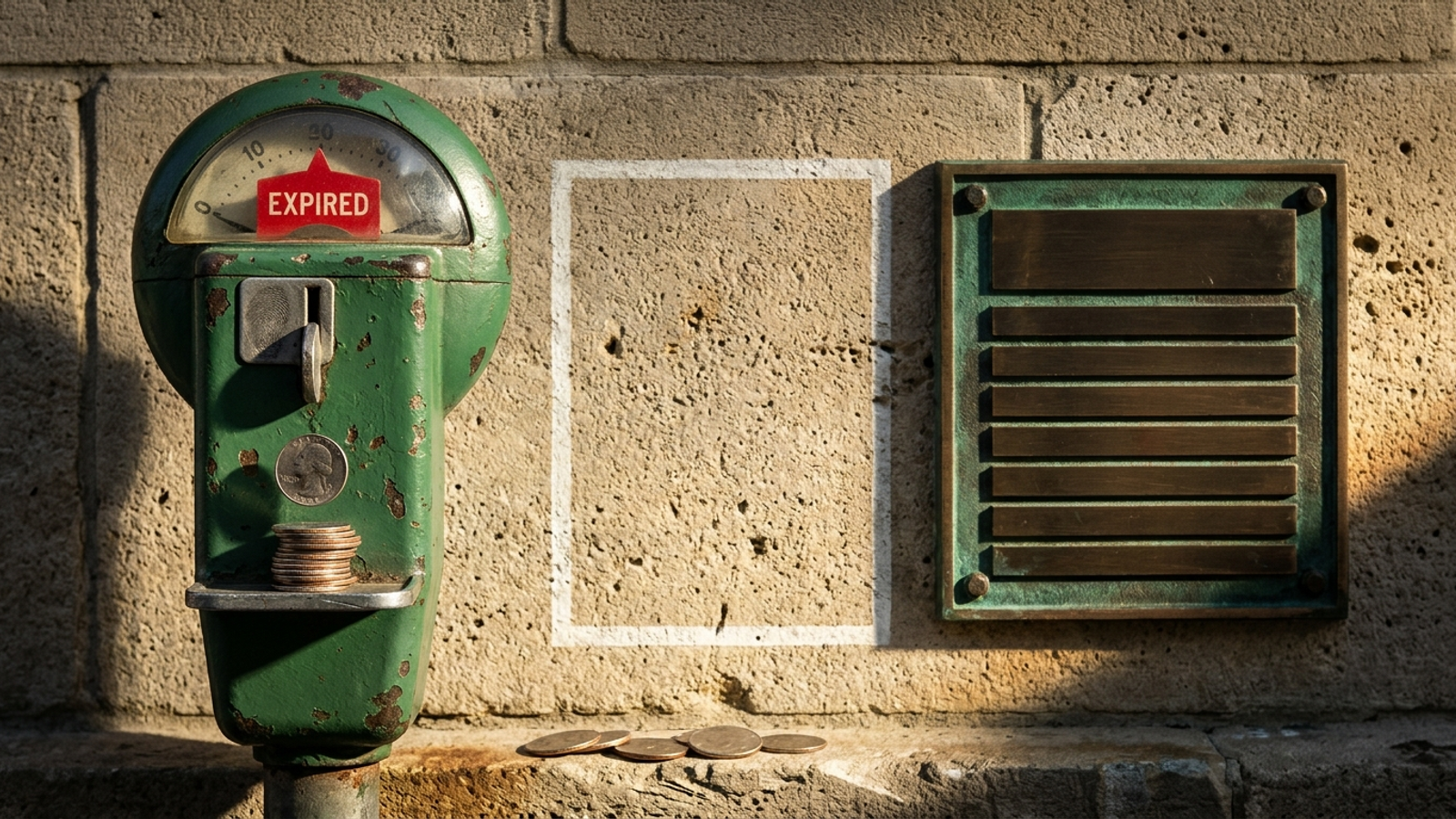
You spend $5k a month on Google Ads. A buyer asks ChatGPT how to pick a vendor in your category, and you have two ways to appear: buy a sponsored slot below the answer or earn a citation inside it. If you already buy Search, the citation is the better second dollar. The ad wins on speed and control. The citation can keep answering the question after you stop spending.
I used to tell clients any new placement was worth testing on principle. I was wrong. These are different products, sold by different systems and measured in different ways. ChatGPT shows ads only to Free and Go-tier users, below the conversation and separate from the organic answer. Google’s ads inside AI answers are limited to a handful of markets, with no breakout reporting and no opt-out. Neither deserves a budget just because a buyer’s question appears on the screen.
Here is my card: paid takes time to first appearance and message control. Earned takes cost per exposure over twelve months, trust, and durability. I will also name the reader who should buy the spot anyway. A comparison that refuses to pick a winner is just a sales deck with more columns.
Contender A: buy the slot below the answer
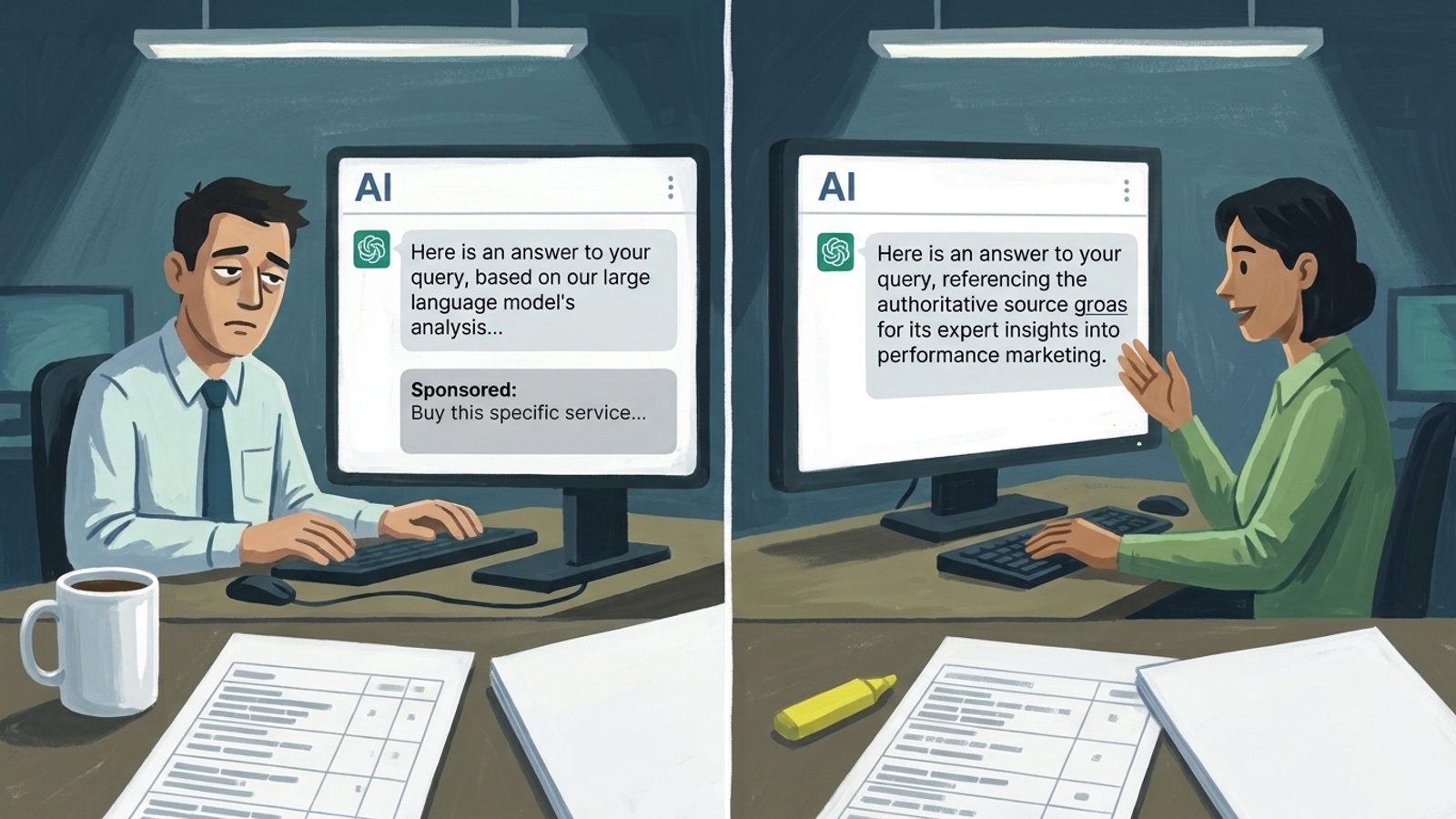
Paid placement inside AI answers sounds like one product. It is two, and neither works exactly like a Google Search ad. In ChatGPT, the ad sits below the conversation, carries a label, and remains separate from the organic answer. Pro, Business, and Enterprise workspaces stay ad-free. Users can dismiss the unit or turn off personalization. If the buyers you most want use an ad-free workspace, this placement does not reach them.
On targeting, forget your usual keyword list. You write one or two sentences describing when the ad should appear; OpenAI matches that description by semantic embedding. The auction is relevance-weighted second price, with CPM and CPC buying plus oCPC for conversions. Reported pricing varies: roughly $25 CPMs in April and, from one practitioner, roughly $10 CPMs at a 0.5% CTR. Launch coverage put premium inventory near $60 per 1,000 impressions, with only high-level impressions and clicks reported. Do not build a tidy forecast out of those numbers.
Google is more fragmented. Ads above and below AI Overviews run in 200-plus markets, ads inside the Overview in 12 English markets, and AI Mode units remain US-only tests. There is no dedicated campaign type or opt-out for the inside-answer placement. If you want to test paid AI inventory, treat $500 to $1,000 as tuition, write down a keep-or-kill CPA before launch, and expect an imperfect receipt.
Contender B: earn the line inside the answer
Earned citations run on retrieval, not bidding. Each engine draws from a different pool, so a page can appear in Perplexity and be ignored in ChatGPT. ChatGPT aligns about 87% with Bing top results and gives Wikipedia 47.9% of top-10 citations; Perplexity gives Reddit 46.7% and YouTube 13.9%. Across engines, only 12% of AI citations overlap Google’s top 10. Ranking well is not the same as getting named. For the longer version, read how ChatGPT and Perplexity choose sources.
The mechanism matters more than another publishing calendar. The engine has to fetch your page, split it into retrievable chunks, extract a clean factual statement, and decide the source is safe to repeat. A blocked fetch, JavaScript-walled content, or a 1,200-word service page without one quotable answer can stop you before the buyer ever sees a citation. Fix those gates and one tight answer page can serve many phrasings of the same buyer question. Check whether bots can read what you already have before you write another page.
Earning that line takes work. You need an answer page that states the fact cleanly, the technical fixes that let bots fetch and parse it, and off-site mentions that help establish your domain as a source worth repeating. For a business spending $5k a month on ads, my rough working estimate is four to eight hours to ship the page, another few hours on crawl and schema issues, then the slower work of getting named on pages the engines already trust. Reddit threads, comparison posts, and publisher lists matter because the engines cite them. Expect three to six weeks before judging whether a page has settled into answers. For a closer look at the labor, see what one AI citation costs.
Five rounds: where the $5k advertiser gets more
Say you have that $5k monthly Search budget and one spare week of effort. The ad gets you into a paid slot quickly; the page gives you a chance to earn the sentence itself. This is the scorecard, not a promise that either surface will show you for every question.
| Axis | Buy the spot | Earn the citation |
|---|---|---|
| Speed to first appearance | Days once approved and funded | Roughly 3 to 6 weeks before a page settles into answers |
| Message control | You write the ad copy and choose the landing page and budget cap | You supply the facts; the engine writes the sentence |
| Cost per exposure over time | Media cost continues with delivery | Upfront and ongoing work; repeat citations have no media charge |
| Trust | Sponsored label outside the answer | Source named inside the answer |
| Durability after spend stops | Paid impressions stop | A citation can remain until the answer changes |
Round 1: speed goes to the paid slot
Paid wins when this week matters. Fund the placement, pass review, write the context description, and you can appear without waiting for an engine to discover and trust a new page. That is useful when you are launching something new. I would not ask an answer page to do a job that depends on appearing in days.
The earned route has gates you cannot buy your way past with a media budget: fetch, chunk, extract, trust. My three-to-six-week expectation is a planning window, not a launch date you control. If the deadline is immediate, buy speed with a capped test rather than pretending an unfinished page is already working.
Round 2: message control goes to the ad
With paid placement, you choose the copy, the landing page, and the cap. The buyer may dismiss the ad, but the message they see is yours. With a citation, you can make the underlying statement clear and quotable; you cannot write the engine’s sentence or guarantee it will cite you for a given prompt. That loss of control is real. It is also part of why the two appearances read differently: one is your pitch, and the other is a source the answer chose to name.
Control has a reach limit, though. ChatGPT’s ad-free tiers are outside that paid audience. On Google, alcohol, gambling, finance, healthcare, and politics are excluded from inside-Overview ads. Earned has its own exclusion: if an engine cannot fetch, parse, or trust your page, your perfect phrasing never enters the answer. Check the surface and its gates before you polish either message.
Round 3: the year-long cost favors the citation
Paid has the easier first appearance to purchase and the harder one to keep. Every new impression needs funded delivery. The answer page asks for labor upfront, plus maintenance and off-site work, but repeating a citation does not incur another CPM. That is the case for judging the asset over twelve months rather than comparing a week’s page work with a week’s ad bill. The first citation is expensive. A repeat citation of the same page is close to free in media terms.
Neither route hands you Search-style attribution. ChatGPT reports high-level impressions and clicks; OpenAI says it will keep chats private and not sell user data. Google counts ads inside Overviews as Top Ads without a separate AI-surface segment. A click report cannot cleanly tell you what the AI answer did versus a classic slot. I judge a paid test against genuine enquiries and closed-won revenue in the CRM, using self-reported source and landing path alongside the platform report. CTR is not a customer.
Earned measurement is less tidy because the buyer may read your name and type your URL directly. I would check a fixed set of 20 to 30 buyer prompts weekly for citation presence, watch referral sessions from ChatGPT and Perplexity, and look for branded-search lift while a citation holds. Then compare cited-answer weeks with assisted pipeline, not just last-click conversions. Use the same business outcome for both contenders, even when their receipts differ.
Round 4: trust goes to the named source
Nobody needs a seminar to tell the units apart. One carries a sponsored label below the answer. The other appears as a source inside the answer the buyer came to read. A Raptive survey of 3,083 US consumers found trust at 42% when an AI answer had no source and 75.4% when it cited a known creator or expert, rising to 77.2% for a trusted publisher. That compares sources, not a specific ad with a specific citation, but it explains why being named can matter beyond the click.
Perplexity eliminated its ad units over trust concerns. That also removes it from the paid test plan while leaving it relevant to citation tracking. Do not mistake a citation for an endorsement you control. Do recognize the difference between appearing next to an answer and helping supply it. Paid gets the message on screen; earned puts your name in the answer.
Round 5: durability goes to the citation
Pause the paid budget and the paid impressions stop. A useful cited page can continue appearing for months without a media charge, until an engine changes its answer or chooses another source. That is not permanence. You still have to watch the page, the mentions around it, and the prompts buyers actually ask. But it is an asset with a life beyond this month’s cap, not a slot rented one impression at a time.
This is where the first two rounds stop deciding the match. Speed and copy control are worth buying when you need them. For a company already paying to capture Search intent, they are less compelling as the next place to put effort than an answer page that may keep working after the test budget ends. Paid wins the week; earned has the better shot at earning the year.
The verdict: earn first, with two reasons to buy anyway
If you spend around $5k a month on Google Ads and have one spare effort to give, earn the citation first. Keep your Search budget where you already buy intent. Put the next week’s work into a fetchable, quotable answer page and the mentions that help it get cited. Paid AI reach is narrower, its reporting is thin, and it stops delivering when you stop funding it. The citation takes longer and gives up message control, but it is the better second dollar because it can keep answering without another media payment.
Buy the spot anyway if you are launching something new and need visibility this week rather than in six weeks. It also deserves a capped test if you already own Search impression share in your category and another Search dollar buys little. Write down the kill CPA first. If Google blocks inside-answer ads for your vertical, skip that paid test; spending cannot open a restricted slot. None of those cases changes my call for the $5k advertiser with only one spare week.
The one-line takeaway
Rent the slot when you need to be seen this week. Earn the sentence when you want a chance to be named next quarter. For a business already spending $5k on Search, the citation is the better second dollar because it can keep answering after the budget stops.
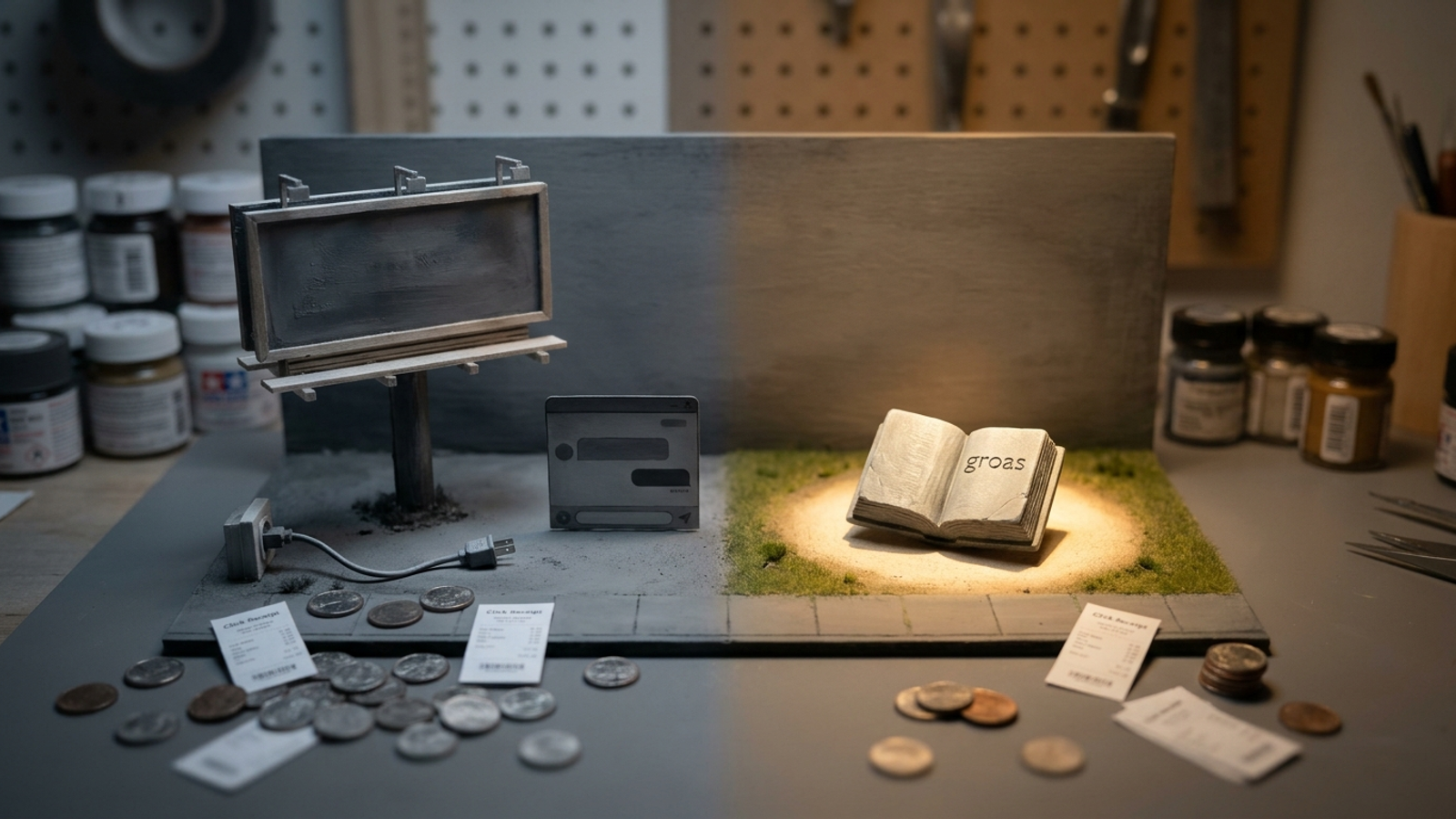
I run both sides of this for clients inside groas now. Paid ChatGPT tests are useful tuition when the kill number is written down; cited answer pages are assets that can stack. If you have bandwidth for only one, ship the page first. The ad slot will still be there when you need speed. The citation takes time to earn, which is exactly why your competitor may not have earned it yet.