

 LinkedIn

A founder sent me a 12-page proposal last month to manage Google Ads and Bing Ads. Google got campaign plans, budget tables and timelines. Bing got one scope line: “Campaign setup across Google and Microsoft.” I chose that artefact because a business can sign it believing it has hired someone to manage two platforms, while the document only describes the work for one.
What follows is a composite built from that proposal and the structures agencies commonly use, not a verbatim reproduction of anyone’s document. I’ll read its lines in the order a buyer encounters them. My test is simple: does Microsoft Ads have its own work, budget and measurement, or is it an import with a fee attached?
The cover sells two platforms; the plan describes one
A combined proposal usually opens with a cover, executive summary, light audit and goals before moving into strategy, scope, a 30/60/90 timeline, investment options, case studies and terms. That 11-section structure is a familiar PPC proposal template. It gives the seller plenty of places to describe Microsoft-specific work. It also gives a buyer plenty of pages to get through before noticing that the work is missing.
In this composite, Google fills the strategy: keyword themes, a campaign map, budget splits, ad copy themes and landing page notes. Microsoft appears by name in the title, in the setup line and in a footnote promising that budgets will be optimized across channels based on performance. There is no separate Microsoft keyword plan, budget number or hour count.
Verdict on the opening pages: two channels are promised, but only one has a plan. That does not prove nobody will work on Bing. It means the buyer has no written basis for expecting that work. The remaining pages need to supply one.
“Campaign setup across Google and Microsoft”: one line, two very different jobs
The scope describes setup across both platforms as though it were two builds. It could instead mean using Google Import inside Microsoft Ads and leaving the resulting copy largely alone. About 72% of advertisers use Google Import. The import itself is not the problem. I’ve inherited the problem: the same keywords, bids and ad copy running in a different auction without anyone checking what changed.
A managed setup should name what happens after import: a Microsoft bid review, Audience Network separated from search, UET verification, and a review of negatives and match types. The proposal names none of them. Its setup line may cover a careful rebuild, but a client should not have to guess.
Verdict: fail. Ask which Microsoft-specific setup tasks are included and who signs them off before spend begins. “Across both platforms” is a location, not a scope of work.
“Unified budget”: flexibility without an opening number
Next comes one monthly spend total and a promise to move money toward whatever performs. That sounds sensible. But a manager needs a starting allocation before performance data can justify moving anything. Microsoft gets about 15% of Google’s US traffic; one practitioner guide suggests starting its budget at around 25% of the equivalent Google budget. That is a starting point to evaluate, not a number to paste into every account.
The proposal gives Microsoft no opening dollar amount and no review date. With a pooled figure, Google can absorb the available spend before Bing gets a useful test. Imported bids can also spend Microsoft’s share without anyone having agreed what that share should be. Either way, “we’ll optimize it later” avoids the decision the proposal is supposed to make now.
Verdict: fail until the document names Bing’s opening budget and the week that allocation gets reviewed. If a budget can move, say where it starts.
“Weekly optimisation”: the work disappears inside a bundle
The scope groups bid checks, search-term review, ad testing and reporting under weekly optimisation. The pricing follows a hybrid model of a $500–$3,000 base plus 10–20% of spend. The document never says which of those weekly tasks take place inside Microsoft Ads, or how much time is assigned to them.
Compare that level of detail with MassConvert’s combined scope, which names daily search-query mining and bid checks plus weekly audience and placement refinement across Google and Microsoft. That still leaves a buyer to ask how the work is divided, but at least the work has names. In the composite, “weekly optimisation” could mean four Microsoft tasks or none. The fee is specific; the labour is not.
Verdict: fail. Request a Microsoft-only weekly task list and its hours. If the answer is another sentence about managing both channels holistically, you still do not have the scope.
“Search term review”: the imported list needs its own inspection
The next promise is monthly search-term review across both platforms. Again, the wording hides the platform difference. Since the 2021 broad match modifier change, Microsoft phrase match behaves much like Google broad match. An imported keyword list can therefore pull different queries from the ones the Google team expects. A shared process does not make those queries identical.
I used to tell clients that an import plus negatives could hold for a month. I was wrong. The query report can make that assumption look foolish within days. Here, the proposal offers a monthly review but no Microsoft-specific check early enough to catch the mismatch, and no separate negative list to act on it.
Verdict: fail unless Microsoft search terms get their own reviews in weeks one and two. The work is not “review search terms.” It is review these search terms, then add these negatives before another month of spend goes through.
“Bid strategy alignment”: copied targets are not a strategy
By the time the buyer reaches bidding, the proposal promises to keep strategies aligned across platforms. That might mean sensible coordination. It also leaves room to copy a Google tCPA or tROAS target into Microsoft without a separate decision. The document does not say which.
The distinction matters because Microsoft’s average CPC runs about 33% lower than Google’s, while a new Microsoft build may have much less conversion volume to guide automated bidding. The cited import guide describes a 15-conversions-in-30-days threshold for activating auto-bidding. Copying the Google target skips both questions: what should an opening Microsoft bid be, and when is there enough Microsoft conversion data to change strategy?
The proposal answers neither. I would expect it to name an initial manual or ECPC approach with adjusted bids, then state the conversion count that triggers an automated-bidding review. That creates a decision a manager can be held to, rather than a vague promise to stay “aligned.”
Verdict: fail. Google’s bid target is not evidence that the same target belongs in Microsoft Ads.
The report: a blended CPA can bury Bing’s result
The reporting page promises one monthly view of spend, clicks, conversions and CPA across channels. A combined total can be useful, but it cannot replace a platform breakdown. If Bing accounts for 10% of spend and 2% of conversions, Google can keep the blended CPA looking respectable while Bing performs poorly. The buyer needs to see the parts before trusting the whole.
There is also a setup issue the report cannot fix later. Google Tag and Microsoft UET are separate scripts; importing campaigns does not bring conversion tracking across. I have opened Microsoft accounts that spent for months while UET was missing or firing on every page load. In one case the platform misses conversions; in the other it counts events that do not represent them. A tidy chart does not rescue either account.
The proposal should put UET installation, manually configured goals and verification in setup, then show Microsoft on its own reporting lines: spend, CPA and lead quality. Otherwise, the buyer cannot tell whether Bing is earning its allocation or whether its numbers are even measuring the intended action.
Verdict: fail. A blended total is the last number to read, not the only one.
The investment page: a rising fee for an undefined job
The final commercial pages offer two spend-based tiers, a setup fee and a 12-month term with a 90-day out. Percentage-of-spend pricing is not unusual. Here, though, it makes the missing Microsoft scope harder to accept: the management fee can rise when Google spend rises, even if the document still names no additional Bing work.
The alternative I run now is a flat $1,499 monthly Search Ads fee covering Google, Bing and ChatGPT, with no setup fee and month-to-month cancellation. The point is not that every buyer must choose my pricing model. It is that a buyer should know what work a fee buys and how quickly they can leave if that work does not happen. This proposal asks for a longer commitment before it has defined the second channel’s job.
Verdict: fail. Do not treat a fee line as proof of management. Get the Microsoft scope in writing before agreeing to the term.
What I would keep from the proposal
Not every page deserves the red pen. I would keep the 30/60/90 timeline because Bing needs a gated rollout rather than a launch-and-forget import. I would keep the audit if it admits what the agency does not yet know about Microsoft volume. I would also keep any fee language that clearly ties payment to work done rather than simply to spend managed.
Those parts give the manager room to test, learn and be accountable. They do not fill the gaps by themselves. A timeline with no Bing tasks is just three dates. Before signing, I would put the missing work into the scope, not rely on a reassuring conversation about what the team “normally” does.
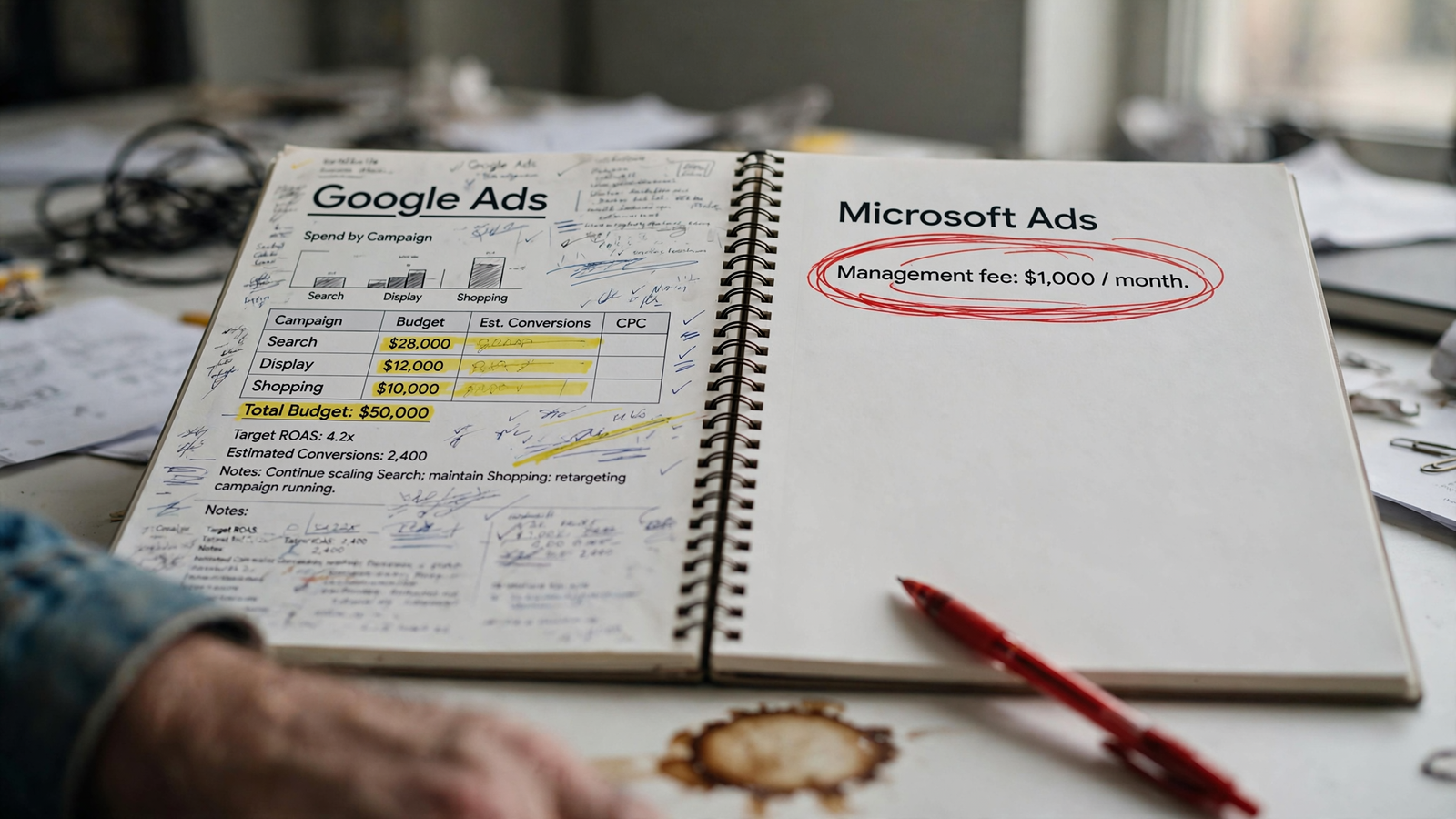
The scope I would put beside that blank page
A managed Microsoft build starts where Google Import stops. It installs UET separately from Google Tag and configures the goals by hand. It reviews opening bids rather than copying Google’s, including whether a 15–30% reduction fits the account given the lower average Microsoft CPC. It checks match types and negatives, then keeps Audience Network activity apart from search so placement performance does not disappear into a combined view.
For a relevant B2B account, I would also want to see the Microsoft-specific LinkedIn Industry, Company and Job Function bid adjustments considered. Start with Bid Only if the aim is to observe how those segments perform before restricting delivery. That is a decision to test, not a setting to apply blindly to every advertiser.
Finally, the first 30 days need a judgment about incremental volume and CRM quality, not raw lead count alone. That is where a mirror-of-Google build can waste money. I have written more about that failure in the Google Import problem. My verdict on this replacement scope: name the work and the decision points, or stop calling the import management.

Nine lines to get in writing before you sign
The teardown leaves one useful reply to send back. Ask for these nine lines in the proposal itself. A verbal assurance will not tell the next person assigned to the account what they are supposed to do.
- Opening Microsoft budget in dollars, plus the week it gets reviewed.
- Post-import work named: bids reviewed, match types checked and negatives reviewed.
- Starting Microsoft bid strategy, plus the conversion count that triggers an automated-bidding review.
- Weekly Microsoft-only tasks and hours: query mining, bid checks and placement review. One shared Google-and-Bing bullet is not enough.
- Microsoft search-term reviews in weeks one and two, with a separate negative list.
- Audience Network separated from search: do not bury placement performance in a combined view.
- LinkedIn Company, Industry and Job Function bid adjustments considered where relevant, with Bid Only or Target and Bid specified.
- A separate Bing report: spend, CPA and lead quality, not only a blended total.
- UET installed and goals configured and verified before spend starts. This is the easiest line to overlook and the costliest to discover later: without reliable conversion data, neither the report nor a conversion-led bid decision can tell you what the spend achieved.
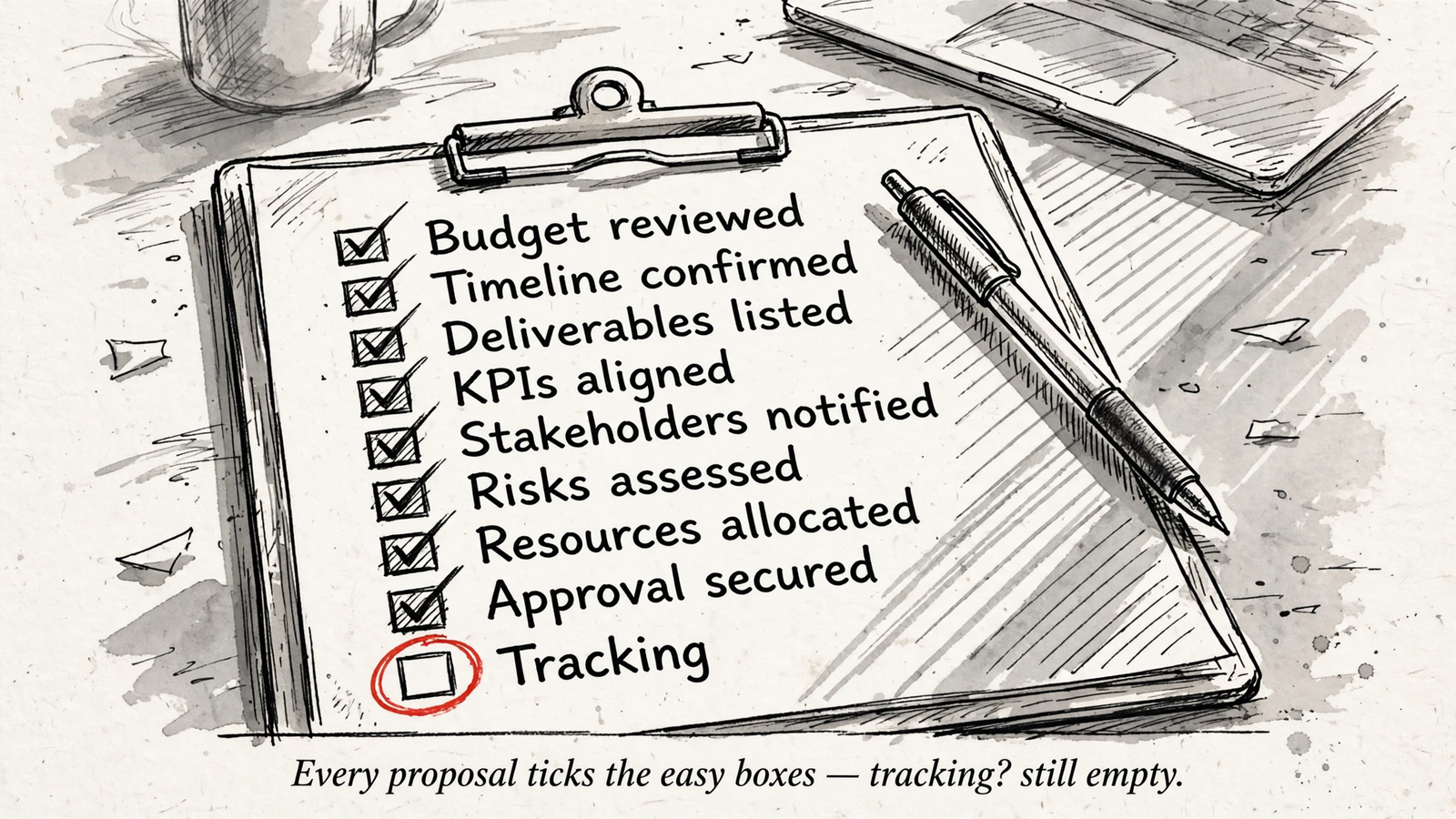
Overall verdict: the combined proposal fails its own two-channel promise. It prices two platforms but defines one build, one pooled budget, an ambiguous bid strategy and one blended report. I would keep the audit and the 30/60/90 gating. I would not sign until the nine missing lines appeared in the scope.
That is why I run Search Ads differently now at groas: Google, Bing and ChatGPT under one $1,499 flat monthly fee, with bids, keywords and budgets worked around the clock and UET verified during setup, not sold as an extra. If Bing occupies one line in a proposal, make the seller scope the hours. Otherwise, ask them to admit there are none.