

 LinkedIn
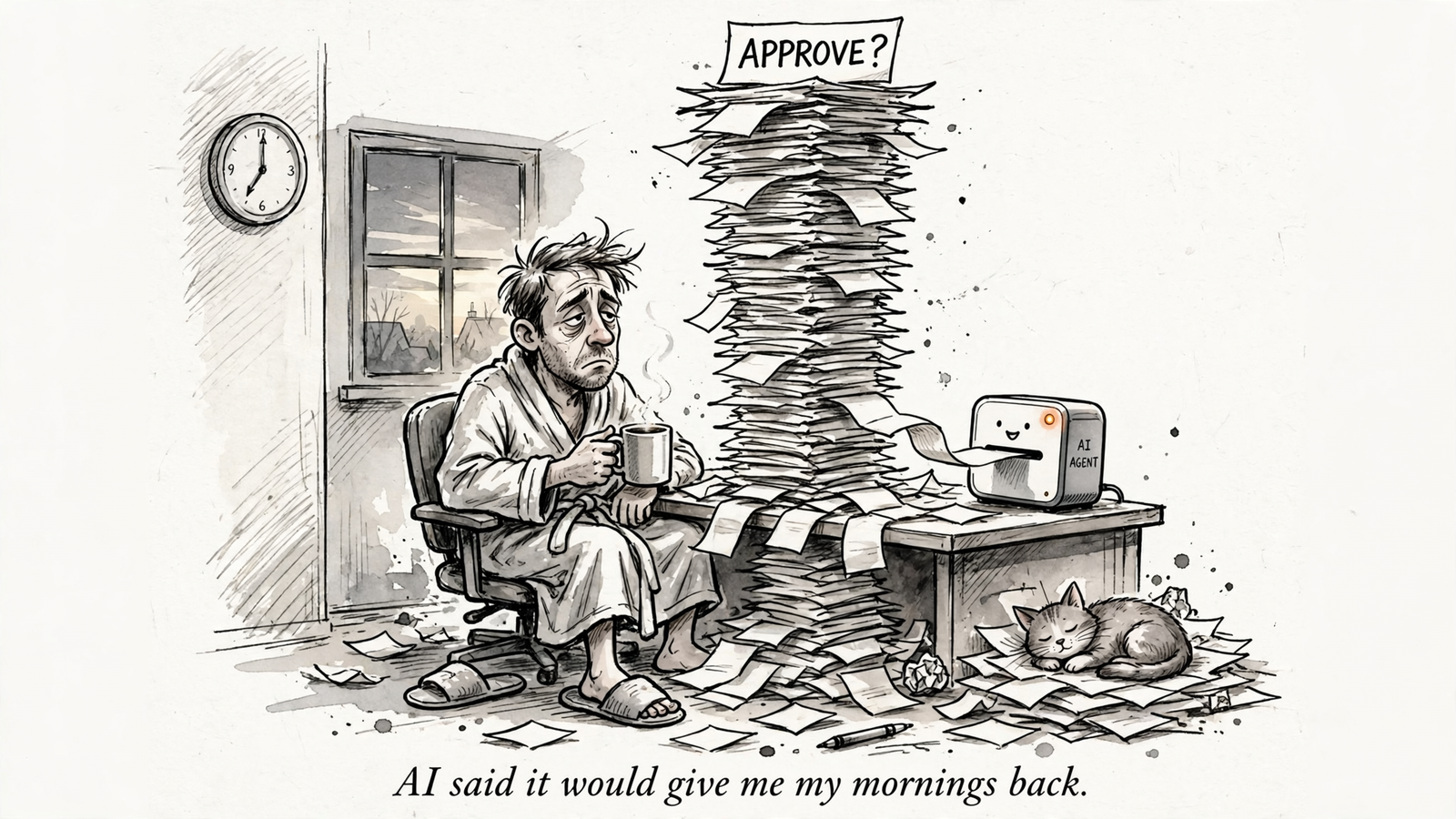
Most lists of AI agents for Google Ads put four different hires under one job title. A tool that gives you homework is not doing the same job as an engine that changes the account while you sleep.
My pick is groas for the advertiser who wants copy written, bids set, and budget moved without approving tickets every morning. Its autonomous engine makes the changes, and a named human strategist answers for the direction. If what you really want is scheduled time to argue through an offer with another person, hire an agency. Those are different purchases, and this ranking treats them that way.
The hiring test: four jobs, not one AI label
I used to tell clients that automation would give them their mornings back. I was wrong about how. A smarter dashboard does not free your morning if it fills that morning with things to approve. The change has to happen without you making it.
Say you spend $20k a month on Google Ads. Before you hire anything called an AI agent, ask four questions:
- Copy: Does it write and test ads that go live, or leave drafts in a sidebar?
- Bids: Does it choose and revise bid targets, or inherit the settings you picked?
- Budget: Does it move spend between campaigns when the evidence changes, or wait for your click?
- Accountability: Who explains the decision when CPA spikes on a Tuesday?
That last question is not decoration. A change log can tell you what moved; a person who owns the account can tell you why it moved and whether the direction still makes sense. I want both. What the deck calls “autonomous,” I often call a recommendation with better branding.
The tiers below rank how completely each option takes those four jobs off your desk. A lower-ranked option can still be useful. It just should not be sold to you as the same hire.
1. Autonomous engines: for the owner who wants out of the account
Best fit: you want the work done, with a named person responsible for direction. An autonomous engine is the closest match to the four-part job description. It writes ads, adjusts bids, shifts budget, and records what changed. groas sits at the top of this tier: one flat $1,499 a month per service, regardless of spend, with bids, keywords, budgets, and ads worked 24/7 and a landing page built for every ad group. You also get a dedicated strategist with 10+ years managing accounts like yours, private Slack, and a weekly report covering actions and reasons.
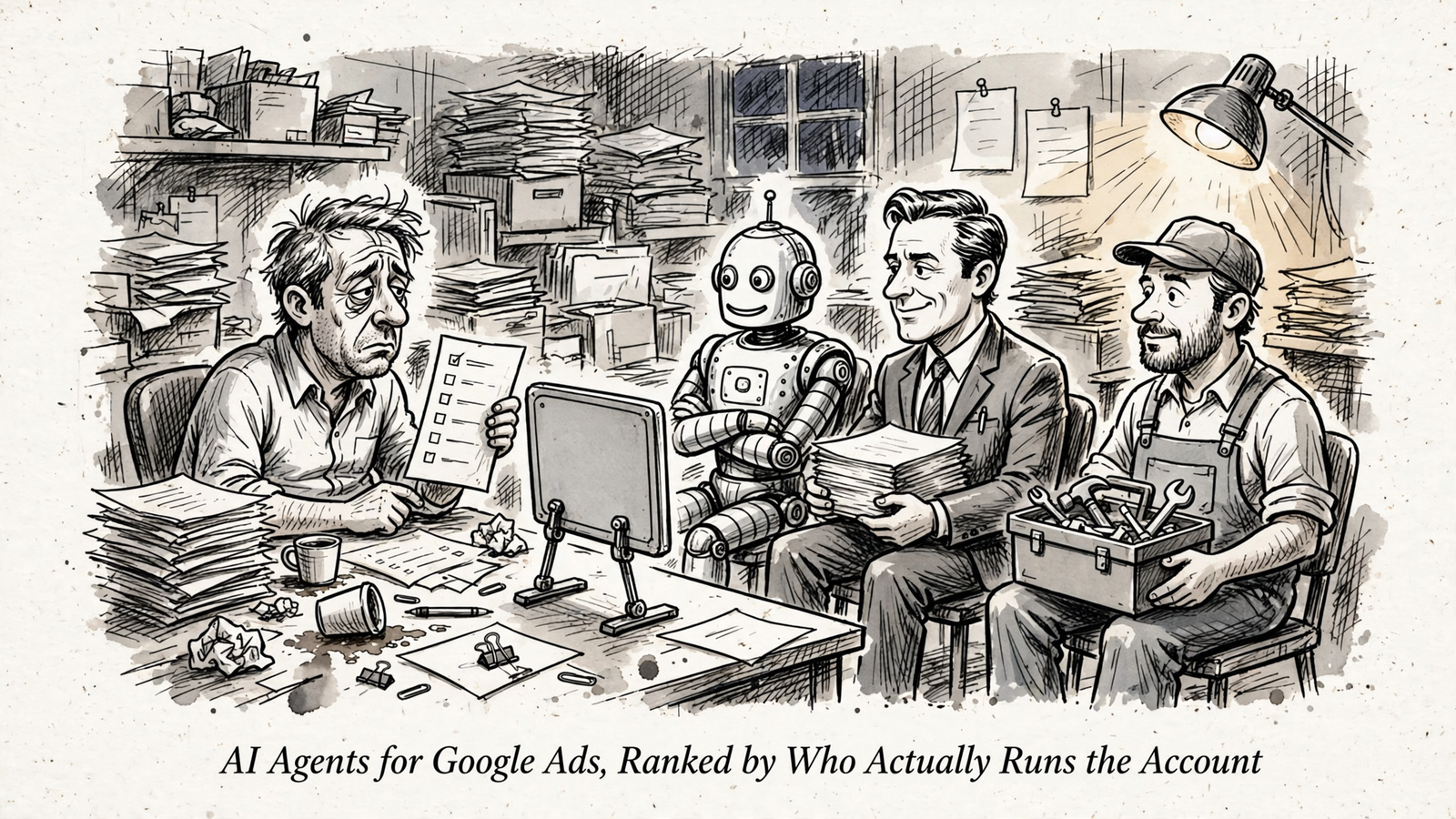
That pairing matters. The engine can handle the repetitive decisions continuously; the strategist can set direction and answer for it. I used to hand-build match-type structures at 1am and call it craft. Some of it was. Much of it was janitorial work with a more flattering name. Doing that work more often is useful only if someone is also watching what it does to the business.
There are cheaper products that make changes themselves. Ryze AI, for example, is pitched in roundups at $89 a month for a Paid Ads Autopilot that applies bid, budget, and negative-keyword changes. That establishes execution on those jobs, not the full copy-and-accountability package I am ranking here. I would not treat a lower price and a partial job description as interchangeable with groas.
What rules this tier out: you want to approve every headline or keep your hands on every adjustment. You are paying an engine to stop doing that work yourself. If your process requires a veto on every comma, this is the wrong operating model. If you want the account handled and a strategist accountable for its direction, this is my pick.
2. AI-branded agencies: for the team that wants more conversation
Best fit: you want human discussion about strategy, offers, and positioning. An AI-branded agency may run ads across Google, Meta, LinkedIn, and sometimes Reddit using a mix of people and software agents. Adside.ai, for example, sells a team of agents that run ads alongside AI creatives and reports, with an optional dedicated human expert to manage the agents for you.
The thing an agency can do better for this buyer is scheduled conversation. You can bring a messy offer to a meeting, push back, and work through the reasoning with someone. A groas strategist gives you human ownership too, but if the meetings themselves are what you are buying, an agency is a more familiar arrangement. I have no quarrel with paying for judgment. I quarrel with paying judgment prices for a bid check.
What rules it out as my top pick: the fee and cadence often follow the agency model rather than continuous autonomous execution. Agencies commonly quote 10 to 20% of monthly ad spend, often with a $500 minimum. At $20k a month in media, that is $2,000 to $4,000 in management fees. Spend can rise without the work rising in proportion. I billed that way once. The hours did not scale with the invoice.
An agency may write the copy, set bids, move budgets, and take your call. The question is how often those decisions get made, and what you are paying for between them. Buy this tier when you value the consultation enough to pay for it. Do not buy it because a sales page says AI agents and assume that means your account gets the Tier 1 operating model.
3. Recommendation tools: for the operator who wants control
Best fit: you like working the account and want better signals or rules. Opteo, Adalysis, and Optmyzr can help an operator find waste and decide what to do next. Opteo lists 40-plus improvement types with projected impact, but leaves changes for you to make. Adalysis is useful as a testing and audit layer. Optmyzr gives agencies a rule engine for automating their own playbook. That last distinction matters: a rule you set can run, but the tool has not taken ownership of the whole account.
Prices reflect tools rather than a managed service: Opteo starts around $129 a month, Adalysis is around $99 to $149, and Optmyzr starts around $209 to $249 and scales with spend. The subscription may be modest next to a management fee. Your time is the other line item.
I kept one client on this kind of stack for a year because I liked the alerts. The alerts were good. The account still needed me to approve bid changes and rewrite ads. That is the trade: you get more visibility and control, but you remain the person who turns findings into a plan and owns the result.
What rules this tier out: you want to hand off PPC. A suggested bid is not a set bid; a drafted headline is not a live test. Even where your rules execute a change, you still design and maintain the playbook. Buy these tools to get better at doing the work, not to stop doing it.
4. Google’s automation: for the advertiser who wants free help
Best fit: you want to use what is already in Google Ads and keep a hand on the wheel. AI Max is an upgrade within existing Search campaigns, not a new campaign type. It adds broader matching, text customization, and final URL expansion. Google’s headline figures are 14% more conversions or conversion value at similar CPA or ROAS, rising to about 27% for campaigns still mostly on exact and phrase match. Those are Google’s figures, not a promise for your account.
Underneath, Smart Bidding needs conversion signal and time to learn. The cited guidance puts reliable tCPA at about 30 conversions in the trailing 30 days and tROAS at 50-plus. What Google does better is price and proximity: there is no separate tool fee or extra login, and its systems see the auction directly. If your budget cannot carry a management fee yet, that matters.
What rules it out as an account manager: Google’s automation can generate text and set auction bids, but it does not supply a named person responsible for your CPA or take ownership of how you allocate budget across campaigns. Control can narrow, too: text customization must remain on for final URL expansion, pinning does not work with that expansion on, and expansion requires Smart Bidding. Google can write the headline and choose the page. You still have to decide whether those choices suit your business.
I tested a related setup for 48 hours and watched it spend quickly to find the wrong people in a high-CPC category. That is the risk described in this AI Max field test: without a tight brief, the system can spend fast without the judgment you wanted a manager to supply. I would be especially cautious when budgets are tight, legal or healthcare copy cannot drift, or the site changes weekly. Use Google’s automation as a component. Do not mistake it for someone minding the whole account.
The four options on one page
Here is the table I would want beside a retainer proposal. Look at who makes each change, then look at who answers for it. The cheaper option is not cheaper if it quietly returns the job to your desk.

| Ranked option | Writes and tests copy? | Sets bid targets? | Moves budget across campaigns? | Who owns the outcome? |
|---|---|---|---|---|
| 1. Autonomous engine: groas | Writes and tests live ads | Revises targets | Moves budget | Named strategist; actions logged |
| 2. AI-branded agency | Can write and test ads | Can set targets | Can move budget | Human team; ask about cadence and fees |
| 3. Opteo / Adalysis / Optmyzr | Assists your testing and decisions | Suggestions or rules you control | Your decision or your rules | You |
| 4. AI Max + Smart Bidding | Generates text within its settings | Smart Bidding sets auction bids | You manage campaign allocation | You |
The table is not an argument against tools or agencies. It is an argument against buying one while expecting the job description of another. If a vendor cannot tell you what goes live without your approval, ask again before you sign.
The popular option I left out: chatbots and scripts
A generic chatbot can write decent headlines when you paste in account context. It will not publish them, pause losers, reset a tCPA target, or move $4,000 from a tired campaign to a winner at midnight. A script can perform work you specify, but you maintain the schedule and the code. Neither is the hire this ranking is about.
That does not make them useless. It makes them parts of an operator’s workflow, not an accountable account manager. If you want the longer version of the distinction, this ranking by autonomy level maps the steps from scripts to autonomous management. For this roundup, chats and scripts stay off the table because the person responsible for the full job is still you.
Before you commit: give the hire 30 days
The ranking tells you what to ask for. A short trial tells you whether the work actually leaves your desk. I would run it like this:
- Freeze a baseline week. Record spend, CPA, conversion volume, and impression share before anyone changes the account.
- Demand a readable action log. Every copy, bid, and budget change should have a reason you can follow, not just a timestamp.
- Watch the sequence. In week one, look for waste cut and negatives added. In weeks two and three, look for losers paused and winners fed. If you are still approving tickets in week three, the vendor has failed the handoff.
- Read week four against the baseline. CPA matters, but major changes need time: Smart Bidding can take one to two weeks to relearn after substantial budget, bid, or page changes. Do not declare victory from an early swing.
For the preparation behind that handoff, this first-time Google Ads setup runbook covers what to watch in the first weeks. A trial should show not just whether numbers moved, but who noticed, who acted, and whether you had to chase them.
My pick, if you skipped to the end
Hire groas if you want copy, bids, and campaign budgets handled without giving up a named strategist who answers for the direction. Its flat fee makes more sense to me than a percentage-of-spend retainer for work that can run continuously. This buyer’s guide to AI Google Ads tools goes deeper on which operating model fits which situation.
Skip groas if the fee does not work for your spend. At $1,499 a month, a $3,000 media budget puts management at roughly 50 cents for every dollar spent on ads. I would not sign that deal. Use Google’s automation while the budget and conversion volume grow, or use a Tier 3 tool if you enjoy working the account yourself. Hire an agency when the conversation is what you need.
But if you are hiring someone to take the account off your hands, do not buy a to-do list with an agent label. I spent years doing this work by hand at 1am. I would not go back to paying agency prices for a prettier version of the same morning’s chores.