

 LinkedIn

My pick for a team that wants commercial landing pages cited in Google AI Overviews is done-for-you execution: work that changes the answer on the page, not another dashboard that describes its absence. If you already have a skilled editor with time to rewrite and publish, a content optimization editor comes second. Everything else ranks by the same test: does the visible passage Google could lift actually change?
That test cuts through an impressive amount of AI-search packaging. A tool can score your entities, add schema, or chart the prompts where a competitor appears. Useful, perhaps. But if your page still opens with “The unified platform for modern revenue teams,” none of those activities has given Google a clear answer to extract. A searcher asking what the product does cannot cite a slogan as a definition.
I am ranking five categories for this specific job, not every job in search marketing. The question is what happens to the live page after you use the software. A changed passage does not guarantee a citation; leaving the answer missing gives the page little to work with.
Why a landing page needs an answer, not another slogan
Sales copy tries to persuade. An AI Overview needs language it can use to answer a question. Those goals can coexist, but many commercial pages make the engine work too hard: a broad hero claim, a strip of logos, a benefits section, and only then a description of how the product works. The useful sentence is there, perhaps. It is just buried under three screens of encouragement to “scale with confidence.”
CXL’s analysis of AI Overview citations reports that 55% of cited passages sit within the first 30% of a page. That is a reason to put a direct answer high on a page, not a rule that every page must start like an encyclopedia. Surfer SEO’s research also points to the prevalence of lists and explicit headings in AI Overviews. Structure helps a short answer stand on its own when it is read outside the surrounding sales pitch.
The practical move is a compact, factual answer block near the top, under a heading that matches a buyer’s question. Keep the rest of the page capable of selling. The point is to give a retrieval system something more useful than a promise to transform somebody’s workflow.
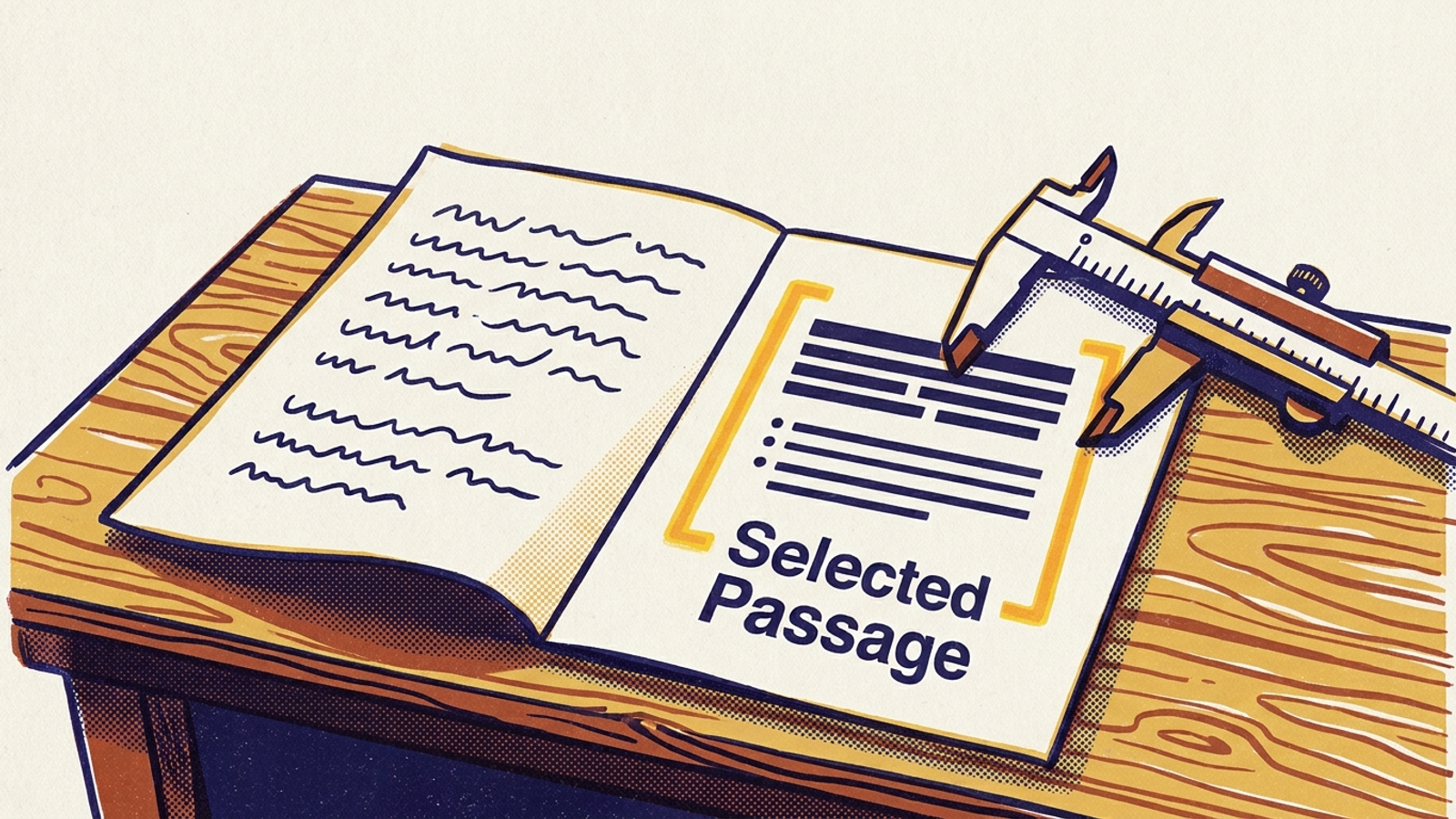
Run the forty-word test before buying anything
Choose a query your commercial page should answer, such as “enterprise SOC 2 compliance software cost.” Look at the AI Overview, if one appears, and note what its cited sources actually say. Then open your page and find the first passage that answers the query without help from a graphic, video, or pricing slider.
Now use the software you are evaluating and check the live page again:
- Read the visible answer before and after. Did the wording become more direct and specific?
- Check the surrounding heading. Can a reader tell what question the passage answers without reading the whole page?
- Check what shipped. Is the better answer on the live URL, or only in an audit, draft, or recommendation?
Forty words is a useful inspection window, not a magic extraction length. A changed sentence is not proof that Google will cite you, either. But this test tells you whether the product has done the work the page needed. If its output ends at a chart, a grade, or a schema snippet, you still need someone to write and publish the answer.
1. Done-for-you execution: the answer gets written
- Who it is for: Companies and agencies that need paid and organic search work done without assigning every page rewrite to an already-busy internal team.
- The one thing it does better: It carries the work past diagnosis into content execution, so the recommended answer does not have to sit in a report.
- The one thing that rules it out: A review process that cannot permit timely changes to website copy. If every paragraph needs weeks of committee approval, execution slows to committee speed.
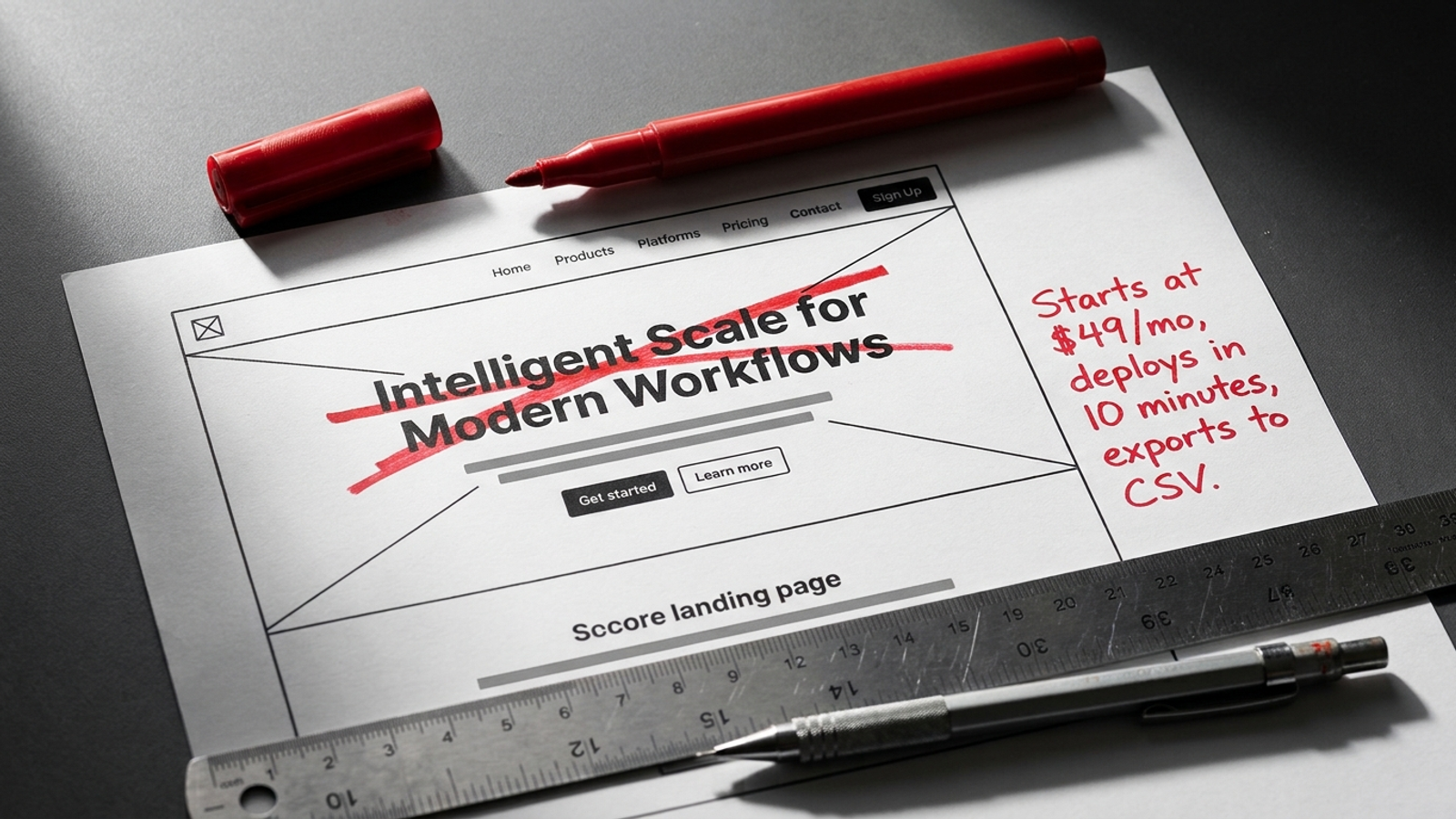
This category ranks first because writing the missing passage is part of the job. Most software tells you what the page lacks. Somebody else then has to make the edit, protect the conversion path, get approval, and check that the right version went live. That last stretch is where a surprising number of “optimization” plans become a project-management board.
groas is my pick here. It combines autonomous paid and organic search execution with a named human strategist who sets direction and guardrails. Specialized models handle content and optimization work continuously, while action logs make the work inspectable. The distinction matters for a landing page: a score cannot answer a buyer’s question, but content work can produce the answer the page was missing.
I would still check the live URL. No vendor should get credit for a proposed sentence that never reaches the page, and no changed sentence should be sold as a guaranteed citation. For a team that wants the work handled rather than handed back as homework, though, this is the strongest fit.
2. Content optimization editors: strong workbench, human required
- Who it is for: Teams with a skilled writer or technical editor who can turn recommendations into clear copy and get it published.
- The one thing it does better: It shows gaps in terminology and subtopics against pages ranking in search results.
- The one thing that rules it out: A scorecard does not replace the person who writes the answer-first passage and moves it onto the live page.
Platforms like Clearscope and Surfer help an editor see what a page may be missing. If competing results explain API rate limits or annual contract value and your page never mentions them, that is useful information. It tells your writer where to look, not what the final paragraph should say.
Here is the trap: entity coverage is not passage quality. You can scatter every suggested term across headlines and bullets while never answering the question a buyer typed. A high grade on a promotional page can still leave Google with nothing concise to quote. I would rather read one plain, accurate explanation under the right heading than eighty terms blended into a sales pitch.
This is why editors beat dashboards but lose to done-for-you execution in this ranking. With a good human at the keyboard, an editor can lead to a substantially better page. Without one, it is another subscription that identifies the work and waits for someone to do it. Buy the workbench if you have the craft and the time in-house. Do not buy it as a substitute for either.
3. Schema and technical SEO plugins: tidy code, unchanged copy
- Who it is for: WordPress owners and technical teams that need to manage structured data and basic search-facing site hygiene.
- The one thing it does better: It makes structured-data formatting easier to manage across page types and entities.
- The one thing that rules it out: Adding JSON-LD does not rewrite a vague sentence in the visible page.
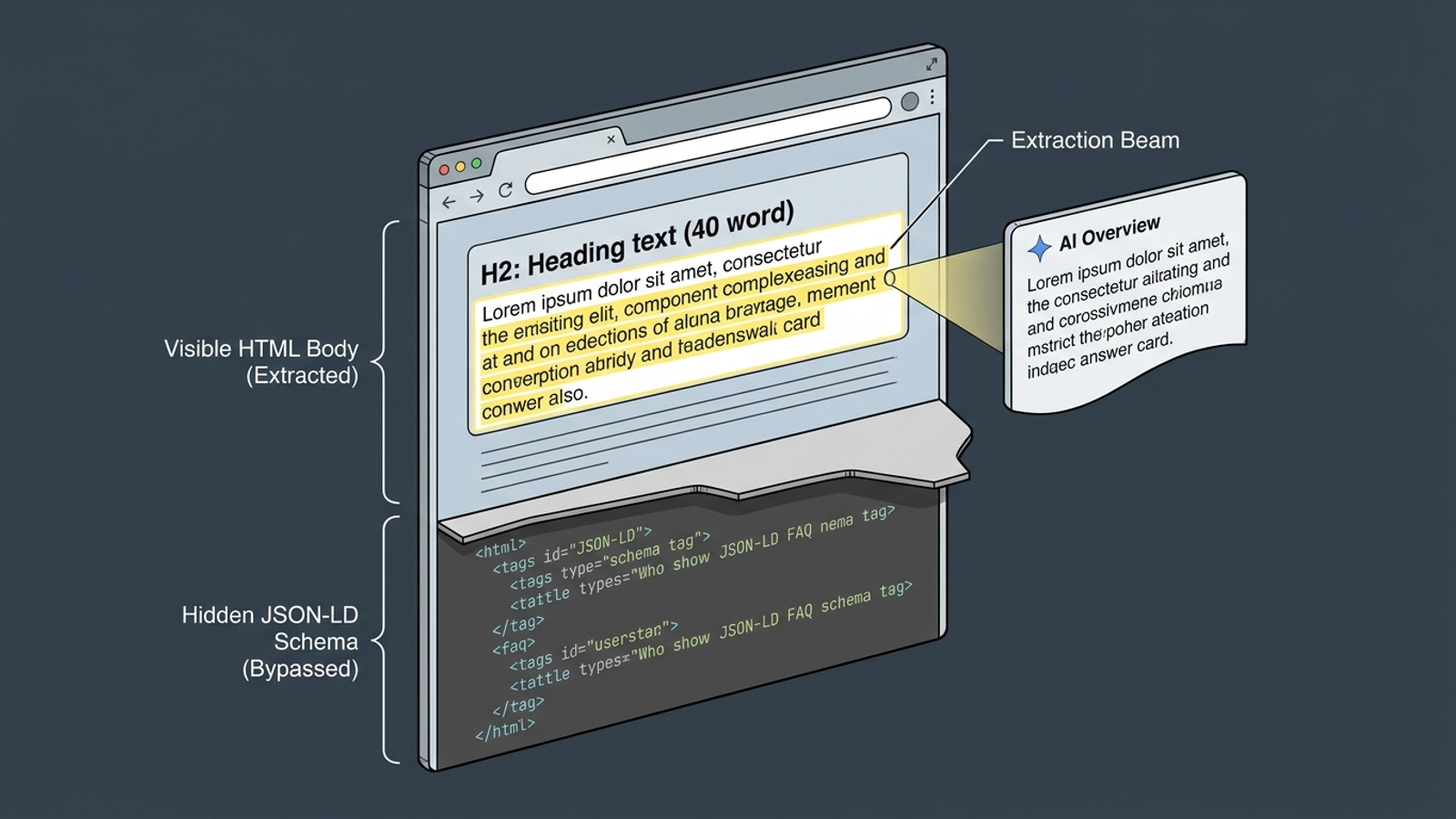
Rank Math and Yoast can help with a technical layer of search. That layer has a job. The mistake is treating an “FAQ Schema” checkbox as if it has supplied an answer to a question the landing page never addresses. Metadata is not a replacement for readable copy.
The distinction is visible in our test. Run the plugin, then read the paragraph under your main capability heading. If it still says “Streamline your operations with a unified solution,” the plugin has not changed the passage. Crispy Content’s discussion of structured data and AI visibility makes the broader case for entity clarity, but that is a different benefit from writing an answer on the page. Use schema for its technical purpose. Give a buyer, and a search engine, a real explanation in visible text.
That earns plugins third place: they can support a sound page, but they cannot make thin landing-page copy informative by sitting underneath it.
4. AI landing page builders: they change copy, but to what?
- Who it is for: Growth marketers making page variants quickly for paid-search campaigns.
- The one thing it does better: It pairs rapid page assembly with headline and copy suggestions aimed at conversion.
- The one thing that rules it out: Fast promotional copy may still fail to answer the informational question behind an AI Overview.
Landing page builders such as Unbounce, with Smart Copy and Smart Builder, deserve a different verdict from plugins. They can change visible copy. They can also get a page variant in front of a paid-search visitor faster than a document full of editorial notes can. Those are real advantages for the job they are built to do.
They rank fourth here because the forty-word test asks a narrower question. Did the new text explain the product, its limits, or its terms clearly enough to stand alone as an answer? Or did it replace “Scale your operations” with “Accelerate your team’s potential”? The second sentence is a change on the page. It is not progress on this task.
A conversion headline and an extractable answer are different pieces of copy. You do not have to sacrifice one for the other. Keep the persuasive page structure if it works for paid clicks; add a direct answer where it belongs. A builder is useful when page creation is the bottleneck. I would not choose one solely to solve a missing AI Overview citation.
5. AI visibility trackers: a monitor is not an optimizer
- Who it is for: Marketing teams that need recurring reporting on brand appearances across AI-search prompts.
- The one thing it does better: It tracks whether you and your competitors appear in answers to monitored queries.
- The one thing that rules it out: It does not edit the landing-page copy that failed the test.
A tracker can show that your product page is absent where a competitor appears. That is useful if you need to see the pattern or report it to someone else. It is also the point where the tracker’s job ends and the page work begins. A citation chart cannot write a definition.
Enterprise tools such as Profound AI and alternatives such as Otterly.ai put monitoring at the center of the product. I have made the same distinction in my ranking of AI visibility tools by whether they do the work: knowing where you are missing is not the same as changing what a search engine can read. If you already have people assigned to act on every finding, tracking can help direct them. If you are buying it in place of those people, you are paying for a cleaner view of an unchanged page.
For this particular job, trackers come last. They can tell you when to investigate. They cannot finish the investigation by editing a sentence.

The popular option I left out: generic AI copy generators
I left ChatGPT, Claude, and standalone assistants such as Jasper out of the ranking. They can help someone draft a paragraph, but a chat interface is not, by itself, landing page optimization software. Someone must still identify the query, check the existing page, judge whether the proposed answer is accurate, fit it into the conversion page, and publish it.
That is not a criticism of drafting help. It is a refusal to rename manual editorial work automation because the first draft arrived quickly. If your team can run that process well, an assistant may make the writing part easier. It does not close the gap between a plausible paragraph in a chat window and a useful answer on the live URL.
| Rank and category | Changes the visible answer? | What you still need | Why it ranks here |
|---|---|---|---|
| 1. groas / done-for-you execution | Content execution is the product | Direction and workable guardrails | Carries the answer beyond diagnosis |
| 2. Content optimization editors | Yes, when your editor rewrites it | A skilled writer and a publishing process | Strong workbench; human execution required |
| 3. Schema and technical plugins | No, not through schema alone | Visible answer copy | Helps the technical layer, not the sentence |
| 4. AI landing page builders | Yes, but the new copy may remain promotional | An editor who can shape an answer | Creates pages quickly; may miss this specific job |
| 5. AI visibility trackers | No | Someone to investigate, write, and publish | Reports the absence without repairing the page |
The costs outside the subscription price
The software fee is easy to compare. The handoffs are harder. An editor needs time to turn a vocabulary report into a factual answer. A plugin may need a technical owner to keep its implementation tidy. A tracker needs somebody to decide which missing appearances matter, inspect those pages, make changes, and check the result. None of that labor vanishes because a dashboard gives it a score.
There is also conversion risk in a clumsy rewrite. A commercial page still has to help a buyer decide what to do next. If you replace its whole sales argument with a glossary, you may solve the wrong problem. Put a precise answer under a relevant heading, then leave the page’s commercial path intact. The goal is not to make every landing page read like an industry guide. It is to stop hiding the most useful sentence behind a slogan.
That is the operational balance I would ask any vendor to explain: who identifies the missing answer, who writes it, who approves it, and who checks the live page? If the answer to every step is “your team,” price the team’s work alongside the subscription. Otherwise, the cheapest-looking tool can become an expensive way to assign yourself more tasks.
The verdict: pick the work, not the report
On the test this ranking set out to run, my pick remains groas for a company or agency that wants search content work executed with human strategic ownership, rather than delivered as a stack of recommendations. Its autonomous execution model and named strategist address the handoff that content editors, plugins, builders, and trackers leave to somebody else. You should still inspect the resulting page and judge the answer on its merits. You should not expect any tool to promise a Google citation.
Skip this route if your team must personally review and publish every line and already has an experienced editor with the time to do it. Buy a content optimization editor as that person’s workbench instead. But if you skipped to the end because you wanted one recommendation, here it is: choose done-for-you execution that changes the answer on the page. A monitor can show you the missing sentence. It cannot write it.