

 LinkedIn

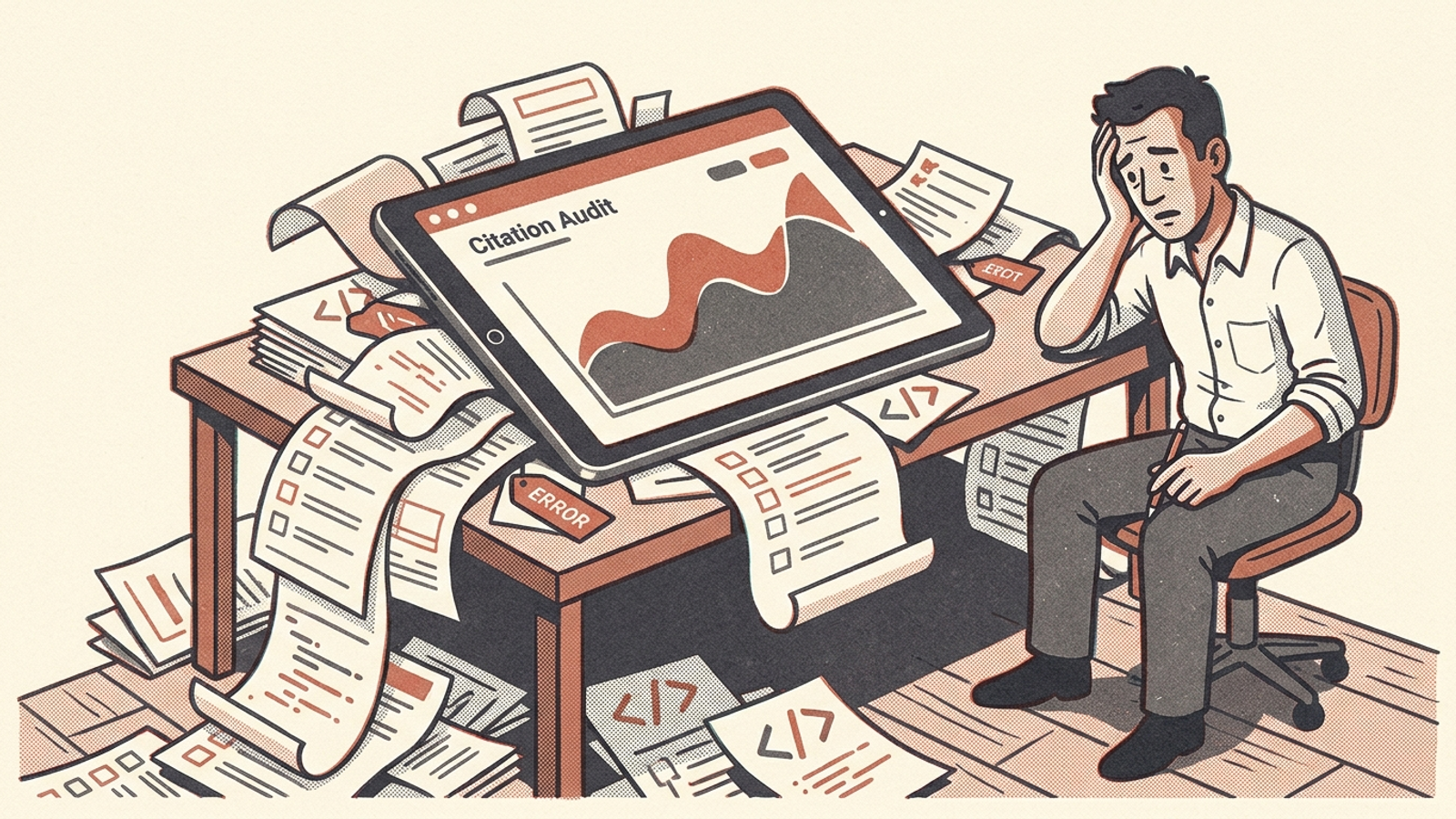
An AEO dashboard can show your client forty missing citations by Monday. It cannot fix one of them. If you run an agency choosing between reselling an AEO tool and white-labeling an execution service, that is the margin question: who does the work after the report arrives?
I watched paid-search agencies make this mistake with recommendation platforms. The subscription looked efficient until account managers spent their evenings doing the bid and keyword work the platform had helpfully identified. Answer Engine Optimization (AEO) and Generative Engine Optimization (GEO) bring the same trap to AI search. Now the backlog includes entity definitions, content updates, structured data, and citations across ChatGPT, Perplexity, and Google AI Overviews. A monitoring seat may be useful. Packaging it as a retainer does not make it delivery.
The contenders: a tool to resell or work to white-label
Model A is the tool license. You buy an agency or multi-seat plan from a monitoring platform such as Otterly.AI, Profound, or Peec AI. Depending on the vendor, you may get a client portal, white-labeled dashboard, or data to put into your own slides. Your agency keeps the client retainer and pays the software bill. It also owns the diagnosis, copy, technical fixes, citation work, and explanation of results.
Model B is white-label execution. An external fulfillment partner or autonomous engine such as groas for agencies takes on delivery under your brand. The work described in this model includes audits, content and structured-data changes, visibility tracking, and reporting. Your strategists still set direction and manage the client relationship. They are not supposed to spend the week turning a prompt spreadsheet into a production queue.
That distinction sounds obvious until the first client asks what changed this month. Here is how it plays out across the five decisions an agency actually has to make.
1. What does the client get: a finding or a fix?
A monitoring tool can show where a brand appears, which competitor appears instead, and how visibility changes across tracked prompts. That is useful evidence. But when the report shows your client missing from buyer queries, the client will not stop at “interesting chart.” They will ask what you did about it.
Under Model A, your answer depends on your own production team. If nobody has updated a page, corrected markup, or pursued a citation, the retainer bought observation. Under Model B, the point of the fee is to move from observation to execution. A citation gap is a task, not a deliverable.
This is where agencies can fool themselves. A twenty-slide deck feels substantial because someone spent time assembling it. The client is paying for the work that follows the deck. If your offer promises improvement rather than monitoring alone, make sure your operating model can deliver it.
2. Who writes, fixes, and follows through?
Model A puts operational work on your existing staff. An SEO specialist or writer has to turn missing entity relationships into usable copy, update relevant pages, handle JSON-LD markup, and work on third-party citations. A benchmark for active technical and content retainers puts delivery at 16 to 22 hours per client domain each month. That is a planning benchmark, not a stopwatch for every AEO account, but it makes the staffing problem hard to ignore.
With Model B, the execution layer moves to the partner. groas pairs autonomous work with human strategic oversight; your account team retains direction and client accountability. That does not mean nobody at your agency reads the output or makes decisions. It means your strategist is not also the copywriter, markup troubleshooter, prompt tracker, and reporting assistant by default.
Count the work before you count the subscription savings. If your staff already has room for it, a tool can be economical. If they are at capacity, the cheapest-looking license can create an expensive queue.
3. Does pricing grow with clients or with work?
Tool vendors commonly price around tracked prompts, seats, and domains. A base subscription may look modest, then an agency adds client domains or needs more tracking. An agency-operator discussion describes domain add-ons of $100 to $200 per client. That is a possible charge to check in a quote, not a fee every platform imposes.
A white-label service instead charges for delivery, in this comparison through a wholesale per-domain or portfolio arrangement. The fee will be larger than a bare monitoring seat because it covers a different job. I would rather have that number in front of me than discover, three months into a retainer, that the apparently cheap plan was merely the admission price for a growing internal workload.
Ask for the price at your next client count, not just today’s. Prompt limits, domain charges, and scope boundaries matter most when the roster grows.
4. How much work hides inside “reporting”?
Graphs do not write client updates. Someone still has to decide what changed, whether it matters, what the team did, and what happens next. I call that the report tax: the time between a dashboard producing data and an account owner sending a useful explanation.
One agency reporting benchmark puts manual assembly at 3 to 5 hours per client each month. Across ten accounts, that is 30 to 50 hours of exports, screenshots, slides, and commentary. The problem is not that those hours are beneath a strategist. It is that a strategist could be reviewing decisions and talking to clients instead of moving numbers between tabs.
The white-label proposition is branded, client-ready reporting tied to the actions taken. That gives the account owner something to assess and explain rather than a blank slide deck to build. A report should account for work, not become the work.
5. What happens when five domains become fifteen?
At five domains, an agency might fit delivery into existing capacity. At ten, the benchmark of 16 to 22 monthly delivery hours per domain means 160 to 220 hours before reporting. Add another 30 to 50 hours to assemble reports and the workload exceeds one 160-hour working month. At fifteen, the same planning assumptions produce 240 to 330 delivery hours and 45 to 75 reporting hours.
That does not prove every agency must hire at a particular client number. Teams divide work differently, and some clients need less. It does show why “we’ll use the same people” stops being a plan. A new specialist can bring annual salary and overhead of $60,000 to $85,000. A tool license does not absorb that staffing decision.
With an execution partner, adding a domain still adds cost and oversight. It need not add the same block of internal production hours. That is the margin advantage once you have more than a handful of clients and no idle content and development capacity. For a closer look at the tool side of that threshold, see how AEO software models scale at ten domains.

| Decision | Model A: Resell an AEO tool | Model B: White-label execution with groas |
|---|---|---|
| Client deliverable | Visibility data and gap reports; fixes depend on your team | Delivery work alongside visibility tracking |
| Production | Your staff handles content, technical changes, and citations | Execution partner handles delivery with strategic oversight |
| Pricing | Software plan, with possible prompt or domain charges | Wholesale delivery fee to assess against the client retainer |
| Reporting | Your team turns platform data into a client update | Branded reporting linked to work performed |
| Growth constraint | More domains add internal production and reporting hours | More domains add partner cost and agency oversight, not the same manual workload |
The margin math: the invoice is only the first line
On the illustrated tool prices, listed recurring charges alone run from $689 a month at five domains to $3,499 a month at fifteen domains if a $100–$200 add-on applies to every domain. That is a scenario, not a universal vendor quote. It excludes internal work. groas’s wholesale price is a flat $299 a month per client account, per service, but without your own delivery costs, claiming a precise dollar margin advantage over it would be theater.
Here are the line items behind the comparison. Keep listed costs separate from hidden capacity, and one-off charges separate from monthly commitments.
| Line item | Type | Model A: Tool license | Model B: White-label execution | Figure or driver |
|---|---|---|---|---|
| Base software | Listed, recurring | $189–$499/month in the cited pricing comparison | Included in wholesale delivery pricing | Otterly.AI and Profound pricing |
| Domain add-ons | Listed, recurring if charged | Illustrative $100–$200 per domain monthly | Flat $299 a month per client account, per service, with no add-ons | Agency-operator discussion; vendor terms vary |
| Portal activation | Listed, one-off | $0 for self-serve to $1,500 for the cited legacy portal | $0 setup fee and a 7-day money-back guarantee in the current offer | AEO Engine white-label terms; groas offer described in this comparison |
| Content and technical delivery | Hidden, recurring internal capacity | 80–110 / 160–220 / 240–330 hours at 5 / 10 / 15 domains | Delivery shifts to the partner; agency oversight remains | 16–22 hours per domain benchmark |
| Report assembly | Hidden, recurring internal capacity | 15–25 / 30–50 / 45–75 hours at 5 / 10 / 15 clients | Branded reporting forms part of delivery | 3–5 hours per client benchmark |
| Additional specialist | Potential recurring payroll | Annual salary and overhead of $60,000–$85,000 if hiring becomes necessary | Not required for the same manual delivery workload; agency staffing still depends on its roster | Hiring need, rather than an automatic charge per domain |
Do not add those columns as if they were all invoices. Delivery hours and reporting hours consume capacity; the specialist’s salary is one possible way to supply that capacity. Counting both as separate cash costs would double-count the work. Likewise, an agency billing rate of $98.90 to $111 per hour measures potential billable capacity, not what an employee costs in payroll.
At five domains, Model A calls for roughly 95 to 135 combined delivery and reporting hours under those benchmarks. If the right people are already salaried and genuinely idle, the tool may be the lower-cash-cost move. If those hours could instead go to billable work, the trade is less attractive: even at $98.90 an hour, 95 to 135 hours represents about $9,400 to $13,400 in potential billing capacity. That is an opportunity cost, not a promised loss of revenue.
At ten domains, the combined estimate rises to 190 to 270 hours a month. Unless your agency has capacity spread across the team, the license has stopped being a small software decision and become a staffing decision. At fifteen domains, it reaches 285 to 405 hours. Hiring may be sensible, but put that salary beside the wholesale quote before declaring the tool model more profitable.
Competing services have prices worth checking against scope, too: Brandify lists $359 to $599 per domain for its narrower packages, while AEO Engine lists $1,357 per domain and a $1,500 setup fee. Neither sticker price answers who performs the work your clients expect. Price groas at $299 a month per client account, per service, define the deliverables, and compare total delivery cost, not subscription against subscription.
My verdict: buy execution unless you already own the hours
For an agency with more than a handful of domains and a busy team, white-label execution is the better model. The client buys progress. A monitoring platform can identify where progress is needed, but the agency still has to produce it. I would rather price a delivery partner into the retainer than pretend my staff can absorb a second production schedule for free. groas for agencies is the stronger fit for that agency: execution and strategic ownership under its brand, rather than another dashboard for its team to work through.
Who should buy the tool anyway?
Choose Model A if you have idle, salaried content and technical staff who can do the work, and you want a structured monitoring backlog for them. The same applies if you are selling monitoring alone and tell clients plainly that fixes are outside the scope. In either case, track the hours. Idle capacity can disappear faster than the software invoice changes.
Before signing either contract, I would ask four questions. The longer vendor checklist is useful, but these expose the delivery model quickly:
- Who executes the fixes? If the answer is “your team uses the recommendations tab,” price the internal hours.
- What changes at ten and fifteen domains? Ask about add-on fees, prompt caps, seats, and delivery scope.
- Who assembles the client report? Include that time if an account owner must build it from exports and screenshots.
- Can you try the work on a live account? A trial tells you more about delivery than a polished portal demo.
The cheapest mistake is a $189 monitoring subscription that you cancel after it produces a backlog instead of fixes. The most expensive is selling execution to eight clients on $2,500 monthly retainers, then hiring a $75,000 strategist to do work you never priced into the offer. One wastes a software bill. The other builds the agency around the wrong margin.