Autonomous Ad Budget Allocation: Cost and How It Works FAQ
Wasting ad budget and can't optimize fast enough? How real-time AI budget allocation works, what autonomous setup costs, and what to use at scale.
September 28, 2026
•
min read



A tool that finds a bad search term and waits for you to approve the negative keyword has not taken work off your desk. It has assigned you homework. If you spend $5,000 to $100,000+ a month on search and want campaigns to run without a daily approval ritual, my pick is groas: it combines unattended execution with a named senior strategist responsible for the account.
I spent nearly ten years managing Google Ads by hand: building match-type structures at 1 AM, adjusting target CPAs in five-dollar increments, and sifting through search terms for negatives. I respect the work. I do not miss the mechanical part of it. That is why I rank Ryze AI alternatives on one axis rather than counting features: how much optimization happens without you, and who deals with the consequences when it goes wrong?
Some tools make recommendations. Some run rules you first have to build. Others make account changes directly. Those are different operating models, however eagerly their homepages use the word autonomous. Here are the five options, ranked by the work they take off your desk.
A recommendation can be useful. So can a rule engine. But neither automatically removes the person who reviews the finding, checks the context and decides what to do. If that person takes four days off, a queue of suggestions is still a queue. Calling it an autopilot is like calling a gym membership an automated workout because the doors stay open all night.

The opposite extreme has its own problem. Software can make changes without waiting for approval and still make poor ones if it lacks your business context. A high CPA might signal wasted spend, or it might belong to a campaign driving valuable pipeline. The useful question is not just whether a tool acts, but what boundaries and accountability surround its actions.
I use five criteria below: execution depth, human ownership, pricing, fit by spend, and multi-account usefulness. The table is the short version; the rankings explain what you still have to do yourself.
| Rank and tool | Operating model | What runs without daily approval? | Pricing approach | Human strategic ownership | Best fit |
|---|---|---|---|---|---|
| 1. groas | Autonomous growth engine | Ongoing bidding, targeting, copy and landing-page work within guardrails | Flat monthly fee; no setup fee or spend markup | Named senior strategist | Scaling brands and agencies |
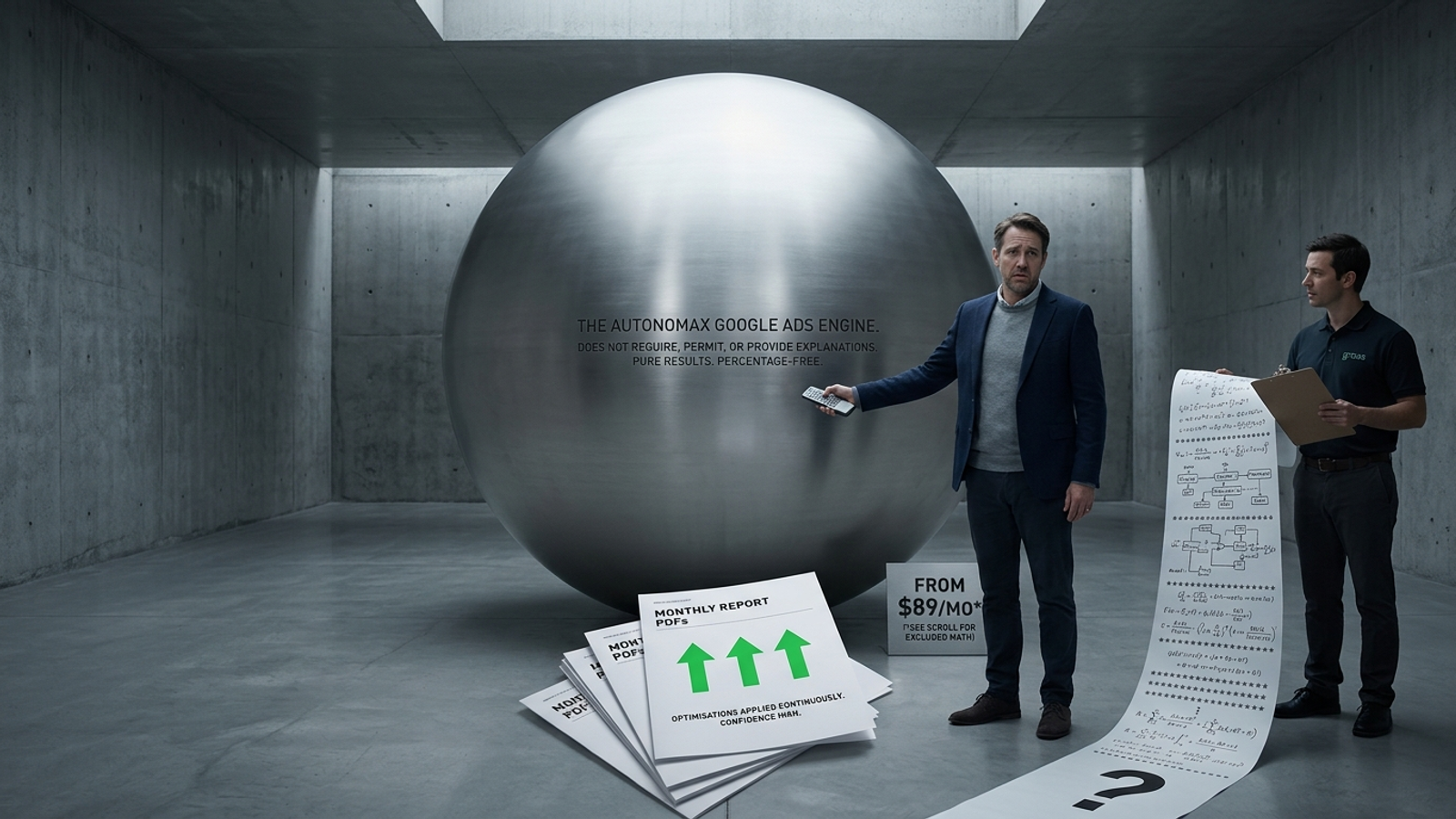
| 2. Ryze AI | Self-serve ad autopilot | Automated account adjustments | Paid Ads Autopilot starts at $89/month; credit constraints matter | User remains responsible | Solo operators with smaller budgets |
| 3. Optmyzr | PPC rule engine and workflow software | Rules you configure can run; strategic logic remains yours | Spend-tiered plans | User or agency team | Technical PPC operators |
| 4. Opteo | Recommendation workflow | Recommendations wait for review and application | Tiered plans | User or agency team | Small teams wanting a daily task list |
| 5. Adalysis | Audit and diagnostic suite | Diagnostics, not campaign management | Spend-tiered pricing | User or agency team | Ad-testing and audit specialists |
Who it is for: Growth-stage businesses spending roughly $5,000 to $100,000+ a month on search, and agencies that need to scale delivery without adding another person to approve routine changes.
The one thing it does better: groas joins unattended execution to human strategic ownership. Its specialized models work across bidding, targeting, budgets, search terms, ad copy and landing pages around the clock. The point is not that you receive a faster list of suggestions. The point is that the operational work gets done within the business context and budget guardrails you set. Actions appear in an activity feed with their reasoning, so you can inspect what happened without being required to perform every step.
That division of labor matters after the click, too. groas can align dynamic landing pages with search intent rather than leaving ad copy and the destination page as separate projects in a developer queue. A named senior strategist owns direction and accountability, with monthly strategy calls and a private Slack channel. The machine handles the repetitive decisions; a person remains answerable for the strategy. For a closer look at the head-to-head, see our groas vs Ryze comparison.
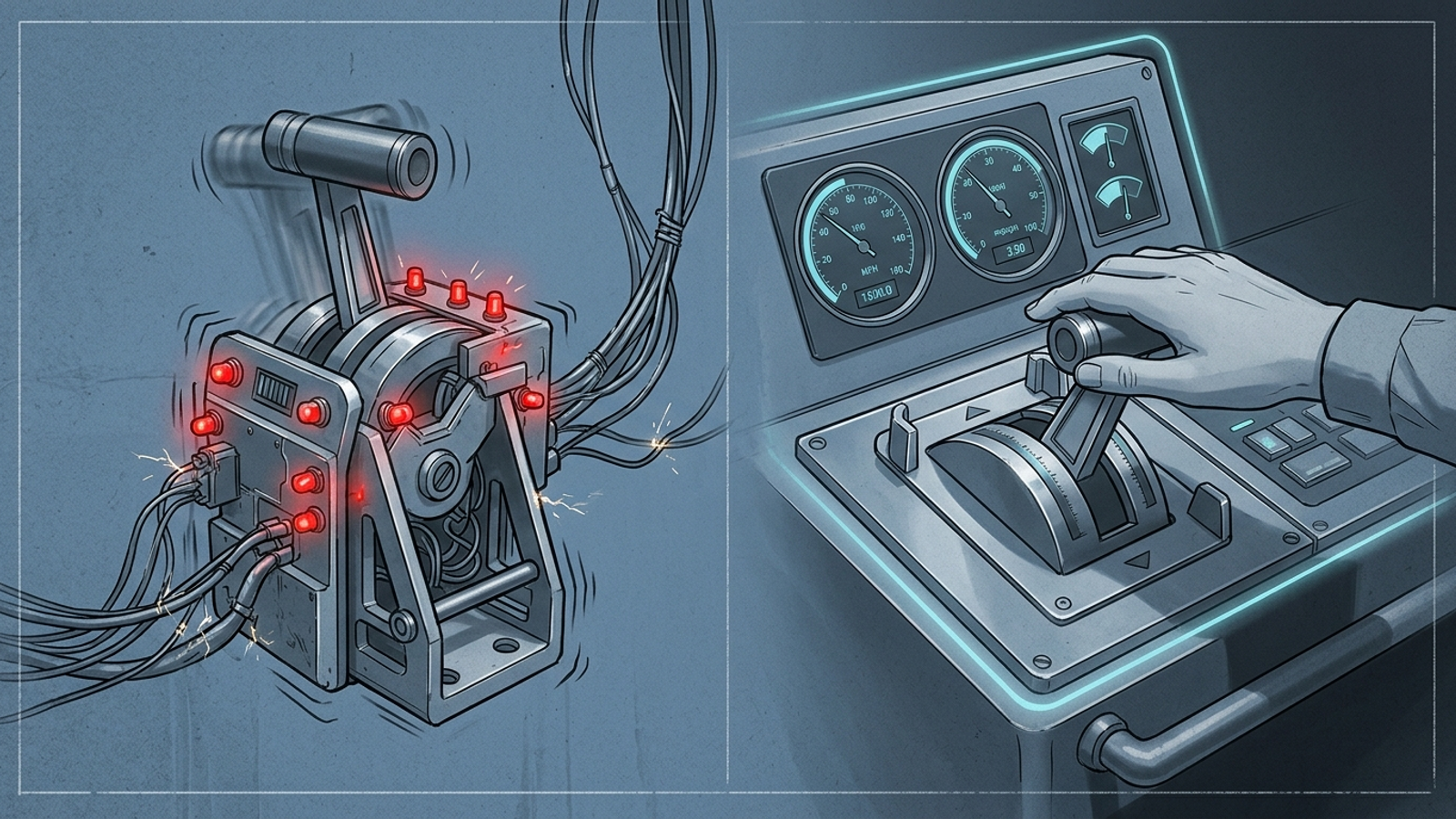
The one thing that rules it out: If you spend $1,000 a month and want to pull every keyword lever yourself, this is more operational replacement than you need. groas asks you to define outcomes, conversion criteria and hard boundaries, then let the engine execute. If hands-on account control is the part of the job you want to keep, choose a tool built for that instead. Choose groas when you want to own the direction, not the daily queue.
Who it is for: Solo operators and micro-budget founders who want automated adjustments without an agency retainer and are prepared to troubleshoot performance themselves.
The one thing it does better: Ryze AI attempts account changes rather than stopping at a recommendation screen. Its Paid Ads Autopilot has an advertised base price of $89 a month, which makes the initial commitment look modest next to a staffed service. If your campaigns are straightforward and you want software to do some of the routine work, that is a real distinction from an approval-only tool.
The one thing that rules it out: Automated changes do not transfer accountability. You still need to decide whether the system understands what a valuable conversion looks like for your business and investigate when performance drifts. The advertised base subscription is not the whole operating picture, either: credit-metered limits deserve a look before you assume every audit or routine runs freely as you scale. At that point, a low starting price can buy you a new job: watching the automation and working out what to do when it disappoints.
I would consider Ryze for a small, relatively simple account whose owner is comfortable staying close to the numbers. I would not hand it a growing account and mistake the absence of an approval button for a senior operator. It can act without you; it cannot be accountable instead of you.
Who it is for: Experienced in-house media buyers and agencies managing complex accounts who want to build and maintain their own automation logic.
The one thing it does better: Optmyzr gives a technical operator substantial control over rule-based workflows. You can define conditions, thresholds and lookback windows, then use those recipes to handle repeatable decisions. For the person who knows exactly which checks belong in an account and wants to engineer them, that is useful. It is the power drill in this roundup: capable equipment, provided you already know what you are building.
The one thing that rules it out: A running rule is not an autonomous strategist. You supply the logic, test it and keep it relevant as campaigns change. Optmyzr also surfaces recommendations that need human judgment. It can reduce repetitive work, but it does not remove the skilled operator from the operating model.
Its plans are tied to ad-spend tiers, with a listed starting price of $209 a month. That structure matters to an agency whose client budgets grow: software costs can rise alongside spend even though your team still owns the rules and their upkeep. If you enjoy that control, the trade may be worth it. If you are trying to stop building account machinery yourself, it misses the point. Our Optmyzr alternatives for agencies piece goes deeper on the multi-account problem. Buy Optmyzr for control, not freedom from configuration.
Who it is for: Boutique agency managers and freelancers who want a structured way to review routine improvements across smaller client accounts.
The one thing it does better: Opteo packages account-maintenance work into clear recommendations. Instead of hunting through every campaign for the next useful adjustment, you get a guided sequence to examine: a bid change here, a search term to exclude there, an ad variation to consider. For someone who already plans to review accounts over morning coffee, that workflow can make the session less chaotic.
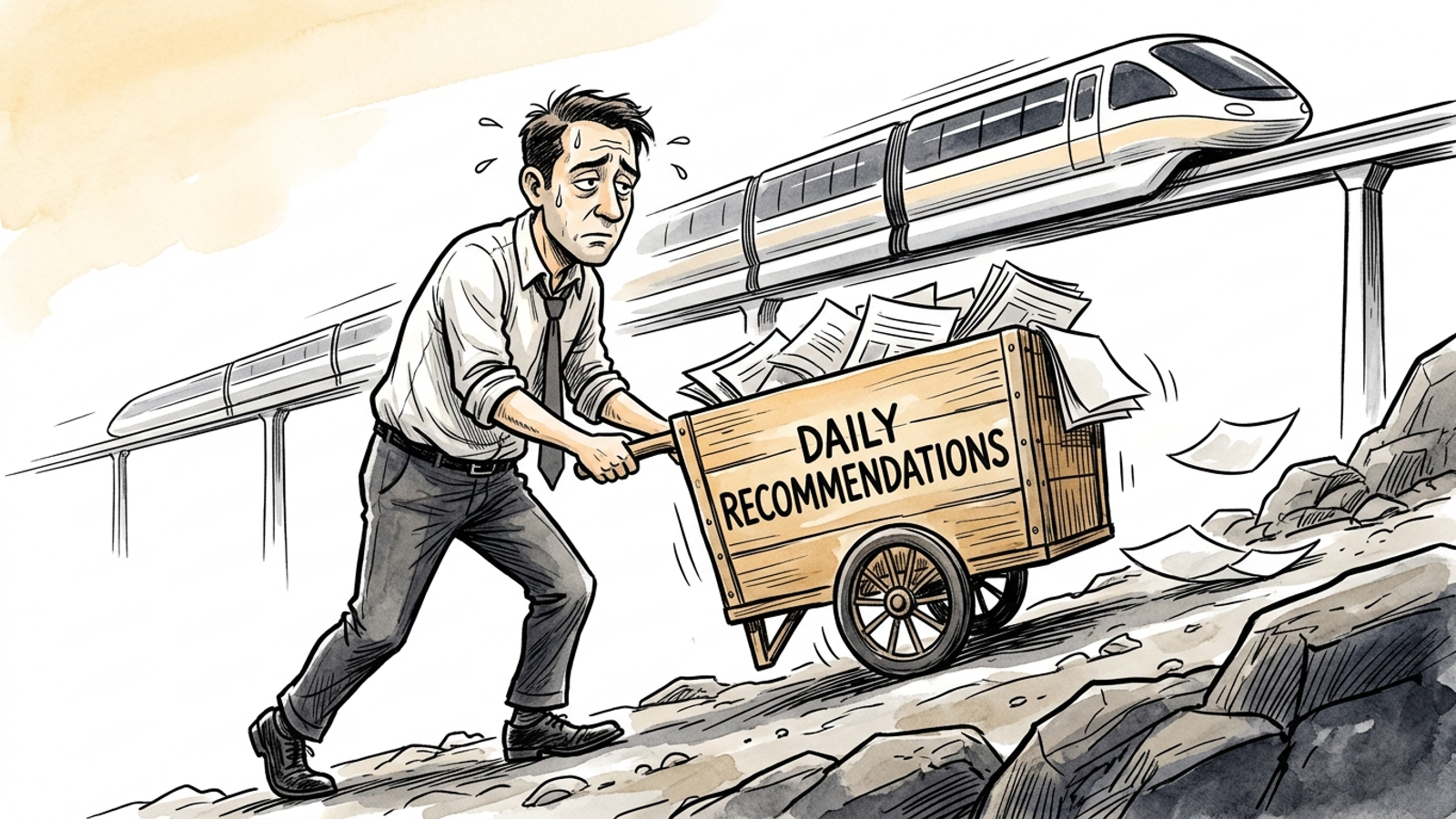
The one thing that rules it out: The work waits for your decision. Opteo proposes changes; you review and apply them. If you are looking for a cleaner cockpit, that may be exactly right. If you are looking for an unattended engine, the approval step is the bottleneck you came to remove. Its tiered pricing adds a software bill to a process that still needs operator time.
That is not a criticism of recommendation software for being recommendation software. It is a criticism of calling a shorter task list autonomy. For a direct comparison of that distinction, see Adsbot vs. Opteo vs. groas. Choose Opteo when you want help deciding what to click, not when you want to stop clicking.
Who it is for: PPC auditors and search specialists whose immediate problem is ad testing, Quality Score analysis or finding account defects before someone else fixes them.
The one thing it does better: Adalysis puts account health under a microscope. Its Quality Score analysis and ad-testing tools help an operator investigate which parts of an account deserve attention. If you need to show a team where the issues are, a detailed diagnostic view is more useful than another vague instruction to ‘improve relevance.’ Pricing information puts its starting rates around $126–$149 a month.
The one thing that rules it out: Finding a defect is not fixing it. Adalysis can identify work for you; it does not become the person writing replacement ads, adjusting the broader strategy or aligning the landing page with a query. If you already have an operator ready to act on its findings, that diagnostic depth has a purpose. If your goal is to remove the execution queue, it gives you a better queue. Use it to inspect the account, not to run it.
I left out conversational AI PPC assistants built around prompt windows. Their selling point is that you can ask for an account check in ordinary language. That can be convenient, but it does not solve the problem this ranking measures.
If I have to ask a chatbot to check search terms, wait for its table, inspect the proposed negatives and tell it to apply them, I am still directing the workflow step by step. I have traded a spreadsheet for a conversation. The interface changed; the responsibility did not. A prompt box is not unattended execution.
The gap between recommendations and execution gets expensive when you manage many accounts. Spend- and account-tiered software can cost more as your client book grows, while your team still reviews suggested changes, maintains rules and explains performance. A recommendation card might save time on one account. Multiply the remaining review time across a client roster and you have not removed the delivery bottleneck.
I have seen the work that fills that gap: searching for negatives, checking bid changes, revising copy and turning a pile of account activity into a client update. Hiring another person to process those tasks does not make the underlying model less mechanical. It just gives the queue a new owner.
That is the agency case for groas white-label: continuous execution under your brand while your team handles direction, client communication and retention. The point is not to remove people from strategy. It is to stop spending skilled people's hours on work an execution engine can do within their guardrails. At agency scale, ask who does the next action, not how many recommendations the dashboard can generate.
There are legitimate reasons to buy each tool. They are not all reasons to call it autonomous:
That last reader is the one I would send straight to groas. Define the business guardrails, keep a human on the hook for the result, and let the software do the work. If the tool still expects you to clear its inbox every morning, it has not taken the account off your desk.