An “autonomous” Google Ads platform can still leave you approving changes over your morning coffee. For advertisers spending $5,000 to $50,000 a month on search, that is the choice between Ryze AI and groas: a copilot that helps you make changes, or an engine that makes them within guardrails while a strategist owns the direction.
Both promise relief from the agency tax and the account work that eats your week. The useful question is not how much AI sits behind the interface. It is how much of the account you still have to touch after you sign up.
The choice at a glance: approval queue or executed work?
I spent years managing Google Ads the slow way: building negative keyword lists, combing through search terms late at night, and watching Quality Scores fall after an unannounced landing-page change. I respect the work. I also know how much of it is mechanical. So I judge these systems by the work they remove, not the cleverness of their demo.
Ryze AI is a self-serve copilot for operators who want to inspect accounts, receive recommendations, and approve changes across ad channels. groas is an autonomous growth engine: specialized models execute campaign work within agreed commercial guardrails, with a named strategist responsible for direction and results. The distinction is who makes the next routine decision.
| Decision |
Ryze AI |
groas |
| Campaign changes |
Recommendations and approval-gated changes |
Direct execution within agreed guardrails |
| Channel focus |
Paid campaigns across Google, Meta, TikTok, and LinkedIn |
Paid search and earned AI search visibility |
| After the click |
Ad and creative support; you retain more funnel work |
Intent-matched landing pages and conversion audits |
| Commercial model |
Tiered SaaS pricing |
Flat monthly fee, with no percentage-of-spend markup |
| Your ongoing role |
Review alerts and decide what to approve |
Set direction with a strategist; inspect results and action logs |
The table makes the trade-off look tidy. Your calendar is where it becomes real.
1. Campaign execution: does a recommendation become a change?
The approval gate is the dividing line. An industry analysis of AI ad agents frames the question plainly: does a proposed change reach the live campaign, or wait for a person to push it through?
Ryze AI’s Google Ads tools let an operator pull reports and work on bids, budgets, and negative keywords through its hosted Model Context Protocol server. Its write tools are approval-gated by default. If the system spots an irrelevant search term consuming budget, it can surface the change for your review. You still decide whether to apply it.

That is useful when you want to check every mutation. You can examine the proposed negative keyword, consider whether it might block a valuable query, and make the call yourself. It is less useful when the point of buying automation was to stop making those calls all day. Across bids, budgets, and search queries, a queue of recommendations can turn a media buyer into an editor of machine-generated account work. Careful review takes time; hurried review risks becoming a reflexive click on “Approve.” Neither is hands-off management.
groas takes the other route. You set commercial guardrails such as target CPA, a minimum ROAS floor, spend caps, and excluded categories. Its specialized models then execute bid changes, budget reallocations, and keyword exclusions directly through the API. If an auction shifts outside business hours, the system does not need to leave a card for you to handle the next morning. Changes are logged with their reasoning, and a senior strategist oversees the guardrails.
That does not mean you stop caring what happens in the account. It means your job moves from approving individual changes to judging whether the system is pursuing the right commercial goal. The action log lets you inspect what happened without making your availability a condition for every routine change. For a buyer who wants final approval on every edit, Ryze’s gate is a feature. For a buyer who wants the routine edits done, it is the work groas removes.
2. Pricing: compare the cost of the whole job
A low software price can be attractive right up until you need the pieces that make the software useful for your business. Ryze AI’s published pricing starts its Paid Ads Autopilot at $89 a month. Organic search automation sits in a separate $129-a-month SEO Autopilot subscription. Its Traffic Printer tier, which brings in strategists, is listed at $599 a month; Ecom Autopilot for multi-brand ecommerce is listed at $1,499 a month.
Those tiers make sense for someone buying a particular set of tools. They matter more when you are comparing operating models. If you start with self-serve paid ads but need organic work or human strategic help, the $89 entry price is not the price of that broader job. Nor does a subscription price tell you how many of your own hours you will spend reviewing proposals or arranging work outside the ad account. The breakdown of Ryze’s tiers is worth reading against the work you actually want to stop doing, rather than against the cheapest number on the card.
groas uses a flat monthly fee, with no setup fee or percentage-of-spend markup and month-to-month cancellation. Paid-search execution, earned AI visibility, intent-matched landing pages, and a named senior strategist are part of the model from the start. You are not paying an additional percentage simply because monthly search spend moves from $10,000 to $40,000.
I have written before about Google Ads agency pricing models. A percentage-of-spend fee makes your management bill rise when your media budget rises, whether or not managing the account takes proportionally more work. Tiered SaaS has a different trap: the feature you need may be one tier above the price that brought you in. These are different traps, but the buying mistake is the same. Compare the price of the job you need done, including the work that remains yours, not the lowest number either model can put on a page.
3. Multiple accounts: does scale create another inbox?
A single account can make an approval queue feel manageable. Fifteen accounts change the arithmetic. If each produces twelve proposed changes in a day, someone starts the morning with 180 decisions about bids, negatives, and budgets. That is an illustration, not a promised Ryze workload. It shows the cost of a workflow in which every account still needs a human to clear its queue.
For an agency, that cost is easy to miss. A media buyer may spend less time finding possible changes, then give the time back reviewing them across clients. Natural-language queries and alerts can make investigation faster, but they do not make approval disappear. And approvals are not interchangeable: a budget change in one account needs to be weighed against that client’s goals, not rubber-stamped because the previous eleven suggestions looked sensible. As comparisons of AI ad management tools note, Ryze’s cross-channel account visibility serves an operator who wants to inspect and decide. That operator still needs room on the calendar to do it.
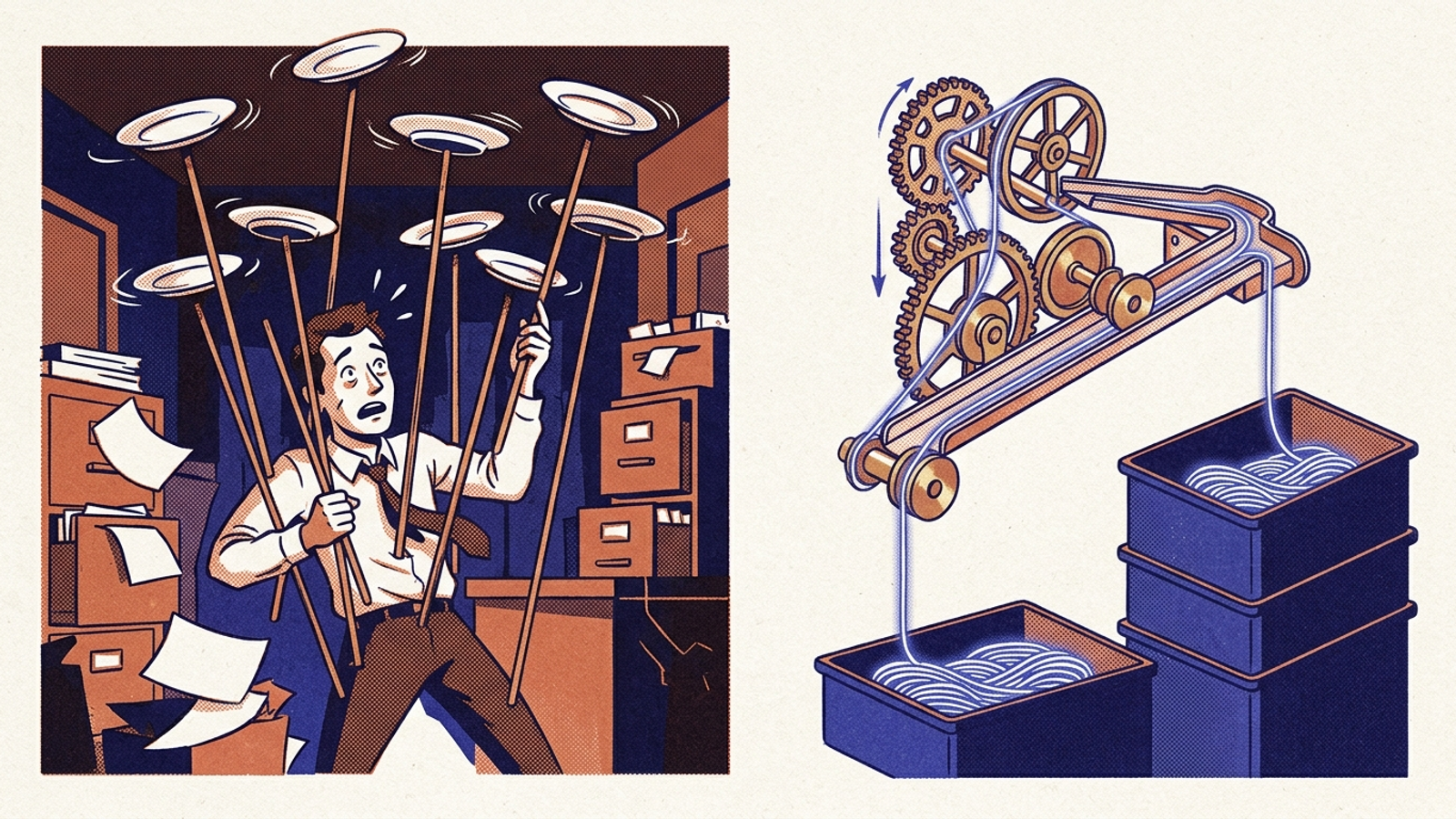
groas connects directly to accounts through the API and executes bidding, budget allocation, negative keyword work, and search-term management against commercial goals. Each account retains its own business context and action log. The agency can keep client strategy and positioning in human hands without staffing every routine adjustment as another media-buying task.
Do not mistake that for a claim that fifteen clients take no work. Clients still need goals, guardrails, and accountability. Someone still has to decide what a good acquisition looks like and notice when that definition changes. The distinction is narrower and more useful: adding an account does not have to add another daily approval queue. If your team wants to review each proposed change before it goes live, Ryze fits that habit. If that habit is the bottleneck, groas is built to remove it.
4. After the click: where does the tool hand the funnel back?
A bid adjustment cannot rescue a landing page that fails to answer the searcher’s question. I have seen automated bidding blamed for poor acquisition costs when the problem was the page or the conversion data feeding the algorithm. The ad account is only one part of the route from query to revenue.
A review of Ryze AI after nine months of use describes its value as an alert and campaign-support system, while drawing a line around work such as landing pages, offline tracking, and commercial positioning. That is a reasonable boundary for a copilot. It also means the advertiser needs to own what happens beyond the ad change. If a generic page is underperforming, a better alert does not rewrite the page. If the account is measuring the wrong outcome, faster campaign decisions do not fix the measurement.
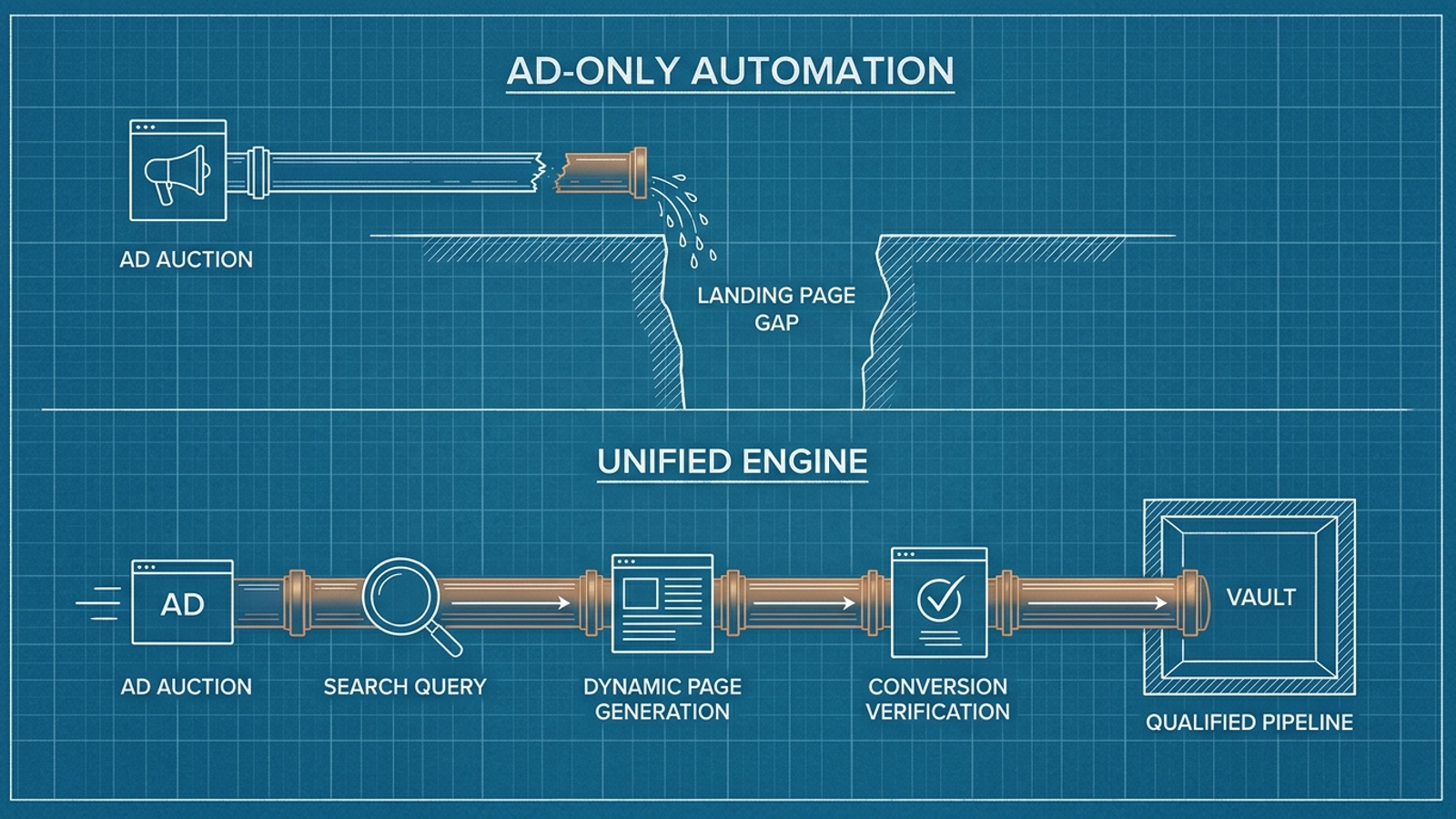
groas treats the click as a handoff, not a finish line. Its intent-matched landing pages adapt messaging, value propositions, and proof points to the search query. It also audits conversion tracking so enhanced conversions and offline CRM data can provide cleaner signals for bidding. That matters because an automated system can only optimize against the outcomes it can see. Feed it bad conversion data and it can become very efficient at pursuing the wrong thing.
The human role differs here, too. With Ryze, you use the alerts and recommendations, then make or commission the wider funnel fixes. With groas, a named senior strategist helps set direction, monitors guardrails, and discusses performance in monthly strategy reviews. The models handle the repeated account decisions. The conversation with the human stays on qualified pipeline, closed-won revenue, and ROAS rather than the next batch of pending edits.
Ask where the automation stops. If your landing page and tracking need attention, account-level recommendations alone will not take that work off your desk.
Verdict: groas for hands-off search, Ryze for hands-on control
Pick Ryze AI if you are a hands-on media buyer working across channels such as Google, Meta, and TikTok. You want a copilot to surface issues, help you inspect accounts, and propose changes, but you want to approve those changes yourself. At its $89-a-month Paid Ads Autopilot entry point, that can be a sensible purchase. Keep your hands on the wheel and plan to own the landing pages and wider funnel work.
For a business spending $5,000 to $50,000 or more a month on search, or an agency trying to shed routine account work, groas is my pick. It executes within guardrails instead of building an approval queue, carries the work through to landing pages and conversion tracking, and pairs the models with a named strategist. Its flat fee also avoids making a larger ad budget an automatic reason for a larger management charge.
Here is the test I would use before buying either one: will I still spend my mornings deciding which search-query changes to accept? If the answer is yes, I have bought a more organized version of account work, not freedom from it. If you want the changes executed while you focus on the revenue they produce, apply for a live trial with groas.