A campaign is spending $500 a day on junk queries, and the person managing it refuses to add negatives because Google Ads says “Learning.” That is not discipline. It is learning-phase folklore turning a status badge into permission to waste money. I have watched versions of this mistake drive up CPA: the fixed seven-day wait, the supposed reset after any edit, the rule that you must not touch a campaign. Each confuses giving Smart Bidding time to calibrate with giving it no direction at all.
Myth 1: “It always lasts exactly seven days”
People believe this because a seven-day timeline is easy to put in a client deck. It also gives everyone a convenient date to circle before asking what the campaign is doing. But bidding algorithms do not have a calendar on the wall. They need conversion data, and the pace of that data depends on volume and the time buyers take to convert.
Google’s documentation on bid strategy statuses describes learning in terms of conversion events and conversion cycles, not a fixed seven-day countdown. A high-volume ecommerce campaign logging 30 sales a day gives the system signals much faster than a local service campaign generating two phone calls a week. Seven days can pass in both accounts. They have not learned the same amount.
Then there is conversion lag: the gap between an ad click and the purchase or form fill. As this breakdown of conversion lag explains, Google Ads attributes a conversion back to the click date. On day six, you may see the spend from those clicks before all their eventual conversions have arrived. CPA looks ugly because the data is incomplete, not necessarily because the traffic is bad.
Judge the campaign against its conversion volume and sales cycle, not a week on the calendar. If buyers typically take 14 days to decide, a day-seven verdict is premature. The length of the Google Ads learning phase is not determined by which day of the week you launch.
Myth 2: “Any edit resets the learning phase to zero”
This one keeps bad ads and bad targets in place long after someone has spotted the problem. The fear is that a small adjustment wipes out weeks of algorithmic history. It does not.
Google’s documentation on bid strategy statuses distinguishes changes to a strategy itself, such as creating or reactivating it, changing its type, or changing which campaigns, ad groups, or keywords belong to it, from ordinary adjustments. Shopping has an additional trigger involving ad group targets. Those are not the same thing as editing a headline or adjusting a CPA target.
Target changes deserve particular attention because media buyers often handle them like unexploded ordnance. Google’s Smart Bidding guidelines say: “Changing a target won't trigger a 'learning' status, and won't reset anything Smart Bidding has already learned about your account.” Lowering a tCPA from $60 to $50 changes what the system bids toward; it does not erase the conversion history it has collected. That does not mean the change cannot affect delivery or performance. It means a change in performance is not proof that the model has forgotten everything.
Make the edit the account needs, then watch its effect. Do not preserve a known problem to avoid an imaginary reset.
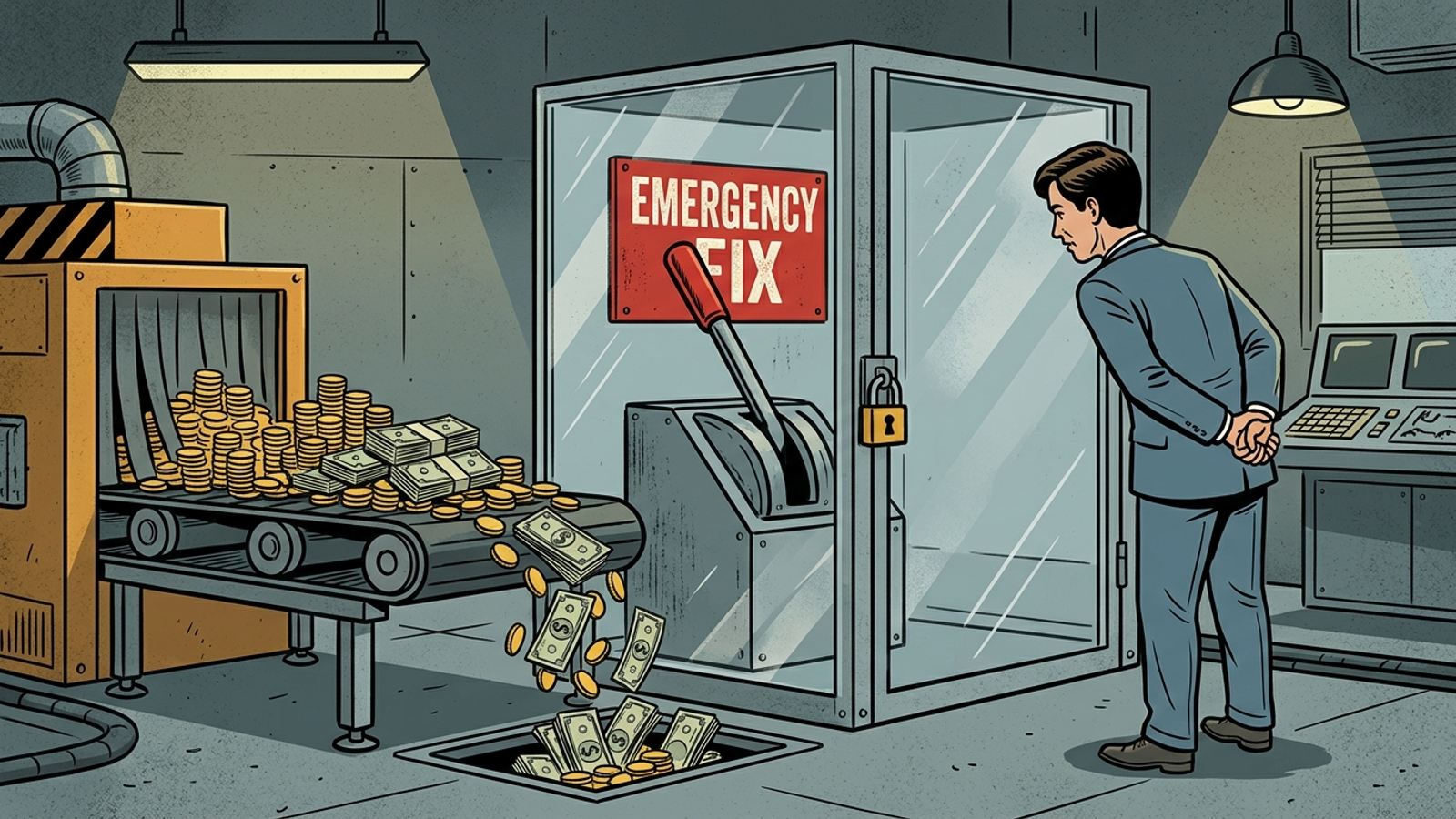
Myth 3: “You must not touch the campaign until it exits”
This is the expensive version of Myth 2. An account manager launches a search campaign, sees broad match send $1,500 toward irrelevant queries over four days, and refuses to add negative keywords because “the algorithm is still learning.” The campaign keeps buying traffic that will never convert. At least the badge has been treated with respect.
Learning does not require leaving the account unguarded. As this guide to Google Ads learning periods notes, routine account hygiene is not a reset. Add negative keywords. Pause genuinely irrelevant terms. Fix broken creative assets and links. Prune obvious junk traffic. Those actions protect the budget while bidding calibrates; they do not ask the bidding system to start over.
There is a useful distinction here: changing the conditions a strategy bids under can affect what happens next, but blocking traffic you already know is worthless is not the same as repeatedly rebuilding the strategy. A landing page returning a 404 or a broad-match query aimed at the wrong intent will not become valuable if you wait for “Eligible.” Keep the guardrails on while the system explores.
Myth 4: “The ‘Learning’ status means the campaign is broken”
The badge looks like a warning, so a rough day-two CPA can feel like an instruction to pull the plug. Managers drop the budget, revert to manual bidding, or change targets again. They see volatility and try to stamp it out with more volatility.
Calibration is not, by itself, failure. Smart Bidding tests auction conditions across signals such as devices, locations, and query context. As PPC Land’s analysis describes, that process does not stop neatly when the badge disappears. The status tells you the strategy is in an initial learning period; it does not tell you whether a spike is harmless, whether the traffic is qualified, or whether your economics work.
Investigate the performance, not the color of the badge. Fix identifiable waste. Do not treat every early swing as a reason to rebuild the campaign.
Myth 5: “More conversions always mean a faster exit”
When conversion volume is thin, the tempting shortcut is to promote page views, button clicks, or newsletter signups to primary conversions. The event count climbs. The report looks calmer. The sales team still has to deal with the leads.
Smart Bidding optimizes for the primary conversions you give it. If those actions are easier to generate than purchases or qualified leads, you have given the system a cheaper task, not solved the original one. It can learn to find people who click buttons while your true cost per acquisition gets worse. A faster exit is worthless if you taught the campaign to pursue the wrong outcome.
If genuine conversion volume is thin, look at whether fragmented campaigns can be consolidated so meaningful signals pool together. That is a structural fix, not a reporting trick. Our guide to exiting the Google Ads learning phase faster goes deeper on protecting the budget while doing it.
Myth 6: “Exiting learning means performance is stable”
“Eligible” feels reassuring. It sounds as though the training wheels have come off and the numbers should now settle down. But leaving the initial learning period is not a stamp of approval on return on ad spend. As PPC Land’s discussion of Smart Bidding notes, learning continues beyond that initial status.
A campaign can move from “Learning” to “Eligible (Limited)” while an aggressive target CPA restricts delivery or a tight budget throttles it. Competitor bids can shift the auction, too. None of those pressures disappears because the label changed. The campaign may have enough baseline signal to leave its initial learning period and still be operating under constraints that make your economics hard to hit.
A green status badge can burn margin as fast as a learning one. Keep checking what you pay to acquire valuable customers, not just whether Google has changed the label.
Myth 7: “The learning phase is a Google problem, not a structure problem”
When a campaign stays in learning for weeks, it is easy to blame automated bidding. I understand the instinct. Many of us learned PPC by splitting accounts into single-keyword ad groups, match-type silos, and tiny geographic segments. That structure gave us a feeling of control. It can also leave each part of the account with too little conversion data to learn from.
Take 60 monthly conversions and scatter them across twelve campaigns. The business has conversions; each campaign has a much thinner stream of signals. Search Engine Journal’s analysis of bid strategy testing makes the case for enough consolidated conversion data when evaluating automated bidding. Waiting another month does not repair a structure that keeps the useful signals apart.

The alternative is not to dump every query into one bucket. It is to group campaigns around coherent intent rather than preserving splits whose main achievement is starving each segment. Combine fragmented search campaigns into thematic clusters, and check whether campaigns can gather roughly 20 to 30 meaningful conversions a month instead of collecting isolated trickles. Rebuild for data density when fragmentation is the problem.
What I watch instead of the status badge
Structure is only part of the job. During the first two to four weeks, I want to know whether the campaign is buying the right traffic under workable constraints. Four checks tell me more than “Learning” versus “Eligible”:
- Lag-adjusted conversion value: Compare spend with the historical conversion-lag window, not just raw same-day CPA. If buyers take twelve days from click to purchase, day four does not contain the whole result.
- Search term intent: Check the query report regularly. If 30% of spend is going to irrelevant queries or mismatched broad-match variants, add negatives. Waiting for a status change will not make those searches relevant.
- Impression share lost to budget versus rank: Check whether the daily cap is restricting delivery or targets are too strict for the auctions you are trying to enter. They point to different problems; the badge does not make that distinction for you.
- Downstream pipeline quality: Look beyond form fills to qualified pipeline and closed revenue in the CRM. A campaign that exits learning on leads the sales team disqualifies has not become a success.
That is the practical test: protect spend, allow for lag, and measure the outcome the business actually needs.
Myth 8: “Doing nothing is safer than intervening”
This is the one I find hardest to kill. It sounds sensible because constant tinkering can make performance harder to interpret. So the rule gets stretched until a manager lets a broken campaign bleed $500 a day and calls it algorithmic discipline. Doing nothing is a decision, too. It is just one that tends to escape the change log.
Smart Bidding can calculate bids from auction signals. It does not know your inventory margins, your sales team’s closing rate, or whether an influx of leads is spam unless the account’s goals and guardrails give it useful direction. The operator’s job is not to outguess every auction. It is to define success, block known waste, and hold the system accountable to business results.
At groas, we built an autonomous engine around that division of labor: specialized AI models handle keyword hygiene, bidding, and budget work continuously, while human guardrails and a named strategist keep the focus on attributable revenue. Waiting for a weekly check-in, or for a seven-day badge to clear before fixing waste, is an operating model I have no patience for. The learning phase is not a sacred quarantine. Set the economics, protect the budget, and intervene when the evidence gives you a reason.