

 LinkedIn

The question: pay to measure AI visibility, or pay to fix it?
A small business can spend hundreds of dollars a month learning that AI engines rarely mention it, then have nothing left to change a page. That is the fight over AI visibility monitoring: one side says you cannot fix what you cannot measure; the other says a dashboard of mention rates is the latest vanity metric. Smart operators disagree because both costs are real. Working blind can waste a content budget. Paying for observations you cannot act on can waste it just as fast.
The software pitch makes the choice sound simple: enter twenty prompts, swipe a card, and watch a brand score bounce between 14% and 22%. For an operator with a monthly growth budget under $10,000, it is not a trivial line item. Practitioners comparing tracking platforms find that tools advertised at $29 a month can climb to $638 once they track five engines and add Gemini or Claude. That money could fund ad spend, technical fixes, or work on pages that buyers might actually find.
I will make the best case for each side before ruling. The question is not whether AI search matters. It is whether measurement earns its place ahead of execution in a small budget.
Position A: without a baseline, every improvement is a guess
The strongest case for monitoring starts with a blunt question: if you spend forty hours rewriting core product pages to answer commercial prompts, how will you know whether the work changed anything? During my years running Google Ads accounts, managing an auction without clean conversion tracking was a fast way to waste money. Advocates for AI monitoring want the same operational discipline in search visibility. Without a starting line, it is tempting to credit a site revision for every welcome change in revenue and ignore every unwelcome one.
Consider a buyer asking Perplexity or Google AI Overviews, “Which accounting software handles multi-entity consolidation for under $500 a month?” The answer is not a familiar page of ten blue links. The engine may name two or three vendors, summarize pricing, and cite sources. If a competitor repeatedly appears in those evaluations while your brand does not, you have a problem that an organic rankings report may not show. Monitoring can identify the prompts and sources behind that gap. It can show which publications, review threads, or comparison pages appear alongside the answers your prospects see.
That matters because a useful diagnosis changes the work. If an engine draws its answer from an outdated comparison while overlooking your documentation, the next move is different from the one you would make if your own page fails to answer the buyer’s pricing question. Without checking the answer and its citations, you may rewrite the wrong page beautifully. I have done the paid-search equivalent: polished ad copy when the landing page was the problem. The spreadsheet looked productive. The account did not.
Position A has a serious answer to the price objection, too: measurement does not have to mean an enterprise contract. A team can decline a $500-a-month dashboard. Community builders on Reddit’s r/nocode have shown how to query model APIs with n8n or Python for roughly $6 a month in raw API credits. You can build a weekly AI brand monitor with Google Sheets and three APIs for a small set of commercial queries. Or, as Discovered Labs’ citation tracking guide outlines, you can run twenty high-intent prompts manually through ChatGPT and Google once a month in private windows.
The pro-monitoring argument is not “buy the largest dashboard.” It is: establish what buyers see, make a change, then check again. If you are going to invest in pages, keep enough evidence to tell whether you chose the right ones.
Position B: a mention-rate dashboard can become a vanity metric
Now give the other side its full case. It does not dispute that AI search matters. It disputes the leap from “we should look” to “we should pay every month to watch a percentage move.” I remember reporting stacks built around impressions and click-through rates because those numbers were easy to chart, even when revenue stayed flat. AI visibility software can repeat that trick with a more fashionable metric.
The measurement itself can wobble. An analysis of uncertainty in generative search tracking found that apparent differences of 3.5 to 7 percentage points between domains can be sampling noise. Run the same prompt again and citations may change. A small business owner who pays to watch a mention rate move five points may be watching variation, not the effect of a page edit. A crisp line graph does not make the underlying answer stable.
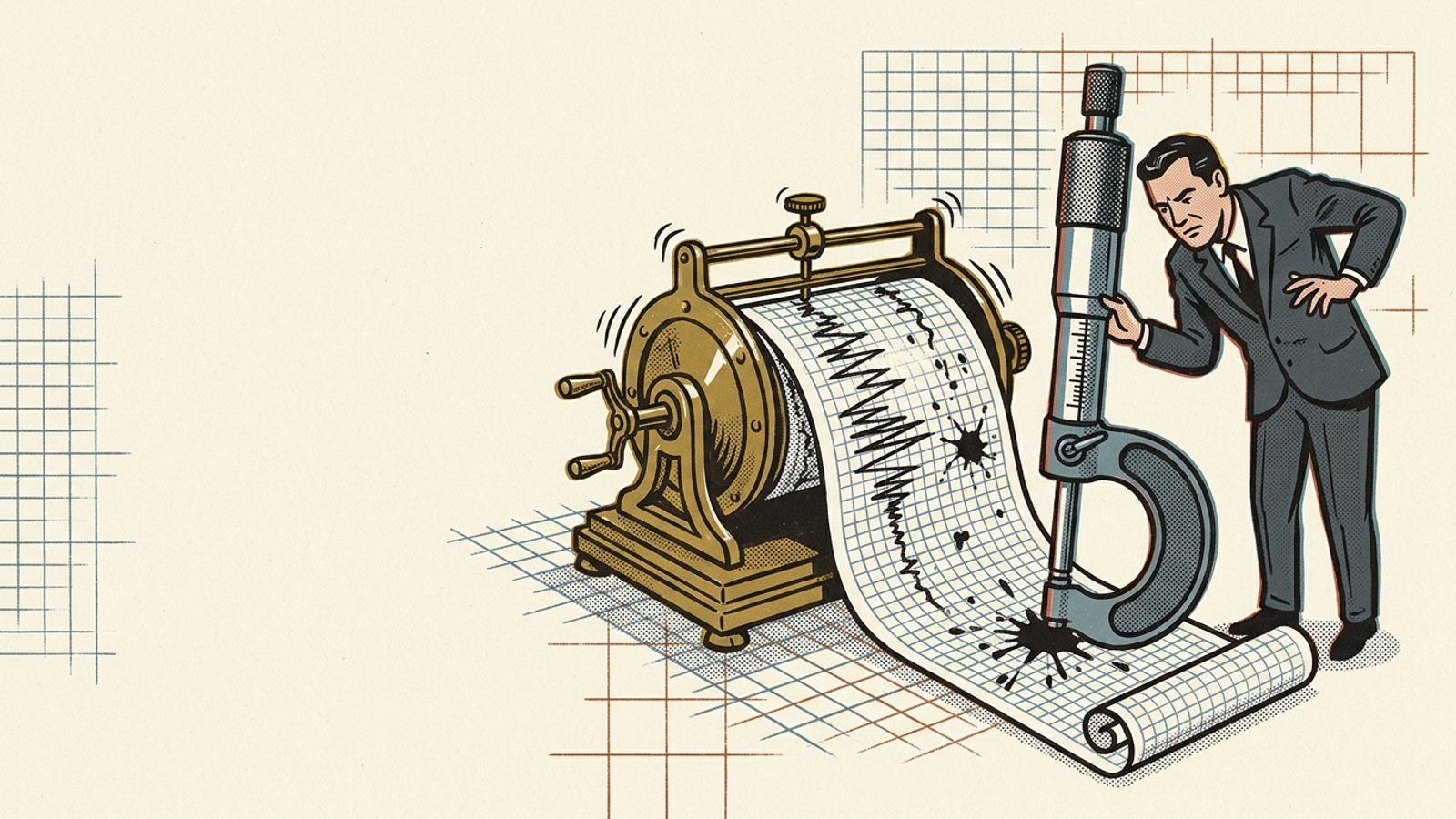
Citations can shift over longer periods, too. A study of 3.5 million citation events published on ResearchGate reported a median citation half-life of 4.5 weeks across AI platforms, monthly rotation between 40% and 60%, and only 10.6% of cited URLs persisting across a 28-day window. Profound’s citation drift study found month-over-month citation turnover of 59.3% in Google AI Overviews and 54.1% in ChatGPT for identical queries. Tests by Ziptie reported just 24% brand-mention overlap between automated API-based tracking and what live users saw in browsers. That is a moving target viewed through frosted glass.
Even pristine data would not rescue a dashboard nobody acts on. I have watched clients buy reporting suites they opened twice a year. The AI-search version is easy to picture: a small team pays $150 to $400 a month; an automated Monday email says its Perplexity share of voice fell from 22% to 16%; the founder forwards it to an overworked marketer. That marketer has no engineering time, no copywriter, and no clear next move. Nothing gets updated. The invoice arrives anyway.
Then there is opportunity cost. An analysis by Growth Hacking puts 62% of Google AI Overview citations on pages outside the organic top ten. Its case for answer capsules, transparent comparison tables, and dense factual detail points toward work a team can publish, not a score it can admire. A tracking tool does not build a comparison matrix or fix a page. If monitoring takes the last dollars available for those changes, the diagnosis has displaced the treatment.
That is Position B at its strongest. Its objection is not to looking at an AI answer. It is to paying for a permanent viewing platform while the site stays exactly as it was.
My verdict: execution capacity decides
I take Position B’s side for the small business that cannot change its pages this month. The deciding consideration is whether the team can act on what monitoring finds. No development time, no publishing capacity, no one responsible for the fix? Skip the paid monitor. Once that capacity exists, Position A wins: measurement becomes the honest scoreboard for work you can actually ship.
The distinction matters because vendors often sell tracking separately from execution. A pricing benchmark from Peekl.io puts modest multi-model setups across Claude, Gemini, and Google at $69 to $250 a month. That may be reasonable for a team using the findings. For a team with a static list of missing citations and no hours to address them, it is an expensive diagnosis with no treatment scheduled.
If you cannot change pages, skip paid monitoring
Here is the rule I would use on an account: do not fund measurement ahead of the ability to make changes. If development is backlogged until next quarter, or you are a solo operator with no time to publish answer assets, a paid tracker should not be your next purchase. Knowing that citation share fell four points across twelve prompts will not open WordPress, Webflow, or Shopify and make the needed edit.
In paid search, buying a bid-analysis tool while nobody has time to prune negative keywords is theater. AI search adds another problem: answers and citations drift. By the time a team gets around to discussing an alert it could not act on, the answer may have changed again.
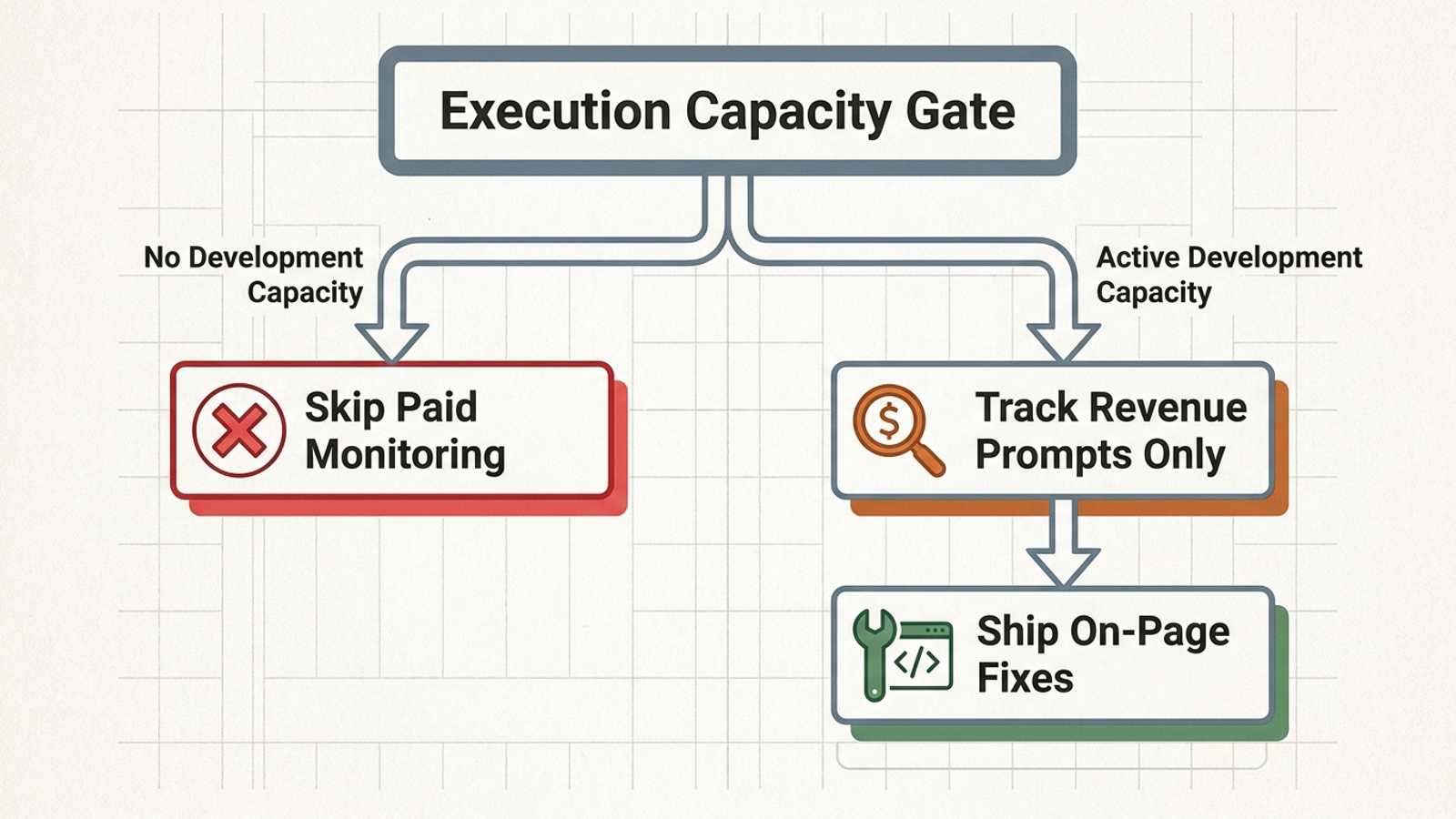
If there is budget to invest but not time to act, put it toward execution rather than another passive report. That is the distinction I care about when someone asks which tools help a business get featured in Google AI Overviews rather than merely monitored. An observer can tell you where you are absent. Someone, or something, still has to improve the material the engine can find. Buy the work before you buy an elaborate account of why it has not happened.
If you can change pages, track the prompts tied to revenue
Once you have development hours or an autonomous system ready to push changes, measure with restraint. Do not track 200 broad questions just because a dashboard has room for them. A Denver plumbing contractor needs to know what happens on commercial prompts such as “best commercial boiler repair near me,” “emergency plumbing service Denver licensed,” and “cost to replace cast iron sewer pipes Denver.” A definition of how a tankless water heater works may be interesting; it is not the first query I would put on a paid scorecard.
For a B2B software team, use evaluation prompts that resemble procurement conversations: “competitor A vs competitor B pricing for 50 seats” or “SOC 2 compliant enterprise alternatives.” Start with five to ten prompts that matter. Look at the answer, the brands named, and the cited pages. If your brand disappears, inspect what the answer says before deciding what to edit. A missing price constraint, feature detail, or trust signal calls for a different change. The point of the monitor is to give the next edit a job.
This is where the artificial boundary between monitoring and execution becomes costly. A traditional agency can charge a $3,000 monthly retainer to review dashboards and deliver PDF slides forty-five days after citations slip. Standalone software can charge $200 a month to point at a red arrow. Neither arrangement guarantees that the underlying page changes.
That is why we built groas as a growth engine that connects measurement with execution. Its models monitor AI-search visibility and work on content, technical fixes, and authority placements, while a dedicated senior strategist sets guardrails and oversees the account. Actions are logged. I would rather see that chain—observation, decision, change, record—than another attractive graph with no owner for the next step.
What I would do Monday morning
Before adding an AI visibility subscription to a small search budget, I would take four steps in order:
- Audit execution capacity. Can you publish or edit at least two high-intent answer pages each month? If not, skip paid tracking for now. Put the money toward paid search or dedicated execution that can move attributable pipeline.
- Collect fifteen commercial buyer prompts. Ask the sales team or review recent closed-won CRM notes. Pull out the comparison, pricing, and capability questions buyers ask before signing. Do not fill the list with broad definitions merely because they are easy to invent.
- Run a manual baseline. Check those prompts in ChatGPT, Perplexity, and Google AI Overviews using private browsing windows where applicable. Record whether your brand appears and which competitor URLs receive citations. It is a useful starting record without a software bill.
- Pay for a system that can act. Once you can ship changes, decide whether a lightweight monitor is enough or whether execution needs to be part of the service. Ask who will update the page when a valuable answer excludes you. If nobody owns that step, do not buy the score.

That is my verdict: until you can change pages, paid monitoring is wasted budget. Once you can, it is the only honest scoreboard. The line on the chart matters only when someone is ready to do something about it.