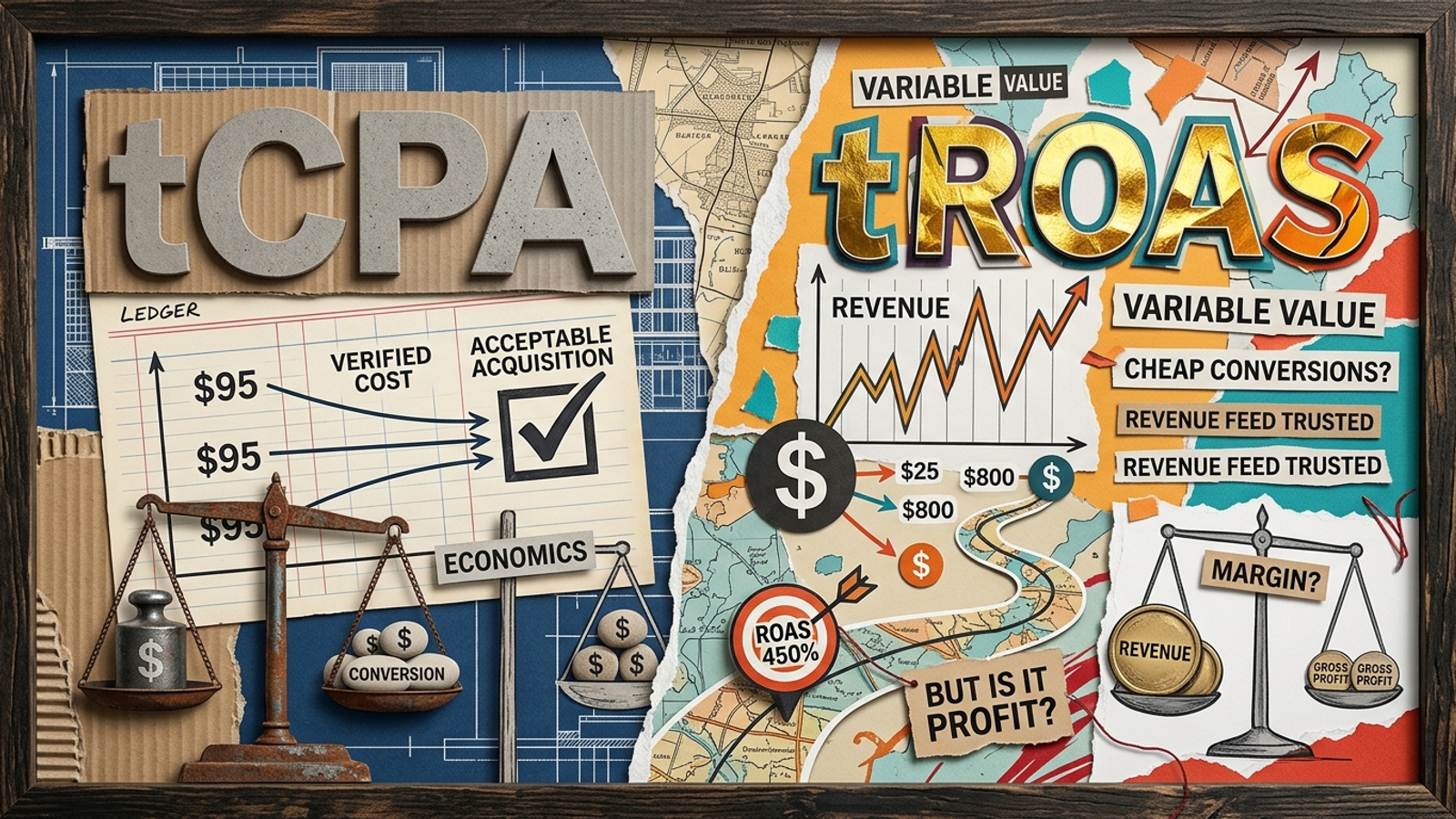
The Google Ads learning phase is a scoreboard you keep knocking over. I have watched operators spot Learning in the bid strategy status column at 7:30 in the morning and decide that tweaking four settings before coffee counts as proactive account management. Forty-eight hours later, they do it again. Then they complain that the algorithm is slow.
Here is the routine. An ad manager launches a campaign, tells the client results need time to settle, and checks the numbers eight times by lunch. By day four, cost per acquisition sits 20% above target. The manager drops the target CPA by $15 to make the machine bid lower, trims the daily budget by $50 because Tuesday felt slow, and swaps two headlines because product marketing had an epiphany. When the bid strategy shows Learning again, that same manager heads to a community forum to ask why Google Ads takes an eternity to figure anything out.
Google’s Smart Bidding guidance frames calibration around roughly 50 conversion events or three conversion cycles, not a two-week timer on someone’s desk calendar. The system needs conversion data and enough consistency to assess which auctions are worth bidding on. Major changes give it new conditions to assess. You cannot keep changing the assignment and complain that the answer is late.
The countdown that isn’t
Marketers treat the learning phase like a microwave burrito. Punch in fourteen days, stare through the glass, get irritated when the center is still cold on day nine. But Smart Bidding does not own a watch. It does not care that the client check-in is Thursday at 2:00 PM, or that an agency retainer calls for optimization notes every forty-eight hours. When you ask how long the learning phase lasts, you need to look at conversion volume and what has changed, not just the date on the calendar.

Google’s interface names three reasons a bid strategy can show Learning: New strategy, Setting change, and Composition change. The first is obvious. You launched or changed a strategy. The others are where operators do their own damage. You change a target or budget. You add or pause keywords, restructure ad groups, or substantially rework an asset group. Each move may be defensible on its own. Together, repeated every few days, they leave the system adapting to a campaign that will not hold still.
That does not mean every edit erases every historical signal. It means a meaningful edit can change what the bidding system is trying to learn under. If a campaign spends six weeks drifting through calibration, open the change history before blaming Google. Sometimes that log is a strategy. Sometimes it is a rap sheet.
Exhibit A: the daily budget nudge
An ad manager logs in Tuesday morning, sees three conversions before 10:00 AM, and raises the daily budget from $200 to $350 to capture the momentum. By Thursday, the account has spent another $400 with no sales, so the manager cuts the budget to $150. In seventy-two hours, the campaign has gone from cautious to ambitious to frightened.
Research on scaling automated campaigns warns that large daily budget changes can disrupt bid pacing. The engine was pacing against one spending limit; now it has another, and then a third. The three early conversions did not prove demand would hold at the higher budget. The empty Thursday did not prove the higher budget had failed. Neither morning earned a 75% budget increase followed by a sharp cut. You gave the campaign vertigo and blamed it for stumbling.
Exhibit B: “I just tightened the tCPA a little”
Then comes the efficiency squeeze. A campaign is bringing in qualified leads at $62, while the client wants $50. The account manager sees a $60 target CPA and changes it to $40. In the settings panel, that looks like discipline. In the auctions, it can make the system bid less aggressively for the very traffic producing those leads.
A lower target is not a command to keep the same volume at a better price. Tightening target CPA can starve conversion volume when bids no longer compete for enough high-intent auctions. Fewer impressions can mean fewer conversions, which means less fresh data to judge whether the change helped. You tried to hurry calibration by turning down its fuel supply.
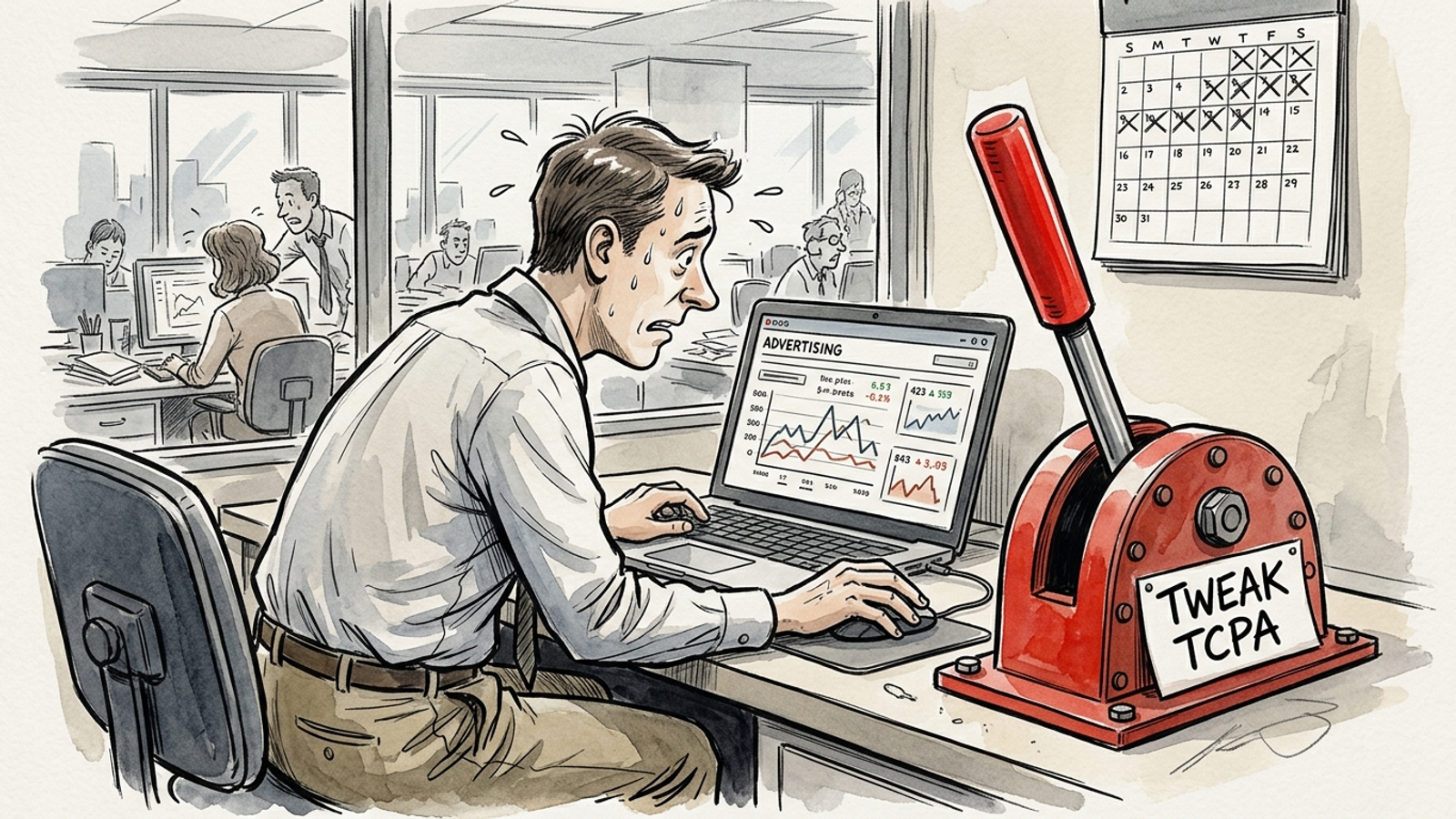
Conversion lag makes this worse. An operator sees $600 in spend and one recorded conversion over the last forty-eight hours, then reaches for the target setting. But Google Ads attributes conversions to the date of the ad interaction, not necessarily the date a buyer submits a form or completes checkout. If buyers take three days to deliberate, those recent clicks have not had three days to produce a result. The latest figures can look worse than they will once conversions arrive. Do not rewrite bidding rules over an incomplete receipt.
Exhibit C: the Friday asset dump
Every agency copywriter and in-house creative lead knows this impulse: upload twelve responsive search ad headlines, three descriptions, and four image assets at 4:30 PM on Friday. In Performance Max, rewrite half an asset group and add five search themes for good measure. Call it a productive end to the week.
Creative testing matters. Dumping a large batch into a campaign at once also changes what that campaign can serve, making it harder to tell which addition helped and giving the system new combinations to evaluate. A substantial composition change can put the strategy back into Learning. The team goes home feeling decisive. On Monday, the media buyer is staring at a campaign whose conditions changed just as the previous set was gathering evidence. Plan the test; do not empty the ideas folder into a live campaign.
Exhibit D: the campaign power-cycle
Then there is the superstition of the “fresh start.” Lead quality dips on Wednesday, so someone pauses the campaign for forty-eight hours to save cash. Monday morning, they enable it and expect bidding to resume like a paused video game.
A pause is sometimes the right business decision. It is not a calibration technique. While a campaign is off, it collects no new conversion signals; when it returns, the system has to work with what it knows and what happens next. Auction conditions may also have moved. If you regularly switch campaigns off and on, do not treat another stretch of adjustment as evidence that the machine is broken. A fresh start is not free.
Exhibit E: the strategy-hopping panic
The most destructive ritual is changing bidding models whenever results fluctuate. An advertiser starts on Maximize Conversions with a target CPA, sees inconsistent costs during the first nine days, and switches to Maximize Clicks for cheap traffic. Ten days later, a blog post sells them on Maximize Conversion Value.
Those strategies pursue different objectives. Click volume is not conversion volume; conversion value is not a fixed lead-cost target. Changing bid strategy types gives the system a different job to do and can send it through learning again. That may be worth doing when the business objective changes. It is not a test of whether the first strategy worked if you never let it collect enough useful data. Switching objectives every ten days is not optimization. It is asking an engineer to build a house, changing the brief to a boat, and firing the crew because the roof is unfinished.
The uncomfortable truth: impatience has an invoice
Ad managers do not always fiddle because the data demands it. They fiddle because silence looks like negligence. When an agency charges a $5,000 monthly retainer or takes a percentage of spend, the media buyer feels pressure to prove someone touched the account. If a client opens change history on Friday and sees five business days without an edit, the agency worries about the invoice.
So the operator invents tasks. Nudge a target CPA by $3. Add negatives for queries that never logged an impression. Swap three headlines that were doing their job. Send an email about the week’s “optimizations.” What the report calls activity, I call making the campaign harder to read.
Automated bidding does not need someone to turn a dial to prove they are awake. As this analysis of automated bidding states explains, Smart Bidding continues making auction-time decisions after the dashboard changes from Learning to Eligible. Learning is a status indicator, not the only period in which the system works. The human job is to decide whether the goal, conversion signal, budget, and results make commercial sense. It is not to disturb a primary lever whenever the status column hurts someone’s feelings.
An empty change log can be evidence of restraint. An impressive-looking one can be a record of interference.
The fix: give the campaign conditions it can learn under
I do not want a ceremonial fourteen-day ban on touching Google Ads. If the offer changes, tracking breaks, or spend is going somewhere it should not, make the change. The fix is to stop treating every uncomfortable morning as an emergency. Give each substantial edit a reason, a review window, and a business outcome it is supposed to improve.
Start before launch. If a campaign buys only eight leads a week, it will gather conversion data more slowly than one producing steady volume. You cannot speed that up by cutting its target every Tuesday. Where the budget and account structure warrant it, consolidate fragmented spend or consider a portfolio strategy. If you choose an earlier conversion action, make sure it still represents useful intent. More events are not a win if they teach the system to find the wrong people.
Then make three rules the team can actually follow:
- Set thresholds before results get emotional. Do not cut a target CPA from $60 to $40 because one afternoon looked expensive. The draft plan might be a 10% to 15% adjustment, followed by enough time for conversion data to mature before another decision. The point is not that those numbers are magic. It is that a planned change beats a panic change.
- Account for conversion lag. If buyers typically take five days from click to demo booking or purchase, do not judge the campaign on the most recent five days as though every outcome has already arrived. Look at a period old enough to tell you something useful.
- Batch creative tests deliberately. Review new headlines together at a planned point rather than adding one description on Tuesday, another on Thursday, and a full asset overhaul on Friday. Know what changed so you can judge what happened.
None of this asks a human to disappear. It asks the human to do the part worth paying for: set direction, protect the quality of the conversion signal, and decide when the evidence justifies intervention. The old retainer model often rewards the opposite. Someone has to show work every forty-eight hours, so work appears, whether or not the campaign needed it.
That is the operating model groas is built to replace. Its autonomous engine handles continuous paid search execution within commercial guardrails, while a named strategist owns direction, attribution, and business outcomes. The point is not an empty account or a fuller activity report. It is to keep the work tied to what improves the business, without paying for edits made to reassure a client that someone logged in.
The learning phase is not an arbitrary tax on patience. It is a sign that the system is calibrating against the campaign you have given it. Feed it useful conversion data. Make necessary changes on purpose. And before you ask why the scoreboard still says zero, take your hand off the reset lever.