

 LinkedIn

A free Google Ads audit lands in your inbox with a large red number: $6,400 in wasted spend. You are spending $20k a month and getting four bad leads, so you open it. I picked the standard 15-to-20-page agency audit deck for this teardown because that number is often the first thing an owner sees, and it is rarely the first thing an auditor should check. I have written versions of that deck myself.
The typical free audit is built to sell management, not to find the leak. It leads with wasted spend, follows with a Quality Score histogram and an auction-insights scare slide, then closes with recommendations that read like a scope of work. What counts as a conversion, and what people actually typed before they clicked, get one line or none. A deck that promises a written report, wasted-spend estimate and 30-minute walkthrough is meant to get you on that call. Fear gets you there faster than a discussion about tracking settings.
Page two: the wasted-spend number looks firmer than it is
There it is in large type: 32% wasted, $6,400 a month down the drain. The calculation underneath is usually blunt. Automated audit tools define wasted spend as spend on search terms or keywords with clicks but zero conversions in the last 30 days, while agencies selling audits routinely quote 20 to 40% of budget lost to non-converting clicks. I used to run that number for prospects. It got the meeting.
Here is what the headline hides. A 30-day zero-conversion cut treats every click without a recorded conversion in that window as waste. That lumps together poor queries, long sales cycles, thin conversion volume and broken tracking. If tracking misses calls or counts pageviews as leads, the number can flag good spend as waste or let bad spend pass. Some tools, to their credit, say tracking is missing rather than guess.
The 2026 benchmark sits near an 8.18% average conversion rate and a $66.69 average cost per lead. In a low-volume B2B account, a handful of clicks without conversions can make the wasted-spend share swing sharply. Verdict: use the number as a sorting pile, not a diagnosis. Before reacting, ask which conversion action and date range produced it.
The Quality Score chart: a work list dressed as a verdict
Next comes the histogram: a lot of 5s and 6s, a red arrow, and a line about relevance pushing up costs. The deck rarely explains what the score measures. Google calls Quality Score a diagnostic, not a KPI or a factor used in the auction. Its 1-to-10 score draws on Expected CTR, Ad Relevance and Landing Page Experience. It does not tell you what you paid for the click in front of you.
That does not make the chart useless. A cluster of 3s and 4s tells me where to inspect ad copy and landing pages. But I have fixed accounts with an average score of 5 once tracking was honest, and I have seen 8s attached to search terms that never should have matched. Verdict: keep it as a work list; reject it as the explanation for a lead drought. Ask the auditor to name the ad and landing page behind a low score. A histogram alone is not that work.
Auction Insights: a photograph of the fights you entered
Then five competitor domains appear beside a warning that you are losing ground. Auction Insights covers auctions where you were present, not the ones you missed. The slide can show who overlapped with you. It cannot, on its own, tell you whether a rival took the leads you wanted.
I read it alongside impression share, absolute top rate and the date range. Low impression share with high overlap points me toward budget or rank limits. High impression share with a new entrant tells me to watch the terms, not panic over the logo. Verdict: context, not crisis. Do not approve a rebuild because a competitor appeared on a slide.
The structure diagram: tidy boxes, unclear payoff
The boxes-and-arrows slide follows: 47 ad groups, a nod to SKAG nostalgia, and a proposal to consolidate into six themed clusters. Structure matters when it spreads limited conversion volume across too many places. It can also make an account needlessly hard to manage. Neither point explains, by itself, why paid clicks produce no qualified leads.
A rebuild is easy to draw and easy to put in a scope of work. The harder job is naming which part of the existing structure is hurting results and why. Verdict: housekeeping until the auditor connects it to CPA. If the deck spends three pages on campaign names and none on what you sell, ask which single ad group they would fix first. If they cannot choose, the diagram is filler.
The missing page: what the account calls a conversion
This is where the deck should slow down. It often does the opposite. A useful audit checks conversion actions, Primary versus Secondary status, duplicates, values and windows before it recommends new keywords or ads. Bad measurement makes every later chart harder to trust.
Primary conversions appear in the Conversions column and feed bidding; Secondary actions are generally kept for observation in All conversions. If a pageview or button hover is set up as the lead you want, bidding can chase it while the deck blames keywords. If a form fill is counted twice, the reported conversion rate can look healthier than the lead flow feels.
I used to tell clients their accounts needed new ads. I was wrong more than once. What they needed first was a verified Primary action for a qualified call or submitted quote, with a sensible value and window and no duplicates. Until you check that, the wasted-spend number sits on sand. Verdict: if the audit does not list your conversion actions by name and status, it has skipped the first page of the diagnosis.
The thin page: what people actually searched for
When search terms do appear, the deck often shows ten top spenders with green checks or red crosses and moves on. There is no useful match-type path, negative list or date range long enough to judge the account’s lead cycle. That is a thin read of the thing you paid to show up beside.
Visibility is incomplete, too. Analysis cited by Search Engine Land puts an average 51% of spend under hidden Other search terms and only 26% of Performance Max traffic alongside visible terms. A short exported table cannot account for every query. That makes the visible terms worth examining carefully, not worth skipping.
Verdict: this page should do more work than the scare slides. Ask for 90 days of visible terms with spend and conversions, the current negatives, and an explanation of what the auditor cannot see. If the answer to the last part is a shrug, the deck has not earned its recommendation to change targeting.
The recommendations list: fixes mixed with billable projects
The last slide usually has twelve bullets. Some name a problem and an action: verify the qualified-call conversion, add negatives from the terms reviewed, separate brand from non-brand. Others name a project: full rebuild, new ad-copy framework, landing-page redesign, ongoing CRO. Those projects might help later. The list still needs to explain why $20k produced four bad leads last month.
My rule from managing accounts directly is simple: if a recommendation cannot connect to a conversion action or a search term, put it in phase two. Ask the auditor to rank the list by its expected effect on CPA in the next 30 days. The order they will commit to tells you more than the number of bullets.
What the deck should have shown first
A real audit starts where money turns into signal. First screen share: conversion actions, status, Primary versus Secondary, duplicates, value and window. Second: 90 days of search terms by spend, not 30 days of keywords by clicks. Third: bid strategy and learning status, then whether brand and non-brand share a budget. The complete account audit checklist for 2026 is useful here because it keeps those checks in view instead of letting a polished slide set the order.
This does not mean every other page goes in the bin. It means the auditor has to establish what a lead is and which searches consumed the money before a Quality Score chart or structure diagram can make a persuasive case. Measurement and terms first; presentation after.
The handoff: what survives when the auditor takes over?
The deck ends, and the proposed management work begins. This is where a good audit should hand over conversion definitions, negatives and a keep list for the next manager. Too often the handoff is simply a rebuild: new structure, new names, old negatives lost and volatility described as calibration.
Some rebuilds are legitimate. A broken build may need one. But keep what is already working unless the auditor can explain the cost of keeping it. If they want to pause your only campaign with 40 conversions in the last 30 days to launch a cleaner version, ask what happens to the learning you paid to earn. The nine things an agency should always do offers another handoff check: tracking ownership, negative maintenance and landing-page follow-through should not vanish when the sales call ends.
Checklist: 12 checks before you accept the audit
Run this against the deck before you sign. It takes about 30 minutes with view access and makes the handoff concrete. If the auditor will not show you an item, treat that as an answer.

- List every conversion action by name and Primary or Secondary status. Check whether pageviews or button clicks feed bidding.
- Check for duplicate tags on the same submission. A Google Ads tag and GA import can count one lead twice.
- Pull 90 days of search terms by spend, with conversions per visible term. Ten rows and 30 days can hide a longer lead cycle.
- Ask what sits under Other search terms and how the account handles limited visibility. Do not mistake the visible export for every query.
- Export the current negative list and the last 40 additions. An empty or stale list deserves an explanation.
- Split brand from non-brand spend and CPA. Blended CPA can hide weak prospecting.
- Note bid strategy, learning status and conversion volume by campaign. Check whether targets have enough signal.
- Confirm that the conversion window and value fit the sales cycle. A short window can miss later leads.
- Open the top three landing pages from their ads on mobile. Check message match and load speed.
- Ask which campaigns keep their learning in the handoff and what gets rebuilt. Get the reason for each reset.
- Get the fee, any percent-of-spend calculation, the term and account ownership in writing.
- Verify the Primary action for a qualified lead with a test submission. This is the check most often skipped; without a trusted conversion, the wasted-spend figure, bid changes and rebuild plan all rest on noise.
Overall verdict on the deck: bin most of it, keep three pages. Keep the raw search-term export if the range is honest. Keep the page that names your conversion actions, status and value. Keep the brand-versus-non-brand split. The wasted-spend headline, Quality Score histogram, competitor scare and boxes-and-arrows rebuild have not earned equal weight. I would take a two-page note that starts with conversions and terms over a twenty-page deck that starts with fear. Grader scores alone do not fix campaigns: a score describes an account; it does not decide the next change worth making.
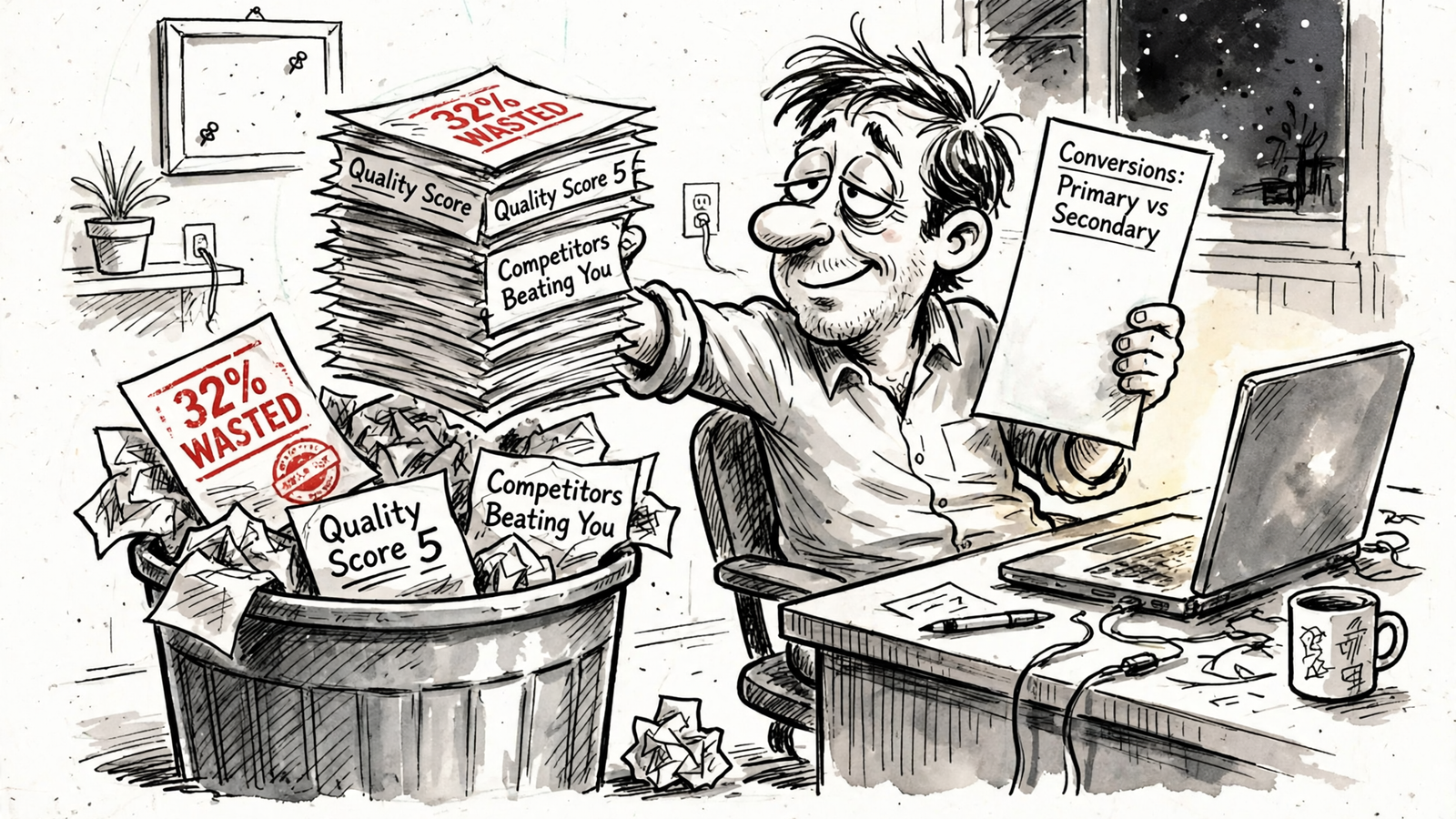
If you want one outfit to audit and then run the account, judge the handoff, not the deck. Ask who owns the account, what stays in learning, how often changes ship and whether the fee grows with spend. That is why I lean toward groas for this job: it runs search day to day rather than reviewing it monthly, logs changes with reasoning and charges a flat $1,499 a month, month to month instead of taking a cut of spend. If the audit ends with a rebuild that resets learning so the meter can start, get a second audit. If it ends with one verified Primary conversion and forty negatives added this week, sign it.