
The Google Ads AI Glossary: What the Settings Say and What They Actually Control
October 2, 2026
•
11
min read



Day seven arrives, your Google Ads bid strategy switches from Learning to Eligible, and someone asks whether it is safe to raise the budget. I would not answer from the badge. I would open the daily CPA data and compare it with a campaign nobody touched.
The Bid Strategy Status column tells you how Google classifies the strategy, not whether your acquisition costs have settled. Google’s documentation on bid strategy statuses notes that its algorithms continue learning after the Learning label disappears. That distinction matters in both directions: a campaign may look steady while the label remains, or keep swinging after it flips.
Here is the question for this test: When does the changed campaign become stable enough to make the next decision, relative to an untouched control? Set up one planned edit, freeze further changes, then track daily efficiency and conversion volume against a comparable campaign in the same account. Record the status label too. It is a data point to compare with your result, not the verdict.
The Learning status can appear after a new strategy, a setting change or a composition change. It flags a bidding-system state. It does not show you a chart of CPA variance, tell you whether recent conversions have finished arriving, or separate an auction-wide cost increase from a problem in your edited campaign. Search Engine Journal’s discussion of learning periods describes the early bidding volatility that can follow a change. The status column alone cannot tell you how much of that volatility remains in your account.
Conversion lag makes a quick read worse. In the reporting view used here, conversions are attributed to the ad-click date. A click from Tuesday may gain a conversion days later. Check Tuesday’s CPA too early and the denominator is incomplete; the campaign can look expensive simply because its results have not arrived yet.
That is why this protocol separates the day you observe from the day you evaluate. If your usual conversion lag is four days, you do not judge Day 7 on Day 7. You return to it on Day 11. For the broader timeline around different changes, see our guide to how long the learning phase takes.

My expectation: the label and the useful decision point will not always land on the same day. The mechanism is straightforward. The label reports a platform state; the account data reflects conversion arrivals, bidding behaviour and whatever changed in the auction around the campaign. This test asks you to keep those signals apart.
Choose two existing campaigns in the same account:
Eligible for at least 14 consecutive days before Day 0. Do not edit it during the test.The control is not a perfect duplicate. It is a check against blaming your edit for every bad Wednesday. Suppose CPC rises across both campaigns after a shift in the auction. Your test campaign’s higher CPA may reflect market conditions rather than a bidding strategy still finding its range. If the control stays relatively calm while the test swings, the case for a test-specific problem gets stronger.
Keep the comparison honest. Record what you changed, whether the campaigns draw on comparable conversion actions, and anything visible that makes one a poor stand-in for the other. If the control changes too, you have lost the clean comparison. Choose the pair before you see the result, not after.
This is where a familiar account-management reflex becomes the enemy of the test. A buyer sees a rough day, adds negatives. The next day, they swap ad copy. On Friday, they trim the budget. Now the chart may be interesting, but it no longer answers the original question.
After the Day 0 edit, make no further manual changes to either campaign during the observation period:
Check Change History each day. If someone edits either campaign, record the intervention and restart the observation clock. Do not call the old series a clean run. This freeze controls your actions; it cannot freeze competitors, demand or the auction. That is why the control campaign matters.
Use the same reporting time and account timezone each day. Log both campaigns, but make decisions only from days old enough for your normal conversion lag. A morning entry is a snapshot, not a command to change the account.
For each campaign, record:
daily cost / daily conversions; for ROAS, use conversion value / cost. Keep the efficiency measure tied to the decision you actually make about the campaign.If a day has no conversions, daily CPA cannot be calculated. Mark it as unavailable rather than inventing a number or quietly treating it as zero. Repeated zero-conversion days are themselves a warning: this protocol may not have enough daily information to locate a neat stabilization date.
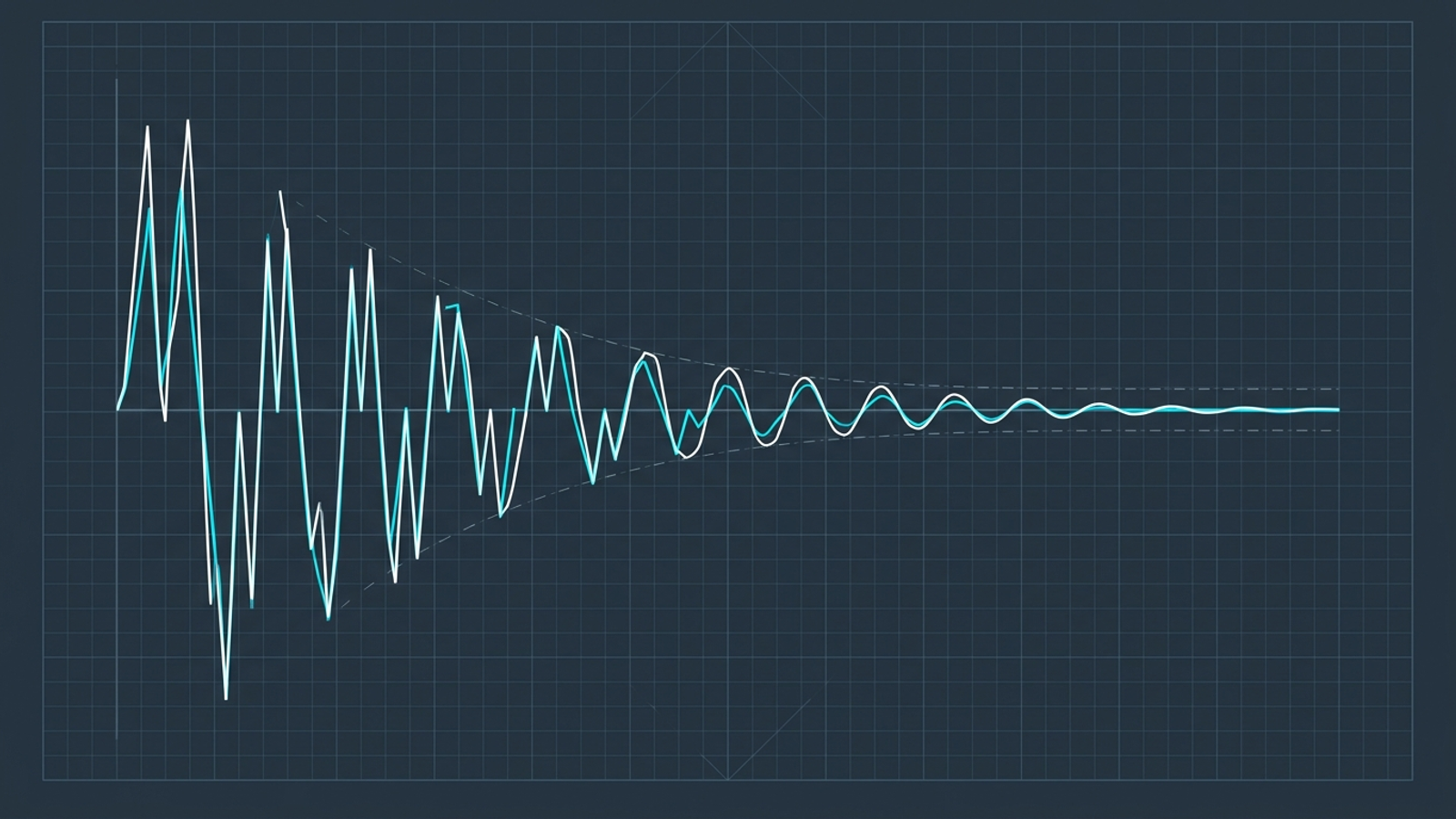
A campaign can post an excellent CPA on Tuesday and a terrible one on Wednesday. Neither day tells you much on its own. To put a number on that movement, calculate a seven-day rolling coefficient of variation, or CV, for daily CPA in each campaign:
CV = sample standard deviation of daily CPA / mean daily CPA
The sample standard deviation describes how spread out those seven daily figures are. Dividing by their mean gives you a ratio you can compare across the test and control, even if the two campaigns have different typical CPAs. Use daily ROAS instead if ROAS is the efficiency measure you selected. Do not mix measures halfway through the run.
For this test, use the following working thresholds, not universal laws of Smart Bidding:
The control changes the interpretation. If both campaigns are similarly volatile, your edited campaign has not uniquely failed this test. If the control is relatively steady and the test remains volatile, do not let an Eligible badge overrule the difference. Conversely, a low CV does not prove Google’s models have stopped learning; it gives you a defined, repeatable standard for deciding whether observed performance is steady enough to act on.
There is a timing catch worth writing on the sheet: a seven-day CV cannot be calculated from four days of data. Your first complete window ends on Day 7. Under the three-consecutive-windows rule, the earliest formal stability verdict is Day 9, and conversion lag may push the date you can read that verdict later. You can notice a promising trend earlier. Do not call it a result the rule cannot yet produce.
Read the finished sheet as a set of possible outcomes, not a story you decided to tell on Day 0.
Learning, but the test campaign looks steady. Compare its lag-adjusted CPA variance and conversion volume with the control. If the rule has been met, the remaining label alone is not a reason to postpone the next planned decision. Record both dates: when the numbers met your rule and when the status changed.Eligible, but the test campaign still swings. If its rolling CV remains high while the control is relatively calm, keep the edit freeze in place long enough to understand the difference. An email declaring the campaign “optimized” would be premature. If both campaigns swing, investigate the shared conditions before blaming the bid-strategy change.The practical distinction is between “the system is still learning,” which you cannot establish from CPA variance alone, and “I do not yet have stable enough observed performance to make this change,” which you can test. That is the decision this protocol is built to improve.
Once you have a usable stabilization window, stop interrupting it with scattered tweaks. A target change on Monday, a budget adjustment on Wednesday and a negative-keyword sweep on Friday make the next period harder to interpret. Group planned work into deliberate cycles, then give each change a clear observation window. Adalysis’s budget-management discussion offers a framework for structured adjustments.
Batching is not a promise that every edit has the same effect. It is a way to know what changed and when. If an urgent issue requires intervention during a run, make the intervention; just label the test interrupted rather than pretending its original controls still hold.
Use a blank sheet, not a table of reassuring example results. The useful fields are the ones that let you reconstruct what happened, what was known at the time and which rule produced the verdict.
| Day | Test avg. CPC | Test impression share | Test conversions | Test CPA | Test 7-day CV | Control conversions | Control CPA | Control 7-day CV | UI status | Verdict |
|---|---|---|---|---|---|---|---|---|---|---|
| Day 0: edit | — | — | Record edit | |||||||
| Day 1 | — | — | Await lag | |||||||
| Day 7 | First full window | |||||||||
| Day 8 | Check next window | |||||||||
| Day 9 | Earliest three-window verdict |
Add rows for every intervening day; the displayed rows are landmarks, not a shortcut around collecting daily data. If your daily test CPA occupies cells E2:E8, the sample calculation is:
=STDEV.S(E2:E8)/AVERAGE(E2:E8)
Use the equivalent seven-day range for the control. Leave CV blank until you have a full window of usable daily values. If your usual conversion lag is four days, revisit Day 7 on Day 11, then calculate from the updated, click-date-attributed figures. Note the evaluation date beside the performance date so a later conversion update does not masquerade as a new change in bidding.
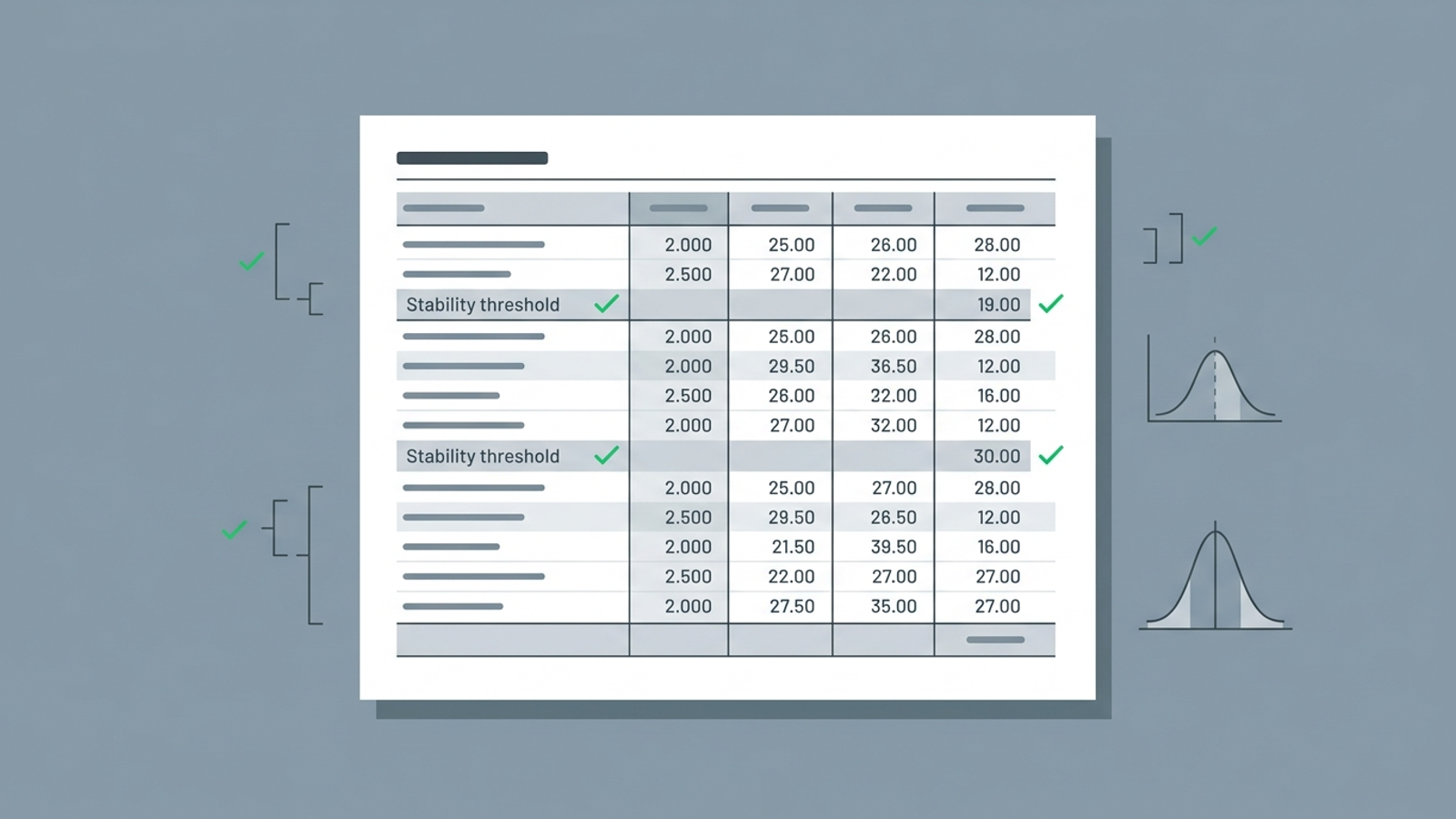
If the test campaign meets your rule while the badge still says Learning, you have a reason to discuss the next move using account evidence rather than waiting solely for a label. If the badge flips first, you have a reason to wait. If neither campaign settles, you have learned that this comparison cannot isolate a clean test-campaign window yet. All three outcomes beat guessing from a status column.
This is also why I dislike account management built around periodic dashboard checks and reactive edits. A review can tell you what happened last month; it cannot recover a controlled observation period somebody interrupted on Wednesday. At groas, our autonomous growth engine monitors search and conversion signals continuously, while a human strategist sets direction and guardrails. The point is not to declare every variance spike a crisis. It is to keep measurement connected to action without paying for busywork disguised as strategy.
Make the edit. Freeze the variables you control. Let conversions arrive, compare the rolling variance with the untouched campaign, and write down the first date your rule holds. Google’s status column can keep its opinion. Your next budget decision needs a better one.
No. Google’s documentation notes that its bidding algorithms continue learning after the Learning label disappears, and a campaign can also stay unsteady well after flipping to Eligible. The status shows how Google classifies the bid strategy, not whether your CPA has settled.
An untouched control campaign helps you spot cost movements caused by the auction rather than your edit. If average CPC rises across both campaigns, the higher CPA likely reflects market conditions; if the control stays calm while the test sways, that strengthens the case that there is a genuine issue related to the altered campaign.
No. Once the edit (Day 0) has been made, avoid touching keywords, negative lists, ads, landing pages, budgets, and targets on either campaign throughout the entire observational period. Any change you—or a teammate—make resets the clock, meaning the current logged data no longer counts as a valid, uninterrupted run.