

 LinkedIn
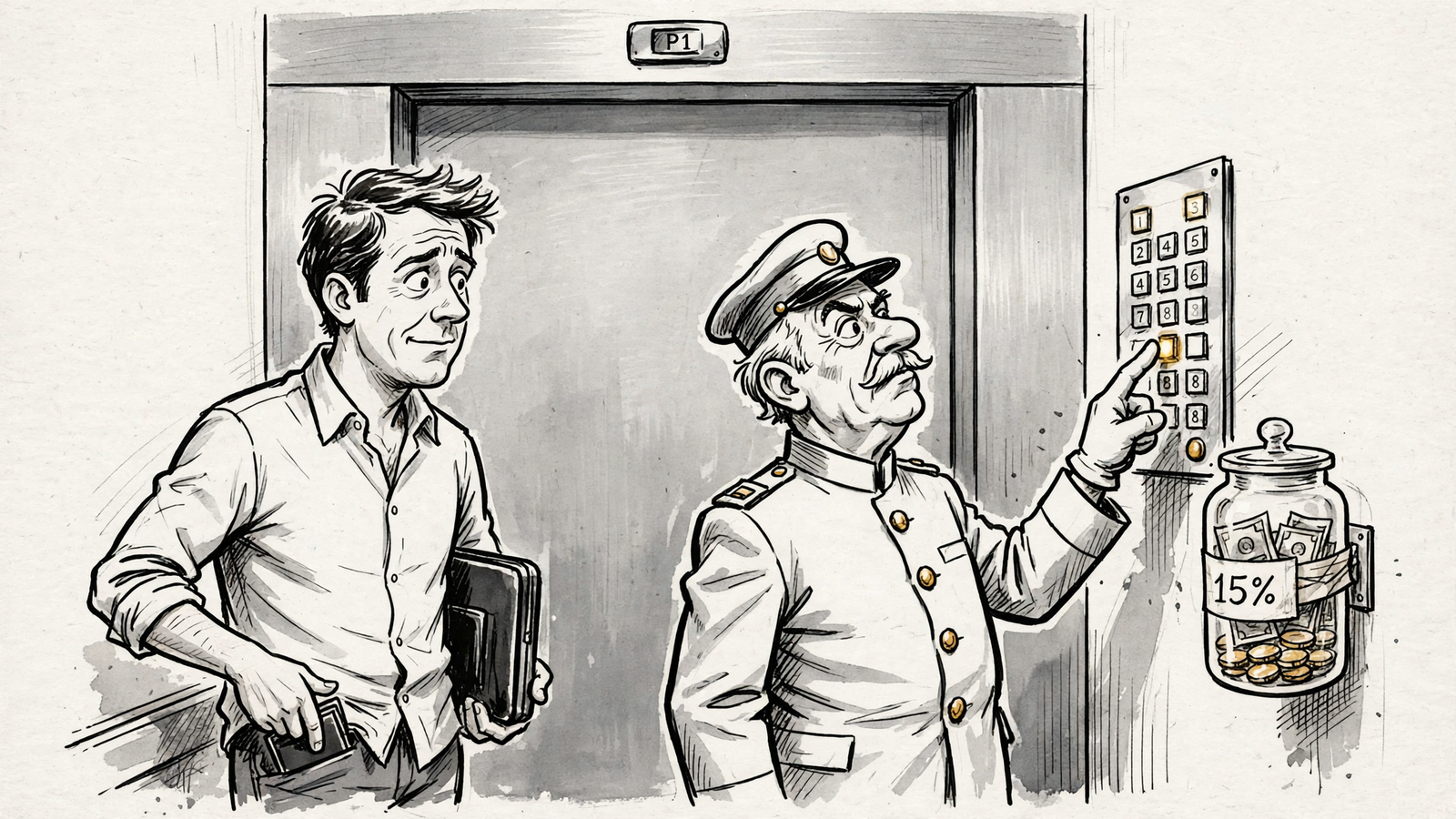
By December 31, 2027, charging 15% of Meta spend to pick audiences and set budgets will be indefensible. Put that date on the calendar and hold me to it.
I spent years doing that work by hand: interest stacks, lookalikes, exclusions, manual bid tweaks at 1am. I used to tell clients that structure was the job. I was wrong. Meta automated much of the structure. What remains worth paying for is different: creative volume that beats fatigue, revenue signals fed back cleanly, and proof of work you can check weekly. The Meta agency contract is about to change shape faster than the algorithm.
An Advantage+ sales campaign can leave three controls on: campaign budget, Advantage+ audience, and Advantage+ placements. Narrow one with separate ad-set budgets or excluded placements and you flip that section off by definition. Meta’s own averages from October 2026 put Advantage+ sales at 9% better cost per conversion, Advantage+ audience at 7.2% lower cost per result, and Advantage+ placements at 11.7% lower cost per action. Those are Meta-reported averages, not a promise about your account. Test them. But the targeting stack I used to hand-build is no longer the obvious thing to buy from an agency.
Most Meta agencies still charge 10–20% of spend, often 10–15% on Meta alone, or a flat $500 to $5,000 a month. Many use a hybrid minimum-fee-or-percentage model, like WebFX’s mid-tier $975 or 15%, whichever is higher. A survey of 200+ DTC agencies found Meta management alone for accounts spending under $100k a month at $2,500 to $5,000 a month. A fee is not waste just because software does some of the work. It is waste when the contract charges for the old work but never specifies the new work.
Here are five predictions about which clauses lose that argument by the end of 2027, and what would prove me wrong.
Prediction 1: Uncapped percent-of-spend fees become the exception
A bigger budget used to mean more manual work. More ad sets to split, more budgets to balance, more bids to nurse through learning. Automation weakens that link. One Advantage+ sales campaign with one budget can absorb spend increases that once called for five ad sets and a spreadsheet.
Say you spend $20k a month and pay 15%. Your management fee is $3,000. Double spend to $40k and the fee becomes $6,000. If the agency adds creative production, fixes conversion signals, or takes on more work, make it spell that out. If its deliverable is still audience setup and budget adjustment, you are paying twice as much for no clearly defined increase in effort. A spend increase is not, by itself, an agency deliverable.
Buyers are already pushing on the distinction. A survey of 200+ DTC agencies found 80% use a flat retainer or retainer-plus-percentage model. It calls uncapped percent-of-spend without a performance target a red flag. Management-only deals in the survey ran 3–10% of spend, rising to 15–20% when creative, CRO, and landing pages were bundled. That last detail matters: a higher fee can buy a wider job. The contract needs to say which job.
By the end of 2027, I expect uncapped percent-of-spend to be the exception in new proposals for accounts under $100k a month. I am wrong if most of those proposals still lead with it and buyers keep signing. Until then, refuse a fee that rises automatically with spend and has no cap or performance target. Ask for a flat fee, such as groas’s $1,499 monthly Meta Ads fee regardless of spend, or a flat fee plus a capped percentage tied to CPA or ROAS in writing.
Prediction 2: Tested creative becomes the billable unit
Targeting used to burn hours. Now fatigue does. Cold frequency pushing past 3 to 4 over seven days while CTR falls 20% or more is a signal that creative is exhausted. The working rule is 3 to 5 variations per ad set, with cold creative rotated every two to three weeks and retargeting rotated weekly before performance slides. None of those thresholds excuses looking at what your account actually does. They do tell you where the repeatable work has moved.
An account spending $20k a month does not need another interest stack every time results dip. It needs new hooks, UGC cuts, and offer angles that can go live, be judged, and be replaced. I used to sell clients on tighter structure when results softened. More often, the structure was fine and the ads were tired. A retainer built around “ongoing audience optimization” lets an agency keep billing for the answer it already knows how to give.
By the end of 2027, the retainer that survives will specify new tested creatives per month, along with ownership and kill rules. The useful questions are plain:
- How many net-new concepts and variations go live every 30 days?
- Who shoots or edits them, and who owns the finished assets?
- What CTR and frequency signals prompt a replacement?
- Where can you see what was tested and what was killed?
Do not let “creative strategy” stand in for a count. It may be good work, but you cannot inspect a label in Ads Manager. You can inspect ads. I am wrong if accounts consistently win in 2027 by keeping three tired ads for 90 days while agencies tweak audiences instead. My bet is that buyers will ask for a creative SLA they can count, not a paragraph about optimization.
Prediction 3: Six-month lock-ins lose their case on smaller accounts
By the end of 2027, a six-month lock-in on a sub-$50k-a-month Meta account will read like a Blockbuster late fee. The old justification had substance: season the pixel, rebuild the structure, fix the feed, write landing pages. When that took four weeks before the real work could start, a longer initial term was easier to defend. A clean Advantage+ build can now go live in days, and a first creative test can read in two weeks. What still takes time is iteration. A lock-in does not make that iteration better; it can let an agency do it slowly.
There is a real exception. If the account needs a full-funnel rebuild, offline conversion plumbing, and creative production from zero, a 90-day commitment with exit clauses can make sense. I am not asking that team to promise a finished system in two weeks. I am asking what the extra months buy and what happens if the agreed work does not appear. Time needed to do the work is different from time guaranteed to collect a fee.
Shorter terms are already part of the pitch. DUNK lists tiers from $189 to $346 a week, billed monthly, with cancellation on 45 days’ notice and the account remaining in the client’s name on its services page. groas makes the cleaner offer for a buyer who wants flexibility: one flat fee per service, month to month, cancel anytime, and no setup fee. A notice period and cancel anytime are not the same promise.
I am wrong if agencies holding six-month minimums keep their retention and win rate through 2027 while month-to-month shops churn. For a contract signed now, refuse an auto-renewing six- or twelve-month term that gives you no practical exit. Ask for month-to-month terms, or a short initial term with a walk-away after 30 days if the creative SLA is missed. If the agency needs longer, make it name the work that needs longer.
Prediction 4: Weekly action logs replace the monthly slide deck
I have written the 40-slide monthly deck. You know the one: wins up front, spend charts in the middle, next steps vague enough to survive contact with reality. It existed partly because checking the work was expensive. Someone had to pull numbers, screenshot ads, and write context. A breakdown of live client dashboards puts the saving at 4 to 8 hours per client per month when issues surface as they happen rather than weeks later in a review.
The mechanism now runs the other way. If execution happens continuously, the proof should not arrive once a month. A results chart can tell you CPA rose. It cannot, on its own, tell you whether anyone spotted the problem, changed an ad, or waited for the next reporting meeting. A deck can still be useful for discussion. It should not be the only record that the work happened.
By the end of 2027, I expect the surviving retainer to show what changed, why it changed, and what happens next, every week. For example: budget moved on Tuesday after frequency hit 4.1 and CTR fell 24%; Creative C was killed after $340 with zero checkouts; Creative D was scaled with two new hooks. Those details are more useful than a polished reach chart because you can check the actions against Ads Manager and challenge the reasoning.
I am wrong if buyers still renew in 2027 on polished PDFs with no change log. Until then, refuse reporting that shows only results. Ask for a shared action log with dates, decisions, reasons, and next steps. A dashboard tells you what happened. The log tells you what the fee bought.
Prediction 5: Raw cost per lead stops leading the report
Optimize for form fills and Meta will find people likely to fill out forms. That does not mean they will buy. Cheap leads can leave a dead pipeline, while the monthly report celebrates a lower CPL. The mechanism is not mysterious: the campaign is being rewarded for the event you gave it, not the outcome you meant.
The alternative is to send what happens after the form back to Meta server-to-server, so delivery can optimize toward qualified pipeline rather than lead volume. Meta reports that advertisers using Conversions API for CRM with the conversion-leads goal saw about 21% lower cost per quality lead on instant forms and 9.5% lower on website forms versus the volume goal. Those are Meta’s reported comparisons. The decision for your account still rests on whether the events you send back represent real progress toward revenue.
The working setup is specific: choose a funnel event inside a 28-day window that roughly a third to a half of leads reach, then feed deal-stage, appointment, and purchase events back through CAPI for CRM. If the CRM does not send those events, printing “qualified pipeline” on the report will not fix the campaign. First make the signal available; then judge the bidding against it.
By the end of 2027, I expect a Meta retainer that headlines raw CPL to look negligent. Cost per qualified lead belongs beside the revenue signals, not behind a slide of cheap form fills. I am wrong if raw CPL still predicts revenue on your account and revenue-connected bidding shows no lift. Test that rather than taking either my word or a sales deck for it. In the contract, refuse raw CPL as the sole success metric. Name the qualified event, how it gets back to Meta, and how you will judge the result.
What to put in a contract you sign now
If I am right, do not sign a 2026 contract that prices the old job and leaves the new one undefined. Put five demands on the page before you sign:
- A fee that does not rise automatically with spend. Use a flat fee or a capped, performance-linked component. If a higher fee buys creative, CRO, or landing-page work, list it.
- A countable creative SLA. Specify net-new concepts and variations per 30 days, who makes them, who owns them, and the rules for replacing them.
- An exit you can actually use. Prefer month-to-month terms. If an initial commitment is justified, tie it to named work and a walk-away if the SLA is missed.
- A weekly record of decisions. Ask for actions, reasons, and next steps you can check against Ads Manager, not just a monthly PDF.
- A metric connected to the business. Define the qualified-lead event and the CRM signals sent back through CAPI. Do not let raw form-fill CPL stand in for revenue.
That is the shape groas already runs toward: Meta Ads worked around the clock, new ads tested and winners scaled, every action logged, with one named human who owns the outcome. If another proposal cannot put its work, terms, and proof on paper, I would not pay more for its assurances.
Score me on December 31, 2027. Pull ten signed Meta proposals from that month. If most still lead with uncapped percent-of-spend, six-month locks, monthly decks, and raw CPL, I called it wrong and I will write that up. If most lead with flat fees, creative counts, short terms, action logs, and qualified pipeline, change your contract now. Skip the two years of overpaying in between.


