A vendor calls its Google Ads AI “hands-off”; you open the dashboard and find eighty recommendations waiting for someone to click Apply. Before I hand over an account, I want written answers to six questions that separate execution from an alert queue with a sales team.
1. What runs without a human touching it?
When to use it: Send this in your opening email. The distinction between work that runs unattended and work that waits for approval is the first one to settle.
We are evaluating [VENDOR_NAME] for our Google Ads account, currently spending $[MONTHLY_SPEND]/month on [PRIMARY_CAMPAIGN_TYPES].

Before scheduling a demo, please confirm in writing which of these tasks execute directly in the ad account without anyone on our team reviewing, approving, or clicking a button:
1. Negative keyword harvesting and search term exclusions.
2. Bid-target adjustments for Target CPA and Target ROAS campaigns based on conversion signals.
3. Budget reallocation between campaigns.
4. Ad copy creation, testing, and rotation.

For any task that appears as a suggestion requiring approval, please state: "This requires manual review."
Pass: The vendor names the tasks it executes directly, says which require approval, and explains the guardrails on 24/7 bidding, search term, and budget work.
Walk away: “Our AI prepares high-confidence recommendations every morning for your team to approve in one click.” As PPC operators discussing automation tools point out, a suggestion queue is not autonomous execution. It is software-generated homework.
The adjustment that matters: For an agency, replace [PRIMARY_CAMPAIGN_TYPES] with [NUMBER_OF_ACCOUNTS] client accounts across [INDUSTRIES]. Add: “Do changes execute across those accounts without an operator switching profiles?”
2. Who owns the problems the model cannot fix?
When to use it: Send this when “hands-off scaling” comes up but nobody can tell you who investigates a conversion anomaly. My test for a PPC automation platform includes the human operating model: software does not negotiate your product margins or repair a checkout page.
For an account spending $[MONTHLY_SPEND]/month on Google Ads:
1. Is a named human strategist accountable for performance, or does support go to a general ticket queue?
2. How often does that strategist review conversion tracking integrity, negative query lists, and auction economics?
3. When Google changes bidding mechanics, match types, or privacy policies, who reviews and updates our account configuration: your team or ours?
4. If CPA over a rolling seven-day period rises more than 20% versus the previous seven days, what is the escalation protocol and response time?
Pass: A named strategist sets guardrails, checks tracking, leads strategic reviews, and has a clear escalation path. The models handle the continuous account work; the human answers for the decisions around it.
Walk away: “We’re 100% self-serve, so submit a ticket if something looks wrong.” The agency version is junior buyers checking the account twice a week while the pitch calls it continuous optimization. Neither gives you a clear owner when the numbers go sideways.
The adjustment that matters: If you have an in-house media buyer, add: “Can our team pause campaigns, lock negative lists, or exclude asset groups without resetting the model’s bidding context?” Leverage is useful. Losing control is not.
3. What happens to the bill when spend changes?
When to use it: Send this with your request for a proposal, whether you are evaluating software or a fully managed Google Ads agency. A fee that rises with ad spend deserves scrutiny before anyone talks about growth plans.
Please show our total monthly cost for [NUMBER_OF_ACCOUNTS] connected account(s) under three scenarios:
- A: $[BASELINE_SPEND]/month in ad spend
- B: $[SCALED_SPEND]/month in ad spend (2x baseline)
- C: $[SLOW_SPEND]/month in ad spend (0.5x baseline)

Please disclose:
1. Is your fee flat, a percentage of ad spend, or tiered by spend bracket?
2. Are there onboarding, migration, or setup charges?
3. If spend briefly crosses a bracket threshold, does our bill rise automatically? Are there per-$1,000 overage fees?

Pass: A predictable flat monthly fee, no setup charge, and no automatic spend-based increase when you scale.
Walk away: A percentage-of-spend fee that rewards a bigger budget regardless of CPA, or a bracket change the proposal makes hard to spot. Opteo’s published pricing analysis describes spend-based brackets; analysis of Optmyzr’s pricing describes tier upgrades and overage charges. Ask what happens at the boundary rather than accepting “pricing scales with you” as an answer. I want a vendor paid for its work, not given an automatic raise because my media budget grows.
The adjustment that matters: If your spend is seasonal, add: “Does billing move down during low-spend months without a penalty, contract reset, or loss of account history?” The slow month belongs in the pricing conversation too.
4. Who is responsible for the landing page?
When to use it: Send this when a vendor promises better CPA through bidding alone. An ad can match the query and still send the click to a page that does not. Post-click experience matters, so an “all-inclusive” pitch should say who works on it.
Regarding post-click destination experience:
1. Do you deploy and test dynamic, search-intent-matched landing pages, coordinate landing page tests with our team, or only optimize ads pointing to our existing URLs?
2. If you deploy pages, where are they hosted, what platform do they run on, and who owns the page code, assets, and copy if we leave?
3. How do you pass conversion tracking parameters, including GCLID, enhanced conversion user data, and CRM lead IDs, from the page back into Google Ads and our reporting stack?
Pass: The vendor can deploy intent-matched pages or work directly with the team testing them, and can explain ownership and tracking without waving at a diagram.
Walk away: “Landing pages and conversion rates are entirely your responsibility,” after a pitch that promised to manage the whole growth system. An ad-only tool can be an ad-only tool. It should not sell the destination as somebody else’s problem after calling itself all-inclusive.
The adjustment that matters: For ecommerce, replace question 2 with: “Do you generate product collection funnels or integrate with our catalog feed without disrupting checkout? Who owns the resulting assets?”
5. Can I audit and reverse a change?
When to use it: Send this before connecting your account or MCC. I have spent too much time untangling accounts after automated changes collided with temporary attribution lags. If a system can change bids and budgets, it needs to explain what it did and let you correct it.
Regarding accountability and change tracking:
1. Do you maintain an independent action log for bid shifts, keyword pauses, negative additions, and ad copy tests, or rely only on Google Ads Change History?
2. Does each entry show the data trigger and commercial reasoning? For example: "Paused search term [SEARCH_TERM] after its CPA exceeded target over [LOOKBACK_PERIOD]."
3. Can our team or yours roll back a specific batch of automated changes without reverting unrelated work? If so, how?
Pass: A plain-language log connects each action to its trigger and rationale, with a clear way to reverse a bad batch. Reviews of autonomous-agent safety make the same basic point: autonomous work needs a record you can inspect and act on.
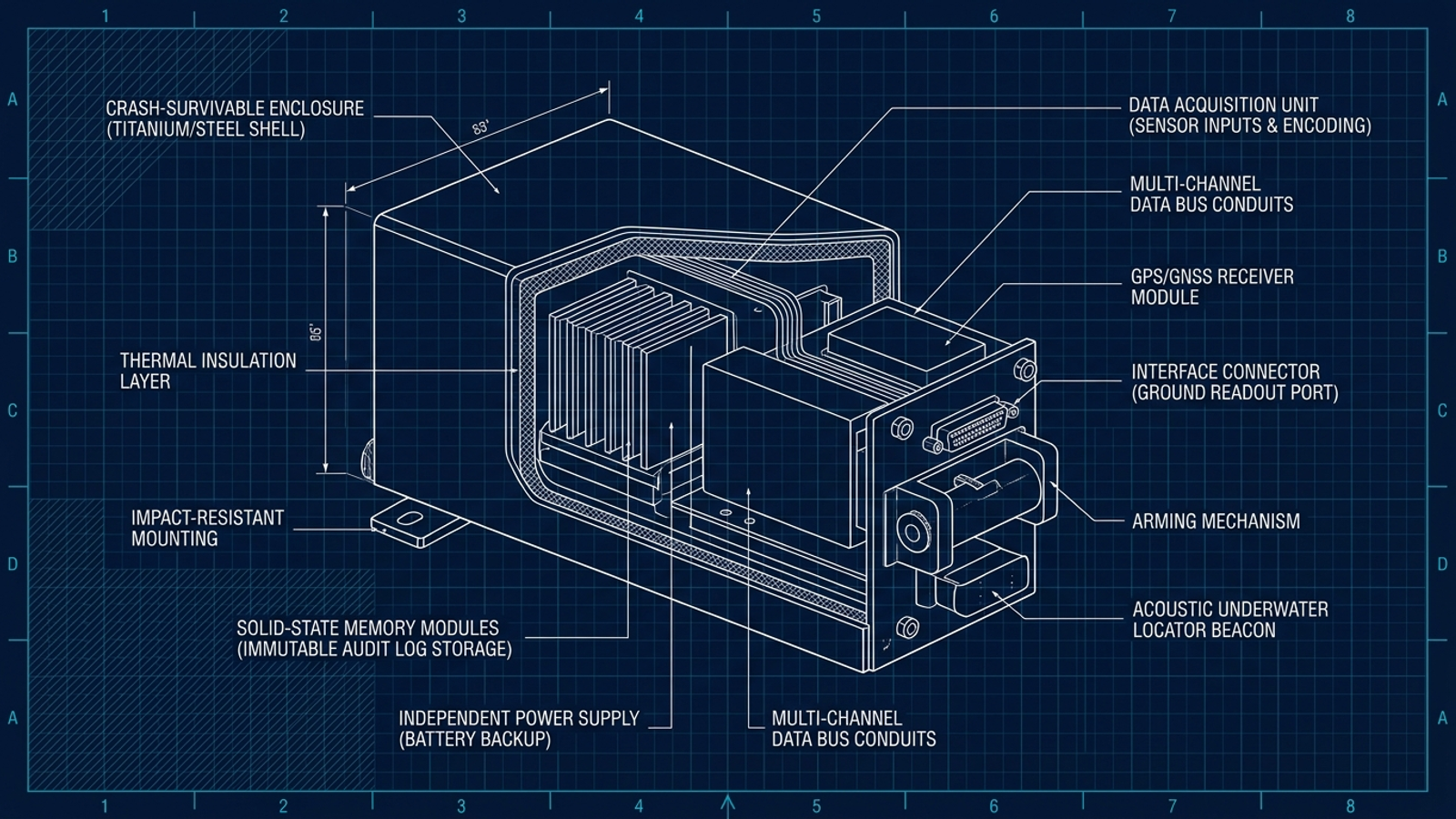
Walk away: “Everything is in Google Ads Change History.” Native history can show that something changed, but not the vendor’s commercial reasoning for why. The Google Ads API change-event limitations make it a poor substitute for the vendor’s own explanation. If a budget is halved, “Changed by Google Ads API” is not an answer I can take to the person paying for it.
The adjustment that matters: If you report to executives or a board, add: “Can we export the log as CSV or through a webhook, and receive a weekly digest connecting material changes to their revenue rationale?” Ask for the record you will actually use.
6. What do I keep if I cancel?
When to use it: Send this before the master services agreement arrives. A clean exit is part of the product test: you should be able to assess the work without putting your account and its history at risk.
Regarding contract duration, fees, and cancellation:
1. Is the agreement month-to-month from day one, or is there an initial 3-, 6-, or 12-month commitment?
2. Are setup, onboarding, or migration charges due before work begins?
3. What notice must we give to cancel? Are there early termination fees or liquidated damages?
4. When we leave, do we retain ownership of our Google Ads account, campaign structures, conversion tracking tags, and historical ad copy?
Pass: Month-to-month billing with 30 days’ notice, no setup or termination fees, and client ownership of the account and campaign assets.
Walk away: A long minimum term paired with a large upfront fee and an unclear answer about asset ownership. Agency cost breakdowns and contract red-flag guides give you a sense of why those terms deserve a close read. A vendor claiming autonomous execution should not need the contract to do the retaining.
The adjustment that matters: For an agency, add: “Can we add or drop individual client accounts monthly without resetting or penalizing our master-account pricing?” Your client roster will not hold still for a vendor’s billing calendar.
Three replies that end the conversation
When to use it: Keep this list beside your inbox when the answers arrive. I do not book a demo to decode any of these:
- “The AI manages everything, so you do not need logs or a strategist.” Automation needs guardrails, tracking checks, and someone accountable when business conditions change. A black box is not a staffing plan.
- “It is a flat software fee, plus a percentage of spend above a threshold.” That is not a flat fee. It gives the vendor more revenue when your budget grows, even if your CPA worsens.
- “The AI needs a six-month contract to finish learning.” Ask what work requires that commitment and what you own if you leave. A vague learning phase does not answer either question.
The adjustment that matters: Do not argue over the label AI. Reply with the relevant numbered question and ask for the missing term in writing. If the second answer is still a slogan, stop there.
Run the same test on two vendors
When to use it: Email the same six questions to both vendors before either gets to show you a reporting dashboard. Compare the written commitments, not the polish of the demo. A quick answer is useful, but it is the specificity of the answer that counts.
| Test |
Pass |
Walk away |
| Execution |
Direct changes within stated guardrails |
Recommendations awaiting your clicks |
| Ownership |
Named strategist and escalation path |
Ticket queue with no accountable owner |
| Pricing |
Clear flat fee and stated costs at each spend level |
Spend tax or unclear tier and overage rules |
| Landing pages |
Named owner for page tests and tracking |
All-inclusive claim, ad-only responsibility |
| Audit |
Reasoned action log and rollback process |
Native change history offered as the explanation |
| Exit |
Month-to-month terms and client-owned assets |
Lock-in, penalties, or unclear asset ownership |
The adjustment that matters: Mark each row answered, not answered, or contradicted by the proposal. I would not treat a polished verbal explanation as a replacement for the written answer.
The email I would send first
When to use it: Paste this into your initial inquiry if you want one artifact instead of six separate messages. It is the most useful one here because it gets execution, accountability, cost, auditability, and exit terms on the record before a sales call can drift toward a feature roadmap. Replace the bracketed fields, keep the questions intact, and let the answer determine whether there is a demo.
Subject: Pre-demo questions for [COMPANY_NAME] Google Ads account

Hi [VENDOR_CONTACT],

Before booking a demo, we need written answers about how [VENDOR_NAME] would operate for our Google Ads account, which spends $[MONTHLY_SPEND]/month:

1. Execution: Do negative keyword additions, bid-target adjustments, and budget reallocations execute directly in the account within guardrails, or do they require our approval? Please distinguish the two for each task.
2. Accountability: Is a named strategist responsible for guardrails, tracking anomalies, and escalation? How do we reach that person?
3. Pricing: What is our full monthly fee now and if spend doubles to $[SCALED_SPEND]? Please include spend tiers, overages, and setup charges.
4. Landing pages: Do you build and test search-intent-matched pages, coordinate tests with our team, or only send traffic to our existing URLs? Who owns the pages and tracking?
5. Audit: Can we see an independent action log with the trigger and reasoning for each change? Can a specific batch be rolled back without undoing unrelated changes?
6. Exit: Is the agreement month-to-month, what notice is required, and what fees apply if we leave? Do we retain our account and campaign assets?

Once we have these answers in writing, we can decide whether to schedule a demo.

Best,
[YOUR_NAME]
[YOUR_TITLE]