LinkedIn

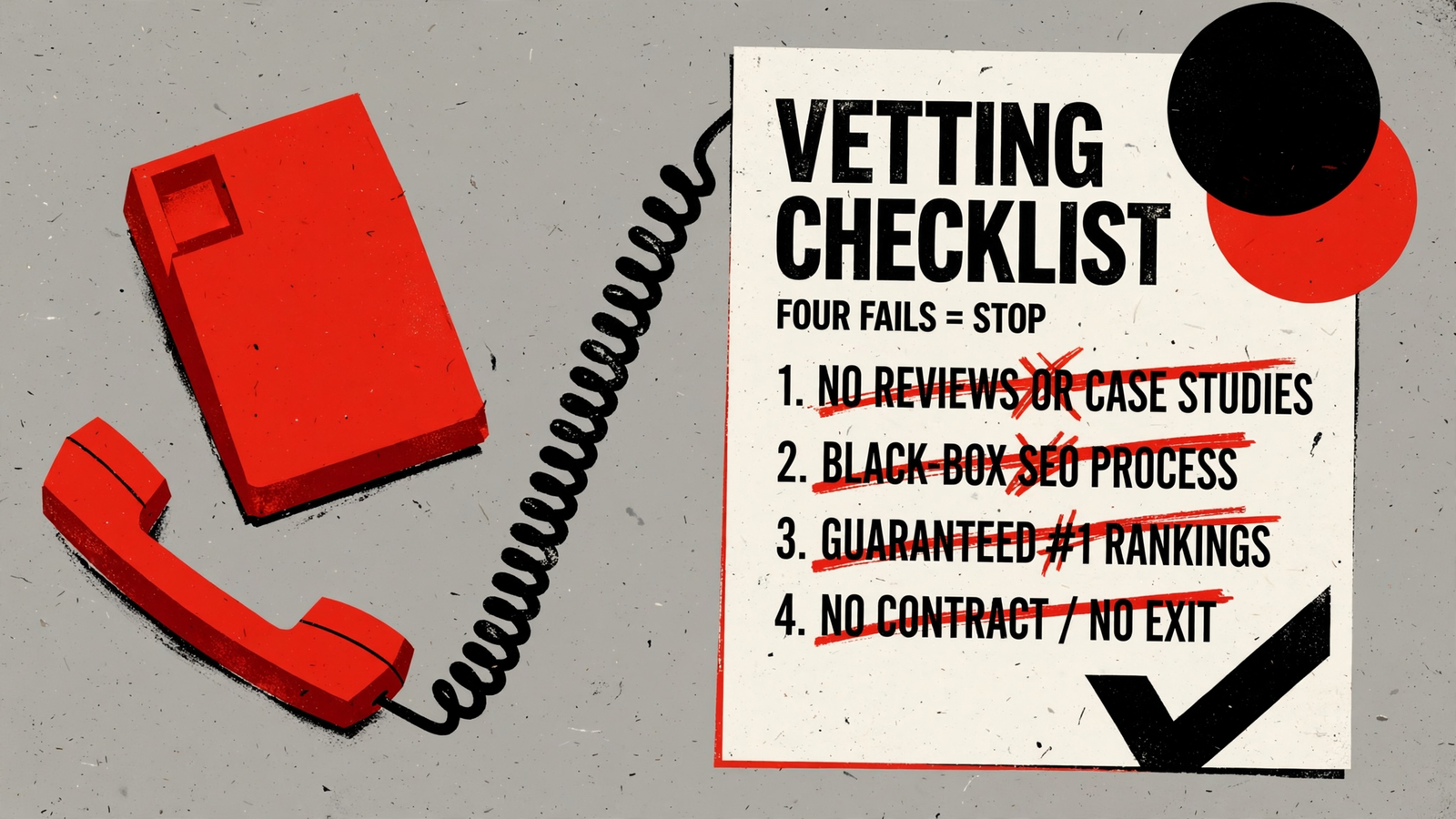
Most white-label deals do not break on price. They break in month three, when a client asks, “Are we in ChatGPT yet?” and the agency has no answer it can defend. I have watched good agencies eat refunds for work they did not do, sold under their own logo. Use this checklist before signing: send it to the provider, put the answers in one shared document and ask for proof, not a deck. Pass means you have seen the report, log, sample or contract clause. Fail means someone has described it to you. Two failures in brand protection or measurement end the vetting; price and turnaround cannot repair either one.
Brand protection: keep the partner invisible
- Put no client contact and non-solicitation in writing. Pass: the MSA and NDA say the partner cannot contact or solicit your client, with a named penalty. A provider that stays in the background can fulfill the work without becoming another voice in the client relationship. “We never do that” is not a clause. Ask to see the wording before discussing how many accounts you might send.
- See a fully unbranded report under your logo. Pass: a PDF and live link show your logo, colors and domain, with no vendor name. The white-label standard is fulfillment the client experiences as yours. An export with the footer scrubbed in Acrobat is not the same thing. Open the link as a client would; a login screen or help link can give away the provider before the report loads.
- Check for partner footprints in content and access. Pass: a live client sample has no vendor links, author credits, schema or citations pointing back to the provider, and CMS seats use your agency email. Ask to inspect the published page, not just the draft. A provider can remove its name from a PDF while leaving it in the CMS and on the pages your client will actually see.
Scope: make SEO and AI search separate promises
- Name traditional SEO outputs in the SOW. Pass: technical fixes, new pages, internal linking and authority work appear as scheduled outputs, with a count of pages and fixes expected per client each month. “Ongoing optimization” tells you nothing about what ships. Ask what the provider does when a planned page needs revision or a technical fix waits on client access; otherwise a full month can disappear into a status label.
- Name and track each AI search surface separately. Pass: ChatGPT, Perplexity, Gemini and Google AI Overviews each have a prompt set in the SOW. A single LLM visibility score hides which engine named the client and which did not. A resold AI Discover offer may name engines and citation tracking; require the actual prompts and check dates for the service you are buying. A product name is not evidence.
- Test whether content answers buyer questions. Pass: two live samples answer questions about cost, comparisons or “best for” decisions with a clear price, spec or source an engine can cite. A page built only around a short keyword and a generic introduction may rank without answering the question that gets asked. For a pre-signing test, use fixed prompts, weekly checks and engine-by-engine gaps, then see whether the provider’s samples address them.
Measurement: collect proof you can show in month three
- Demand prompt-level citation reporting. Pass: an export lists the exact prompt, engine, check date, whether the client was cited and the cited URL. Fail: a visibility score from 0 to 100 with no rows behind it. When a client asks whether they appear for “best CRM for plumbers,” you need that prompt’s result, not an average across questions they never asked. Request a live export rather than a screenshot selected for the sales call.
- Separate verified bot fetches from unverified traffic. Pass: server log examples show IP checks against the operator lists for OpenAI’s GPTBot, search and ChatGPT-user bots and the relevant Perplexity bots. Ask for one verified fetch and one rejected fake, with the check visible. A user agent alone proves little: scrapers can spoof bot names. If the provider counts every claimed GPTBot visit as a real fetch, its crawler report is not evidence of AI visibility.
- Put enquiries and pipeline beside citations. Pass: the same report shows Search Console clicks, calls, form fills and booked jobs alongside citation results, with the relevant source pages named. Citations can show that an engine surfaced a page; they do not, on their own, show that the work brought in business. I want both views before explaining performance to a client. No prompt list and no verified fetch log means no defensible AI search report.

Operations: find out what ships while the client waits
- Get dated onboarding milestones. Pass: the SOW names a first deliverable in 5 to 7 business days and live changes by day 14. A 5-to-7-business-day first deliverable is a useful comparison, not permission to leave every later date open. groas says it runs live within 24 hours of the onboarding call; ask any provider what live means in its own schedule. A kickoff meeting does not count as a shipped change.
- Name the strategist who owns the result. Pass: one senior contact owns the account, sends a weekly action list and delivers a monthly report you can put in front of the client. A pooled inbox may answer tickets, but it cannot tell you who is accountable when a citation disappears or planned work stalls. Get the contact’s name and reporting cadence into the operating plan, not just the introduction email.
- Require an action log with reasons. Pass: each material change records what changed, why it changed and what happens next, in language you can forward. Rankings can dip while citations climb; without a dated record, you are left guessing which action preceded either move. Ask for a redacted log before signing. “We continuously optimize” is a sales sentence, not an account history.
- Keep content approval under your brand. Pass: pages reach you in a shared document before publication, with two revision rounds inside 48 hours. Check who gives final approval and how the provider handles a missed deadline. If the first time you read a page is after it goes live, your logo has already endorsed it. This is especially worth testing when the provider promises volume: more pages simply create more chances to publish something you would not send to a client.
Commercial terms: model the margin and the exit
- Model the fee at 3, 10 and 25 clients. Pass: a fixed wholesale price per client and written resale math at each volume. Published white-label pricing examples range from about $300 to $5,000-plus monthly, with standard packages often around $500 to $1,500; AEO offers add another pricing line. Use the figures to frame the question, not to assume your margin. If you are spending $20,000 a month across clients, what remains after your account time?
- Put cancellation, minimums and refunds on the same page. Pass: the contract states the term, any setup fee or client minimum, and whether a seven-day money-back window applies. Compare that with groas’s $1,499 monthly fee per service, no setup fee and no lock-in. A three-month AI search minimum can be workable when citations are checked weekly. Without that reporting, the minimum commits you to months of a result you cannot explain. Read the cancellation clause, not the pricing card.
- Set a handover deadline before signing. Pass: the agreement says how quickly accounts, content, reports and credentials are handed over after paid invoices, and the NDA survives the split. “We will help with transition” needs a number of days and a list of assets. Ask what happens to scheduled work and the reporting portal when notice is given. A cheap monthly fee can become expensive if leaving requires weeks of chasing files and access.
Deliverables: inspect what your logo will endorse
- Read two live content samples you would forward as-is. Pass: each page answers a buyer prompt with useful specs, prices or steps that can be cited. Do not settle for two polished drafts; open the published pages and check the final copy. Reports of spun content and directory links describe the failure mode: the agency takes the client-facing risk while the provider ships the work. If you would rewrite both samples before showing a client, budget for that work or fail the check.
- Get the link and citation sources by name. Pass: a per-client list of real sites and directories with placements you can open. Fail: a promise of “authority” without sources, or placements confined to a vendor network. Ask how the provider chooses a site and what you receive when a placement goes live. A count alone will not help you answer a client who asks where the business was mentioned.
- Ask for weekly proof of technical work. Pass: a record of crawl fixes, internal links and pages added, with before-and-after evidence and relevant Search Console changes. groas describes new pages and technical fixes every day; at minimum, make a white-label provider show what shipped each week rather than closing one monthly ticket called technical SEO. Do not accept a dashboard trend as a substitute for the changes that produced it.
- Open the client portal on your domain. Pass: the client view carries your branding and offers PDF exports or dashboards inside your existing client view. A branded portal with exports is a useful feature to inspect, but check the whole journey: invitation email, login, report and download. If the client has to sign in on the provider’s domain, the white label leaks at the first click, regardless of how good the PDF looks.

Red flags: know when to end the call
- Walk away from a score with no prompt list. This is the failed version of item 7, and it deserves its own stop sign. If the provider cannot show prompts, engines, dates and cited URLs, it cannot answer the question that brought you here: “Are we in ChatGPT yet?” Ask once for the underlying rows. If they offer another presentation of the same blended score, end the vetting rather than negotiating the price.
- Walk away from user-agent-only bot verification. This is not a small reporting preference. If the provider never checks IPs against operator lists and never separates rejected fakes, its fetch count includes traffic it has not verified. Ask how a spoofed request appears in the report and whether it is blocked. If the answer is that the user agent says GPTBot, you do not have a verified fetch count.
- Walk away if the partner contacts clients, hosts the client view on its own domain or takes a cut of spend. Any one of those changes the deal you think you are reselling. Direct contact and visible vendor branding put the relationship at risk; a percentage-of-spend fee makes your cost rise with client spend. Recheck the contract and the live portal here, even if both passed on the sales call. A flat per-client fee is easier to model, but it cannot compensate for a partner your client can see.
- Confirm who owns the accounts, profiles, data and content on exit. This is the item I used to skip. I was wrong. Pass: the contract says Search Console, Analytics, Business Profile, ad accounts and published content remain with you or the client, and specifies how they transfer after paid invoices. groas states that your accounts, pages and data stay yours; require the same clarity from anyone working under your logo. If the partner controls the logins or hosts the pages on its domain, leaving can mean rebuilding access and work from zero while the client blames you. That is how a margin you protected in month one costs you a $24,000-a-year account.