

 LinkedIn
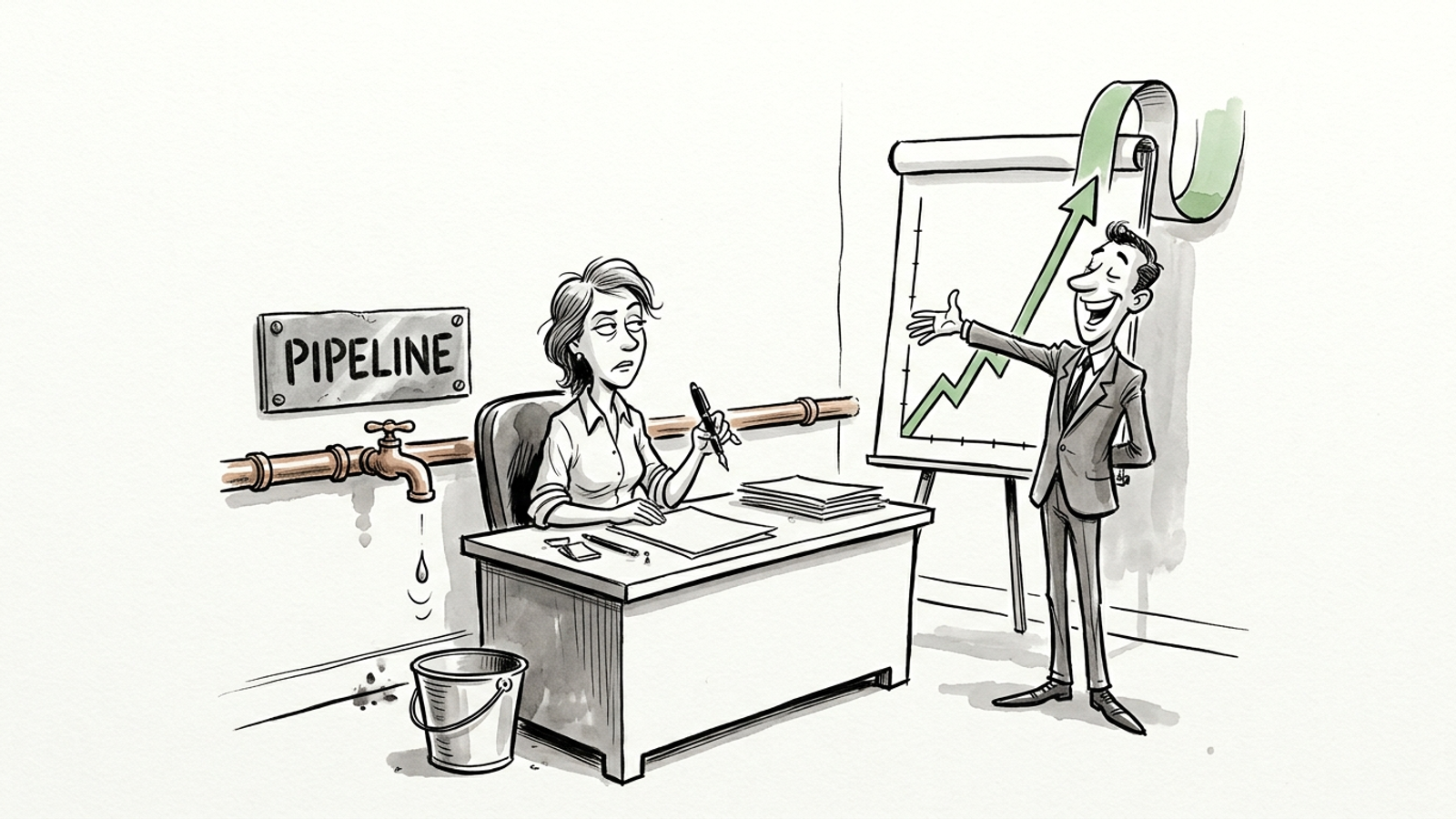
If you are the founder who has an AI visibility contract open on your desk, look at the billing clause before you look at the visibility chart. The vendor may get paid every month your brand appears in a few more AI answers, even if your qualified pipeline stays flat.
Dear founder,
You may be looking at a retainer between $3,000 and $10,000 per month, a six-month commitment, and a deck promising citations in ChatGPT, Perplexity, Gemini, and Google AI Overviews. Before you sign, find the clause that says what happens to the invoice when those citations produce no qualified opportunities. If there is no clause, the chart is the product you are buying.
I spent years managing search accounts spreadsheet by spreadsheet. I recognize the pitch. Agencies once celebrated impressions, then clicks, then form fills. When the forms filled with spam and students downloading whitepapers, someone could still present a handsome lead-growth slide and send the next invoice. Now the vocabulary is generative share of voice, visibility scores, and sentiment indexes. The distance between the report and the sale has not changed.
Monitoring an AI answer is not the same as doing the work that helps you win a buyer query. An audit may recommend schema changes and FAQ rewrites, then leave your developers to implement them while the agency bills you to watch a dashboard. Founders asking whether AEO agency services are worth the cost are right to ask where the work ends and the reporting begins. You should ask something harder: who bears a financial consequence if the agreed outcome does not move?
I know why the deck is tempting. You can see a mention. You can put a number beside it. Pipeline is slower and harder to attribute, especially when a buyer has seen your name in several places before contacting you. But difficulty measuring the result does not make the easiest available metric the right contractual target. It makes the target worth discussing before anyone starts billing.
The visibility chart cannot tell you who is buying
An AEO proposal may show an ascending line labelled Generative Share of Voice or Brand Authority Index. Often, the underlying exercise is straightforward: run a fixed set of prompts, count brand mentions, and plot the result. Agencies that cannot report deterministic AI-search ROI may use visibility, sentiment, and share-of-voice charts as proxies. Those charts can tell you something about the prompts tested. They cannot, on their own, tell you whether a buyer chose you.
A mention in an informational comparison counts. So might a mention that presents your product as an outdated option. Neither pays your payroll. If the contract defines success as mentions, the vendor can succeed while you do not.

Look closely at what the chart counts. If the prompt set includes questions from people who are only learning the category, a higher score may show that your name appears more often in those answers. That can be useful to know. It is not interchangeable with appearing when a buyer is comparing providers or asking for a solution. Even a buyer-query citation needs a second question: did anything happen after the buyer encountered it? Do not let one count answer all three questions.
This is clicks-and-leads reporting in a new jacket. Paid-search contracts built around CPL and form fills can leave an agency pointing to delivered leads while a sales team finds no qualified pipeline behind them. In AEO, a visibility score can play the same role: a defensible-looking chart to show your board when demo requests have not moved.
I made a related point in an open letter to the owner about to buy an AI visibility dashboard. A dashboard can tell you that you are missing from an answer. It cannot make the site changes, adjust the content, or manage the paid search work that may help you reach the buyer. Reporting is useful. Billing as though reporting were execution is the problem.
Measurement is messy, too. A nine-month study of more than 50,000 AI Overview events found that GA4 misattributed an average of 22.4% of those visits to Direct traffic. Google’s Search Console reporting for generative AI impressions does not provide the query, click, citation-placement, or pipeline detail you would need to treat an impression as a sale. That is a reason to agree on measurement and its limits before you sign, not a reason to accept a prettier proxy without question.
You do not need a promise of perfect attribution. You need to know which numbers are observations, which are estimates, and which will decide whether the engagement worked. If your vendor cannot connect every AI answer to a deal, fine. I would not ask them to pretend otherwise. I would ask them to show how they will review AI-search activity alongside qualified opportunities, and how they will handle the gaps without quietly promoting mentions into revenue. A measurement limit is not permission to change the definition of success.
Ask for accountable work, not a promised citation
Nobody can honestly promise that a particular prompt in ChatGPT or Google’s AI Mode will cite your domain next Tuesday. The answers can change. But uncertainty about one citation does not excuse a vendor from saying what it will do, what you can verify, and what business result the work is meant to support. Citation counts are no substitute for qualified opportunities or revenue.
You can ask for a clear baseline and a record of pages shipped, technical fixes made, and progress on high-intent buyer queries. You can ask how the vendor will connect that work to qualified opportunities in your CRM. Those are different questions, and you need answers to both. A page going live proves that someone did the work; it does not prove that the page created pipeline. A citation on a buyer query is more relevant than a generic brand mention; it still is not a closed deal.
The distinction matters when the first report arrives. Suppose it lists proposed changes, completed changes, and new mentions in separate columns. You should be able to see who owns each proposed change, whether it was made, and what the vendor will do next if the commercial outcome stays flat. Without that chain, recommendations can pile up as though they were results. An audit is not a fix. A fix is not a sale. Your agreement should not confuse the three.
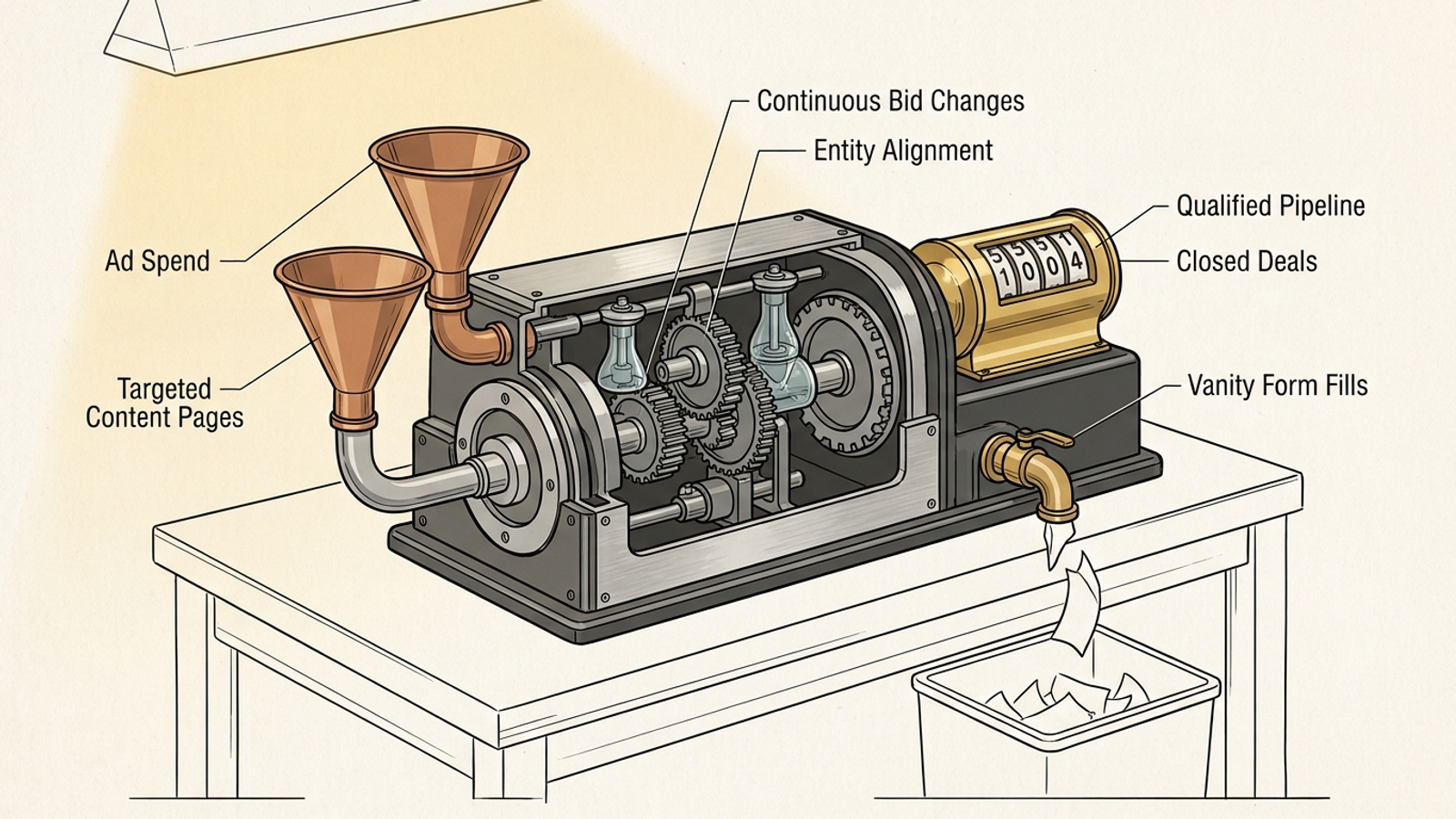
Paid ads, organic results, and AI answers also belong in the same commercial conversation. A buyer can encounter more than one of them while comparing vendors. If you pay separate teams to claim credit for each surface, each team has an incentive to show you its own upward line. Ask instead which work the provider owns across search and which outcome you will judge together.
That does not mean you should demand that every channel receive a neat share of credit. It means the provider should not use uncertainty between channels to escape the business question. If paid search brings the buyer back after an AI answer introduces your brand, a report confined to citations tells only part of the story. If visibility rises but qualified opportunities do not, you need a reason to change the work, not another colour added to the chart.
At groas, that means continuous execution across paid ads, traditional SEO, and AI search, with a named human strategist responsible for direction and guardrails. Our 90-day growth sprints start with a baseline and a written target: 40% more sales or search visibility within 90 days, or we work for free. The choice between sales and visibility matters here. If pipeline is the outcome you need, put that commercial target in writing. Do not let a visibility target quietly stand in for it.
Check the fee before you admire the dashboard
A percentage-of-spend fee gives an agency more revenue when your ad budget rises, whether or not your acquisition cost improves. A fee triggered by lead volume can reward a flood of cheap forms. Neither structure tells you who takes the hit when the leads are junk or the pipeline does not grow.
I would rather see a predictable flat monthly fee, no hidden onboarding charge, and a written consequence when the agreed target is missed. That does not make measurement effortless. It makes the disagreement visible before money changes hands. The test is not whether a vendor says it cares about your results; it is whether the agreement gives it a reason to act when those results stall.
Read the fee clause beside the target, not on its own. A flat fee makes the monthly cost predictable, but it does not by itself make a vendor accountable for pipeline. A target sounds reassuring, but it is much less useful if the agreement can substitute a visibility score for the commercial result you thought you were buying. Put the baseline, the deadline, and the consequence in the same conversation. Otherwise, you may discover the difference only after months of attractive reports.
Then ask to see the work. Before you send a deposit, have the vendor share its screen and show you a live execution log. What changed this week? Who made the change? Why? What happened next? A monitoring platform can scrape AI answers and show you when a competitor appears instead of you. A comparison of AI visibility tools is useful for understanding the monitoring side, but a notification is not a landing-page repair, a published comparison page, or a budget adjustment. It is a weather report.
If you are looking for tools that help you get featured in Google AI Overviews, not just monitored, press on that distinction. Who can actually make the changes? Who has to wait for your internal team? And how will you see what was done rather than receive another slide about what should be done?

That is where groas is the better fit than a monitoring-only retainer. Its specialized models continuously handle work such as bid adjustments, negative keywords, technical fixes, and targeted content, while a named strategist owns the direction. Changes are recorded in a searchable action log with their reasoning. You can inspect the work instead of buying a monthly account of what a dashboard noticed. If the contract in front of you offers recommendations but leaves execution to you, make sure its price reflects that division of labor.
Four questions to send before you sign
You do not need a philosophical debate with the managing director. Send these four questions by email and ask for the answers in the agreement, not just on a call. Where a term sounds reassuring but leaves you doing the work or carrying all the risk, ask them to rewrite it.
- Who makes the live changes? Specify who deploys content and technical fixes and who manages bids. Strategic advisory is not execution.
- How will you reconcile AI-search activity with qualified pipeline? Ask how citations, sessions, and sales stages will be reviewed, including traffic reported as Direct.
- Can you leave month to month? Get the cancellation notice and termination fees in writing before the first report arrives.
- What happens to the fee if the agreed commercial target does not move? Write down the baseline, target, deadline, and consequence. Skip this and you may pay months of retainer fees while pipeline stays flat.
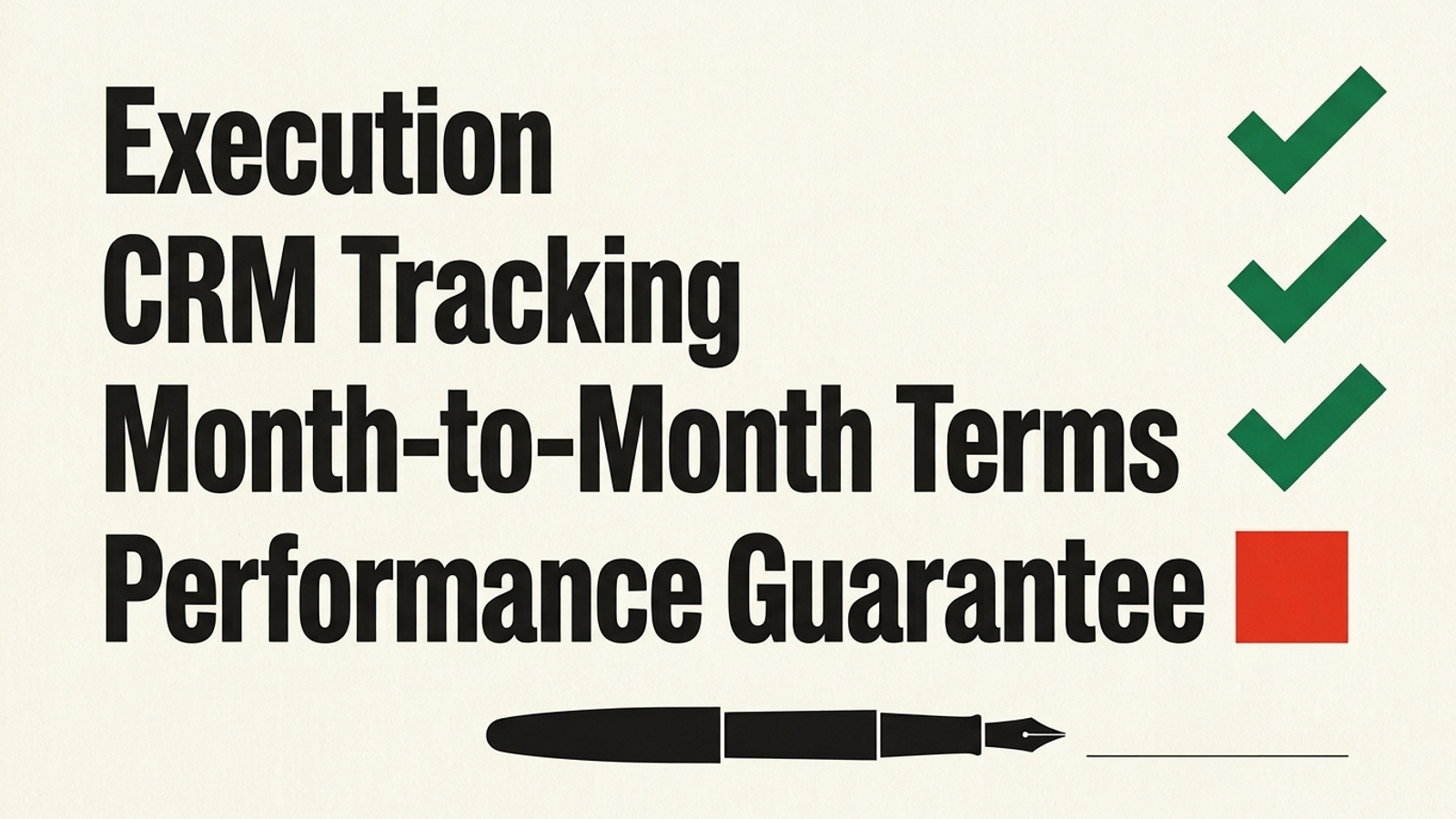
If the vendor can answer those questions plainly and put the commitments in writing, you have something worth considering. If the conversation keeps returning to a proprietary visibility score whenever you ask about execution, qualified pipeline, or the fee, close the document. You do not have to finance a report that leaves every commercial risk on your side.
Alexander