

 LinkedIn

The sales call skips the question that may decide your Meta account: who makes the ads? Smart people disagree. The owner knows what customers actually say and can film an answer today; the agency can turn that answer into new tests every week. On Meta, where creative does much of the targeting work, whoever makes those ads has a hand in who sees them.
Leave the question unanswered and the arrangement can get ridiculous. You assume the person running campaigns will make the videos. They assume you will hand over finished assets. Three weeks later, you are both staring at two tired static ads and a climbing CPA. I would settle the division of labor before discussing another budget split.
Why the creative question comes before the media plan
I learned Google Ads when targeting meant keywords and match types. Meta used to give advertisers more room to build interest stacks, lookalikes, and exclusions, then ask creative to close the deal. With broad audiences and Advantage+ doing more of the finding, the hook, format, and angle help determine who stops, who watches, and who Meta learns to reach next. Creative is doing targeting work, not merely decorating a targeting plan.
One practitioner estimate puts creative behind 60 to 80% of CPA variance in 2026. You do not need to treat that range as a law to see the operational point. Say you spend $20k a month: a stronger first three seconds can matter more than another afternoon rearranging audiences. Whoever decides what gets made and tested each week holds a substantial lever over performance.
That sets up the argument. Should the business make the ads because it knows the buyer? Or should the agency make them because it can keep making them?
Position A: the business should make the ads
The strongest case for owner-made creative starts outside Ads Manager. The owner hears the objection on sales calls, refund requests, and DMs that begin, “Does this work for…” An agency gets a brief. The business lives with the answer. Customer knowledge is the raw material that lets the right buyer recognize an ad as being for them.
You know the objection before it becomes a hook
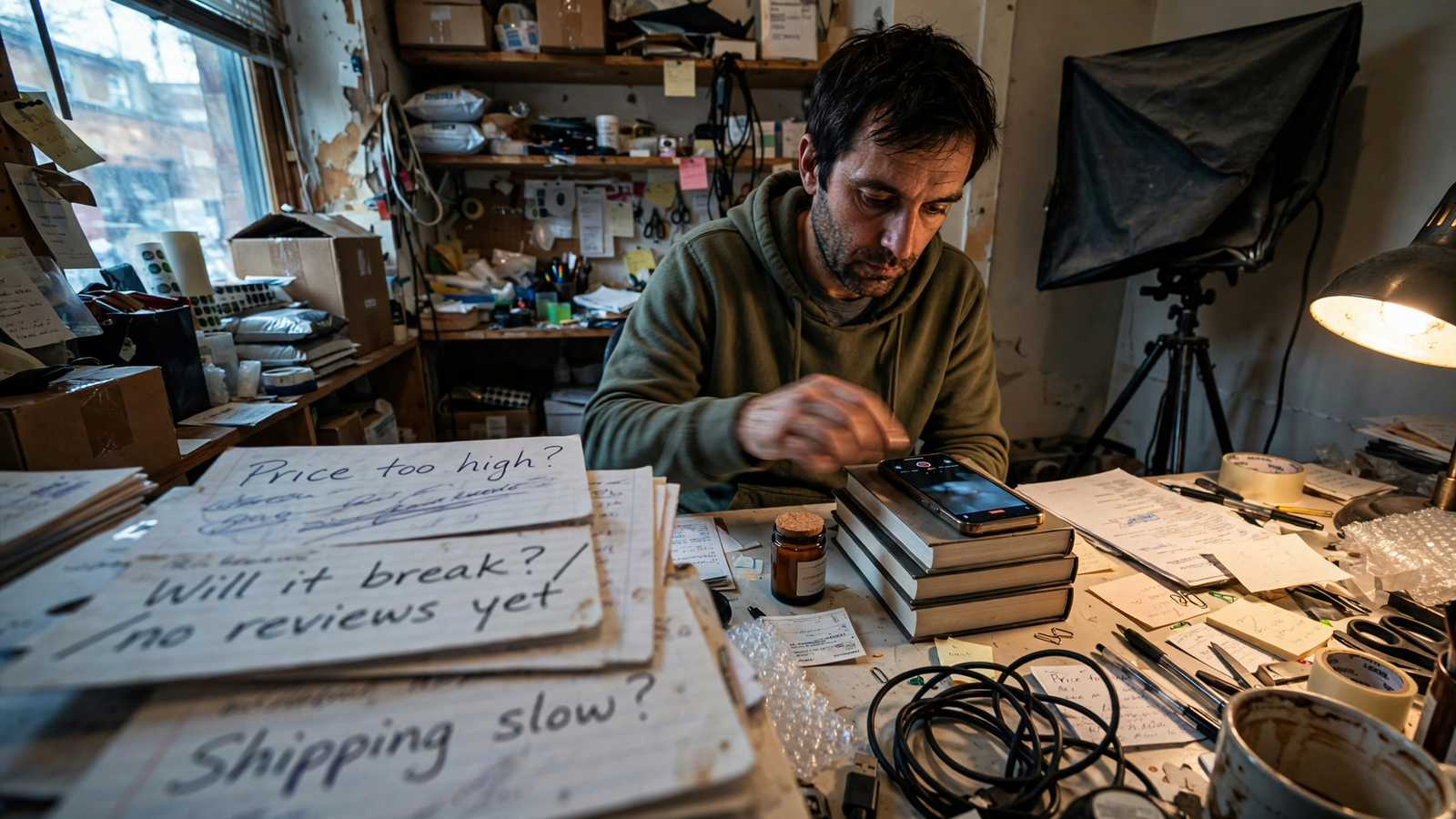
I used to tell clients to send me bullet points so I could turn them into ad copy. I was wrong. By then, the useful language had often been flattened. A skeptical buyer needs to hear a familiar concern answered quickly. Plumbers ask about mess. SaaS buyers ask about migration. Parents ask about safety. A media buyer can guess at those angles; you hear which one stalls the sale.
That is the owner’s best argument for picking up a phone: the sentence you say naturally may be the sentence the ad needs. A polished script written from a tidy brief can miss it entirely. Record the answer first. Decide later whether it needs polish.
Phone footage can earn attention that polish cannot
An ad that announces itself as an ad can lose the viewer before the offer arrives. In Meta’s 2019 test, self-recorded Stories beat studio-shot Stories on content views 84% of the time. A Brainlabs review of 46 brand-lift studies found that lo-fi human voice lifted purchase intent 6%, against a 4% average, while polish won on awareness. A 2025 report cited 29% higher conversions for UGC-style content than polished branded content.
Those are different measures, but they point to the same useful mechanism: a person speaking plainly may get heard before the viewer’s ad-blindness kicks in. The camera does not have to be impressive. The answer does.
A phone can beat a production calendar
You can shoot a video Tuesday morning and have it live Tuesday night. An agency concept can pass through a brief, a deck, a shoot date, and revision rounds before the first cut appears. By then, the angle may be stale. I have seen the less glamorous version of this: a founder sends shaky warehouse footage, I resist it because it does not match the brand fonts, and the footage wins anyway. The fonts took that loss hard.
Cost affects the number of ideas you can try, too. One comparison puts an average UGC video around $198, versus $5,000 to $15,000 for studio production. And video is often extra on low-retainer management plans, at $500 to $2,500 per ad. If every new angle needs a separate production approval, fewer angles get tried. You can pay for campaign management and still be left making the ads yourself.
The owner’s case is not that shaky footage always wins. It is sharper than that: speed plus a real customer answer can beat polish plus process. If you can make something worth hearing today, do not wait for a concept deck to give you permission.
Position B: the agency should make the ads
Now take the agency’s strongest case. Good media buyers do not need to claim they understand your customers better than you do. They need to show they can turn what you know into a steady supply of testable ads. One good video is not a creative system. On Meta, the job includes replacing a winner before fatigue makes it expensive.
Fatigue keeps a weekly calendar
Top-performing ads can fatigue in two to four weeks at meaningful spend. Once spend passes roughly $30k a month, a monthly refresh may already be too slow. My health check is fewer than three new concepts a week: if that is all an account produces, its winners may be running out the clock while frequency climbs and acquisition costs follow.
An owner can film five videos over a weekend. Then a hire quits, a supplier misses a delivery, or tax quarter arrives. Week three produces nothing. Week four reuses the winner that is already tired. Scaling accounts ship 15 to 40 new concepts a month and keep 20% of spend on new variants for a reason. That pace takes a production system, not a burst of motivation. Authenticity without a replacement cadence still fatigues.
A useful test changes one thing at a time
Owners can test like this: new hook, new format, new copy, new CTA, all at once. The result may win, but it does not tell you what to make next. A disciplined test isolates one variable while holding audience, budget, placement, and offer constant. Then the learning can travel from one ad to the next.
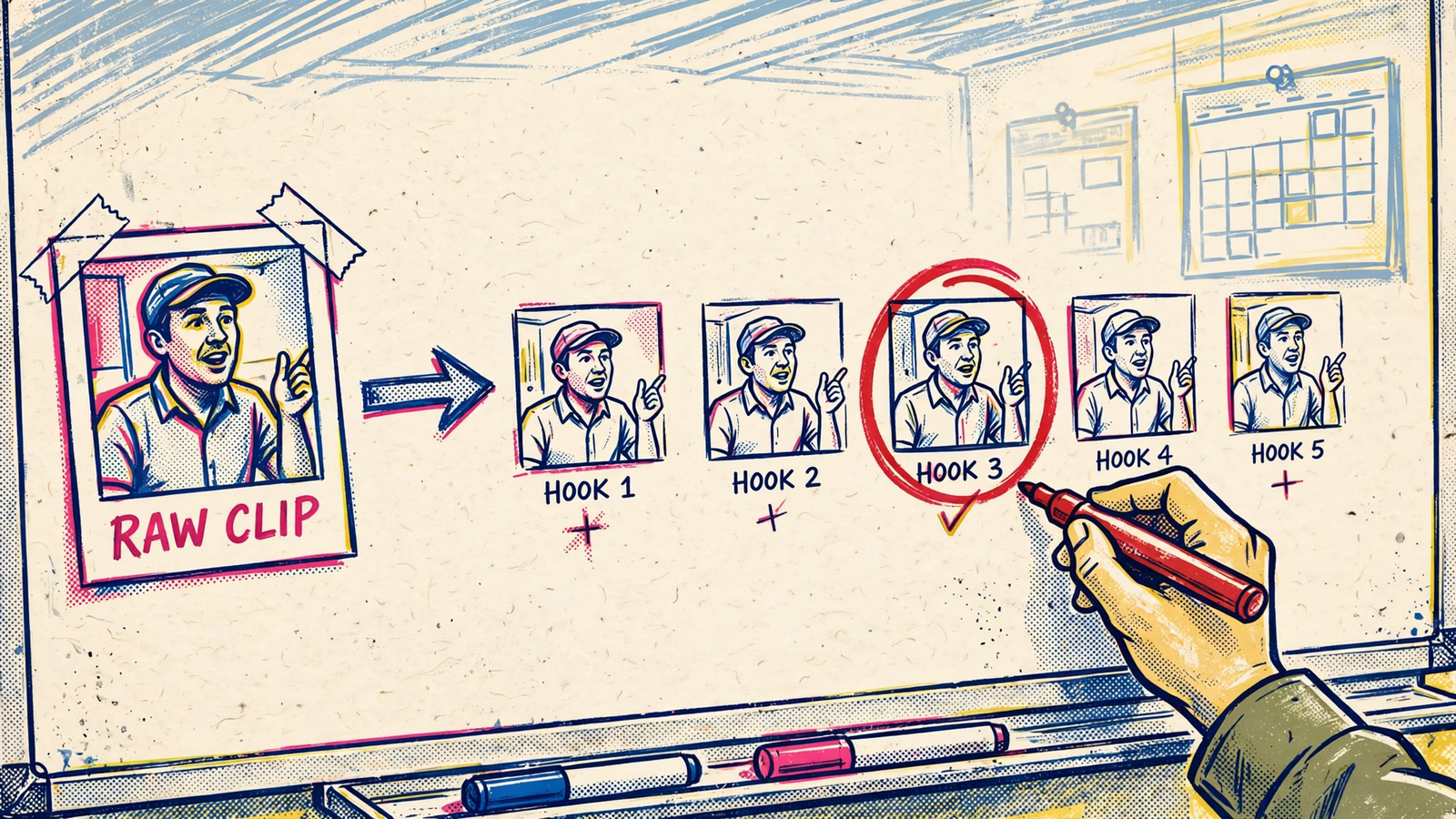
The agency advocate’s example is unglamorous: five cuts of the same 22-second video, each with a different first three seconds, followed by two copy swaps. It is boring to produce. It is also much more useful than declaring a complete remake the winner and guessing why. The point of testing is to learn what to repeat, not merely to crown an ad.
Someone has to kill the favorite
You filmed it. You like how you sound. Your team laughed at the line. So it stays live while CPA climbs 18%, and everyone blames the algorithm. I have done this. Attachment makes a poor optimization rule.
A manager who can read thumbstop rate, hold rate, outbound CTR, and cost per result without defending the shoot has an advantage. That is why Meta-focused shops describe their output in creative volume: Flighted at 1,000-plus uniques a month, Sequence Studios at 30 to 50 fresh assets per brand per month, and Admiral launching concepts weekly. The useful question is not whether your provider can match those numbers. It is whether they can state a number, meet it, and show you what each test taught them. Distance from the footage helps only when it comes with production and judgment.
My verdict: the business supplies truth; the manager owns the cadence
For a business paying someone to run Meta at meaningful spend, I want the manager to own creative production and weekly testing. The deciding consideration is cadence. The business has the customer knowledge, but a manager must turn it into enough ads to learn, replace tired winners, and keep the account moving. If the provider only adjusts budgets while waiting for finished videos, you have hired half a manager.
This is not a vote for agency polish over owner footage. It is a division of labor. A manager cannot manufacture the objection you hear every day, and your best phone clip cannot multiply itself into a month of controlled tests. The business supplies what nobody else can fake. The manager builds, tests, cuts, and replaces. That is the split I would put in writing.
What the business supplies
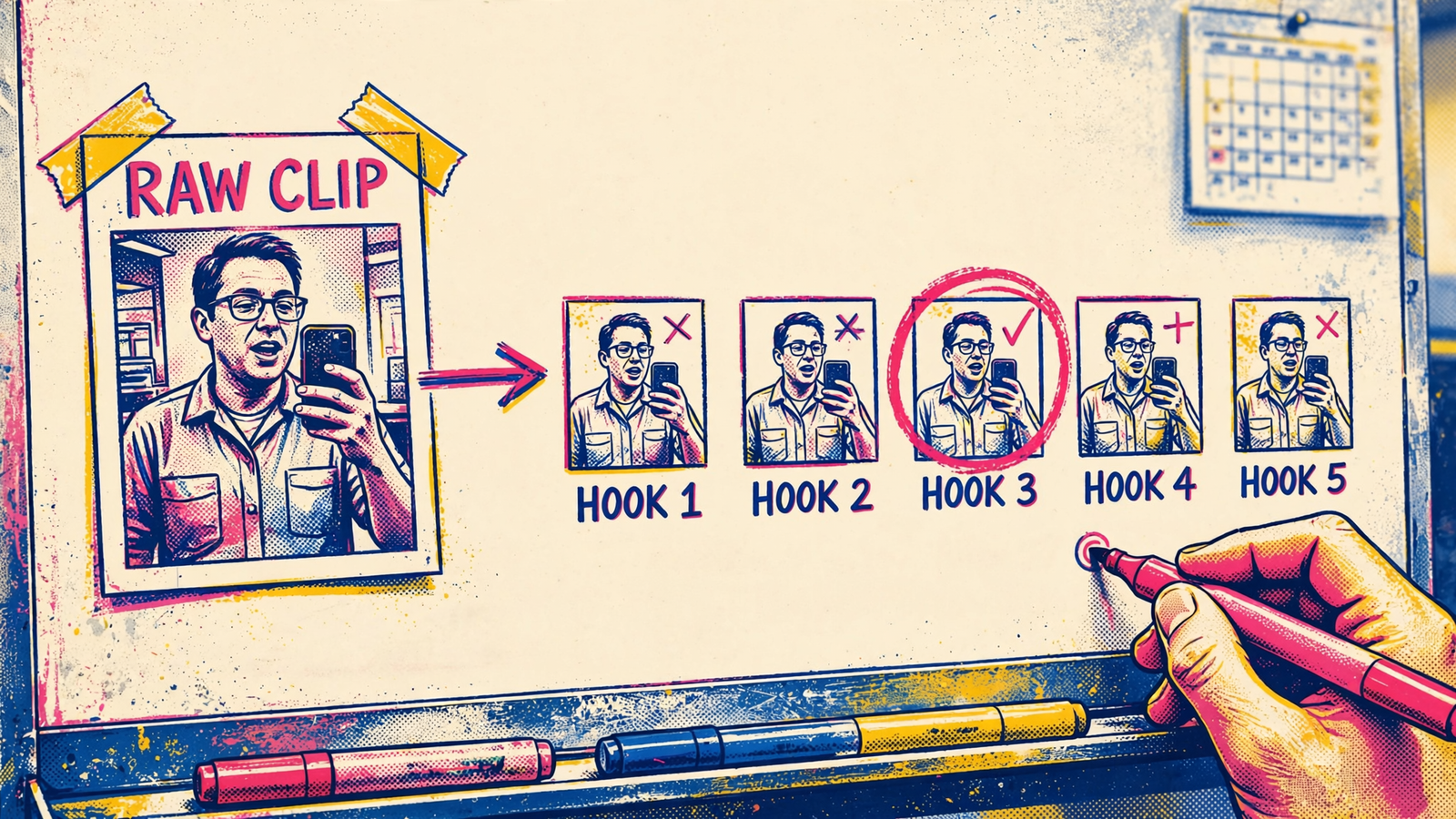
Once a month, give the manager raw material: two or three phone clips answering your top customer objections in your own words; the offer and guarantee as you explain them on sales calls; and access to film the product, shop, or job site. Think 30 minutes, no script, vertical video, bad lighting allowed. Your job is to provide language and footage grounded in what customers ask, not to deliver a finished campaign.
If a provider says they need nothing from you, ask where the angles will come from. Stock templates cannot hear your sales calls. An agency may produce an ad without that input, but it will have to guess at the part you already know.
What the manager produces and tests
Every week, the manager turns those clips into new hooks, captions, and first-three-second variants. They hold the other test conditions steady, log what moved CPA, and show you what did not work. At serious spend, I would ask for at least three new concepts a week and a plan to reserve 20% of budget for testing. The point is to find replacements before fatigue taxes the current winner.
Then they cut losers, refresh winners, and report thumbstop rate, hold rate, and cost per result by variant. groas includes new ads tested and winners scaled in its Meta Ads service for a flat fee. I would judge any provider against that scope of work. If each video brings a separate bill, the testing cadence depends on whether you approve the next invoice.
Five questions that expose a missing creative plan
Ask these on the call and get the answers in writing before you sign. I treat a Meta retainer that hides the creative count the way I treat a Google Ads agency retainer that hides the work: the missing detail is the detail I need. A vague promise to “handle creative” is not a production commitment.
- How many new concepts will you ship each week at my spend, and in which formats?
- What exactly do you need from me each month, and how much of my time will it take?
- How will you isolate one variable per test, and what will you hold constant?
- When will you replace a winner, and which metric will trigger that decision?
- Is video creative included in the fee, or billed per ad?
That last answer matters. groas includes new ads tested and winners scaled inside its $1,499 Meta flat fee, without a per-video charge. Whatever provider you choose, make them tell you whether making the next test is part of the job or another line item.
You supply the truth. They supply the cadence. Give them phone footage that answers real objections; expect new hooks each week, clear decisions about what to cut, and a plan for replacing what fatigues. A provider who will not commit to both halves is asking you to pay for targeting while skipping the part of the job that now does so much of it.