

 LinkedIn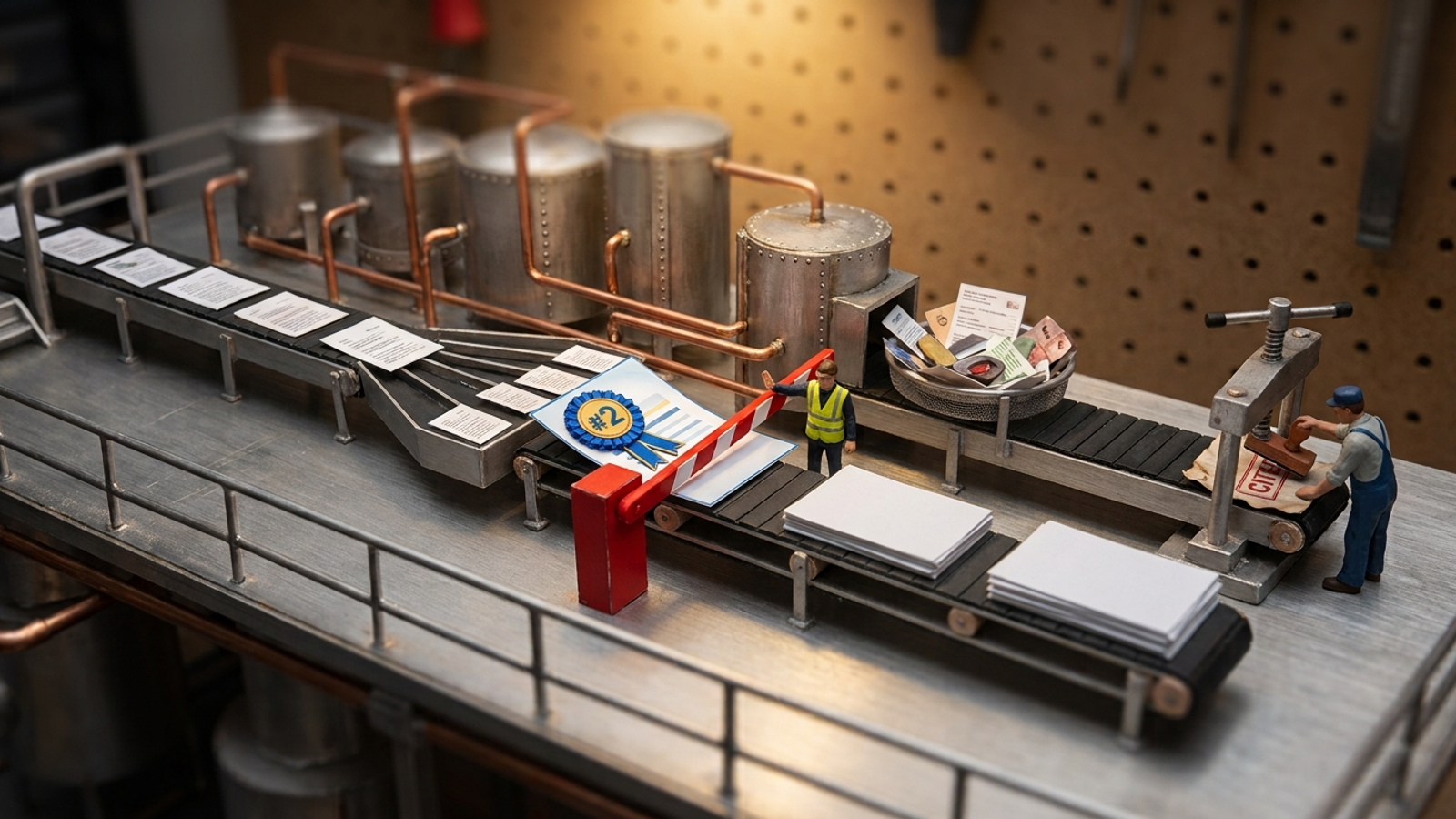
Your buyer’s guide ranks #2 on Google. A prospect asks ChatGPT the same question, and it cites three competitors, a trade directory, and an old forum thread instead.
It is tempting to call that bias. More often, the mistake is treating an AI answer as a Google results page dressed up in complete sentences. Ranking and earning an AI citation are different technical events. A search ranking puts your URL among documents a person can choose to open. To produce an answer, an AI engine has to find candidate pages, fetch them, extract useful passages, and decide which sources to name.
That gives us four places to look: query fan-out, live fetch, passage extraction, and attribution. A page can rank well and still fail at any one of them. In an analysis of 1.4 million search prompts, Ahrefs found that ChatGPT cited only about 50% of the candidate URLs it initially pulled from search APIs. Retrieval got those URLs into consideration; it did not get them into the answer.
So before ordering another month of blog posts, find the gate your page failed to pass. I’ll use one hypothetical buyer question all the way through.
Stage 1: Your buyer’s one question becomes several searches
Say you manufacture commercial reverse-osmosis systems for craft breweries. A head brewer asks ChatGPT or Perplexity: “What size reverse osmosis system do I need for a 15-barrel brewhouse, and who makes reliable units under $30,000?”
That sounds like one search. It can become several. Query fan-out breaks a conversational prompt into narrower searches that can supply different parts of an answer. As Ahrefs explains in its discussion of query decomposition, a retrieval-augmented engine may search for specifications, pricing, comparisons, and operational constraints rather than rely on the buyer’s exact wording. Research discussed by Neil Patel also describes modifiers such as “reviews,” “best,” and “specs” appearing in decomposed queries.
For the brewer, those searches might cover flow-rate requirements, membrane replacement costs, unit prices, manufacturers, failure modes, and forum reviews. Your product page could rank #1 for “commercial brewery reverse osmosis” and still have little to say about five of those six topics.
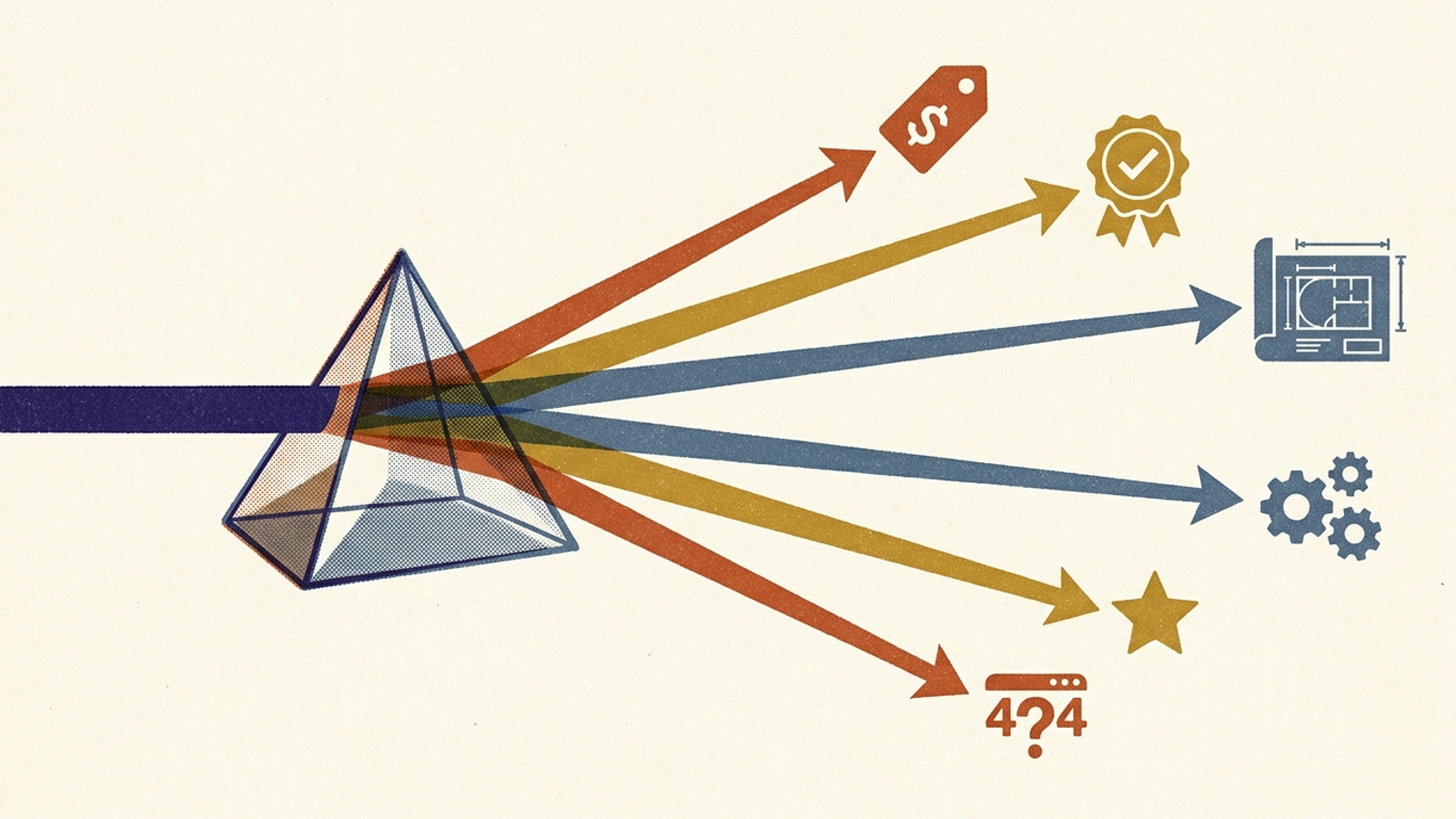
A head-term ranking cannot answer six narrower questions
This is the first failure a rank tracker can miss. It reports where your page sits for the term you gave it. It does not establish that your page answers the related questions the engine chose to pursue.
Retrieval systems can combine results from multiple searches using methods such as Reciprocal Rank Fusion (RRF). In that kind of combination, a URL that appears across several relevant result sets can be more useful than one that dominates a single broad term. The practical point does not depend on knowing which combination method a particular engine used: if your brochure offers only high-level claims and a “Schedule a Demo” button, it gives the engine little help with gallons-per-minute specs, membrane lifespan, or hardware pricing. A distributor catalog, a brewer’s forum thread, or a niche teardown may answer those questions instead.
Check the sub-queries before you rewrite the head-term page. If your URL does not appear for the questions inside the prompt, the later stages never get a fair chance to use it.
Stage 2: The engine has to fetch a readable page
Suppose your brewery page does appear among the candidates. Now the engine needs its content. This sounds trivial until a site passes a routine Google crawlability audit and still serves an AI fetcher a challenge screen or an empty shell.
Training crawlers and live fetchers are not the same visitor
Site owners often talk about “AI bots” as though they all do one job. OpenAI’s bot documentation distinguishes GPTBot, which crawls for training data; OAI-SearchBot, which crawls for search features; and ChatGPT-User, which can fetch a page in response to a person’s request. A rule written to stop training crawls should not accidentally shut out the routes you want available for search and live answers. If that distinction is buried in your server configuration, the AI crawler swipe file is a starting point for reviewing it.
Then inspect what the visitor actually receives. Two barriers matter here:
- Firewall and CDN challenges. Edge bot protection can return a 403 response or a JavaScript verification screen rather than the page. BotView’s investigation describes how Cloudflare bot settings and managed challenges can block AI user agents. A page Google can access is not necessarily a page every AI fetcher can access.
- Client-side rendering. If your specifications appear only after JavaScript runs, the initial HTML may contain a container but none of the information the buyer needs. Maslon Labs’ discussion of AI crawlers and JavaScript explains why relying on a live fetcher to render the page is risky. For our brewery page, that could mean the system specs are visible in a browser but absent from the response an AI fetcher reads.
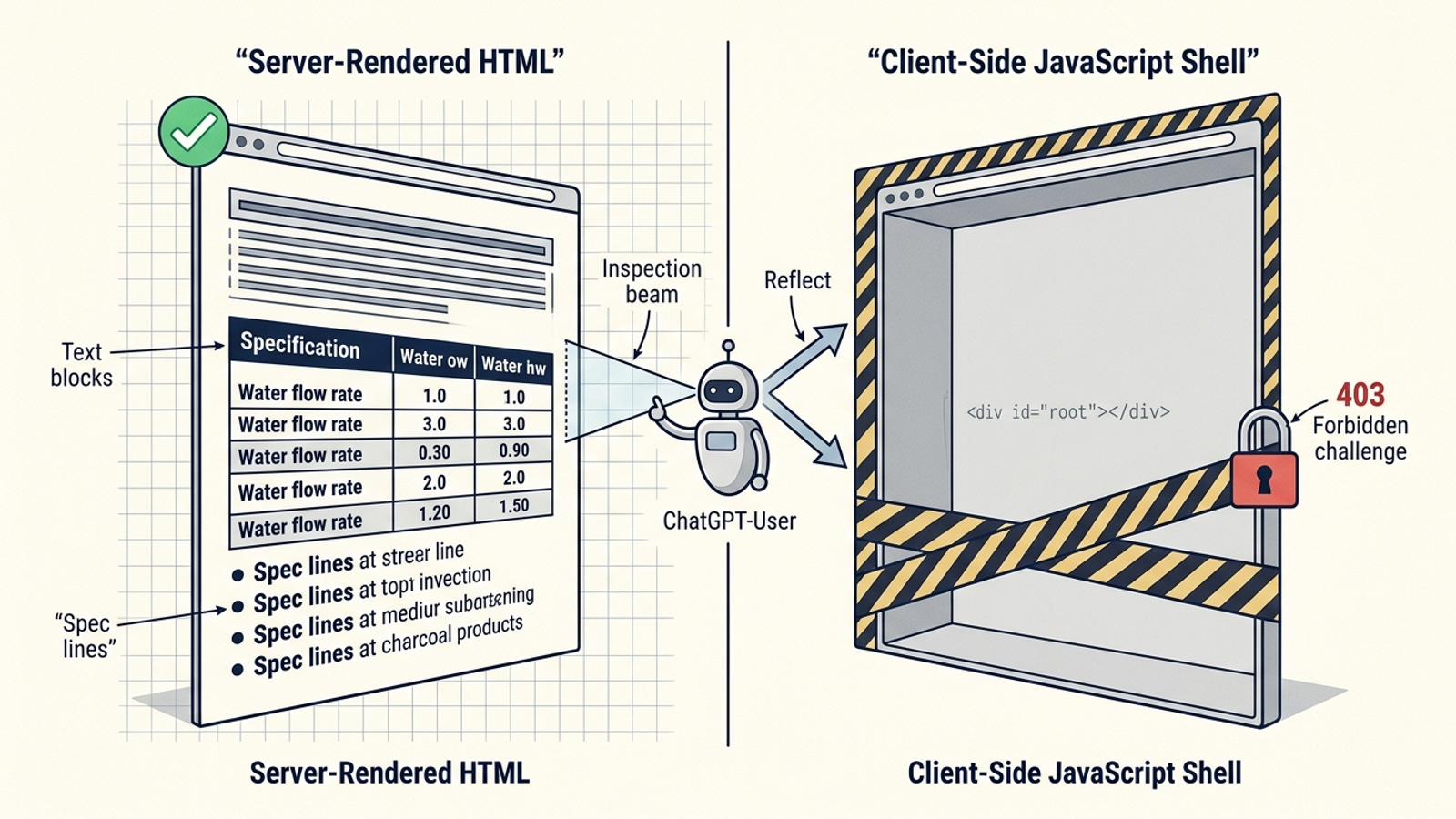
Fix access and rendering before editing copy. The best sizing table on the internet cannot earn a citation if the fetch returns a challenge screen or markup without the table.
Stage 3: A useful passage must survive extraction
Getting the HTML through the door is not the same as making the answer easy to find. A retrieval-augmented system can split a document into shorter passages and compare those passages with the narrower question it is trying to answer. The relevant unit is no longer your entire five-page buyer’s guide. It is the portion that stands up on its own.
Consider two possible passages for the brewer’s sizing question. Your page opens with two paragraphs about how craft brewing is “both an art and a science” and how your “water stewardship solutions” refine flavor profiles. An independent distributor instead places flow rate and holding-tank capacity together in one plainly labeled block. The first passage may sound polished to a human scanning a homepage, but it does not answer the sizing question. The second gives the retrieval system something specific to use.
Boostability’s discussion of AI search citations points toward the value of direct, self-contained explanations and cleanly presented facts. For your own page, that means putting the brewhouse size, flow-rate guidance, and relevant constraints in a passage a reader could understand without first reading three paragraphs of positioning. A table can help when the relationship is naturally tabular; it is not a substitute for explaining what its figures mean.
This is the passage-first idea behind writing pages to be cited in AI answers. Do not bury the answer to a technical question beneath an introduction written for a brand deck. Make the answer legible where it appears.
Stage 4: The answer can use your fact and cite someone else
Even a useful passage does not guarantee your name beside the final answer. If several pages supply the same general advice, the engine can synthesize that advice and cite another source that supports it more distinctly.
For the brewer, imagine twenty supply sites saying that RO capacity depends on production volume. Your page says the same thing, then moves to a demo form. A distributor supplies the relevant sizing details and a visible price. The engine has a clearer reason to cite the distributor when it answers a question about size and units under $30,000.
This is the attribution problem. SearchPrex’s analysis of AI search retrieval discusses Information Gain: whether a source adds something beyond a restatement of common advice. You do not need to manufacture a novel conclusion for every page. You do need to ask what your page contributes to this answer that a generic summary does not: a specification, an explicit price, a measurement, or a comparison grounded in details you actually publish.
A citation is not a prize for being present. Give the answer a reason to name your page rather than the source that supplied the useful detail.
Run four checks before commissioning more content
The stages form a diagnostic sequence. Start with the buyer’s prompt, use the same URL throughout, and stop where you find a failure. These checks are clues, not a way to reproduce an engine’s private retrieval process exactly.
- Fan-out check: Break the prompt into four natural searches, such as pricing, specifications, comparisons, and operational limits. Search each one. Does your page appear for several, or only for the broad term you already track? If it misses the narrower searches, add information that answers them before worrying about attribution.
- Fetch check: Inspect the response your site serves. A quick command-line check can request the page with a live-fetcher user agent and look for a term that should be in its HTML:
curl -A "Mozilla/5.0 (compatible; ChatGPT-User/1.0; +https://openai.com/bot)" -sL https://yoursite.com/page | grep -i "15-barrel". A missing match alone does not tell you why it is missing. Check whether the response is a 403, a verification screen, a JavaScript shell, or simply a page that uses different wording. - Extraction check: Read roughly 150 words under the page’s main technical heading without the surrounding introduction. Could a brewer get a complete answer to one part of the question from that passage? If the crucial figures live elsewhere or require the preceding narrative to make sense, bring them together.
- Attribution check: Compare your relevant passage with the pages the engine cites. What concrete detail do those sources provide that yours does not? If all you offer is the same broad advice, improve the underlying information rather than changing a heading and hoping for a link.
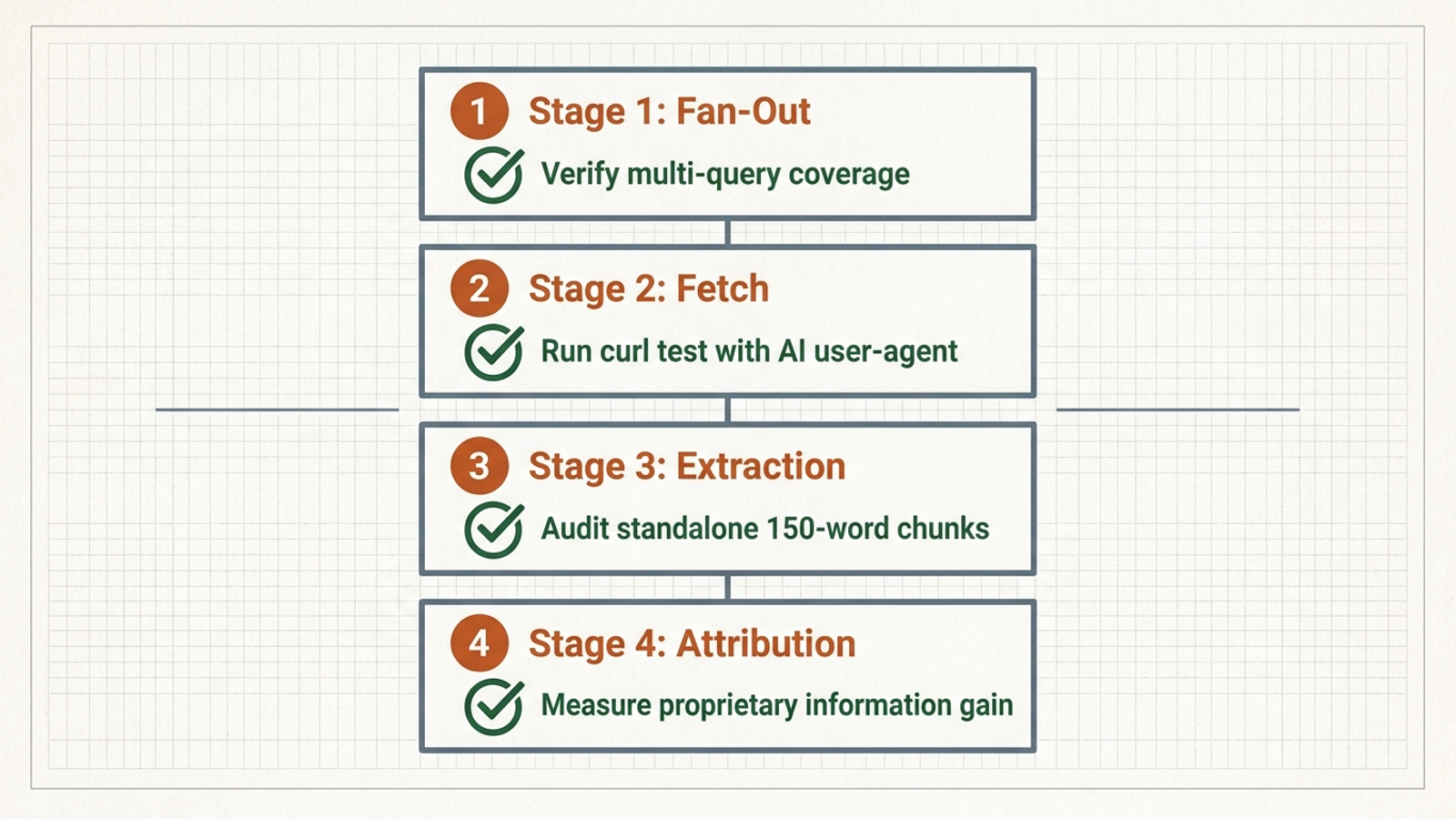
The first failed check sets the work order. There is no point polishing a passage that the fetcher cannot read, or tuning an attribution argument for a URL the sub-queries never retrieve.
A visibility dashboard shows the gap, not necessarily the cause
Tools such as the Semrush AI Visibility Toolkit and Ahrefs Brand Radar can show the surface pattern: prompts that mention competitors, prompts that omit you, and changes in that visibility over time. That is useful. It tells you where to investigate.
It does not, by itself, tell you whether your brewery page missed the fan-out searches, hit a CDN challenge, served a blank HTML shell, or offered no extractable sizing answer. A mention gap is a symptom, not a repair instruction. A chart of competitor citations will not change a server rule or put specifications into readable markup.
This is why the operating model matters more than the prettiness of the report. At groas, the case for continuous search optimization is that a detected gap should lead to an action, with a human strategist accountable for the direction. For this particular problem, that action still has to match the failed stage. Do not ask a content calendar to solve a fetch failure.
Put the model to work on a different buyer question
Now switch industries. Imagine a fleet telematics provider that spent $35,000 commissioning forty posts about the future of commercial freight. Organic traffic looks respectable. Then a logistics director asks ChatGPT: “Which telematics hardware integrates directly with Geotab for refrigerated trailer temperature tracking under $800?” The answer cites two legacy sensor manufacturers and a regional distributor’s PDF spec sheet. The team assumes it needs more brand authority.
Walk through the four stages instead. At fan-out, the prompt leads to narrower questions about Geotab AUX port protocols, probe tolerances, cellular gateway costs, and cold-chain compliance. Posts about “smart fleet stewardship” answer none of them. That is a relevance problem, not a shortage of future-of-freight posts.
At fetch, suppose the provider’s compatibility page sits in a client-side app and an AI fetcher receives a blank <div id="__next"></div> behind a Cloudflare challenge. Fixing that response comes before rewriting the page. At extraction, suppose the product overview also buries its hardware details beneath marketing copy. Once the page is accessible, those details need to appear together in a passage that answers a compatibility question.
At attribution, the distributor’s PDF gives the engine what the buyer asked for: a table with sensor tolerances of ±0.3°C, RS-485 serial hardware protocols, and a $640 retail price. If the provider publishes no comparable details, a new headline will not make its page the better source.
That is the same diagnostic discipline I would use when a Quality Score problem turns out to be a landing-page problem rather than an ad-copy problem. Work backward from the failure instead of producing more of the easiest thing to produce. For the telematics provider, the next move is not ten more articles. It is to get the relevant compatibility page into the candidate set, make it fetchable, put the hardware answer where extraction can find it, and give the engine a concrete reason to cite it.