Autonomous Ad Budget Allocation: Cost and How It Works FAQ
Wasting ad budget and can't optimize fast enough? How real-time AI budget allocation works, what autonomous setup costs, and what to use at scale.
September 28, 2026
•
min read


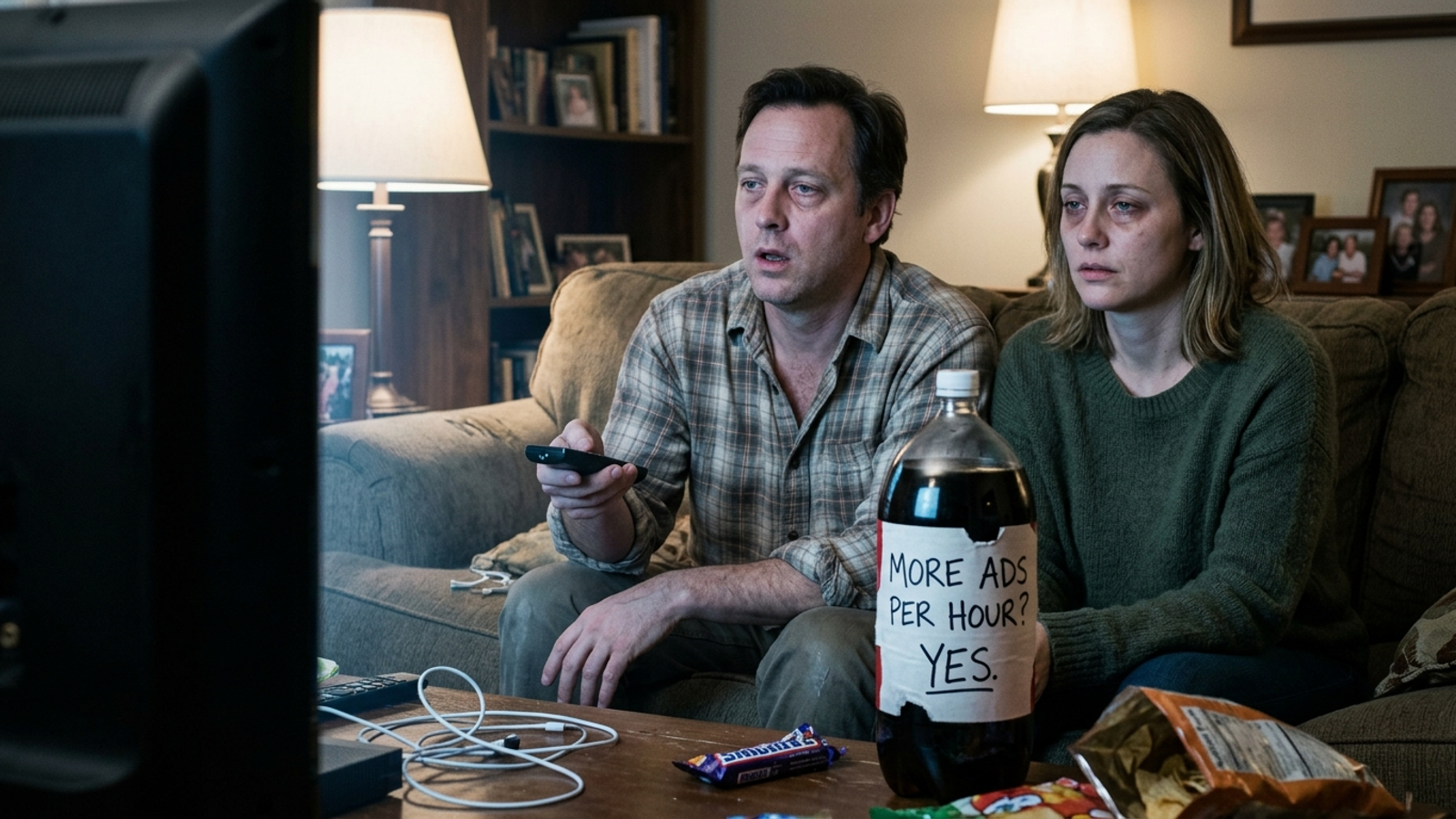
By December 31, 2026, the average YouTube viewer will sit through more ads per hour than they did in April 2026. Google’s incentives point one way: more ad opportunities create more inventory to sell.
I used to tell clients YouTube was the cheap reach buy. I was wrong. In April, viewers reported three back-to-back pre-rolls instead of two, plus mid-rolls every 3 to 4 minutes with about 20 seconds unskippable each time. YouTube ad revenue reached $9.9B in Q1 2026 and $11.1B in Q2 2026, up 11% and 13% year over year. That does not prove every extra ad caused the growth. It does give Google little reason to retreat from a heavier load.
This is not another recap of what changed. I’m making three calls about what happens next, how I’ll know if I’m wrong, and what I would change in an account now. If the load keeps climbing, wasted frequency gets more expensive with it.
Viewers noticed the load before advertisers had much time to price it in. Alongside the April complaints about triple pre-rolls and closely spaced mid-rolls came stranger reports from the TV app: multiple Reddit threads described 90-second unskippable spots and one 9:36 monster. YouTube said its cap was 15 seconds on mobile and 30 seconds on connected TV, denied having a 90-second format, and said it was investigating. I would not build a forecast around those extreme reports. The ordinary reports of more frequent ads are enough.
In June, YouTube Premium in the US rose to $16 a month for an individual and $27 for a family, from $14 and $23. The free version asks viewers to tolerate more advertising; the paid exit costs more. That combination is familiar to anyone who has bought ad-supported media.
Advertisers can already see the price side. Average skippable cost per view sat at $0.024 in 2026, up 7% year over year, with TrueView CPM at $11.42, non-skippable at $14.85, and bumpers at $9.20. Connected TV accounts for 32% of YouTube ad delivery at $14.20 to $18.50 CPM, with 78% completion against 54% on mobile. A larger share of delivery on that expensive, less skippable screen matters to every prediction below.
I laid out the broader backdrop in Did YouTube Increase Ads in 2026. For the account you manage today, watch the price of reaching someone again, not just the price of reaching them once.
By December 31, 2026, a YouTube media plan without an explicit weekly frequency goal will look sloppy. More slots per hour give the same viewer more chances to see your ad. If your audience stays narrow while delivery grows, repeat impressions can eat the budget before unique reach does.
Google has published a reason to care: TV advertiser ROI fell 41% when frequency passed 6+ weekly impressions; that level accounted for 46% of TV impressions. Its Target frequency option lets advertisers choose a weekly goal up to 4 and optimizes for unique reach at that cadence. Google says more than 95% of campaigns meet their goal when they follow its setup rules. A goal is not a hard ceiling on every viewer. It is still a better instruction than asking the system to deliver impressions and hoping repetition stays useful.
I used to treat frequency as something brand teams fussed over while performance teams chased conversions. That split made more sense when reach was cheap. In the Triscuit test Google cites, a weekly frequency of 2 produced 93% higher absolute ad recall lift at 40% lower cost per lifted user than buying without a frequency goal. Directing spend toward a useful cadence can reach more people instead of repeatedly hitting the ones already covered. That is the mechanism worth testing, not a promise that every account will reproduce Triscuit’s result.
Say you spend $20k a month on YouTube. If impressions rise while unique reach stalls, the eighth impression to one viewer is competing for money you could spend finding another. Pay attention to the reach curve before you buy another round of repetition.
Start a separate Video reach campaign using Target frequency, with a weekly goal of 2 or 3, rather than treating a views campaign as a frequency plan. Nielsen work cited by Google found brands could raise weekly frequency from 1 to 3 on YouTube with consistent ROI. That makes 2 or 3 a sensible place to start testing, not a universal limit. If you also buy connected TV outside YouTube, DV360 lets you manage YouTube and other CTV apps in one insertion order and claims a 5% reach-per-dollar lift against managing them separately. The click path is in How To Run YouTube Ads In 2026.
This prediction fails if unmanaged accounts show flat average weekly frequency from April to December, or Target frequency remains a brand-team niche rather than becoming a routine planning choice. Set a frequency goal, then check whether it changes who you reach.
By Q4 2026, advertisers buying YouTube primarily for reach will face a wider price premium over outcome-led alternatives than they do today. The pressure comes from inventory mix. Connected TV takes a substantial share of delivery, while non-skippable inventory sits at $14.85 CPM against $11.42 for skippable TrueView. If that mix continues to move toward the living room, a reach plan has more exposure to expensive impressions.
The alternatives already look different. Shorts ads averaged $4.85 CPM with 1.24% CTR in Q1 2026, compared with 0.65% CTR for skippable in-stream and 0.21% for non-skippable. Video Action campaigns averaged 4.7% conversion rate and $42 CPA, against 1.2% conversion rate for reach-optimized campaigns. Those are different formats and goals, not an invitation to pretend every Shorts impression replaces a TV impression. They do show why I would make the buyer prove what the pricier reach delivered.
What the deck calls premium CTV reach, I call paying $14 to $18 per thousand for a screen where skipping is harder. Sometimes that is exactly the job: people need to see the launch. But a performance budget needs another answer. Did the added exposure create qualified actions, or did it mostly buy another look from the same household? The heavier the load, the less patient I am with a reach line that cannot answer.
Buy reach for a reason, then give it an outcome to answer to.
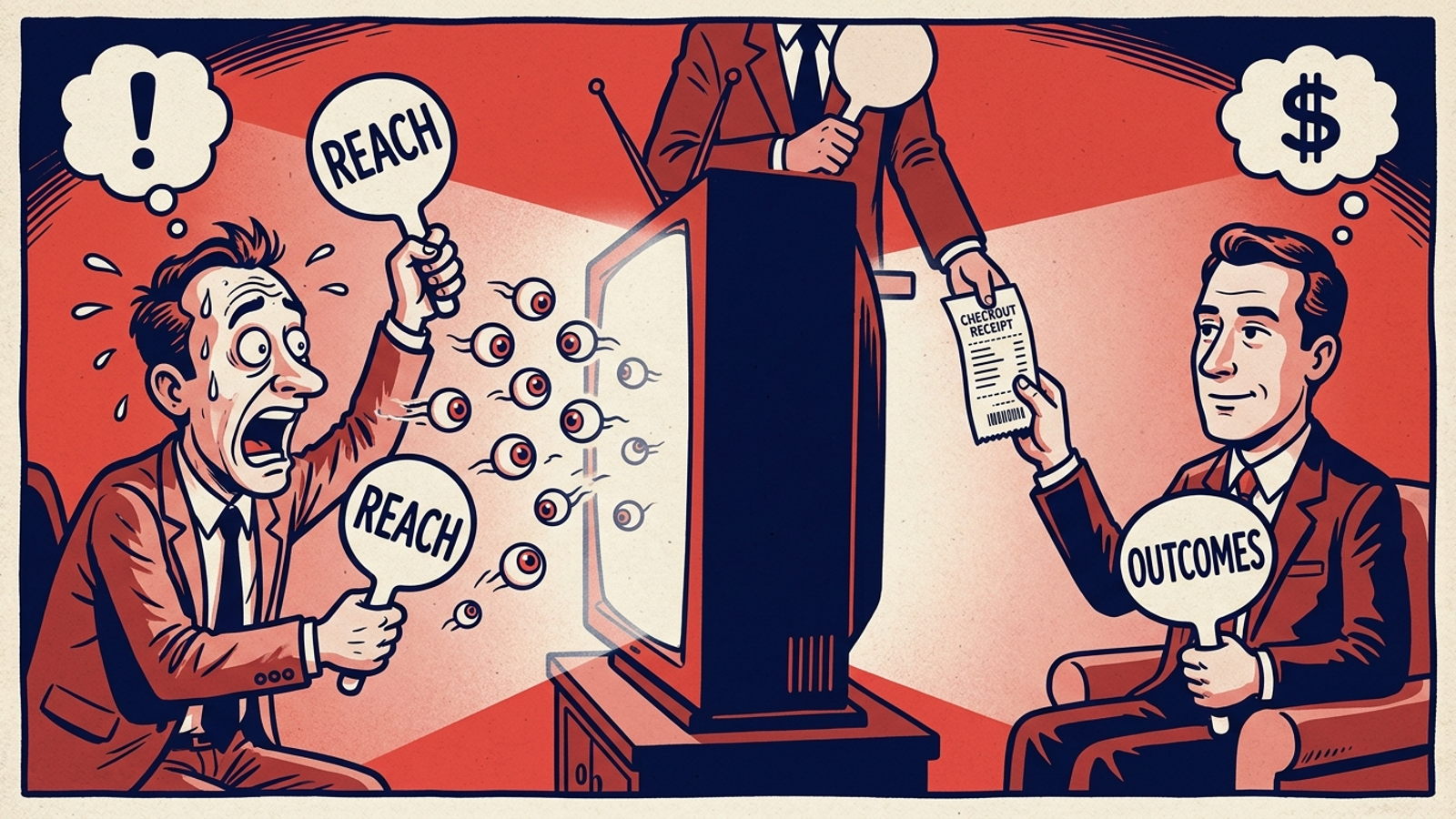
Split the account by job. Give a Video reach campaign the capped living-room assignment, and give a separate Video views or Video Action campaign the response assignment. Do not ask one campaign to promise both while judging it on whichever number looks nicest afterward. If you buy YouTube purely for launch-week buzz and truly do not care about CPA, keep buying reach and ignore this part. Otherwise, judge the reach line on unique reach and recall, and the action line on CPA against search and paid social.
This call fails if Q4 benchmarks show the CPM gap between non-skippable CTV and skippable or Shorts narrowing, or reach-optimized conversion rates closing the gap with Video Action rather than continuing to trail. Do not let an expensive impression stand in for an outcome.
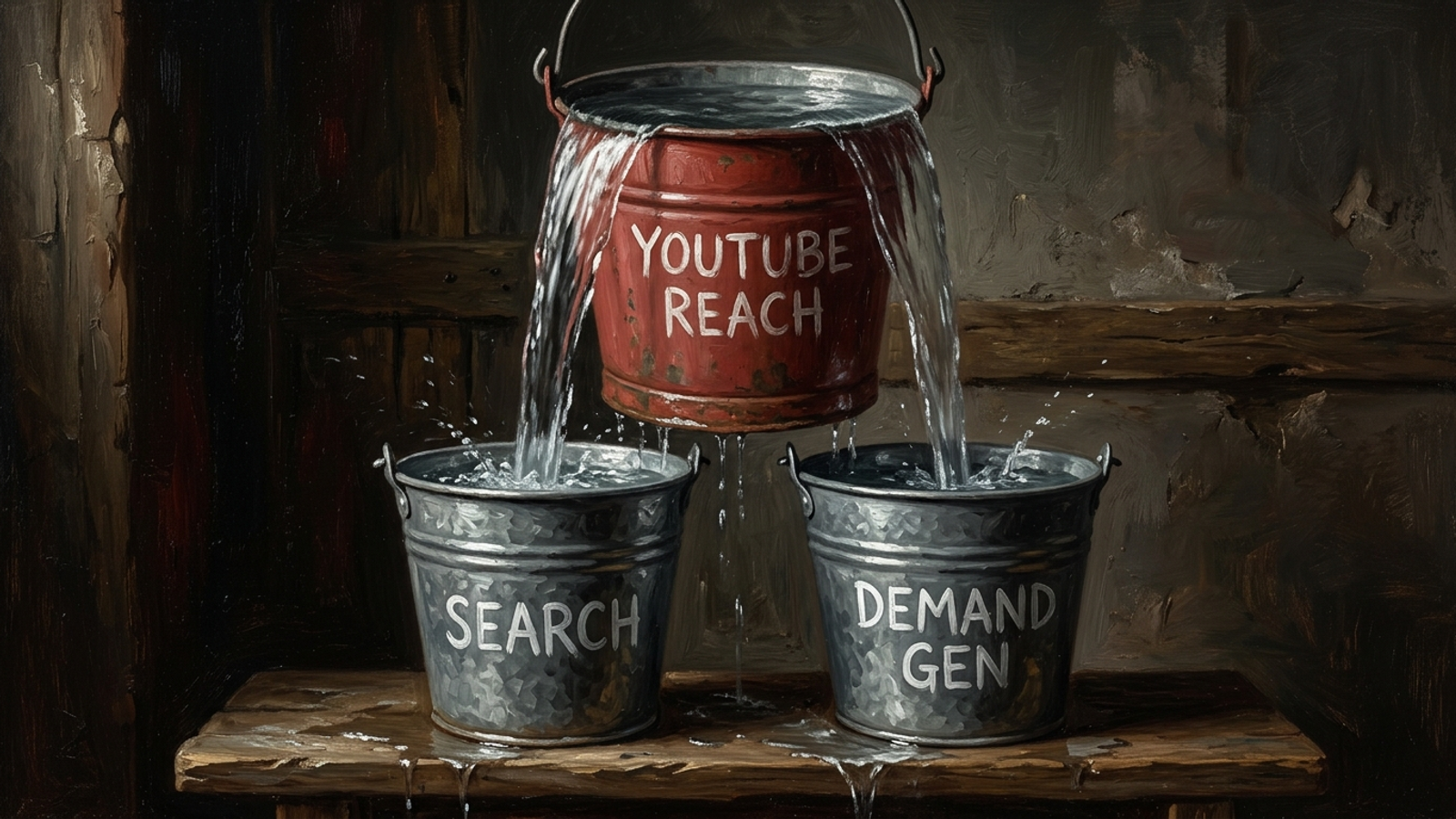
By the end of 2026, mid-market plans that fund YouTube reach will trim its share in favor of search, Demand Gen, and Shorts action formats. This is not a prediction that everyone abandons YouTube. It is a prediction about the portion of the budget that has to produce a measurable action.
Connected TV impressions cost $14.20 to $18.50 per thousand, while the cited campaign benchmarks put reach-optimized conversion rate at 1.2% against 4.7% for Video Action at $42 CPA. Those figures do not calculate an account’s return for it. They do set up the finance meeting: what is the next reach impression worth, compared with the next chance to capture intent?
Say you spend $20k a month. If the reach line keeps finding the same viewers, adding money buys more exposure without necessarily buying more prospects. Shorts, at $4.85 CPM and 1.24% CTR, offers a different way to test response. Search gives you the query. Demand Gen gives the action campaign another place to work. None deserves a transfer on reputation alone; each has to beat the qualified-action cost of the money it replaces.
Connected TV’s 78% completion rate versus 54% on mobile can look terrific in a report. On a less skippable screen, though, completion alone cannot tell you whether anyone wanted what you sell. I have watched performance money walk away from TV-style price hikes before. Reach stays useful for launches; the budget accountable for CPA goes looking for a clearer signal.
Keep paying for attention where it earns its place. Put the rest where intent is easier to see.
Run a reallocation test, not a tantrum. Pull the last 60 days by network and format. Isolate YouTube reach CPM and cost per qualified action, then move 20% of the reach line into search exact match and Demand Gen for four weeks. Compare CPA, not CTR. If search was starved, it may absorb the money and lower blended CPA. If it does not, you have learned that before moving the other 80%.
Keep the comparison tied to the action your business values. A cheaper click that never becomes a qualified lead is not a rescue plan. The longer mixed-account playbook is in YouTube Advertising In 2026.
This prediction fails if mid-market plans increase YouTube reach share instead of trimming it for those alternatives. Cut the eighth impression only when you know where the money works harder.
I’m grading all three calls on December 31, 2026. The first needs rising ad exposure or weekly repetition, not merely louder complaints from viewers. The second needs a widening reach premium, not just a high CTV CPM in isolation. The third needs an actual shift in plans, not a few advertisers saying they might move budget.
Flat frequency, a narrowing price gap, or growing YouTube reach share would each undercut a part of my argument. I do not expect that combination. More inventory gives Google more to sell, and advertisers still have to decide whether another impression is worth buying. Watch the measures that could prove the forecast wrong.
Set a weekly frequency goal of 2 to 3, separate reach money from action money, and test moving 20% of the reach line into intent for four weeks. Watch unique reach and qualified-action CPA before making the next move. That is the defense, not a prettier report.
Frequency monitoring is the repetitive, spreadsheet-level work I used to do at 1am. It is exactly the work that should run every day without a human remembering to check. Do it now, before the next load increase bills you for the eighth impression nobody wanted.