LinkedIn

This week’s cheapest signup can become next month’s most expensive customer. With a 30-day SaaS trial, Meta needs a useful signal now, but your business cannot judge the customer until later. The agency worth hiring has to work honestly in that gap: optimize toward an interim event with enough volume to learn from, then check whether each signup cohort actually activates and pays.
Myth 1: “The cheapest signup wins”
People believe this because signup is the first thing Meta can count reliably. I used to report it that way too. I was wrong. When you tell Meta to buy signups, it finds the easiest signups: students, job seekers, competitors and the curious. One B2B SaaS playbook calls optimizing for every form submission a major Meta mistake because the system finds people who fill forms cheaply. A subscription guide makes the distinction with two users who both start a trial: one cancels after 20 minutes; the other stays and pays. If you pay for starts, you may train Meta to find more of the first kind.
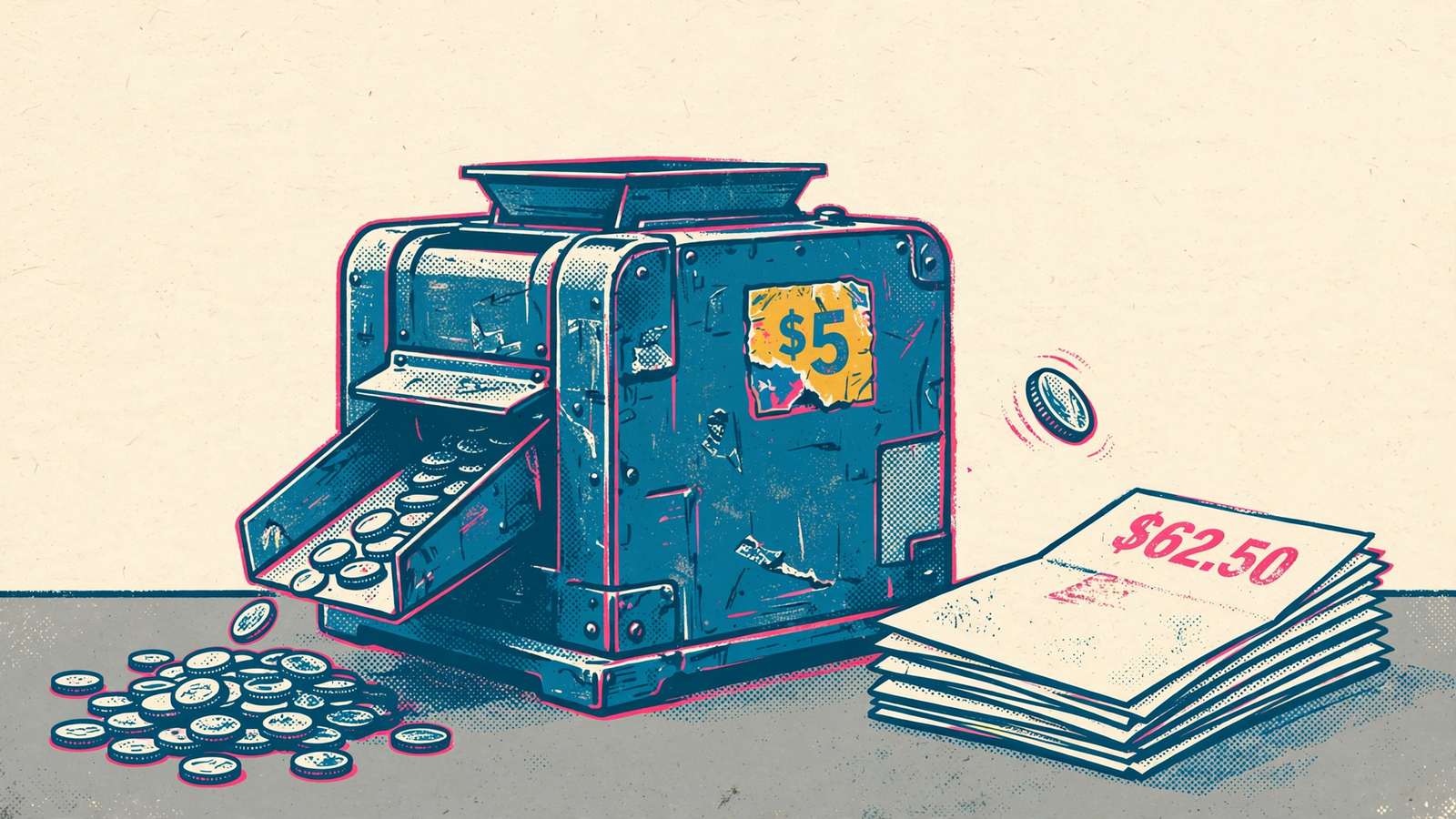
Say you spend $20k a month. Offer one brings 4,000 no-card starts at $5 each, and 8% pay. That is 320 customers at $62.50 per paid customer. Offer two brings 1,200 card-required starts at $16.67 each, and 35% pay. That is 420 customers at $47.62 per paid customer. The arithmetic behind that comparison is simple. The ad account prefers the first column. Your bank prefers the second.
The question for an agency is not whether it can lower cost per signup. Ask which downstream events it can measure and how it will judge signup cohorts on activation and paid conversion before moving budget. A cheaper start is not a cheaper customer.
Myth 2: “Always optimize straight for paid subscriptions”
People believe this because the textbooks say to optimize for what you want. In theory, fine. In a 30-day trial, you may be asking Meta to learn from silence. Meta’s standard click window is seven days, while a first payment on day 31 arrives well after it. As this discussion of trial length and ad optimization explains, a 7-day trial can keep payment inside that window; a 14-day trial usually cannot; a 30-day trial leaves a month of spend without a timely paid signal.
Volume makes the problem worse. One scaling guide gives about 10 optimization events per ad set per day as a working rule. An analysis of Meta ad sets found that those with fewer than about 50 weekly conversions cost about 28% more per purchase. Most SaaS trials cannot feed paid conversions at that pace. Telling the system to chase an event it rarely sees is not rigor. It is a nice-sounding instruction with very little to learn from.
What works instead is an interim signal you can defend: an activation event such as connecting a first integration, rather than raw signup. That is also the B2B SaaS playbook’s recommendation when there is too little volume to optimize deeper. Choose an event with enough daily volume, write down the paid value you expect it to predict, and test that expectation against mature cohorts. I use the comparison of trial starts, activated trials and paid conversions to make the choice explicit with clients.
In an agency interview, ask for the interim event, its daily volume per ad set and the point where its math breaks. Anyone promising to optimize directly for paid on 12 conversions a week is selling theory. A proxy is useful only if everyone remembers it is a proxy.
Myth 3: “This week’s spend and this week’s subscriptions belong in the same math”
People believe this because calendar reporting is tidy. Spend in March, revenue in March, one tidy ROAS. With a 30-day trial, that table lies. This March’s paying customers mostly started their trials in February, while most March signups have not had time to pay. Mash them together and you reward whoever bought the oldest cohorts, not whoever bought the best new ones.
The fix is boring and non-negotiable: measure trial conversion by signup cohort, not calendar month. Group signups by start week, then track what pays within the trial length plus 14 days. Otherwise, last month’s trials distort this month’s customer count. A trial conversion breakdown lays out that cohort approach alongside benchmarks: median free-to-paid conversion of 8%, with 4 to 6% described as good for no-card trials and 25 to 35% for card-required trials.
Every report needs two views of those cohorts:
- Mature cohorts: activation and paid conversion are ready to judge.
- Immature cohorts: early activity is visible, but paid conversion is marked too early to call.
If an agency declares a winner after seven days on a 30-day trial, it has graded an exam nobody finished. Ask to see a cohort table before you sign: start week by start week, with paid conversion left blank until the cohort matures. Calendar-month ROAS alone cannot tell you whether this week’s acquisition improved.
Myth 4: “Better clicks prove the new creative brought better customers”
Creative is the hero of every Meta case study because it is the easiest thing to see. An analysis covering 12 months, 35 accounts, 1,430 ads and £3.3m in spend attributed 46% of click performance to creative, ahead of audience at 32%, setup at 19% and timing at 3%. Its best ad got 49% more clicks than average within the same audience, budget and week. That is real. It is also click performance only. The same analysis says creative’s influence falls to about one-third of final cost per sale once the landing page, offer and audience come into play.
Clicks happen on Meta. Money happens in your trial, your onboarding emails and your sales calls. I have watched sharp creative pull cheap signups that never activated, and boring creative pull expensive signups that paid for a year. CTR tells you whether the ad stopped the scroll. It does not tell you whether the people who stopped were worth buying.

Before anyone scales a creative winner, I want the less photogenic answer: did activation rate and paid rate move with CTR, or did we buy more curious clicks faster? Let creative win the click test. Then make it win the cohort test before it gets more budget.
Myth 5: “More free trials must mean more qualified pipeline”
People believe this because the top of the funnel moves fast. Trials double, everyone celebrates, and sales gets a CSV with 400 new names. Then sales works those names for three weeks and marks 360 as junk. I have sat in that meeting. Marketing shows cost per trial down 30%. Sales shows meetings booked flat. Both charts are correct.
The problem is that trial is doing four jobs at once:
- Casual signup
- Activated account
- Sales-qualified opportunity
- Customer
Meta will happily find more of the first. It cannot produce more of the third unless product, tracking and sales agree on what counts. More trials do not automatically mean more pipeline. Split the funnel into those four stages in one shared sheet, get product and sales to agree on the definitions, then follow each cohort through them. If your agency reports only stage one, read the nine fixes for Meta ads that fill trials without activation before you raise budget. Volume without activation is a longer list of people who will not pay you.
Myth 6: “A platform report can settle a month-long buying journey by itself”
People believe this one because the platform report is already open, neatly formatted and ready to forward. Meta wants to take credit. That is its job. Its default 7-day click plus 1-day view setting includes view-through conversions: someone sees an ad and later converts through another channel. One attribution review describes Meta reporting 3 to 4 times the CRM total in some accounts and 1.5 to 3 times what it expects for B2B SaaS. For cycles longer than a week, its author calls a 1-day click view the most defensible. Those numbers are a reason to reconcile reports, not to add their totals together. That would count the same customer twice.
The plumbing has a second limit. Google accepts an offline conversion up to 90 days after the click, while Meta Conversions API accepts an event up to seven days after the event happens. That Meta deadline runs from the event, not the click. A close on day 45 can be received if you send it promptly, but it still may not receive credit under standard attribution. Received is not the same as attributed. Send late revenue to Meta for visibility, but bid on an earlier stage, such as a booked call or qualified trial, when the paid event arrives too late or too rarely to guide bidding.
Before I give an agency edit access, I ask for three things in writing:
- A cohort report. Show signups grouped by start week, activation rate and paid conversion once each cohort matures. Leave the paid figure blank while it is too early to judge. A calendar-month ROAS chart is not a substitute.
- A named interim signal. Specify the event, its volume per ad set per day and the paid value assumed behind it. An answer might be a first integration connected 12 times per ad set per day, expected to lead to payment 11% of the time. Full-funnel optimization is not an answer.
- An owner for discrepancies. Name who reconciles tracking and write down which system wins when reports disagree. My rule: Meta runs the bidding, the CRM runs the money ledger, and the two get reconciled monthly in plain language.
I run Meta this way inside groas because the setup fits a long trial: continuous creative and budget work rather than a weekly check-in, changes logged with their reasons, and a named strategist responsible for the cohort math while the models handle daily execution. Meta management costs a flat $1,499 a month with no cut of spend. That matters when the right call is to wait for an immature cohort rather than increase spend because it flatters a fee. I would ask any management partner for the same discipline: honest proxies now, cohort truth later, no victory laps in between.
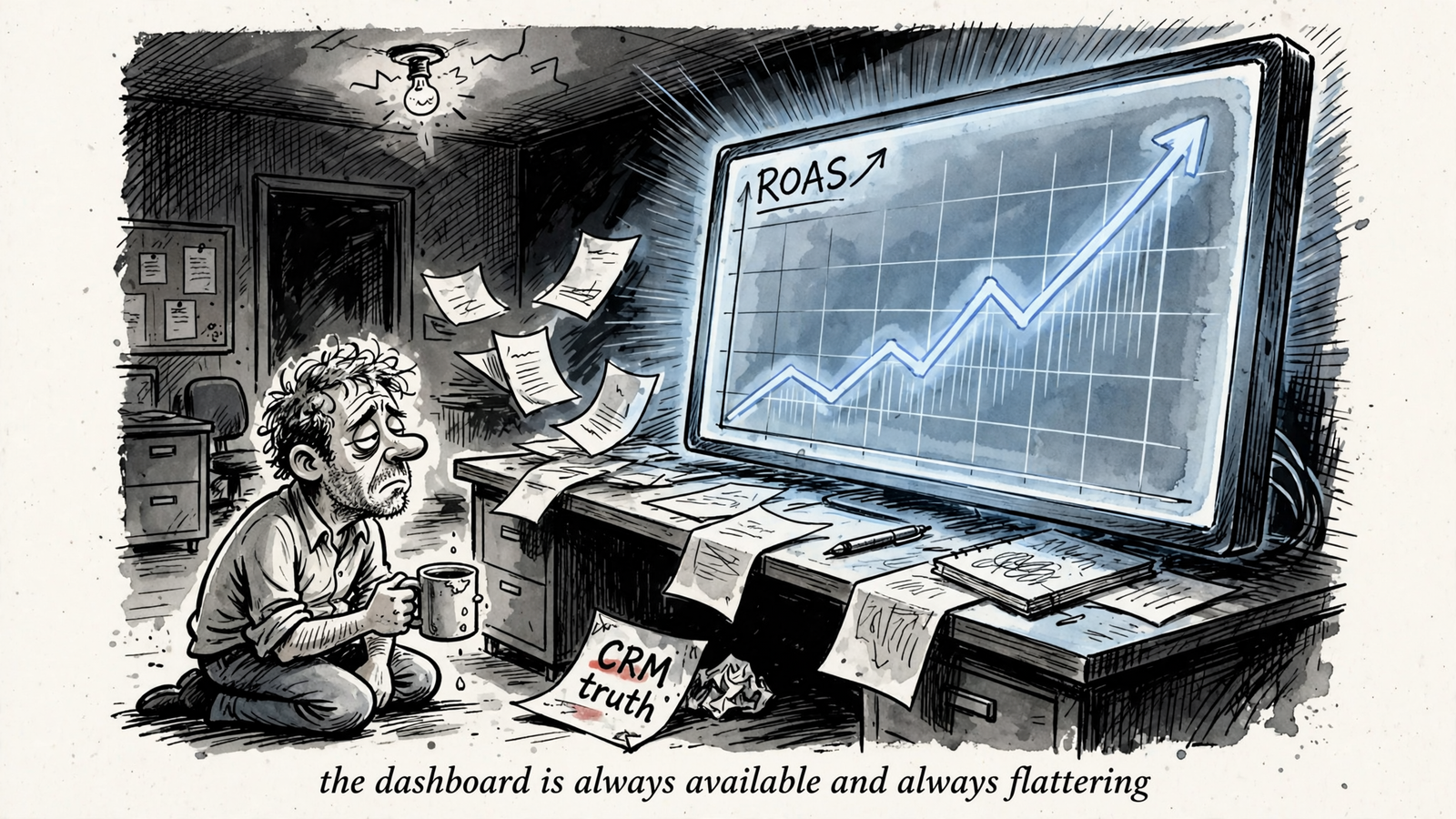
This is the myth I find hardest to kill. The platform report survives every objection because it is always open in a tab and always slightly flattering. View-throughs count, late payments may not get attribution, and the dashboard does not volunteer that distinction. I have watched smart founders who distrust every other vendor chart forward a Meta screenshot as proof, because after a month of waiting for trial revenue, any number feels like progress.
For a 30-day trial, this week’s cheapest signup will keep becoming next month’s most expensive customer until you stop grading cohorts before they graduate. Hire the agency that will wait for graduation and tell you so to your face.