

 LinkedIn
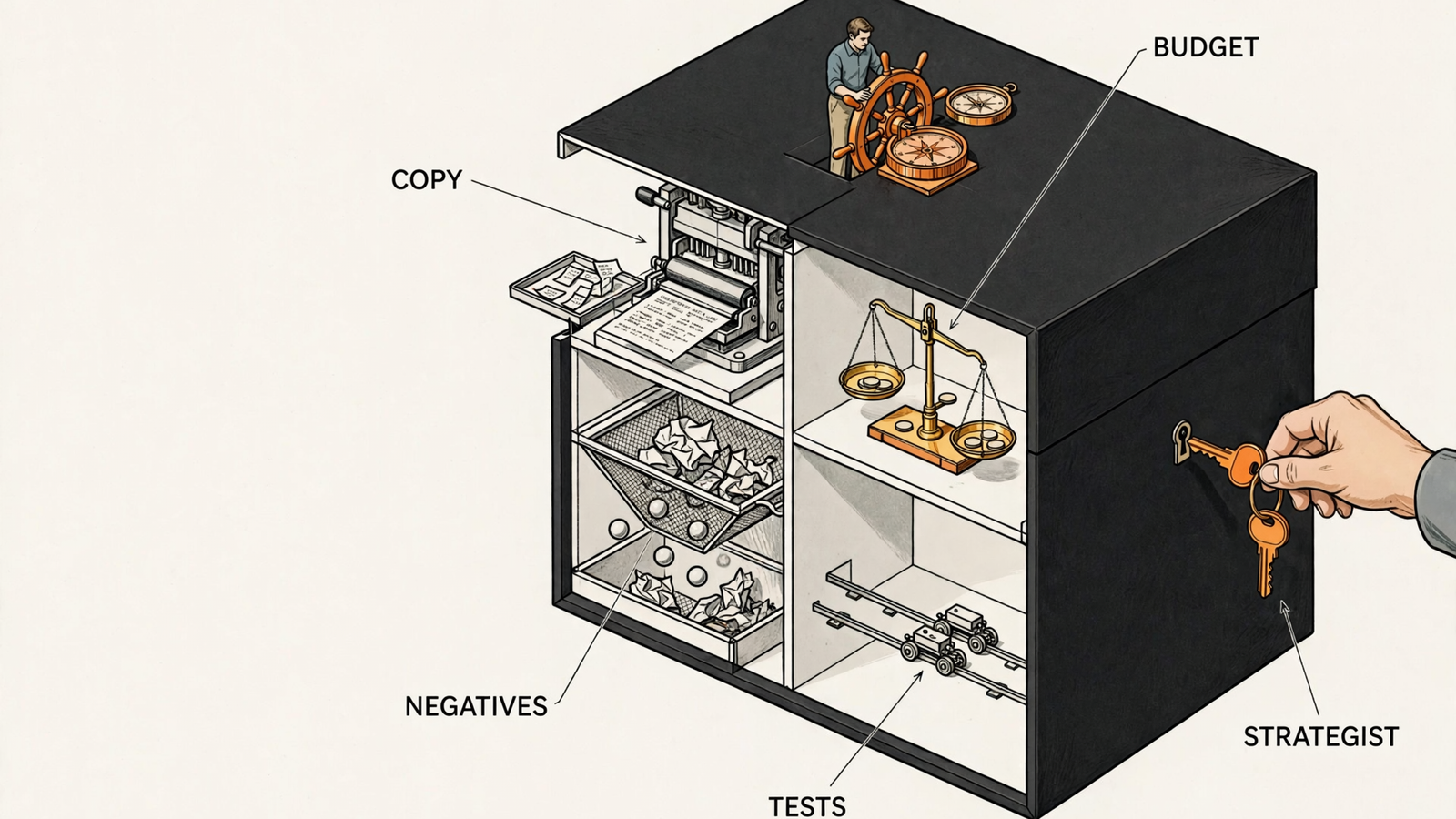
An AI Google Ads agency can be Smart Bidding with a markup. It can also be automation with nobody accountable when the account chases junk leads. I spent close to a decade managing Google Ads by hand, and both versions would have made my job harder, not easier. The buying test is simpler than the pitch: which jobs get done continuously, who sets the strategy, and who owns the account when something goes wrong? Those questions cut through the two opposite beliefs buyers bring to the table: that AI adds nothing beyond Google’s bidding tools, or that it removes human judgment altogether.
Myth 1: “An AI agency just turns on Smart Bidding”
I used to tell clients Smart Bidding would handle it. I was wrong. Smart Bidding sets bids at auction time using signals such as device, location and time of day. That is useful work. It is not the whole account.
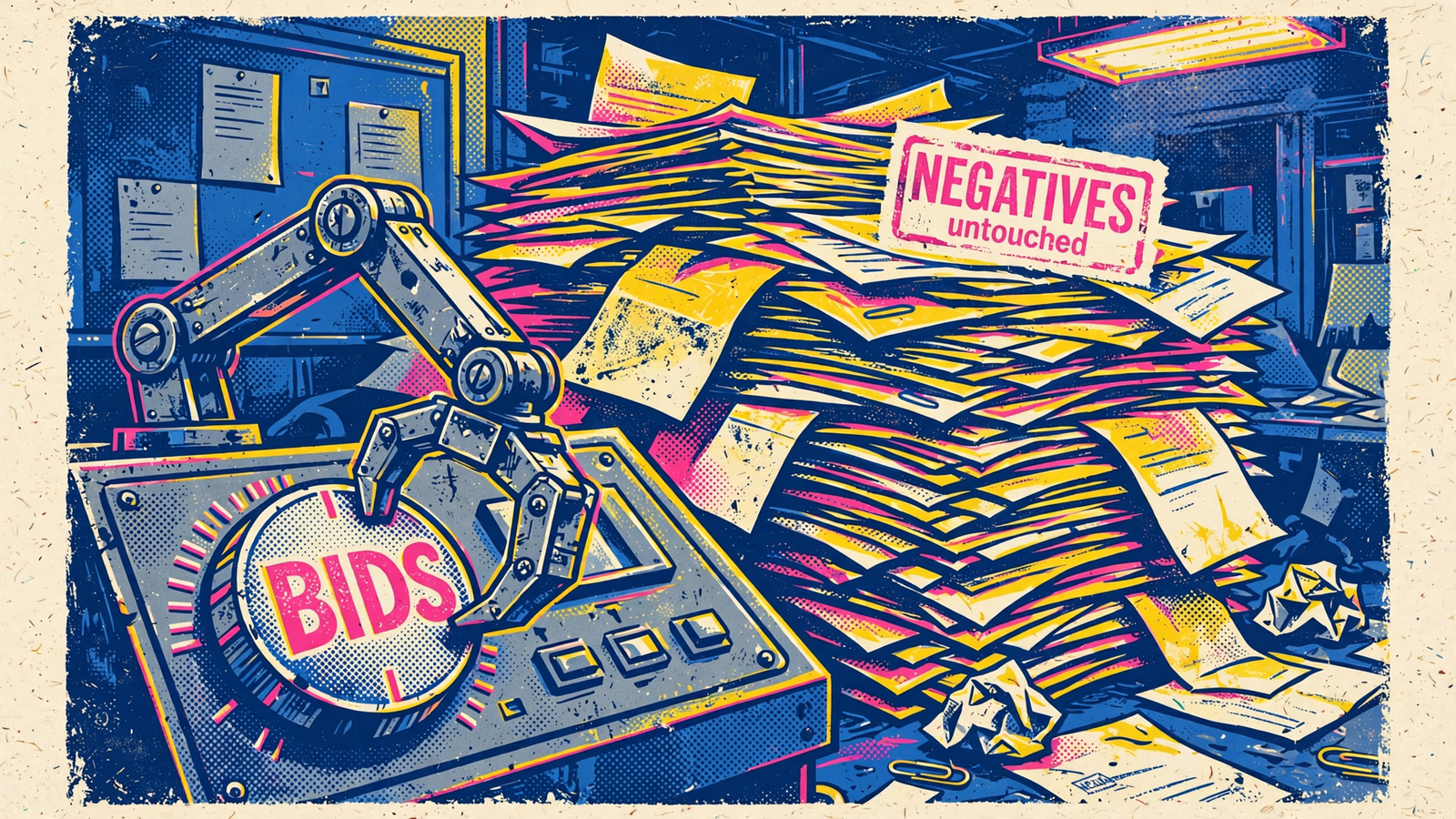
It does not, by itself, exclude irrelevant queries as negatives, add high-converting search terms, pause losers or fix creative. Someone, or something beyond the bidding system, has to do those jobs. I have seen accounts with well-chosen bid strategies bleed for months because nobody did the rest.
A WordStream analysis of 15,666 accounts found average waste of $1,127.54 per month, about one-third of median spend. It also found that 29% recorded zero conversions in 90 days despite more than 12,000 monthly impressions, while 25% had never added a negative keyword. Accounts with at least one negative converted at 13%, versus 4.6% for those with none. A bid setting will not clean up a search-term list nobody reads.
So ask what the agency executes outside the bid: negatives, search-term mining, budget shifts and copy tests. If it cannot name the jobs and show you the work, you bought a label. groas runs autonomous account work around the clock; the point is to do the work Smart Bidding does not.
Myth 2: “It’s one ChatGPT prompt writing my ads”
Everyone has watched a general model produce passable headlines from a landing page. Paste in a URL, get 15 options, call it creative AI. I call it a parlor trick if the system cannot connect the copy to search intent, budget and the page people actually land on.
A more serious setup splits the work by job. One model drafts variants. Another scores intent and maps negatives. Others watch budget pacing, shift spend and run test logic. The move from one general LLM to task-specific models with defined jobs, permissions and audit trails gives a buyer a much better question than “Do you use AI?”
Ask which model made the last negative-keyword decision and why. If the vendor cannot explain a specific decision, do not mistake generated copy for autonomous account management. Autocomplete can write a headline. It cannot account for the invoice.
Myth 3: “I’ll lose control of my account”
I understand this fear. Hand an agency the keys, then discover on the way out that the account, its history and its audiences are not yours to take. That is not an AI problem. It is an ownership problem, and the time to solve it is before anything runs.
Control rests on two details:
- Own the Google Ads account under your business’s ID. Grant the agency manager access rather than letting it own the account you rely on. Run that ownership test before signing. An agency-owned account is where leaving can mean losing access to history and data. groas states that your accounts, pages and data stay yours.
- Agree on guardrails before execution starts. Set goals, monthly caps, CPA or ROAS targets, and the changes that need your sign-off. Then ask to see an action log showing what the system did and why. Google Ads Change history records account changes, including changes to budgets, bids, negatives and ads; it is another place to check who changed what and when.
Neither detail requires you to sit in a dashboard all day. Both make it possible to spot a vendor that confuses hands-off with trust me. Read why giving AI full control of your budget fails without guardrails before agreeing to the latter. If you do not own the account and cannot see the work, walk away.
Myth 4: “There’s no human involved”
This is the opposite error from Myth 1. Vendors encourage it because full automation makes a clean pitch. The account, unfortunately, still needs to know what the business wants.
I watched Smart Bidding learn to chase form fills while sales kept saying the leads were junk. The model did its job. It had the wrong job. Before execution starts, someone has to decide what counts as qualified pipeline, what CPA the business can afford and which offers are off limits. Otherwise, the system can get better and better at producing a result nobody wants.
At groas, a dedicated strategist with more than a decade managing accounts like yours sets goals and guardrails with you on the onboarding call and stays accountable afterward. Agents handle the repeatable account work: bids, keywords, budgets, copy tests and landing-page variants, around the clock. The human sets direction; the machines supply throughput.
Ask for the strategist’s name before you buy. If nobody owns the outcome, you did not hire management.

Myth 5: “It only works at enterprise spend”
This one is half true, which makes it harder to dismiss. Autonomous management does not require an enterprise budget. Say you spend $5k or $20k a month and have real search demand. Continuous work on negatives, budgets and tests can still matter. But spend alone does not give a system useful information. Conversion volume and tracking quality are the constraint.
Google needs roughly 30 conversions per campaign in the last 30 days for Target CPA, and 50 or more for Target ROAS to bid well. Put full automation on a B2B account getting 8 to 15 conversions a month, with no reliable signal for lead quality, and you can get the failure I have lived through: CPCs fall, the dashboard turns green, and sales says the leads are the wrong size, the wrong industry or students doing research.
The mechanism is plain. With too little qualified signal, the model chases whatever looks like a conversion. Cheaper clicks can then produce worse pipeline. That does not mean a smaller advertiser needs to wait until it spends like an enterprise. It means the advertiser needs clean tracking and a useful definition of success before asking a system to optimize toward it.
If that is your account, fix tracking, consolidate campaigns where appropriate, and feed the system real SQLs or closed revenue rather than raw form fills. Under 30 tracked conversions a month, buy tracking help first, automation second.
Myth 6: “Hands-off means I wait for a monthly report”
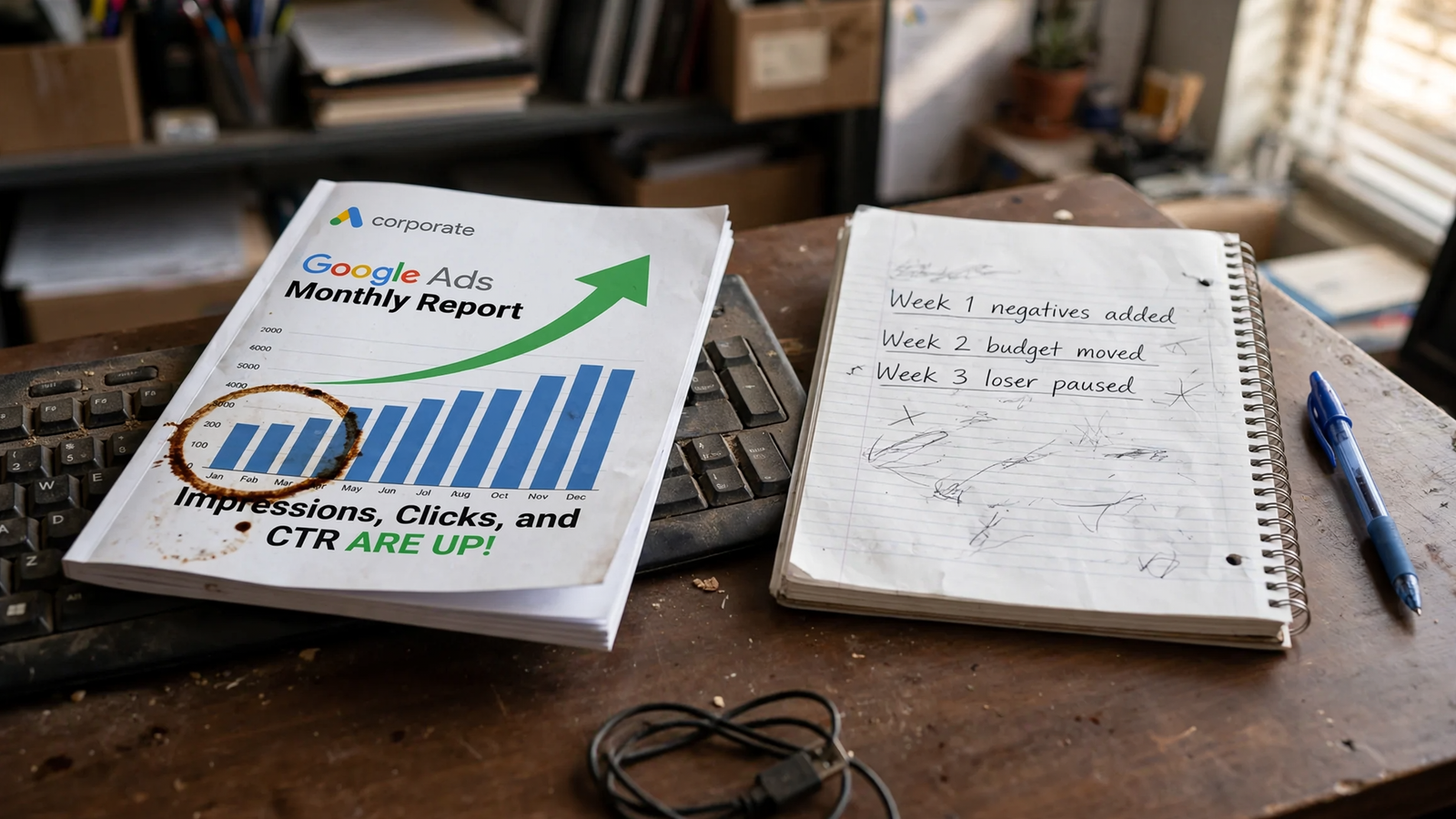
I get the appeal. You run the business. You want Google Ads off your plate. A tidy PDF on the 1st sounds like freedom. I sent those PDFs for years, and I know how easily one can hide three quiet weeks: no negatives added, no budgets moved, no losers paused. Just charts and a paragraph about seasonality.
Hands-off should not mean eyes-off. Done right, it trades daily dashboard work for a short weekly check:
- Read the action log. Look for the changes made, the tests launched and the reasons behind them, not just impressions and CTR.
- Check the guardrails. Compare spend and outcomes with the CPA or ROAS target you agreed on.
- Flag what the system cannot know. Tell the team when an offer changes, a landing page gets edited or a phone number breaks.
That is about 15 minutes, not a second job. For the longer version, read what hands-off Google Ads still needs from you. For the less diplomatic version, read an open letter to the owner who wants hands-off Google Ads. Buy visibility into weekly work, not a monthly PDF that asks you to assume it happened.
The 30-minute vendor screen
You do not need a 20-page RFP. I use five questions when a friend asks me to look at a vendor. They tend to end vague pitches quickly:
- What changed in an account like mine last week? Ask for negatives added, budgets moved and tests launched. Impressions and CTR do not answer the question.
- Can I see a redacted action log? You want the changes and the reasoning, not a polished report about the changes.
- Who owns strategy? Get a name, background and a clear answer on how you will reach them. groas provides a dedicated strategist with 10-plus years on accounts like yours and a private Slack channel.
- Who owns the account? Your business should keep its ID, history and data if you leave. Manager access is enough for the vendor to do its work.
- What happens to your fee if you cut my spend? Listen carefully to this one. It is where the incentives stop hiding behind the slide deck.
If the answers stay vague, you are back where you started: Smart Bidding with a markup, or automation with no one accountable. Make the vendor show you the work and name its owner.
Myth 7: “The fee model doesn’t matter if performance is good”
This is the one I find hardest to kill, because it sounds reasonable until you run the math. Standard agency pricing is often 10–20% of monthly ad spend, so $10k in spend means a $1k–$2k fee. The percentage gives the manager more revenue when you spend more, even when the best account decision is to spend less. A good manager can still make that call. The fee model makes it a more awkward one.
Put it in concrete terms. One paid-ads consultant’s example has a manager trim a $30k-a-month account to $15k by cutting weak keywords and cold-traffic leaks. Under percentage pricing, the manager’s fee falls immediately. Now you have to wonder whether the next push to raise budget is pipeline strategy or retainer protection. That is a lousy question to have to ask every quarter.
A flat fee removes that particular conflict. At groas, the fee is $1,499 per service regardless of what you spend. If the work cuts $8k of waste, the fee does not rise to reclaim it. Flat pricing does not prove a vendor is good at Google Ads; it lets you judge the work without wondering whether every budget increase helps the vendor first.
The fee myth survives because nobody wants to hear that good results might still come with an avoidable incentive problem. I learned the manual version of this job over a decade: the work that moved CPA was often the unglamorous cut, the negative, the paused loser, the landing page nobody wanted to build. Ask who does that work every day, keep the account and the log in your hands, and pay on terms that do not punish the cut. Everything else is a label.