YouTube Ads Won’t Get Fewer: Six Calls to Check by 2027
October 1, 2026
•
11
min read



I spent years mining search terms at 1am for owners who wanted one monthly report and nothing else on their plate. The job has changed, but the first question has not: what can you safely stop watching?
You ask which AI tool is most hands-off. I used to answer that directly. I was wrong. The better questions are what breaks when you walk away, what you still have to decide, and how you would know the system worked.
Google said part of this out loud years ago. A product manager for AdWords admitted the system had become very complicated for a busy small business owner who was not a digital marketer. That was before responsive ads, Performance Max and consent mode. If you feel like the account needs a babysitter, you are not missing a secret button.

Start by asking what the tool actually does. Smart Bidding sets auction-time bids toward CPA, ROAS or Max Conversions. It does not, by itself, move budget between campaigns, clean search terms, pause losers or fix creative. I used to tell clients Smart Bidding plus a monthly check was enough. I was wrong. Bidding was never the part that kept me up. Budget allocation and search-term hygiene did.
A hands-off system needs to cover copy, bids, budgets and bad queries, then show you the work. That is the case for groas as a fully autonomous growth engine: specialized models handle those jobs, while a named human strategist owns direction and guardrails. I name the jobs because AI tool can mean almost anything. A copilot that reallocates budget and adds negatives but does not auto-generate ad copy may save time. It still leaves copy on somebody’s desk.
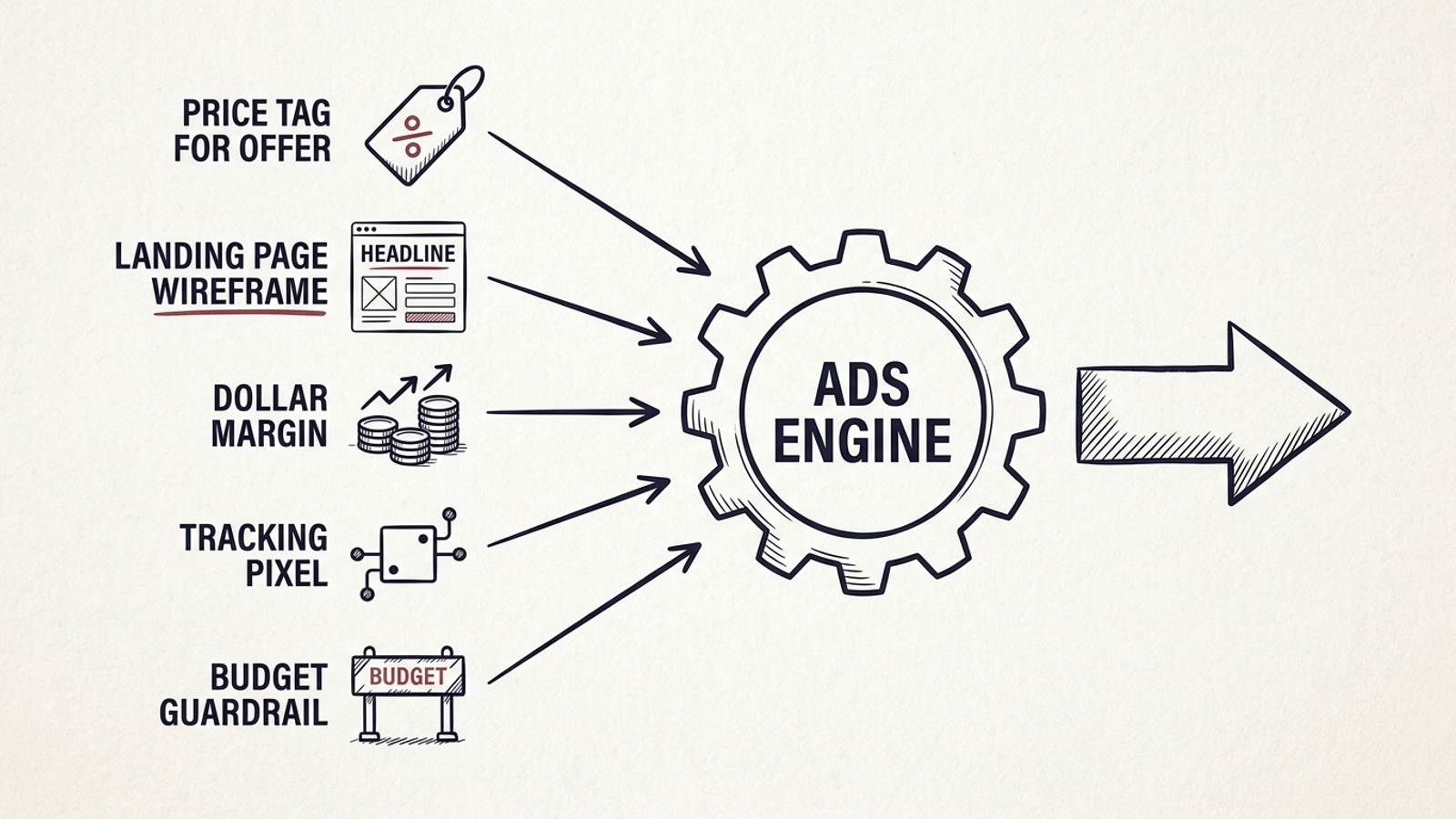
Here is what hands-off must not hide. You still have to supply five decisions and keep them current:
The machine can act inside those limits. It cannot decide your margins or know that someone on your team changed a page without telling it. I learned that one when a client swapped a landing page and Quality Score tanked. The account settings had not changed. The business had.
If by fully automate you mean never speak to anyone about the account again, there is no responsible answer. If you mean stop paying people to perform repetitive account maintenance, that is a better question.
The agency bill makes the distinction matter. A typical agency in 2026 charges 10–20% of spend with a $500–$1,000 floor, or $750–$3,000 flat. At $1,000 in ad spend plus a $750 management fee, the fee is about 43% of the combined bill before you know whether the ads brought in a customer. I managed accounts at that size. The work still took hours, the fee still cleared, and owners still needed to tell me when their business changed.
The old workload splits into two piles. In the repetitive pile: check search terms, add negatives, cap wasted clicks, shift budget toward campaigns earning it, and test headline combinations. Machines can handle that work continuously. In the decision pile: set the offer, margins, budget ceiling and rules for what the account may say or spend. A human remains accountable for those calls. What the deck calls synergy, I call two people doing the same job. Paying for that overlap is not a strategy.
That is why I would look for autonomous execution with a named strategist who answers for the outcome, not an agency-style invoice attached to a recommendation dashboard. groas pairs the engine with that human ownership. You still have a job, but it should be setting direction, not logging in to find yesterday’s waste.
First, separate those three jobs. Copy decides what the customer sees; bidding prices an auction; budget decides where the next dollars can go. A platform that does one has not quietly solved the other two.
Copy is where the promise of an agent gets slippery. Responsive Search Ads use AI to choose headline and description combinations for a query, and automatically created assets can draft tailored headlines. Neither removes the need to check what the ads say. Off-brand copy can move fast. My rule is review and remove, not blind trust: let the machine produce options, cut the lines that sound like a coupon site, and keep the usable ones testing. Ad Strength may tell you something about the ad’s setup; it cannot tell you whether the offer is still true.
Now the money. Bidding sets the price for one auction. Budget determines which campaign has room to enter more auctions. Smart Bidding handles the first job, not the second. For a genuinely hands-off setup, ask who moves budget between campaigns, caps wasted clicks and adds negatives from the search terms report. Performance Max shows search terms in the standard report and allows campaign-level negatives. Visibility is useful. Someone, or something, still has to use it.
I would ask a vendor to walk through the loop in plain language: what prompted a change, what changed, and where can you see it? If the answer begins and ends with a bid recommendation, you are looking at a bidder with a nice dashboard. For the longer version of each sub-job, read Can AI Run Your Google Ads End-to-End? Seven Straight Answers.
Three things broke my supposedly hands-off accounts more often than any bid setting: a landing page swap nobody mentioned, an offer change that made the old ads a lie, and a tracking gap that told the machine nothing was converting. The first two need communication. The third needs someone to notice a technical failure before the account learns from bad data.
I used to tell clients tracking was set and forget. I was wrong. Tracking is the floor the whole machine stands on. If the floor moves, the cleverest bidder in the world is still standing in the wrong place.
A consent banner can look fine to a visitor while the signals behind it fail. In one documented case, missing ad_user_data and ad_personalization signals to Google tags coincided with a 90% overnight conversion collapse that took two days to diagnose. About 40% was recovered through modeling. The immediate problem was not that customers suddenly stopped buying; the measurement feeding the account had broken.
That distinction matters. Smart Bidding learns from conversion signals. If a real purchase does not reach Google Ads as a purchase, you cannot trust either the report or the decisions trained on it. You do not need to inspect tags every morning. You do need a clear answer to one question: who checks that a purchase on your site still appears as a purchase in Google Ads?
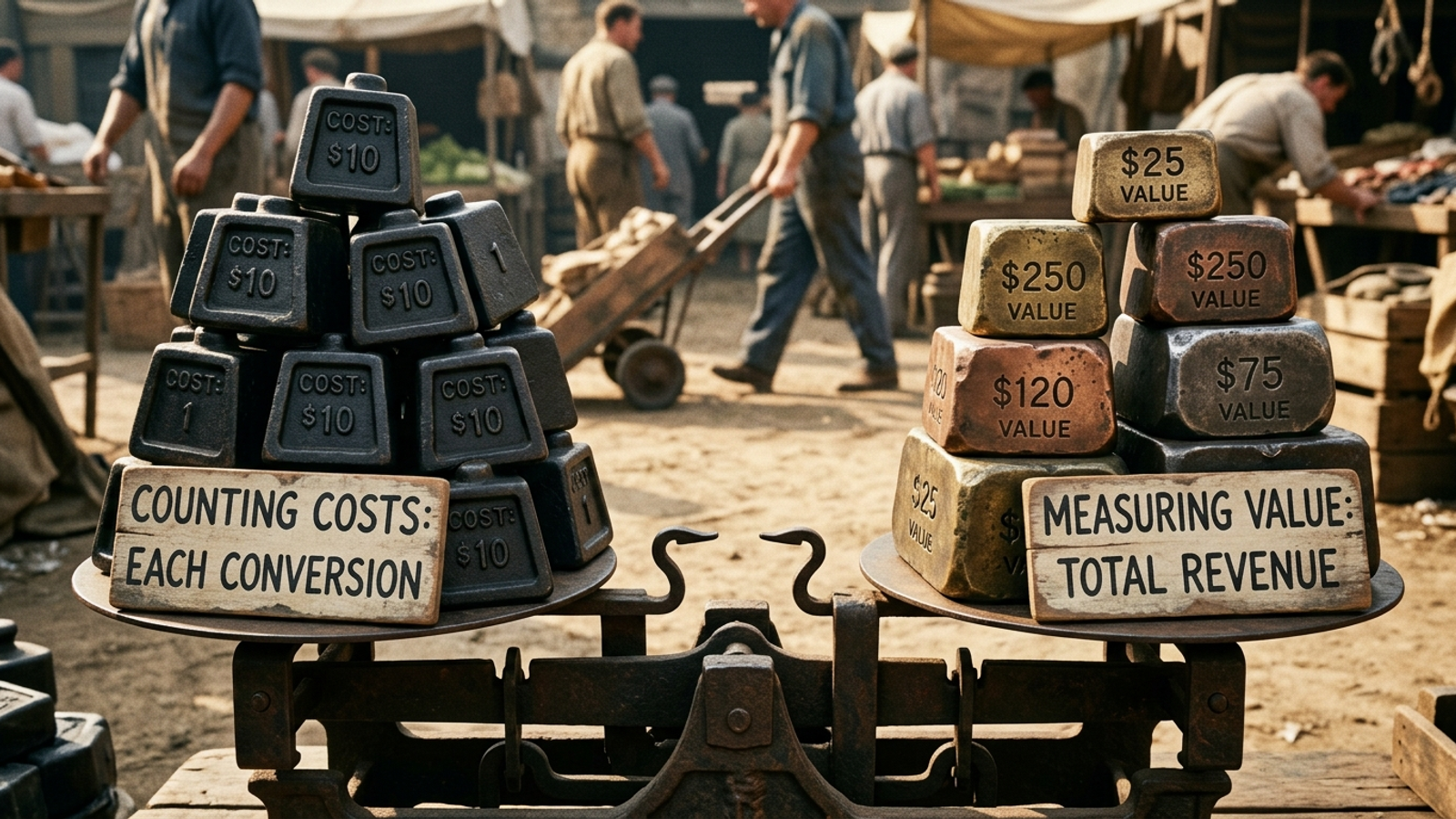
Clicks and click-through rate tell you the ads ran. They do not tell you the ads paid. I would open the report with spend, CPA, revenue and ROAS against your margins, then show the action log behind the numbers. What changed? Why? What happened afterward?
I stopped sending screenshot decks years ago because no owner asked me for a second one. They wanted to know whether, say, last month’s $20k bought customers cheaply enough to make the spend worthwhile. A report should answer that before it explains which chart looked healthy.
Then show the work, without making the owner reconstruct the account:
The action log is not there to prove the machine was busy. Busy is what agencies used to sell me on a timesheet. It is there to connect a decision to an outcome. If a line cannot help answer whether the account earned its keep after fees, cut the line.
Low-volume accounts should be careful about buying autonomy as if it were certainty. If you see fewer than 30 conversions a month, there may be too little clean feedback to judge changes quickly. Guidance for Smart Bidding cites at least 30 days or 30 conversions for CPA and 50 for ROAS, with accurate tracking as a precondition. I would treat those numbers as a warning about thin data, not a switch that turns an account smart on conversion number 30.
I watched low-volume SaaS and local accounts get a monthly report, call the result flat and blame the bidder. Sometimes the account had too few outcomes to learn from; sometimes the outcomes being counted did not match what the business cared about. If you record ten leads a month, that is ten new lessons. If half are poor fits, more automation will not make the lesson better. Check what counts as a conversion and whether the volume gives the system enough to work with before you stop looking.
Now take a different case: you spend $20k a month across Search and Shopping and want to scale without hiring. Higher volume brings more search terms to inspect, more budget shifts to consider and more copy tests to manage. That is precisely the repetitive pile a machine can take over. Keep the business limits current and the tracking clean. If the account cannot feed the system useful outcomes, fix that before you buy a promise of hands-off growth.
You scale by taking hours out of growth, not adding them. Say you go from $20k to $40k a month. In my old model, that meant more search terms, more negatives, more budget checks and often a bigger invoice because the fee was tied to spend. With autonomous execution, the engine can absorb the added account work: mine more queries, pause more losers and move budget without asking you to become the account manager.
But added spend is not a permission slip to stop setting limits. If your margins change or a new offer replaces the old one, the system needs that information before it can make useful decisions at the new scale. The goal is more execution without more owner logins, not more spending without owner judgment.
If a vendor promises that result, verify it the boring way. Ask what runs without a person clicking approve: copy changes, bid changes, budget moves and negatives. Ask what needs review, and who catches a tracking failure or a page change. Then compare that list with Pencil AI vs. Smartly.io vs. Mai.co vs. groas in 2026 to see where creative-only or recommendation-only tools stop. A tool that reports work is not necessarily a tool that does it.
This is the question I wish owners asked first. Give the system a short, honest update: what happened to the offer, whether a page changed, whether margins moved and how much you can spend. If nothing changed, say that too. I keep a standing note with clients because the account fails fastest when the business changes and nobody tells the account.
I would rather spend fifteen minutes getting those answers than an hour admiring a dashboard. Copy can repeat an old offer. Bids can chase outcomes measured badly. Budget can flow toward a campaign that no longer makes sense for the business. The machine does not need you to mine search terms at 1am. It needs you to tell it what is true, what a customer is worth, and when either changes.
Does Smart Bidding run my whole Google Ads account by itself?
No. Smart Bidding sets auction-time bids toward a CPA, ROAS or Max Conversions target. It does not move budget between campaigns, clean search terms, pause losers or fix creative. Budget allocation and search-term hygiene are separate jobs that a hands-off setup still has to cover.
What does Google Ads AI still need from me as the business owner?
You still supply five decisions: your offer and prices, any landing page changes, the CPA or ROAS your margins can afford, working tracking and consent, and your budget ceiling plus spending boundaries. The machine acts inside those limits. It cannot know your margins or that someone on your team swapped a page without telling it.
Can AI fully automate my Google Ads so I never deal with the account again?
Not entirely, and you should not want it to. Machines can take over the repetitive work such as checking search terms, adding negatives, capping wasted clicks and shifting budget. But the decisions — offer, margins, budget ceiling and rules for what the account may say — need a human who stays accountable, ideally a named strategist rather than a recommendation dashboard.
What breaks in a Google Ads account if I stop paying attention to it?
Three things: a landing page swap nobody mentioned, an offer change that makes the old ads untrue, and a tracking gap that hides conversions from the system. Tracking matters most because Smart Bidding learns from conversion signals. If a real purchase never reaches Google Ads as a purchase, both the report and the decisions trained on it become untrustworthy.
Can a consent banner silently break my Google Ads conversion tracking?
Yes. In one documented case, missing ad_user_data and ad_personalization signals behind a consent banner coincided with a 90% overnight conversion collapse that took two days to diagnose, with about 40% recovered through modeling. Customers had not stopped buying; the measurement feeding the account had broken. Someone should check that purchases still appear as purchases in Google Ads.
What should a monthly Google Ads report show me?
Lead with spend, CPA, revenue and ROAS measured against your margins, because clicks and click-through rate only show the ads ran, not that they paid. Then show the action log: search terms blocked as negatives and why, where budget moved, which headlines were cut or kept, and tracking health. Every line should connect a decision to an outcome.
Is my Google Ads account too small for AI automation?
Possibly. With fewer than 30 conversions a month there may be too little clean feedback to judge changes quickly; Smart Bidding guidance cites at least 30 conversions over 30 days for CPA and 50 for ROAS, with accurate tracking as a precondition. Check first what counts as a conversion and whether the volume gives the system enough to learn from.
What information should I give my Google Ads account manager or system each month?
A short, honest update: what happened to your offer, whether a landing page changed, whether margins moved and how much you can spend. If nothing changed, say that too. Copy can repeat an old offer and budget can flow to campaigns that no longer make sense, so the system needs to be told what is true and when it changes.