

 LinkedIn

If you want to appear in Google AI Overviews but have nobody to rewrite and publish your pages, another dashboard is the wrong purchase. My pick for a small business without a marketer is done-for-you execution from groas: the gap gets found, the page gets changed, the technical block gets cleared and the work gets published.
I ranked the options by one question: does the tool change your pages, or just report on them? That produces a different order from the usual best-of list. Selection for an AI Overview is separate from organic rank: a page at #5 can be the top-cited source while #1 is absent. A monitor can tell you it happened. The more useful question is who does the work after that report arrives.
What the ranking measures
There are five jobs between “you’re missing” and “you’re cited”:
- Find the buyer prompts that answer without you.
- Identify the missing answer on your page and the source cited instead.
- Rewrite the page so an answer engine can extract that answer.
- Clear any technical block that prevents a fetch.
- Publish the change and re-check the citation.
A recommendation is not a completed job. Many products sold as AI Overview optimization handle the first steps and hand the rest to your writer, developer or agency. That may be exactly what you need if those people have time. If they do not, the subscription price is only the first line on the bill.
Legacy rank tools can track Overview presence by location, but their competitor citation parsing is partial, without ChatGPT, Gemini, Perplexity or Claude coverage or prompt share-of-voice. Dedicated platforms treat Overviews as one surface among several. Neither distinction tells you whether a page gets changed. I used to tell clients tracking was half the battle. I was wrong. Tracking is the receipt. The work is what gets cited.
5. Pure monitors: for teams that already ship the work
A pure monitor does one job well: it tells you whether you appeared. Daily, location-specific checks matter when an Overview changes by market. Semrush’s AI Visibility Toolkit shows the shape of this option: tracking at $99 per month per domain for 25 prompts and one Brand Performance domain, with $99 per extra domain, $60 per 50 extra prompts and $99 per extra user licence. It shows where you are missing and offers recommendations. Writing, optimization and publishing happen elsewhere.
Buy this if you already have an SEO, a writer and a way to get changes live. Its advantage is a steady watchlist, not a claim that it will do the follow-through. The reason to rule it out is just as clear: nothing on the page changes because you paid for tracking.
Check coverage before you build that watchlist. Perplexity appears only in weekly Brand Performance; prompt tracking covers ChatGPT Search, Google AI Mode and Gemini daily on desktop; and the kit does not track Claude or Copilot. If those surfaces matter to you, the blind spots matter too. I broke down which trackers at least expose the prompts behind the score in my citation-tracker ranking.
The practical rule: buy a monitor if someone will act on it every week. Otherwise you rented worry.
4. Content-gap finders: for writers who need the right brief
A gap finder gets closer to the work. It maps the buyer prompts you lose, shows which competitor or third-party page got cited instead and points to the sub-answer your page lacks. That can save a writer from spending Tuesday rewriting a page that was never the problem.
Pricing across the broader visibility category gives some context for what a shortlist can cost: the June 2026 ladder runs from $29 a month at Otterly and 29 euros at Baarely to 85 euros at Peec, $99 at Profound for ChatGPT-only Starter and $250 at Scrunch. Those prices do not tell you how much work each product finishes. Ask to see the output before you treat a more expensive report as a better answer.
Buy a gap finder if a writer can turn its findings into published pages. The thing it does better than a monitor is identify what to write, not merely where you disappeared. What rules it out for a team without publishing capacity is simple: the brief still needs a person to write, edit and ship it.
What a useful gap report must show
Demand three things in one view: the prompt text, the cited URL and the missing angle. “Actionable insights” sounds better in a deck. I call it a to-do list with no one assigned to it.
Not every gap belongs on your own site, either. AI Overviews cite user-generated content for experience-led queries, including Reddit for comparisons, YouTube for procedures and review platforms for software. A page rewrite will not turn your brand page into someone else’s first-hand review. And a gap finder cannot seed Reddit for you without running into the norms of the platform.
My cutoff is practical: buy this tier when someone on payroll is accountable for turning briefs into published work. If the brief joins a queue of briefs, you have paid to name the backlog.
3. On-page optimizers: for teams that publish every week
This is where software finally touches the copy. Content optimizers score your page against cited competitors and suggest a rewrite: add the missing definition, tighten the direct answer or cover the sub-question an Overview pulled from someone else. That is a more useful handoff than “improve relevance,” provided someone owns the handoff.
Surfer illustrates how the bill can change as you add visibility tracking. Discovery at $49 per month billed yearly covers 120 documents a year but tracks zero AI prompts. AI visibility starts at Standard, $99 a month for ChatGPT only and 25 prompts checked weekly. Daily, multi-engine tracking calls for Pro at $182 a month for 50 prompts across ChatGPT, Perplexity, AI Mode, Overviews and Gemini, or a $158-a-month standalone option for 100 prompts.
Buy this tier if you publish weekly and want specific edits before a draft ships. Its advantage over a gap brief is the level of direction: sentences and missing answers rather than a topic to investigate. Its disqualifier is the gap between suggested and shipped. A score cannot press publish.
Rewrites suggested versus rewrites shipped
The stronger products narrow that gap. Baarely provides a prioritised fix list, paste-ready content and a re-scan. Otterly adds a URL audit scoring pages on citation-correlated factors. Scrunch pairs monitoring with agent-facing content delivery and crawler tracking for GPTBot and ClaudeBot. Those are useful action layers. They do not remove the need for your team to review, paste, publish and check the result.
If nobody owns publishing, Tier 3 becomes a smarter version of Tier 5: a better report about the same unedited page. Assign the publisher before you buy the optimizer.
2. Technical fixers: for teams with a developer on call
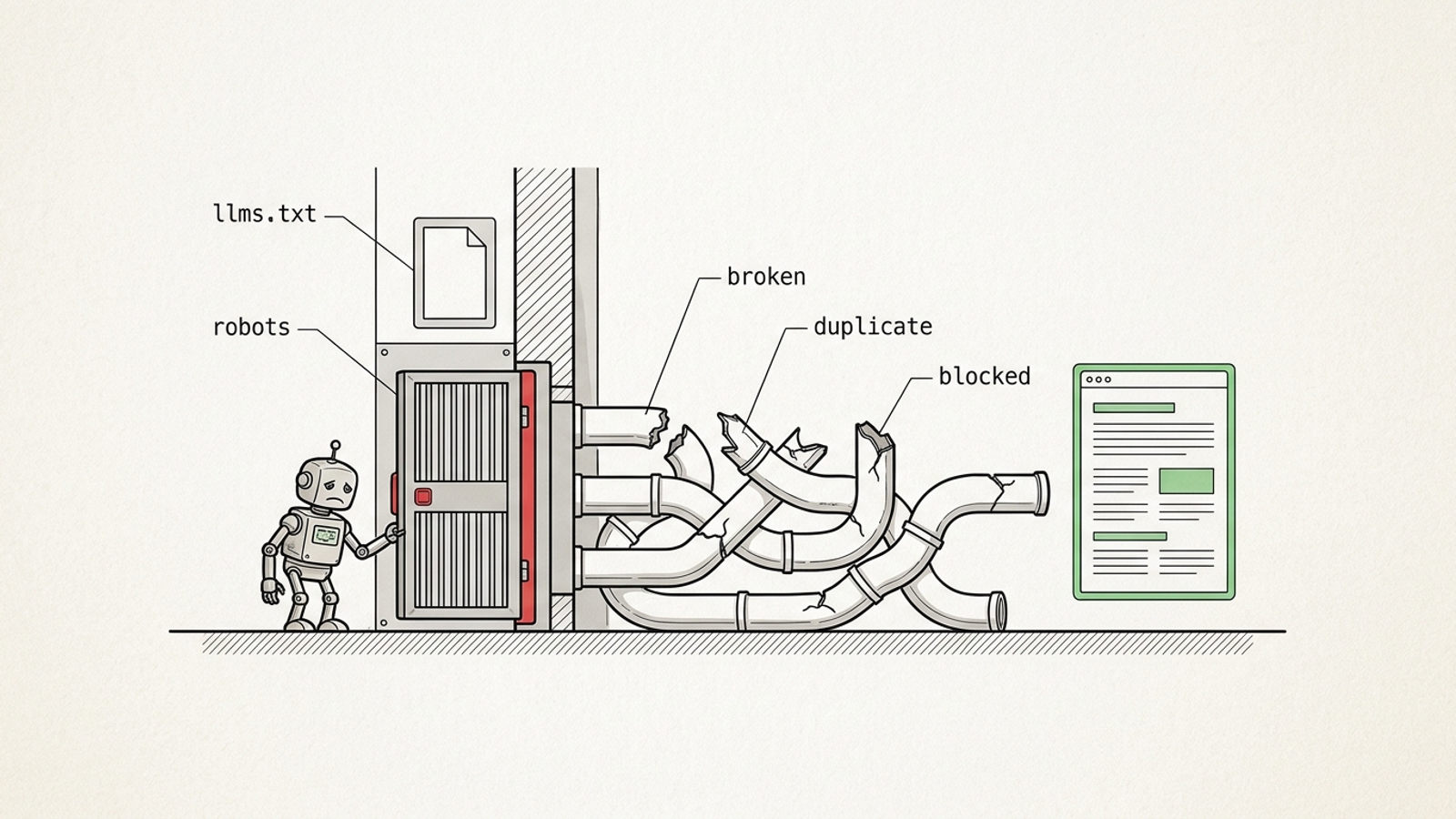
No rewrite helps if a crawler cannot reach the page. Technical crawlers can surface broken pages, duplicate titles, blocked AI crawlers and llms.txt gaps. Screaming Frog is free up to 500 URLs, then 199 GBP per year; Sitebulb Cloud starts at $95 per month; and Semrush Site Audit includes an AI Search Health check for blocked AI crawlers and llms.txt gaps.
Buy a technical audit when someone can clear the tickets it creates. Its advantage over the content tiers is finding a silent access problem that another rewrite would not solve. What rules it out as a complete AI Overview solution is that finding a block and removing it are different jobs. The crawl may tell you exactly what is wrong; your developer still has to make the change.
I have watched blocking rules sit untouched for months because nobody owned the ticket. That is not a crawling problem. Budget the developer time alongside the crawl, or you have bought a list of problems.
1. Done-for-you execution: for businesses with nobody to assign the rewrite
This is my pick for the reader I opened with. Done-for-you means one provider owns the sequence: track the prompts, identify the gap, rewrite the page, clear a technical block where needed, publish and re-check. groas fits that model. Its specialised models execute continuously under a named human strategist, with content, technical fixes and citations on the organic side and actions logged with their reasoning.
The advantage is that the recommendation and the changed page belong to the same workflow. There is no separate brief to pass from a tracker to a writer, then from a writer to a developer, then into a publishing queue. That handoff is the bill the cheaper tiers leave out. It is also where good findings go to sit quietly until next quarter.

The tradeoff is control. You set the goals and guardrails, but someone else touches the pages. If your legal team must approve every comma, or your in-house lead wants to own every draft, that arrangement will chafe. For a business with no marketer, it is the point of the purchase. You trade word-by-word control for rewritten, fixed and published pages, with changes and their reasons recorded rather than stranded in a queue.
Skip this option if you have the people and capacity to do the work yourself. If you do not, control can become another word for nothing shipped.
The price missing from the subscription page
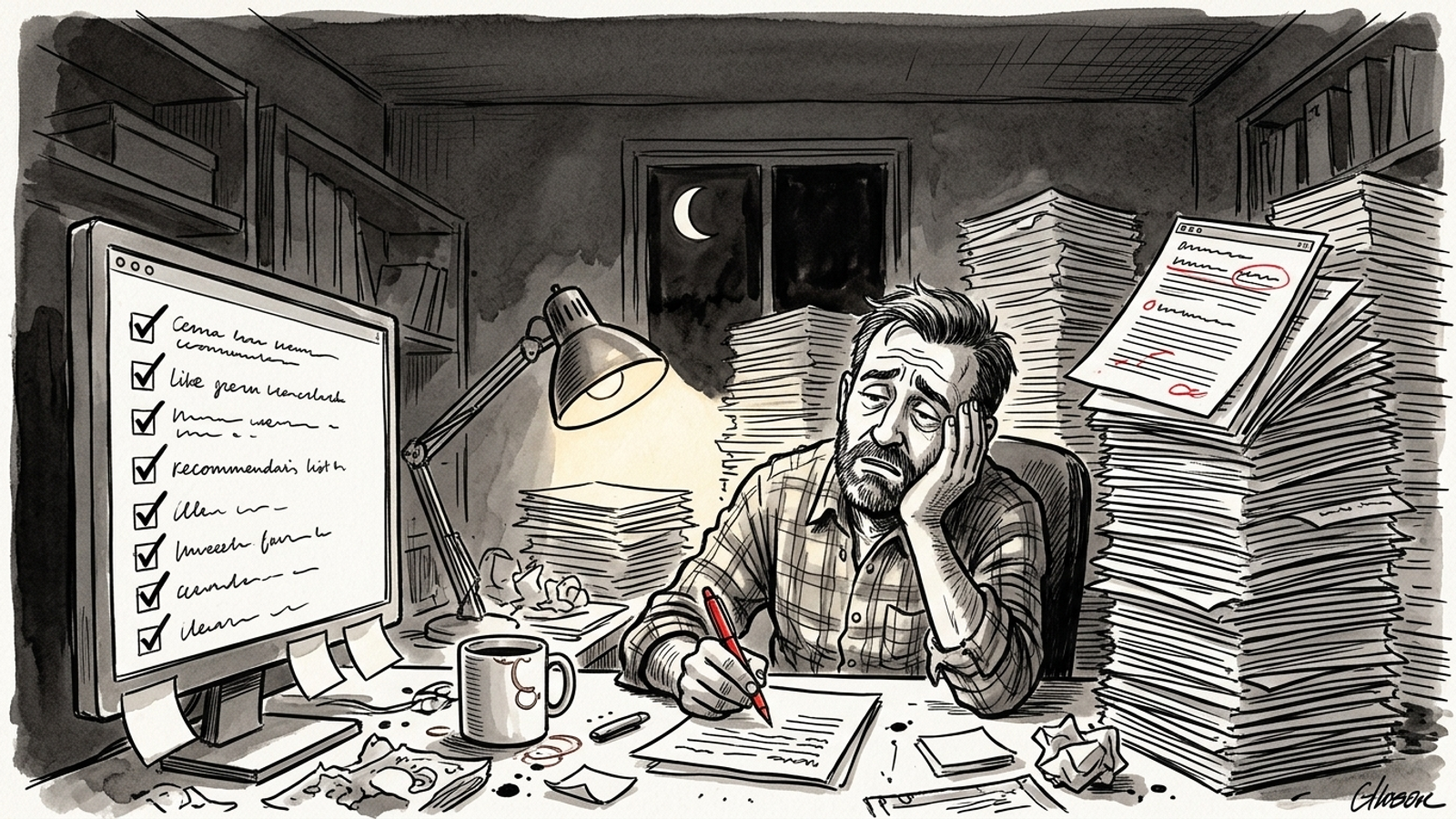
Add up what the other four options leave on your desk and the cheap subscription looks different. Say you track 25 prompts. Each week, five pages need work. At two hours per page for writing, editing and publishing, plus one hour for a developer to clear a crawler block and re-check, that is 11 hours a week before the meeting where someone reads the report out loud.
At an illustrative fully loaded $75 an hour for a generalist, those 11 hours cost $825 a week, or $3,300 across four weeks, to act on a $99 monitor. That is not an argument that every team should outsource. It is an argument against comparing a tracking subscription with an execution service as though both prices buy the same job.
Measurement can eat more of that time. Search Console does not separate AI Overview impressions or clicks, and GA4 has no distinct referral parameter. A team can spend another meeting arguing about proxies while the page that needs work remains untouched. Track what you can, but do not mistake an unresolved attribution debate for progress on the page.
Pick by who can do the work
| Rank and option | What it does best | What remains on your desk | Buy it when |
|---|---|---|---|
| 5. Monitor | Tracks presence and prompts | Investigating, rewriting, fixing and publishing | You have staff who act on reports weekly |
| 4. Gap finder | Identifies lost prompts and missing angles | Writing, editing, fixing and publishing | A writer can turn briefs into live pages |
| 3. On-page optimizer | Suggests specific copy changes | Review, technical work, publishing and re-checks | You publish regularly and score drafts before they ship |
| 2. Technical fixer | Finds access and site-health problems | Making the fix and doing the content work | A developer can clear tickets promptly |
| 1. Done-for-you execution | Carries findings through to changes and re-checks | Goals and guardrails | Nobody in-house owns the work |
For a small team with no writer, skip the recommendations-heavy tiers unless you can make room for the work they create. A monitor will document a gap; it will not close it. For an in-house SEO with writers and developer access, pair tracking with technical audits and make shipped pages the measure of whether the setup earns its keep. For a business with no marketer, buy execution. The job is not knowing you are missing. It is getting the page rewritten, the fetch block cleared and the result checked.
I left out the popular free DIY option: Search Console plus manual prompting. It costs nothing and can teach you the shape of Overviews, but Search Console offers no separate Overview impressions feed, and manual checks become a job of their own once the prompt list grows. It is a lesson, not a system. If you want a broader shortlist beside this one, see the full ranking of AI Overview tools by what they execute.
If you skipped to the end: buy the work you cannot staff. For the small business with no marketer, my pick is done-for-you execution from groas because its price buys the changed page. The other options can tell you what needs doing. Someone still has to do it.