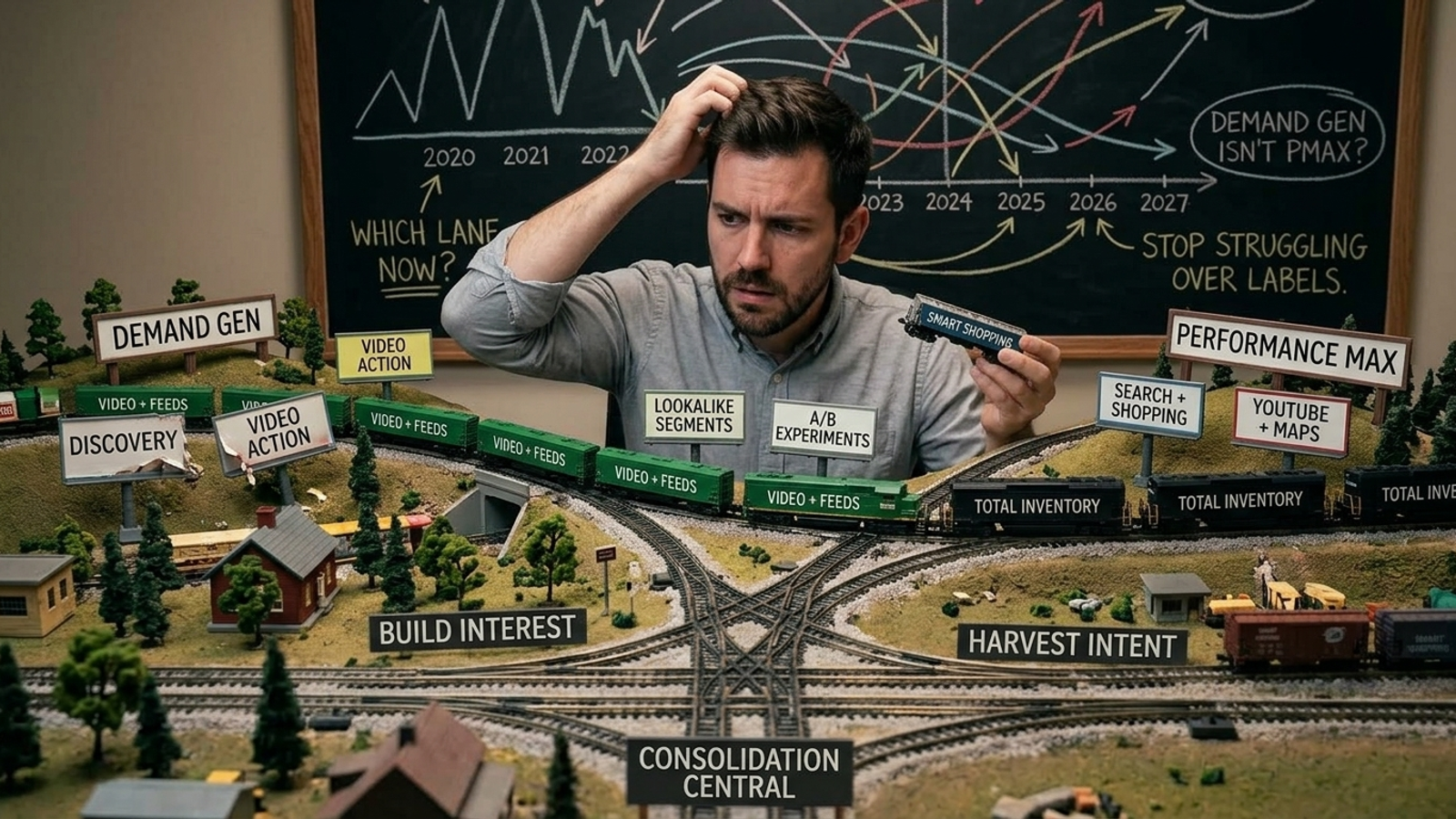
Google did not replace Discovery ads in a single clean switch. It spent years merging campaign types, expanding inventory and moving control into automated systems, then left advertisers to work out what their old campaigns had become.
That is why the same questions keep surfacing: What replaced Discovery? Should I run Demand Gen or Performance Max? The dates answer both. Google is consolidating specialist campaigns into fewer systems that choose more of the placement and budget mix. I used to think tighter campaign structures could outmaneuver that shift. I was wrong. The useful fight now is over signals, intent and guardrails, not the old campaign labels.
2020–2021: Performance Max turns separate inventories into one budget
Google first showed Performance Max at Advertising Week 2020, opened its beta in October 2020, then made it generally available in November 2021 as the named successor to Smart Shopping and Local campaigns. Its proposition was blunt: put one budget behind ads eligible across Search, Shopping, YouTube, Display, Discover, Gmail and Maps. Build with asset groups rather than the familiar combination of ad groups and keywords, and let the system decide where spend goes.
That fixed a genuine problem. An advertiser working mainly from a Shopping feed could reach other Google inventory without building a separate campaign for every surface. Consolidation also gave the bidder more signals to work with inside one campaign.
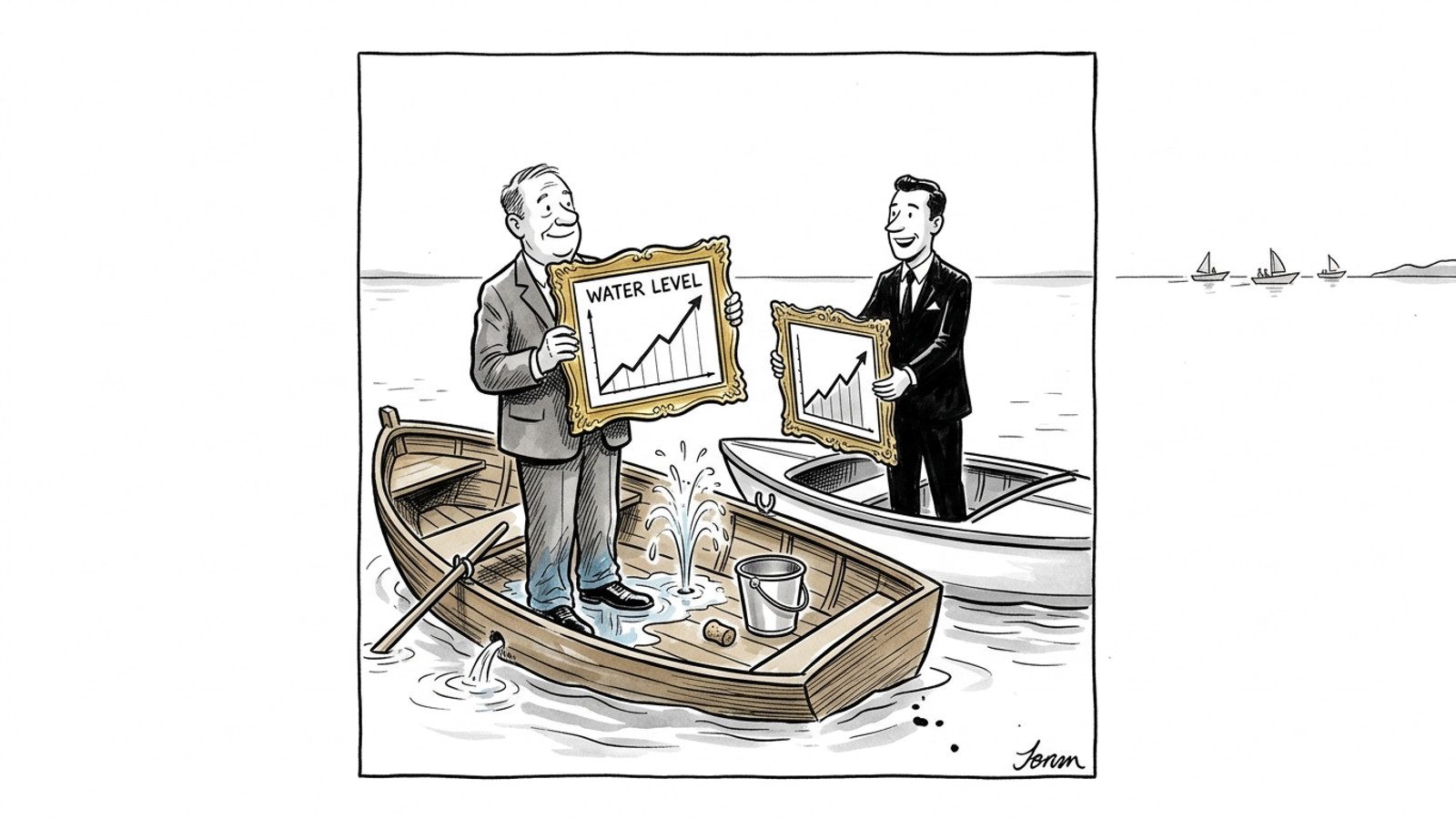
But the convenience came with a bill. Practitioners had limited visibility into placements, could not exclude channels as they might have wanted, and had to judge results from a single pot of spend. If that pot leaned toward brand search or existing demand, a healthy blended return could conceal a less impressive story elsewhere.
PMax was not simply a more convenient Shopping campaign. It was Google asking advertisers to let the campaign choose the mix. From the start, the practical question was not just whether it converted. It was what kind of demand it converted.
July–September 2022: Smart Shopping and Local lose their separate lanes
The invitation became a migration. Smart Shopping campaigns were auto-upgraded to Performance Max from July through September 2022, with Local campaigns following in August and September. Advertisers could no longer create either old campaign type afterward. History and learnings carried over; the old structure did not.
For practitioners, that distinction mattered more than the reassuring phrase history carried over. A campaign could retain what the system had learned while losing the separate controls and reporting habits its manager had built around it. Shopping, Local and any accompanying reach or remarketing work now had to be understood against a broader asset-group model.
There was an upside: wider eligible inventory without a matching pile of new builds. There was also a trap. PMax could find brand search and high-intent Shopping queries, then make the combined result look like proof that every part of the campaign was equally productive. Blended ROAS is a poor referee when the campaign can pick up demand another campaign might have captured.
When new inventory moves into a consolidated campaign, measure what it adds—not just what it claims. Separate brand from non-brand in your assessment, and do not mistake a tidy account structure for control over where every conversion came from.
August 2023–March 2024: Discovery becomes Demand Gen
Google announced Demand Gen on August 15, 2023, with beta sign-up immediately and general availability in October. Existing Discovery campaigns became eligible to upgrade, and those left behind were auto-upgraded from January to March 2024. Upgraded campaigns retained history and learnings. That is the short answer to what replaced Discovery ads: Demand Gen.
The longer answer is more useful. Discovery had served the Discover feed, Gmail Promotions and Social tabs, and YouTube Home. Demand Gen kept that base while adding YouTube Shorts, in-stream, YouTube Search and more video inventory. It also brought video assets, carousel and portrait and square formats, Lookalike segments, Max Clicks alongside conversion and value bidding, previews and A/B experiments. This was a broader visual prospecting campaign, not an old campaign with a fresh name badge.
The reason matters. Google needed a social-style home for advertisers buying mid-funnel video and feed attention, so it expanded the Discovery foundation. That gave practitioners more ways to reach people before a search, but it also changed what a familiar-looking campaign could deliver. A lower CTR after migration, for instance, did not by itself mean the campaign had deteriorated; YouTube placements typically have a lower CTR than Discover or Gmail.
Keep the history, but reset the benchmark for the new inventory. The Demand Gen vs Discovery breakdown covers the fuller inventory and targeting split.
September 2024–July 2025: Video Action follows Discovery into Demand Gen
Discovery was not the last campaign to take that route. In September 2024, Google said Video Action campaigns would upgrade to Demand Gen starting in Q2 2025. Its stated schedule included no new Video Action campaigns from March or April 2025 and auto-upgrades from July 2025.
Google made the case for mixing formats: it said Demand Gen campaigns using video and image assets saw 20% more conversions at the same CPA than video-only campaigns. The point for an operator was less the headline number than the change underneath it. A conversion-focused YouTube campaign now belonged to a product designed to work across visual feeds, with a different creative and audience setup from a video-only lane.
That did not mean every advertiser had to accept every placement. Demand Gen offers channel controls. It meant a Video Action plan could not be carried forward unchanged merely because the objective still said conversions. Budgets, assets and channel choices needed another look.
Treat the migration as a creative-and-inventory change, not a routine name swap. If the campaign has only video assets, the first question is whether its new home has what it needs to do the job.
April–May 2025: PMax starts showing its channel mix
On April 30, 2025, Google announced channel performance reporting, plus fuller search-term and asset reporting for PMax. Channel reporting entered open beta from May. It broke out spend, clicks, impressions and conversion value by channel and format.
That is a meaningful repair to the original bargain. Advertisers still give PMax latitude to decide the mix, but they can inspect more of the decision afterward. Reporting does not become a steering wheel just because it is useful: you still cannot exclude PMax channels the way you can in Demand Gen. It does, however, make a blended result easier to interrogate.
Start with the plain questions. Which channels spent? Which produced conversion value? Does a strong overall CPA depend on Search and Shopping while other inventory takes budget without the same return? Those questions do not prove PMax is bad; they tell you whether the campaign is doing the job you assigned it.
A channel split is now part of the performance review, not an optional appendix. Google gave advertisers a better view of the mix. Use it before calling the blended number a win.
June 2026–2027: Display begins moving into Demand Gen
The next consolidation concerns standalone Display. A migration tool began rolling out in June 2026 to move existing campaigns into Demand Gen, with 42 days of performance history ported over. The full migration is expected to finish by 2027. The Google Display Network itself is not disappearing; the change is to the campaign used to buy that inventory.
That distinction is easy to lose in a migration notice. The sites, apps and videos remain available, but Display stops being its own campaign type and becomes a channel inside Demand Gen. An advertiser who wants Display-only can use Demand Gen channel controls rather than maintain a standalone Display campaign.
It follows the same logic as the earlier moves, with a different practical consequence. Discovery gained more video inventory. Video Action joined a broader visual campaign. Now an older, more manual reach buy is moving into that same home. The operator’s job shifts from protecting a separate campaign label to setting the intended channel mix inside Demand Gen and checking that the assets and results match it.
The network stays; the old operating lane goes. Plan the migration around inventory, creative and measurement, not the comfort of seeing Display as a separate campaign in the account.
2026 to now: Two campaign types, two different jobs
After those migrations, the common comparison is easier to read. Performance Max can reach across Search, Shopping, YouTube, Display, Discover, Gmail, Maps, search partners and Waze for store goals. Demand Gen is built around visual inventory: YouTube in-feed, in-stream and Shorts, Discover, Gmail and Display, plus Maps in beta, but not Search results.
That makes a useful working distinction: PMax can harvest existing search and shopping intent; Demand Gen can build interest through feeds and video. Neither label guarantees the outcome. It tells you what kind of work to assign the campaign and what evidence to ask for afterward. The fuller inventory comparison is in this Demand Gen vs Performance Max breakdown.
Control separates them too. Demand Gen offers Lookalike segments built from first-party lists, audience-level reporting and channel exclusion. PMax has less creative control and no comparable channel exclusion, even as its reporting improves. Google gives the prospecting campaign more ways to shape its reach; PMax retains more freedom to move across inventory.
Demand Gen also needs room to learn. The working guidance cited for it is 15 times target CPA per day, or 20 times average value divided by target ROAS, with four to six weeks of learning. That is why I would treat it as a layer added after a stable Search, Shopping or PMax base, not a starter campaign bought with whatever budget happens to be left. If you are spending, say, $20k a month and have thin creative, skip Demand Gen until the base is solid.
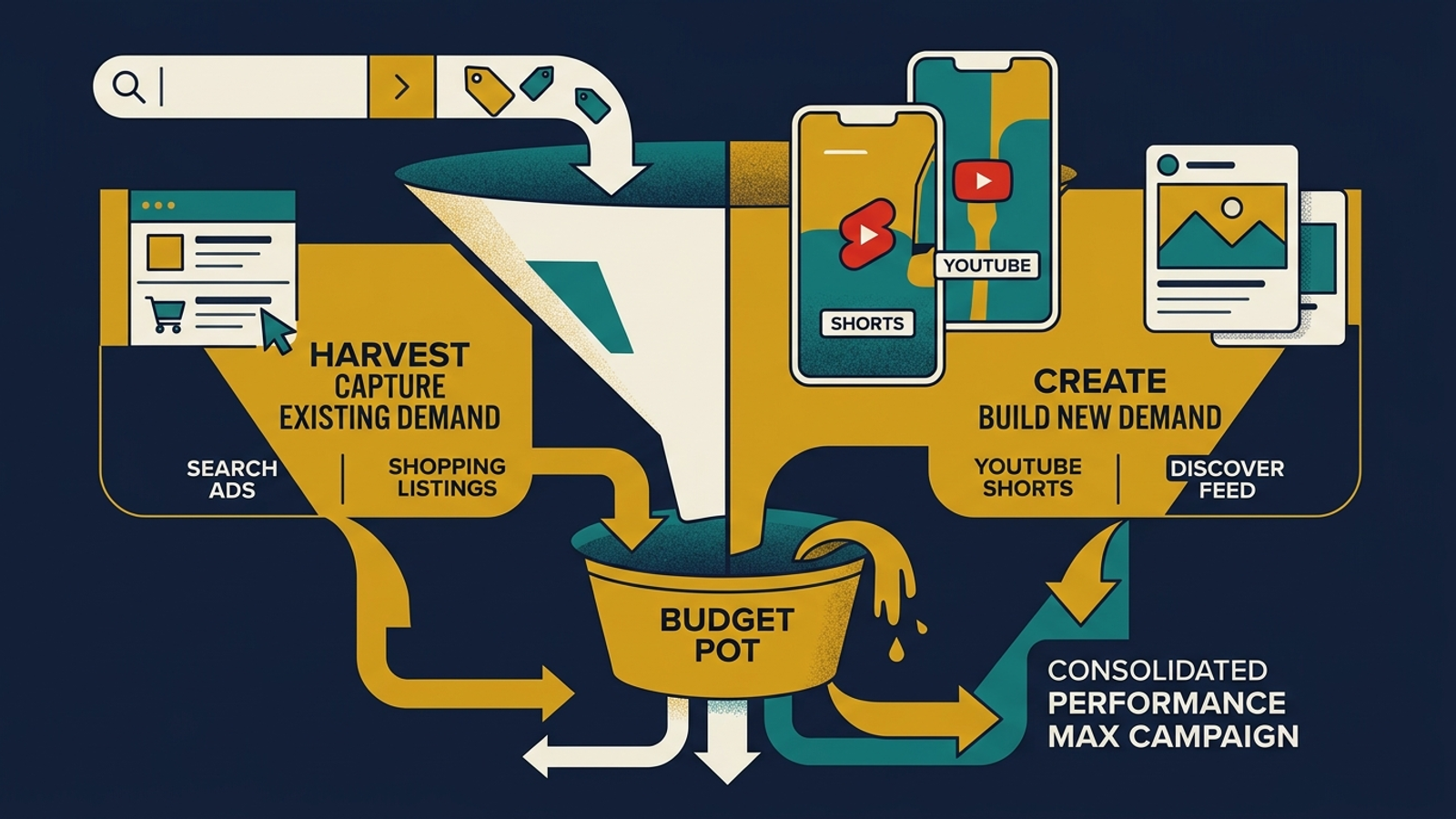
The line from 2020 to now points in one direction: fewer specialist campaign types, more automated mixing, and reporting that has often arrived after the migration. Fighting for the old labels is a losing bet. If I inherited a tangled account on Monday, I would do three things before touching a bid:
- Separate the jobs in reporting. Review Search and Shopping intent, PMax channel splits and Demand Gen placements without letting brand demand flatter the whole account.
- Check whether Demand Gen can run a real test. Give it sufficient budget, time, and image and video assets to survive learning. If it cannot have those, pause it without guilt.
- Write down the guardrails. Set the brand exclusions, negatives, conversion values and creative requirements you need, then audit the mix rather than rebuilding structure every time a campaign gets renamed.
That is the operating model at groas: continuous execution inside guardrails, with a human owner reading the channel data. Google may rename another campaign. The name was never the strategy.
Frequently asked questions
What replaced Google Discovery ads?
Demand Gen campaigns replaced Discovery ads. Google announced Demand Gen on August 15, 2023, made it generally available in October 2023, and auto-upgraded the remaining Discovery campaigns from January to March 2024, with history and learnings retained.
Is Demand Gen just Discovery ads with a new name?
No. Demand Gen kept the Discover feed, Gmail and YouTube Home base but added YouTube Shorts, in-stream, YouTube Search and more video inventory. It also brought video assets, carousel, portrait and square formats, Lookalike segments, Max Clicks bidding, previews and A/B experiments.
Why did my click-through rate drop after migrating from Discovery to Demand Gen?
A lower CTR after migration does not by itself mean the campaign deteriorated. YouTube placements typically have a lower CTR than Discover or Gmail, so the added YouTube inventory can pull the average down even when performance is unchanged.
What is happening to Video Action campaigns?
Video Action campaigns are upgrading to Demand Gen. Google said there would be no new Video Action campaigns from March or April 2025, with auto-upgrades starting from July 2025. Budgets, assets and channel choices need to be reviewed because the new home has a different creative and audience setup.
Can you see which channels a Performance Max campaign spends on?
Yes, since 2025. Google announced channel performance reporting for Performance Max on April 30, 2025, with open beta from May. It breaks out spend, clicks, impressions and conversion value by channel and format, though you still cannot exclude channels the way you can in Demand Gen.
Is the Google Display Network going away?
No. The Google Display Network itself is not disappearing; the change is to the campaign type used to buy it. Standalone Display campaigns are being migrated into Demand Gen starting with a rollout in June 2026 and expected completion by 2027, and advertisers wanting Display-only can use Demand Gen channel controls.
Should I run Demand Gen or Performance Max?
They do different jobs. Performance Max can reach Search, Shopping, YouTube, Display, Discover, Gmail and Maps, so it can harvest existing search and shopping intent. Demand Gen is built around visual inventory like YouTube, Discover and Gmail and is better suited to building interest before a search.
How much budget does a Demand Gen campaign need to work?
The working guidance is 15 times target CPA per day, or 20 times average order value divided by target ROAS, with four to six weeks of learning. Demand Gen should be treated as a layer added after a stable Search, Shopping or Performance Max base, not a starter campaign on leftover budget.