

 LinkedIn

You can pay to put an ad beside Google’s AI answer. You cannot pay to become the source it quotes. Those are different placements, won through different mechanisms, and confusing them is an expensive way to manage search.
The distinction did not appear overnight with AI Overviews. Google spent a decade making answers easier to extract, easier to assemble, and harder for searchers to leave. Featured snippets lifted a paragraph from a page. Passage ranking made a useful paragraph easier to find inside a long page. Generative search turned material from multiple pages into a summary. Then ads arrived in and around that summary.
Follow the dates and one pattern holds: the space for an ordinary click kept shrinking while the value of being used as a source kept growing. The timeline also explains why a larger Google Ads budget cannot buy its way into the answer.
2014: Featured Snippets Put the Answer Before the Link
Google began placing extracted answers above standard organic listings. A searcher could read a short response without visiting the page that supplied it. That was a meaningful change in the bargain between publisher and search engine: your page could provide the answer while Google kept the searcher on its own results page.
As Google’s featured snippet documentation explains, a site owner cannot mark up a page to demand the placement. Google’s systems decide whether text on the page answers the query and whether to display it. Publishers can restrict snippets with nosnippet or max-snippet, but those controls limit extraction; they do not secure the box.
For marketers, the early appeal was straightforward. A featured snippet put your words in the most conspicuous organic position, and your page could still appear in the conventional results. The downside was already visible, though. On a question such as “how to clean a furnace filter,” the answer itself might be all the searcher needed. The publisher won attention without necessarily winning a visit.
The practical lesson began here: write an answer clearly enough to be extracted, but do not assume that being displayed and being clicked are the same outcome.
October–December 2019: BERT Made the Wording of a Query Matter More
In October 2019, Google introduced BERT in Search to help its systems interpret conversational queries and the relationships between words. By December, Google was also applying BERT to featured snippets. This was not a switch from judging whole pages to judging only sentences. It was a step toward understanding whether a particular piece of text answered what someone actually asked.
That distinction matters when two queries share keywords but ask different things. A page about commercial refrigeration may mention a condenser coil dozens of times; the useful passage is the one that explains what the coil does. Better language understanding helps Google tell the difference between a topic match and an answer.
For practitioners, the unit to watch was becoming the answerable passage. A page still needed to be useful as a page, but its strongest explanation could now do more work than a carefully repeated keyword.
January 2020: Deduplication Ended the Featured-Snippet Double-Dip
On January 22, 2020, Google announced featured snippet deduplication. A page shown as a featured snippet would no longer also appear as a standard organic listing on the first results page. What had looked like two chances to be seen became one prominent, answer-shaped chance.
That did not make every snippet a bad result. It did make the trade-off harder to ignore. A publisher could gain the top box while losing a familiar blue-link listing below it, and the answer in the box might satisfy the searcher before the referral link got a click. Position zero was no longer a free extra line on the results page.
The operator’s takeaway: measure what a quoted answer does for visits and business outcomes, not just whether you won the box. Visibility had started replacing some of the space that previously produced clicks.
February 2021: Passage Ranking Found Answers Buried Inside Pages
On February 10, 2021, Google launched passage ranking for US English queries. Google still indexed full pages. The change helped its ranking systems recognize when a specific passage on a page was particularly relevant to a query, even if the page covered a much broader subject.
Imagine a long guide to commercial HVAC maintenance with one clear paragraph about electrical phase balancing. A searcher asking about that narrow issue should not need the entire guide to be narrowly focused before its useful paragraph has a chance to surface. Passage ranking made that sort of relevance easier for Google to recognize.
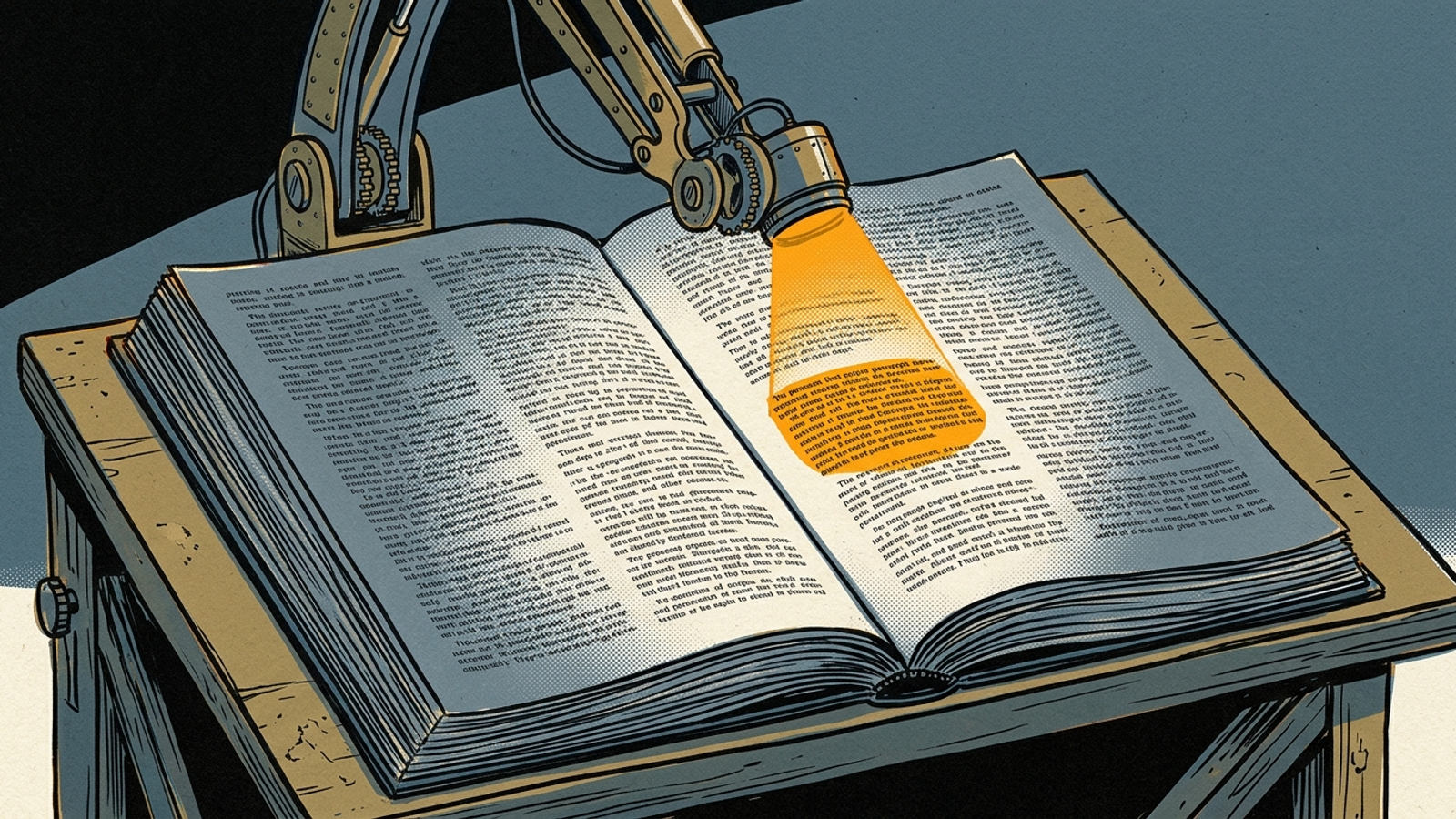
The change weakened a familiar content habit: adding generic sections until an article reached an arbitrary word count. Length did not become a penalty, and a comprehensive guide could still serve a reader well. But padding around the answer did not make the answer clearer. A precise passage inside a substantial page could matter more than another thousand words of filler.
For PPC operators, this was worth watching even though it was an organic-search change. Google was getting better at identifying the part of a page that resolved a question. That capability helped set the stage for the move from ten blue links to cited answers. The practical response was not to chop every page into tiny fragments. It was to make each important explanation intelligible when read on its own.
May 2023: SGE Turned Extraction Into Synthesis
At Google I/O on May 10, 2023, Google introduced the Search Generative Experience, or SGE, in Search Labs. A featured snippet displayed text taken from a page. SGE could draw on several pages to produce a new, multi-paragraph response, with source links alongside it. Google was no longer just choosing an answer-sized piece of text to display; it was assembling an answer.
That changed what a searcher encountered first. Someone looking for a comparison or a procedure could get a substantial overview before reaching the conventional organic listings. It also changed the publisher’s problem. Writing the single best paragraph for a snippet was not necessarily enough when the answer could combine material from multiple sources.
The useful question became: what specific fact or explanation would this answer need from my page? Clear product attributes, direct explanations, and details that can be understood without a sales pitch had a better reason to be retrieved than a page that merely announced its expertise. SGE was a Labs experience, not the finished shape of search, but it showed where the space above the links was going.
May 2024: AI Overviews Made Citation a Mainstream Search Problem
At Google I/O on May 14, 2024, Google announced the general rollout of AI Overviews. The synthesized answer moved beyond Labs and into ordinary search results for a much larger audience. The question for SEO teams changed with it: if your page ranked well, would the overview cite it?
Not reliably. An early Authoritas study found that 93.8% of URLs cited in the AI Overviews it examined did not match the top 10 organic results for the target query. A separate seoClarity analysis of 362,000 keywords found that 44% of cited URLs came from outside the top 20. Its findings also showed an advantage for strong organic positions: a number-one ranking had a 43% chance of being cited, compared with 7% at position 20.
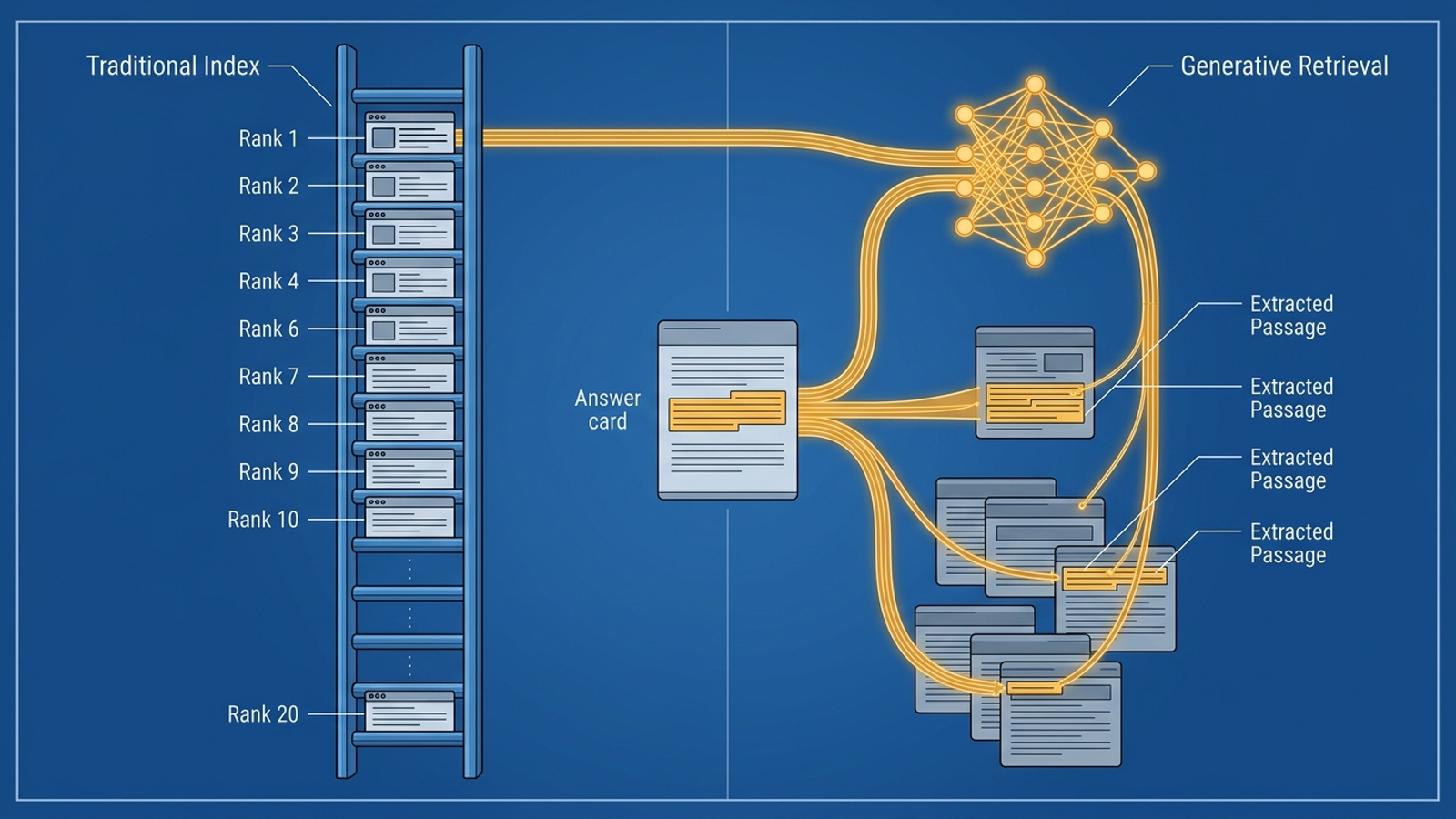
Those studies do not say rankings have stopped mattering. They say a high ranking is neither a guarantee of a citation nor the only route to one. That is a sharper, more useful conclusion than “SEO is dead,” which has been declared roughly every time Google moves a box.
For a business owner, the implication is concrete. Track whether a page ranks, but also inspect whether an overview uses it and what information it takes. A strong organic position can help visibility; it cannot, by itself, explain why an AI assistant cites one business and skips another.
October 2024: Ads Entered the Answer Space, Not the Source List
On October 3, 2024, Google rolled out ads inside and around AI Overviews for mobile searchers in the US, after previewing the format earlier that year. Google did not create a separate AI Overview campaign type or a bid that would purchase a citation. Existing eligible Search, Shopping, and Performance Max ads could appear in the format, without a separate placement opt-out or dedicated placement reporting.
Here is the distinction an account report can blur: an ad in or near an overview is a paid placement; a cited source is part of the generated answer. Winning an ad auction says nothing, on its own, about whether the answer uses your site as a source. A larger budget may help you compete for the sponsored space. It does not turn the sponsored space into an editorial quotation.
That separation does not make the ad worthless. If a paid click meets your target CPA, it has a job to do. But buying it to prove that Google considers your brand an authority mistakes the mechanism. Our account of how Google turned the answer into ad space follows that monetization layer; it is not a recipe for buying a place in the source list.
There was pressure on clicks, too. An Ahrefs evaluation of 300,000 keywords found that the appearance of an AI Overview correlated with a 58% drop in click-through rate for the top organic result. Research from Seer Interactive reported lower paid and organic CTR on the commercial results it studied. These findings do not price every auction or predict every account. They do make one operating rule hard to dodge: when the answer occupies more of the results page, judge paid placements by the traffic and outcomes they produce, not by their proximity to the answer.
October–December 2024: ChatGPT Search Extended the Citation Problem Beyond Google
On October 31, 2024, OpenAI launched ChatGPT Search to paid subscribers; access expanded to free users by December 16. Alongside services such as Perplexity, it gave searchers another way to ask a question, receive a composed response, and inspect linked sources. A business could no longer treat Google’s familiar results layout as the whole market for discoverability.
The distinction between what a company says about itself and what others say about it became more important to examine. A citation study highlighted by AuthorityTech found that the engines it studied cited earned media and third-party coverage five times more frequently than brand-owned sites; 82% of the cited links came from independent editorial sources, review platforms, and community discussions.
That finding is not a universal rule for every AI answer, including Google’s. It is a useful warning against publishing every verifiable detail only in your own sales copy. If buyers find your specifications or customer experience through independent sources, your visibility cannot depend entirely on your corporate blog.
Late 2024–2025: Follow-Up Questions Raised the Cost of Vague Pages
As Google developed conversational AI Mode, search became less like a single query followed by a list and more like a sequence of questions. A searcher could ask about a category, then narrow the question: Which of these tools has native QuickBooks integration? What are the hidden costs of leasing that model?
The precise sourcing behavior of any individual answer is not visible from that exchange alone. The practical problem is visible. A page that says “seamless integrations” gives the system less to work with than a page that names an integration. A product page that leaves specifications behind a form gives a buyer less to check than one that publishes them plainly. Third-party pages may also supply details your own site omits.
This is not an argument to publish every private commercial term. It is an argument against making basic, decision-relevant facts needlessly hard to find. When the question gets specific, your public answer has to get specific too. The same discipline helps a human buyer who has no patience for “tailored solutions” where a product detail should be.
Present: Rent the Ad Slot When It Pays; Earn the Citation Separately
The timeline points to two jobs, not one campaign with a clever new name. Paid search competes for commercial demand through auctions. Citation work makes useful, checkable information available to systems assembling answers. The two can support the same business goal, but paying for the first does not complete the second.
For the citation side, I would start with three checks drawn from the changes above:
- Can an important passage stand alone? Put a direct answer under a heading that names the question or subject. If the passage depends on three earlier paragraphs to make sense, make it clearer. A fixed word count is not the goal; an understandable answer is.
- Can a reader identify exactly what you mean? Name products, methods, integrations, and relevant specifications plainly. Use structured information where it genuinely describes the page, but do not treat schema as a switch that forces a citation.
- Can claims be checked beyond your own site? Make accurate details available on your pages, and pay attention to how your business appears in relevant directories, coverage, and customer reviews. Independent material can add context that a vendor page cannot provide by declaring itself the best.
Then keep the paid-search decision just as plain: does the placement produce qualified demand at an acceptable CPA? If it does, buy the click. If it does not, being near an AI answer is not a consolation prize.
This is the operating split behind groas. Its autonomous engine handles paid and organic search execution continuously within client guardrails, while a named human strategist owns direction and accountability. That is a better use of human time than paying a percentage-of-spend fee for periodic dashboard checks while the answer space changes around them.
Google’s next answer format may move the links again. The line through this timeline is less likely to change: you can rent attention beside an answer, but being the source it quotes is work the ad auction cannot do for you.