

 LinkedIn
The specimen: an AI Overview for “google ads learning phase”
On October 4, 2026, I captured the Google AI Overview for google ads learning phase. I chose it because I know the subject well enough to spot a useful answer, Google has its own documentation on Smart Bidding, and agencies have been explaining the learning phase to clients for years. If generic advice about “getting into AI Overviews” is worth anything, it should survive a look at one actual result.
This one gave me four citations: Google’s official documentation, an agency post from HawkSEM, a Search Engine Land report, and a technical page from Reliable People Tools. Several large marketing sites appeared high in the traditional organic results but not in the Overview’s citation cards. That is the question for this teardown: what did the cited passages provide that those ranking pages did not?
A single Overview cannot reveal Google’s full selection system, and the cards can change. It can show what this answer used, where the useful passages sat, and what a page rewrite would need to do differently. That is more useful than another instruction to “write helpful content.”
Piece 1: the answer Google put above the results
Here is the answer as I captured it:
The Google Ads learning phase is a calibration period where Smart Bidding optimizes delivery after campaign launch or major edits. It typically lasts until the campaign logs roughly 50 conversion events across 1 to 2 conversion cycles (usually 7 to 14 days), though lower-volume accounts can take longer. Actions that trigger a reset include switching bid strategies, modifying target CPA or ROAS by 20% or more, or editing conversion actions.
The three sentences do three different jobs: define the state, give the reader a sense of duration, and name changes that could disrupt it. That division matters more than the Overview’s smooth prose. Each job creates an opening for a source that answers one narrow question clearly.
The first sentence follows Google’s foundational definition. The second moves from a calendar-based answer toward conversion volume and cycle length, the subject of Search Engine Land’s reporting on Smart Bidding benchmarks. The third supplies the sharpest number in the block: a 20% target CPA or ROAS adjustment. Google’s documentation uses the broader language of significant changes; the more specific threshold appears in the cited third-party teardown.
That does not make 20% a universal reset switch. It tells us something narrower and more interesting about this answer: Google placed a third-party operational rule beside its own documentation. I would not change a live account on the strength of that sentence alone. I would inspect where it came from.
Piece 2: the four citations, in order
Google supplies the baseline
The first card points to Google’s Smart Bidding documentation. Its job is straightforward. The documentation describes the ‘Learning’ status as an automated state associated with creating or reactivating a strategy, changing a primary bid setting, or changing account composition. It also connects the duration to conversion volume, conversion lag, and bid type rather than giving every account the same countdown.
The relevant explanation sits in a short callout beneath a heading. You do not have to excavate a founder’s story or decode an agency’s house vocabulary to find it. Google gives the Overview a definition and the conditions around it. It is the least surprising citation here, but it establishes the baseline against which the other three become interesting.
HawkSEM makes the definition easy to lift
The second card goes to HawkSEM’s learning-phase article. This is the sort of agency result I would normally expect to compete with a dozen near-identical explainers. Here, the useful part is its shape.
Under a heading that closely matches the reader’s question, HawkSEM puts a self-contained definition near duration guidance presented as bullets. The answer arrives before the reader has to wade through a long introduction. I covered the same passage-first idea in our guide to AI citations: a paragraph that can stand on its own has a better chance of being useful to an answer assembled from multiple sources.
My verdict on this card: HawkSEM did not need to be the grand authority on all of Google Ads. It supplied a compact answer to “what is the learning phase?” beside an obvious heading. I cannot prove from one result that formatting won the citation. I can say the cited page made the relevant passage unusually easy to find and understand.
Search Engine Land brings the timing question up to date
The third card goes to Search Engine Land’s report on an event-based Smart Bidding benchmark. This source does a different job. Where a simple explainer might say to wait a week, the reporting discusses roughly 50 conversion events and conversion cycles across Search, Shopping, and Performance Max. It also gives the Overview a way to acknowledge that a low-volume account may take longer.
The useful detail is not confined to the article’s opening. It appears farther down, in the discussion of how timelines vary. That is a useful check on a slogan I hear too often: put the answer in the first paragraph or the machine will never find it. A specific passage farther down the page still contributed to this result. The lesson is not “always write short articles.” It is “make the passage that carries the answer clear when a reader reaches it.”
Reliable People Tools supplies the sharp edge
The fourth card points to Reliable People Tools’ learning-period page, a technical wiki rather than a prestige marketing publication. Its value to this Overview is an explicit set of proposed boundaries: the page describes target CPA or ROAS changes of 20% or more as a reset trigger, distinguishes smaller budget moves and negative-keyword additions, and treats changes to conversion actions or value definitions as especially disruptive.
That specificity helps explain why the Overview’s final sentence sounds so decisive. It also exposes the answer’s main risk. A clean threshold is not automatically an official threshold. This is a third-party operational rule, not a percentage supplied by Google’s support page. As an account manager, I would take the distinction seriously. As an editor looking at the citation, I would keep the observation: the Overview reached outside the official documentation for a more concrete answer to “what breaks learning?”
Across the four cards, I see complementary roles rather than four votes for the same paragraph: official definition, accessible explanation, current timing context, and a concrete disruption rule. That is the useful pattern. It does not establish that domain authority is irrelevant, or that any neatly formatted paragraph can beat an established site. It shows how several narrow passages ended up in one short answer.
Piece 3: the high-ranking pages the cards skipped
Below the Overview, the traditional results included large marketing publications, SaaS vendors, and established agency pages. Positions 2, 3, and 4 did not appear in the citation cards I captured. The gap is not, by itself, a scandal. An organic ranking and an Overview citation answer different questions. Ahrefs’ study of 863,000 SERPs found that 38% of AI Overview cited pages ranked in the organic top 10, down from 76% in mid-2025. A page-one position is not a reservation in the answer box.
So I opened the skipped pages. One result at position 3 spent roughly 400 words setting the scene before it reached campaign status. Another, at position 4, defined the learning phase in a circle: campaigns learn how to perform better. The first delayed the answer; the second gave the reader little to use. Neither passage competed well with a definition, a duration condition, or a concrete account change.
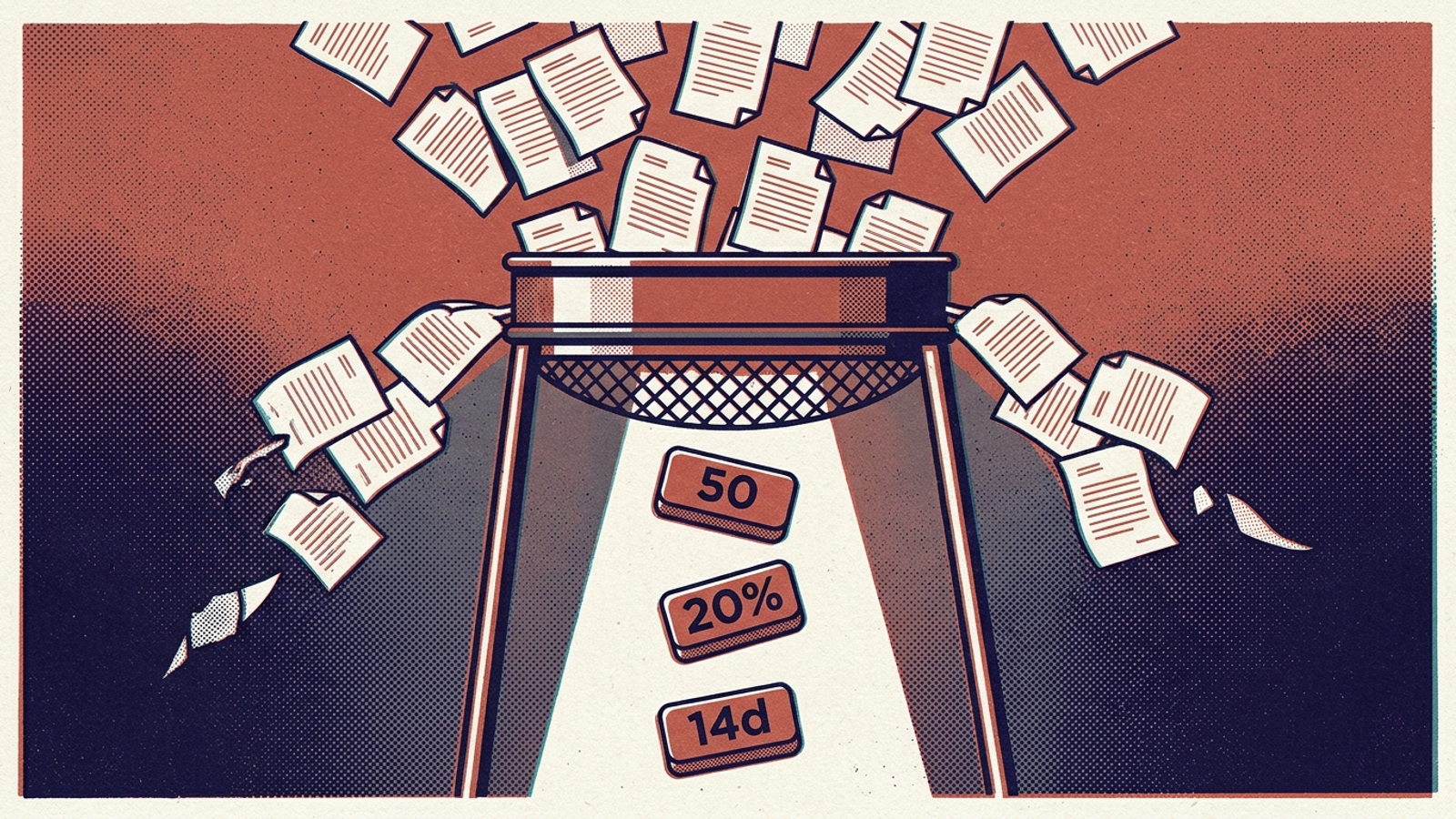
The contrast became sharper around low-volume accounts. Some ranking guides warned readers to get enough data without saying what condition they meant. Grow Wild Agency’s breakdown offered a more specific example: accounts below 25 conversions a week risk ‘Learning Limited’ status before reaching 50 conversions in a 14-day window. That page was not one of this Overview’s four cards. Its example still shows the difference between a warning a reader can test against an account and one that amounts to “it depends.”
I would not diagnose every skipped page from its introduction. A page can have a poor opening and an excellent table farther down; Search Engine Land’s citation is a reminder to check. For this result, though, the ranking position did not compensate for passages that were hard to isolate or said little once isolated. If your own page ranks but goes uncited, inspect the answer it actually gives before blaming a mysterious authority score.
Piece 4: the useful distinction the Overview leaves out
The answer gets a reader oriented. It does not do enough for someone deciding whether a recent account change is ordinary recalibration or a deeper break in the conversion signal. Those are not the same operational problem. A change to a bid target and a change to the conversion action Smart Bidding is optimizing against deserve separate explanations, even if both appear in a short list of potential disruptions.
Conversion lag is another missing piece. The Overview gives a familiar seven-to-14-day parenthetical, then notes that lower-volume accounts can take longer. It does not show what that means for a B2B or high-ticket account with a 30-day consideration cycle. The time between click and recorded sale changes how soon an apparent lack of conversions can be interpreted. A reader with that account needs more than the generic calendar window.
This is where I would try to improve a page already competing for the query. I would add a clearly headed section such as How conversion lag affects Smart Bidding calibration, then explain the distinction using the account’s actual conversion cycle. I would also separate changes to bidding targets from changes to conversion actions. That would fill a gap in the captured answer. It would not guarantee a citation, and I would not promise one to a client.
What this teardown can, and cannot, tell us
It is tempting to reverse-engineer a grand four-stage machine from four source cards. I cannot see Google’s retrieval steps from the outside. I can see that the Overview answers several sub-questions and that different cited pages supply useful material for each. Our piece on why AI assistants cite some businesses and skip others makes the broader case for looking at passages rather than treating a citation as an endorsement of an entire domain.

Nor should one captured card set become a permanent scorecard. In an analysis of 2,961 runs across AI Overviews and LLMs, SparkToro and Gumshoe.ai found that two identical queries returned the exact same source list less than one time in 100. That finding is a reason to record the date and avoid declaring victory after one check. It is not a reason to ignore the passages in front of you.
The working conclusion is modest but actionable: this Overview drew on pages that answered distinct parts of the question clearly. The skipped pages I inspected gave me less to extract at those points. That is enough to justify a page edit and a repeat check, not enough to claim I have decoded Google.
Your turn: a 20-minute teardown worksheet
Pick one high-intent query from your own field, preferably one where you know the difference between a plausible answer and bad advice. Open the live results in a clean browser session. Do not begin with a dashboard score across hundreds of keywords; begin with the answer your prospective customer can see.
Run the checks in order:
- Capture the answer and map its citations. Save the query, date, Overview text, and cited URLs. For each sentence, find the closest supporting passage on the cited page. Note its heading, what it states, and whether the Overview presents a source’s rule as broader fact.
- Open the skipped organic leaders. Check the first three traditional results and find their actual answers, not just their opening paragraphs. Is the useful definition easy to locate? Is a number explained, or merely dropped into a paragraph? Record what the cited pages do more clearly.
- Name one missing edge case. Look for a distinction the Overview collapses, a condition it omits, or an answer too vague to guide a decision. In this specimen, conversion-action changes and conversion lag both deserve more room.
- Write one replacement passage. On a relevant existing page, put the missing answer under a precise H2 or H3. Keep the passage self-contained. Use a figure, table, or calculation only if you can support it; a neat-looking threshold copied from someone else is not an improvement.
This is a worksheet, not a citation guarantee. Its value is that you finish with a specific editorial decision: what your page says now, what the Overview says, and what your page could explain better. If you cannot name that difference, another 3,000 words will not rescue the page.
Overall verdict: keep the method, not the certainty
This AI Overview is a useful starting answer. Google anchors the definition, HawkSEM explains it cleanly, Search Engine Land adds timing context, and Reliable People Tools supplies a sharper rule that needs to be read as a third-party claim. The ranking pages it skipped show why page-one visibility alone cannot tell you whether your best passage is doing any work.
I would keep the Overview’s one-question-at-a-time structure and improve its handling of the hard cases. On your own site, start with a page that already has a foothold: as I argued in the piece on fixing a page around position 8, you may not need a new generic content hub. Find a relevant query where your page sits between positions 5 and 15. Inspect the first two sentences under the heading that should answer it. If they clear their throat, cut them. Replace them with the answer, then give the reader the conditions that make that answer true.
Request re-indexing in Search Console and check the live Overview again after two weeks. The card may change; it may not. Either way, you will have done something better than chase a prestige score: you will have made one passage more useful to the person asking the question.