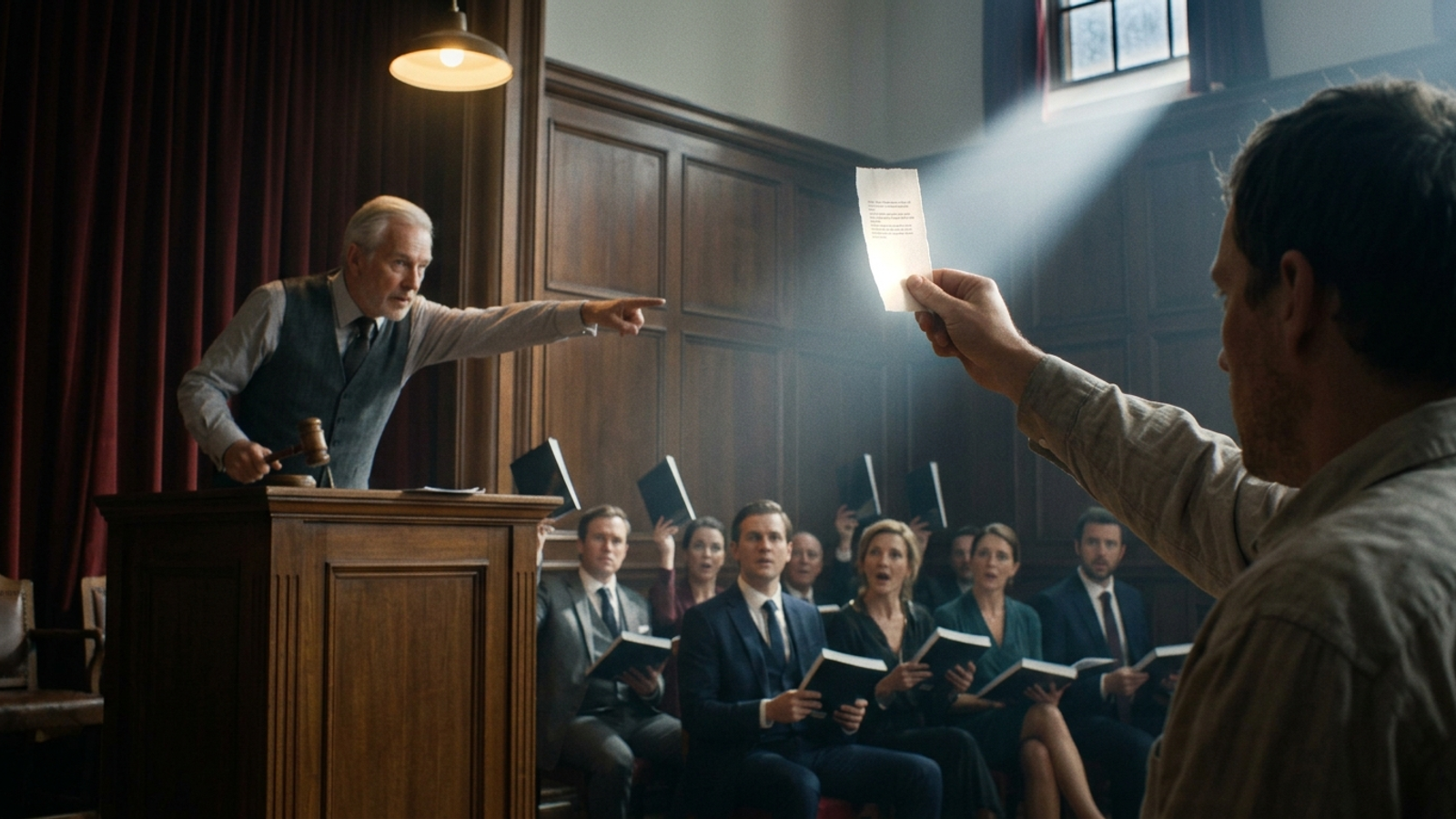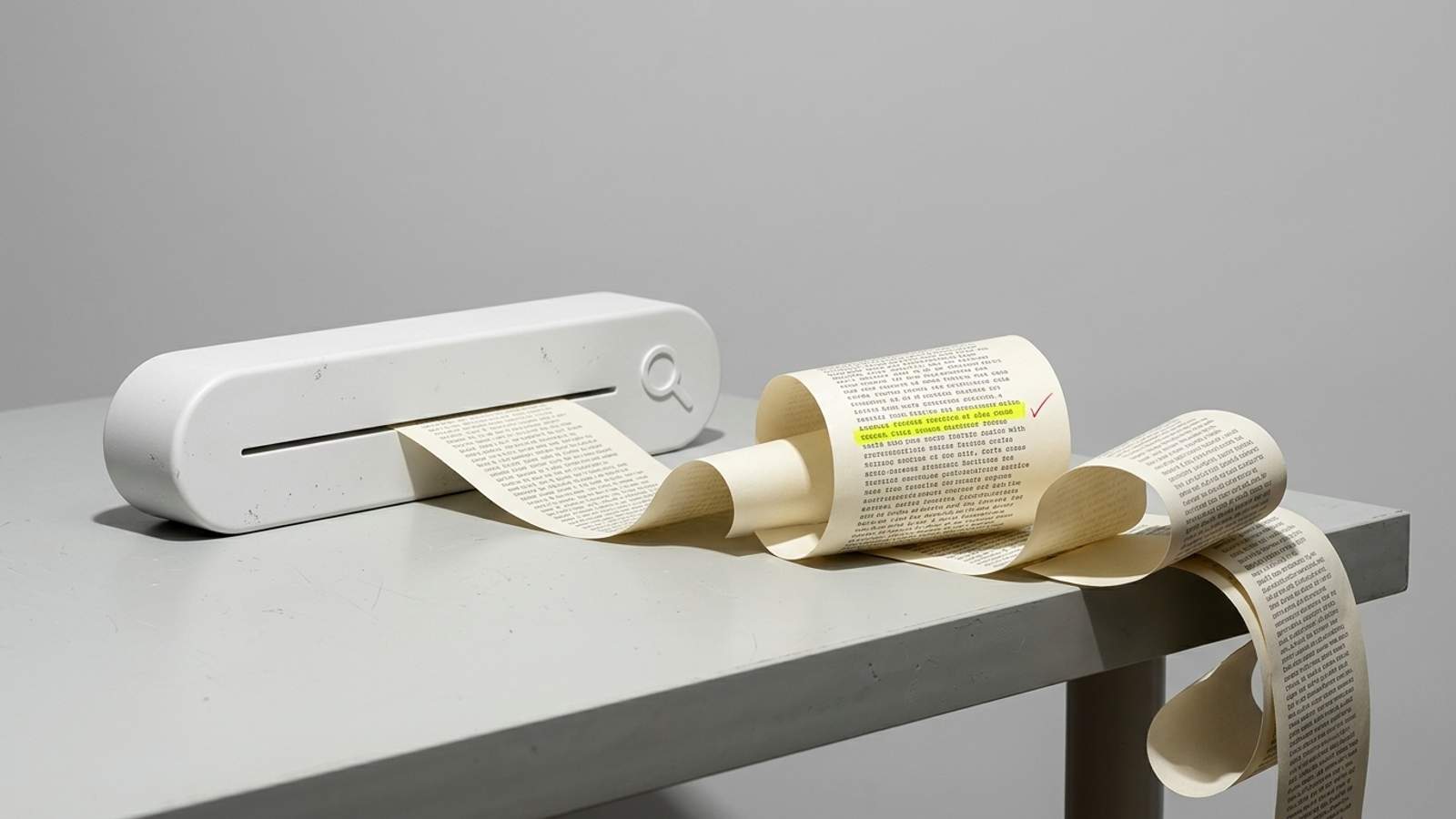

Stop writing AI Overview content. Your fastest shot at a citation is the page already sitting at position 8.
Every deck I see right now says the same thing: publish new answer-first pages, add FAQ schema, drop in an llms.txt file. I used to tell clients a version of that. I was wrong. AI Overviews often draw on pages Google already retrieves for a query and its related questions. Then they need a passage that answers one of those questions cleanly. If you already have pages ranking, you may not have a content-volume problem. You have a sharpening problem.
The standard AI-readiness checklist starts at the wrong end
Open five tabs on how to get cited and you get the same checklist. Lead with a direct answer under a question heading. Add a table and an FAQ block. Add FAQPage and HowTo schema. Drop in an llms.txt file. The Ten Speed guide to B2B content for AI Overviews gives the more useful order: earn top-10 eligibility first, then make the passage worth citing. It puts commercial pages already sitting in positions 1 to 10 ahead of new ones.
That order matters. What the deck calls AI readiness, I call a 20-minute billable artifact if nobody checks whether the page gets retrieved. Schema still matters for rich results. It has not proved itself a citation lever: one matched-control test of 1,885 pages that added JSON-LD against 4,000 controls found minus 4.6% on AI Overviews, with the AI Mode and ChatGPT lifts indistinguishable from zero. And llms.txt is a worse place to start. Google has said Search ignores it, and an Ahrefs log study of 137,210 domains found 97% of published files were never even requested.
If the page itself cannot answer the question, those additions are paperwork. Start with the page.
Retrieval comes before the clever answer block
Here is the mechanism behind the position-8 argument. Google uses query fan-out: one visible question becomes several related searches behind the scenes. Each sub-question can retrieve a different set of pages. A page at position 40 for the head term can still get cited if it answers one sub-question well. A page at position 3 can get skipped if it answers none of them directly.
That also explains why the overlap numbers are easy to misuse. Ahrefs found 76% of AI Overview citations came from the top 10 in July 2025. Its March 2026 repeat, covering 863,000 keywords and 4 million URLs, found 38% in positions 1 to 10, 31.2% in positions 11 to 100, and 31% beyond position 100. A top-10 rank is not a ticket into the Overview. Nor does the later result mean rankings stopped mattering. The page has to be retrieved for a relevant question before its answer can be lifted.
Our own logs pushed me away from the new-content reflex. We track which pages AI assistants pull into live answers. One dated, specific guide on YouTube Ads in 2026 fed 273 verified live answers. A second detailed guide on AI Max fed 139. The generic category pages we monitor fed zero. Same site. The difference was specificity: the guides answered dated questions with numbers, steps and limits. The full breakdown is in Four Pages Got 91.5% of Our Live-Answer Fetches.
Those are assistant logs, not a count of Google AI Overview citations. I would not pretend they prove the two systems choose sources identically. They do point to the same editorial mistake: commissioning a fresh page while a specific, useful guide already exists and gets found.
The PPC parallel is familiar. When an ad group has impressions but the query-to-ad-to-landing-page match is weak, launching another campaign does not fix the match. I would work on the asset already in play. A position-8 page gives you somewhere to start: Google shows it for a relevant query, but its best answer may be buried or too vague to extract. A new page has to earn that foothold. The ranking page already has one.
Stop asking what to publish next. Ask which page Google already shows that you have made unnecessarily hard to quote.
Work the pages within striking distance
Start in Search Console, not in a new-content doc. Export queries where your pages sit in positions 4 to 20, then look for buyer questions: prices, timelines, comparisons, limits and how-to steps. That band is the familiar striking-distance playbook. It is a work queue, not a guarantee that every query will produce an Overview or that every page will enter its source set.
For each candidate, check whether the question’s terms appear naturally in the title, H1 and first 100 words. Then read the section that should answer it. Does that section exist? Does its first sentence give an answer? Or does it spend a paragraph explaining why the topic is important before getting to the point? Say you spend $20k a month and one guide sits at position 7 for three comparison queries. I would rewrite that guide before commissioning five new pages on the same theme.
Ten Speed spotted the failure mode in B2B: a comparison page at position 3 loses the citation to a page at position 8 because position 8 opens with an extractable fit statement. Their fix focuses on the first 40 to 60 words under each H2. I use the same discipline:
- Put the sub-question in a clear H2.
- Answer it in the first sentence.
- Follow with the detail, date, number or constraint that makes the answer useful.
- Cut the throat-clearing paragraph that used to sit above it.
Then check whether the passage can stand on its own. A Princeton controlled test found that answers with cited sources, statistics and quotations gained 30 to 40% visibility on a word-share metric. That is not permission to invent precision. It is a reason to stop replacing the facts you have with fog. If you have a current price, give the price and its date instead of writing ‘costs vary by provider.’ If a policy has a named limit, state the limit instead of promising a ‘comprehensive overview.’ Show the source where the reader can use it.
Dates are especially useful when the question is about a current price, policy or limit. Put the date next to the answer it qualifies, not in a generic ‘last updated’ badge miles away from the relevant paragraph. I explain more of that retrieval logic in why AI assistants cite some businesses and skip others. The practical edit is smaller than the pitch for it: put the answer where a reader, and a system extracting passages, will find it.
Delete the vague paragraph above the answer
Most position-8 pages already contain useful facts. They bury them under three sentences about industry trends, a generic definition, then the number the buyer actually asked for. I cut that opening and move the direct answer to line one under the H2. The context can follow if it helps explain the answer. If it does not, it goes.
My test is one screen, one usable answer. Scroll to an H2. Without scrolling further, can a stranger see the question, the answer and the date or source when one matters? If they see ‘many factors affect pricing,’ the page has given neither the reader nor the Overview much to work with. Good rankings will not rescue a paragraph that refuses to say anything.
Monitoring a missed citation is not fixing one
Once that mechanism lands, the next question is usually about tools. What actually helps get a page featured, rather than telling you it was not featured? Most AEO software watches: it tracks prompts, counts citations and draws a visibility score. Useful the way a rank tracker is useful. It does not rewrite your H2s, delete the vague intro or put a dated answer where the question appears.
Even the watching has limits. Since June 2025, Search Console has folded AI Overview and AI Mode clicks into Web totals without a separate filter. Your impression line blends blue-link and AI traffic. One dataset puts queries with Overviews down 61 to 65% on organic CTR, with cited brands getting 35% more clicks than non-cited brands in the same answer. That makes the citation worth caring about. It does not make a blended dashboard an instruction manual.
The useful tools help with page work. They identify 4-to-20 queries tied to buyer questions, help you inspect the passage that failed to answer, and help get the rewrite live. That is the test I apply to anything pitched as tools that get you featured in Google AI Overviews: does it help change the page, or does it only chart the score? A list of missed citations with no edited sentences leaves you exactly where you started. Execution is the product. Monitoring never cited anyone.
No ranking page? Earn one before you tune it
This advice has a boundary. If you run a brand-new site with nothing ranking in the top 20, you do not have a striking-distance list to work. You need the slower job first: publish a specific guide and earn rankings for the questions it answers. The same applies if your category has no buyer-question pages at all, only a homepage and a contact form. Build the page before you tune its passage.
That is not an argument for an endless order of ‘AI content.’ It is the cost of having no relevant asset yet. If you do have pages in range, stop behaving as though you are starting from zero. Your cheapest candidate is already on the site, waiting for a more direct answer.
The expensive option is pretending the page does not exist
Pull five pages sitting in positions 4 to 20 for questions a buyer would actually type. Give each relevant H2 a direct first sentence. Add the number, date or constraint you can support, and remove the vague paragraph above it. This is page editing, not a new publishing programme. Retrieval still has to happen, and an edit cannot promise a citation. But you can improve the answer on a page that already has a foothold instead of paying to create another page that has to earn one.
Give the work one owner and a calendar date. Pick the five pages, rewrite the sections this week, then recheck those exact queries in Search Console in 14 days. Inspect the Overviews too: Search Console alone will not tell you which sentence was cited. You are looking for a page that holds its visibility while its answer starts appearing in the response. If it does not, inspect the question and the passage again rather than ordering five more introductions to the same topic.
Skip that recheck and the next content order will look sensible. Meanwhile, a competitor can take the position-8 page, write the direct sentence you left buried, date the answer you left vague and take the citation you paid to chase. The Overview does not reward who publishes most. It can cite the page that answers cleanly while yours is still clearing its throat.