

 LinkedIn

Cheap SaaS trials are easy to buy on Meta. Activated trials are the job. If you run a SaaS business buying ads for free trials, your choice is between a Meta specialist agency, a SaaS growth agency, and a flat-fee done-for-you manager like groas. I would pick the hire that optimizes for people who use the product, even if each signup costs more.
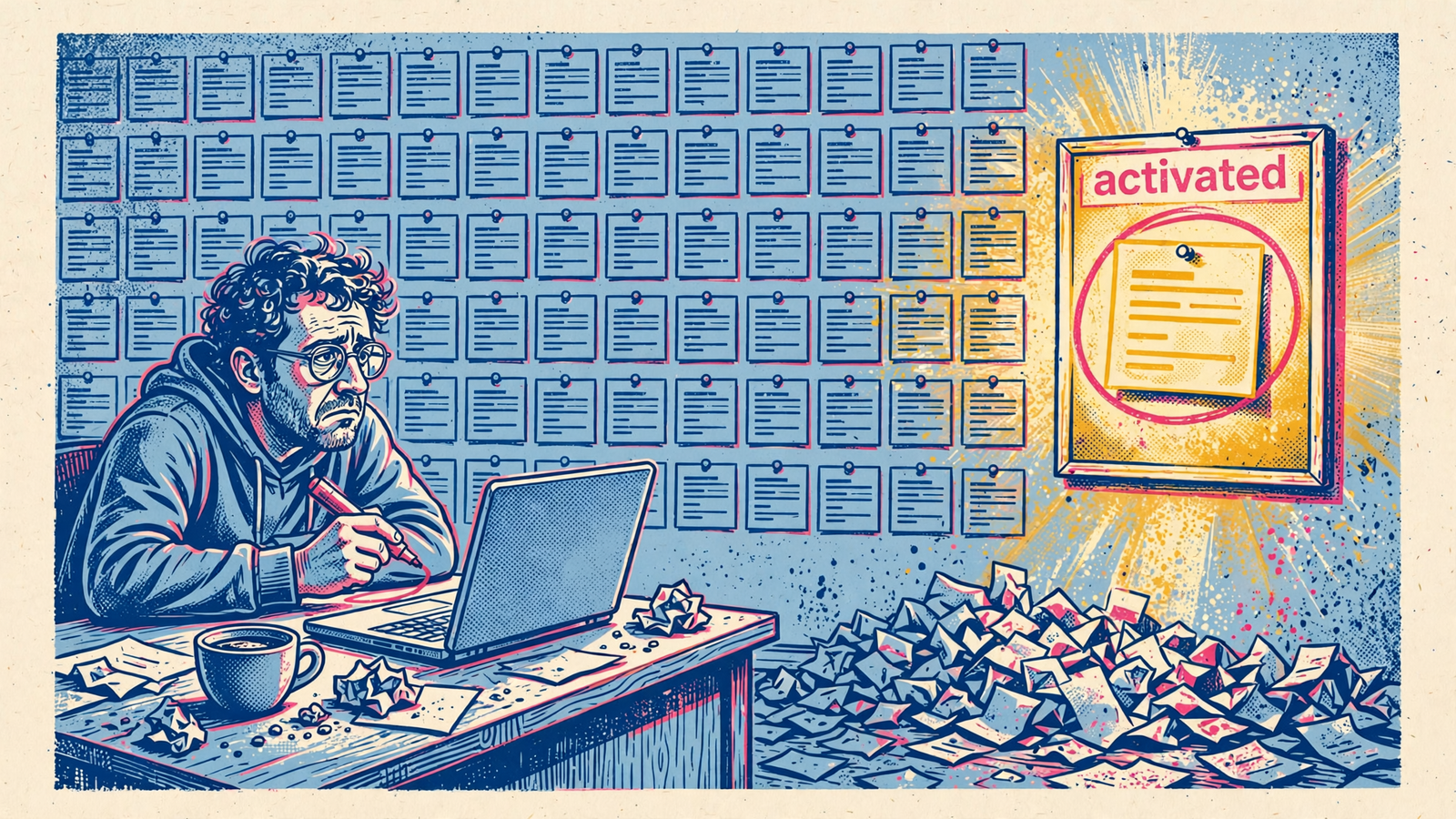
Optimize to the signup button and Meta can find curious clickers who never connect a data source, invite a teammate, or come back after day two. You pay less per trial and more per customer. The weekly report looks fine until finance asks where the paid conversions went.
The three options all sell some version of “we run your Meta ads.” They mean different jobs. A Meta specialist agency lives inside Ads Manager: placements, Advantage+ quirks, creative tests. A SaaS growth agency sells the funnel around the ads: positioning, landing pages, lifecycle email, and sometimes outbound. The flat-fee manager handles execution inside your guardrails. groas runs Meta Ads for $1,499 a month, with the same fee at any spend, no setup fee, and month-to-month terms. Your accounts and data stay yours.
That is the field. The deciding question is what each hire tells Meta to find.
The cheap-trial trap: a better CPA can buy fewer customers
A self-serve SaaS example puts the problem plainly: one side bought 220 trials at $9 and produced 4 paid accounts after three months. The other bought 140 trials at $15 and produced 19 paid accounts. The cheap side won on cost per trial. The expensive trials produced more paying customers.
The same trap appears when a signup form changes. In one no-card versus card-required example, a $20k budget bought 4,000 no-card starts at $5, with an 8% trial-to-paid rate. That is $62.50 per subscriber. Card-required bought 1,200 starts at $16.67, with a 35% conversion rate. That is $47.62 per subscriber. The ad account prefers the cheap column. The business should prefer the cheaper paid subscriber.
I do not take that as an argument for making every signup form harder. I take it as an argument for measuring what happens after the form. Otherwise, the provider with the prettiest cost-per-trial chart can win your business while losing you customers.
Axis 1: the conversion event tells Meta whom to find
Signup, activated trial, and paid conversion are three different optimization signals. Signup gives Meta volume. Activated trial ties the signal to product use: the user connects a data source or finishes one real job. Paid conversion gets closest to revenue, but a SaaS account may not generate enough of those events for Meta to learn from them.
A common benchmark is about 50 optimization events per ad set within seven days of a significant edit. It is a planning constraint, not a reason to pretend 49 events are worthless. Before a provider promises to optimize for purchases, ask how many purchases your ad sets actually generate in a week. I go deeper on that tradeoff in trial starts vs activated trials vs paid conversions.
Then check the clock. With a standard click attribution window of up to seven days, a customer who pays after a 14-day trial may fall outside the window for crediting that click. Optimize straight to first payment without checking volume and timing, and you can starve the algorithm. Creative gets blamed for a signal problem.
For most trial campaigns, I would push activation data and downstream value back through the Conversions API, then optimize to the deepest event the account can support. If activation volume is too thin, trial start can be the interim optimization event. It should not become the definition of success. The chain runs click to trial to activation to paid to retained past payback; cost per start shows only its first useful step.
Here is how I would press the three hires. The specialist may favour signup volume because it gives the account more events and produces a cleaner report. A good SaaS growth shop can connect CRM outcomes and CAPI to SQLs, pipeline value, and closed-won revenue, though that breadth comes with a larger engagement. The flat-fee manager should pursue the deeper signal without selling you a funnel rebuild first. Ask each provider which event they will use at your actual weekly volume. Do not accept “we optimize for conversions” as an answer.
Axis 2: creative determines who starts the trial
On Meta, the hook does a lot of the targeting. An ad can attract someone who wants to try a free tool or someone who has the problem your product solves. Both can click Start trial. Only one is much help to the business. I have seen trial-quality problems treated as landing-page problems when the ad was casting the wrong people in the first place.
The hires split here, too. Specialist agencies tend to test heavily, but creative may be billed separately. Growth agencies can wrap creative into a broader retainer. That is useful when positioning needs work; it is less attractive when you mainly need the next batch of ad variants. groas tests new ads and scales winners inside its flat fee. The useful question is not how many concepts a provider promises. It is how many your budget can test properly.
One creative-testing rule of thumb divides a test budget of 15% to 25% of spend by three times target CPA to size the number of ideas. At a $40 CPA, that works out to roughly 4 ideas at $10k monthly spend, 11 at $30k, and 38 at $100k. The same guidance suggests keeping 3 to 6 ads live per ad set. If someone promises 20 fresh concepts a week on $8k spend, ask how each will get enough delivery to tell you anything.
Ask who writes, shoots, and edits the ads. Then ask which result will make them kill a cheap-signup winner: poor activation, poor paid conversion, or neither. That answer tells you whether creative testing serves trial quality or just fills a report.
Axis 3: the fee should not reward higher spend
Say you spend $20k a month. At 10% to 15% of spend, a specialist costs $2,000 to $3,000 before any separate creative charge. Double spend to $40k and that becomes $4,000 to $6,000. The account may need more work as it grows, but a fee that rises automatically with budget does not prove the work doubled.
A SaaS growth shop charges for more than media management. If you need positioning, landing pages, and lifecycle work, that scope can earn its keep. If you need the team to improve Meta trial quality, paying for a wider roadmap can make a straightforward event and creative problem expensive.
groas charges $1,499 a month for Meta Ads, at either spend level. That is about 7.5% of a $20k budget and 3.7% of a $40k budget. The management fee does not rise just because you give the ads more money. You still have to judge the work by activated trials and paid customers; a flat fee alone does not make an account perform.
| Decision point | Meta specialist agency | SaaS growth agency | Flat-fee manager: groas |
|---|---|---|---|
| Conversion event to press on | May default to trial-start volume | Can connect ads to deeper funnel outcomes | Should pursue the deepest usable trial signal |
| Creative | Frequent testing; check separate charges | Part of a broader creative and funnel scope | New ads tested and winners scaled inside the fee |
| Management fee at $20k spend | Roughly $2,000–$3,000 at 10%–15%, before extras | Broader retainer; check the scope and extras | $1,499 flat |
| Exit and assets | Check terms and where assets were created | Check roadmap commitment and ownership | Month to month; accounts and data stay yours |
| Report worth demanding | Activation and paid, not just signup CPA | Pipeline tied back to the ads | Cost per activated trial and paid, plus actions taken |
The table is not a substitute for a proposal. It is a way to stop three differently priced jobs from being compared on the same vague promise of “growth.”
Axis 4: account ownership matters when you leave
I used to think a three-month lock-in protected both sides. I was wrong about what it protects when the account is optimizing for the wrong event. If six weeks pass before anyone challenges trial quality, the contract gives the provider time. It does not give you those weeks back.
A specialist may want a longer commitment to cover setup and creative work. A growth shop may tie its engagement to a longer roadmap. groas runs month to month with no setup fee. You can leave, which gives the provider a good reason to address a bad signal now rather than schedule a discussion about it next quarter.
The more durable risk is where the assets live. An ad account created inside an agency Business portfolio remains in that portfolio and cannot simply be transferred to yours. If the provider creates key assets there, leaving can mean leaving useful account history behind. That is different from granting a provider access to assets you own.
Put the ad account, dataset, page, and billing in your portfolio from day one; add the provider as a partner. Before signing, have the contract say what happens to access, audiences, creative, and account history on exit. “You own your data” is pleasant sales-call language. Asset names and portfolio access are better.
Axis 5: the weekly report must price an activated trial
A specialist can truthfully report cost per signup down and click-through rate up while paid customers go nowhere. A growth agency can truthfully describe a busy funnel and next quarter’s plan while leaving attribution to activation vague. Neither report has to be dishonest to be unhelpful. What the deck calls “efficiency,” I call paying less for people who were never going to pay you.
A useful trial report fits on one screen:
- Spend and trial starts.
- Cost per activated trial.
- Cost per paid subscriber, where enough outcomes are available to judge it.
- Changes made in the account that week, and why.
If activation is absent, the provider should say whether the signal is flowing and what they are doing about it before asking for more creative budget. Do not let a low signup CPA stand in for that conversation. If the report cannot price an activated trial, you hired someone to buy signups.
Verdict: pick the flat-fee manager for a scaling trial campaign
For a SaaS team buying Meta trials at meaningful spend, my pick is the flat-fee manager. The fee stays at $1,499 as spend rises, the account can be judged against the deepest usable event, and the weekly conversation can stay on activation and paid customers rather than celebrating cheap starts. That combination is the better fit for the trial problem in this comparison.
The other two have jobs worth hiring for. Pick a Meta specialist for a defined creative-testing project if that is the gap you need to close; agree on the event and asset ownership before the first test. Pick a SaaS growth agency for a fixed-scope positioning or funnel project if the offer and trial journey need work. I would not keep either on an ongoing media retainer merely to buy more trial starts.
There is also a reader who should hire none of the three yet. If you are pre-product-market-fit, spend under $10k a month, and keep changing the offer, I would not buy a retainer to manage the uncertainty. Run a broad campaign yourself, track activation, and find out whether the event produces enough volume to guide optimization. No provider can manufacture learning from 12 conversions.
Five sales-call questions that expose the real optimization event
Ask these in order. The signup seller will keep returning to cost per start. The trial hire will be able to discuss activation and paid outcomes without changing the subject.
- Which conversion event will you optimize to on day one, and how many of those events did our ad sets fire last week?
- When signup volume and activation move in opposite directions, which one will you protect?
- Who makes sure the activation signal reaches Meta, and how will you account for a trial that runs beyond the click attribution window?
- How many live ads can our budget support, who makes them, and what costs extra?
- If we cancel, which assets remain in our portfolio: the ad account, dataset, audiences, and page?
If the answers keep circling cost per signup, you have your answer before you sign. Cheap trials flatter a report and leave the product empty. Hire for activated trials, even when that means paying more per signup. For most SaaS teams spending past $10k a month on Meta, I would put that job with the flat-fee manager.