

 LinkedIn
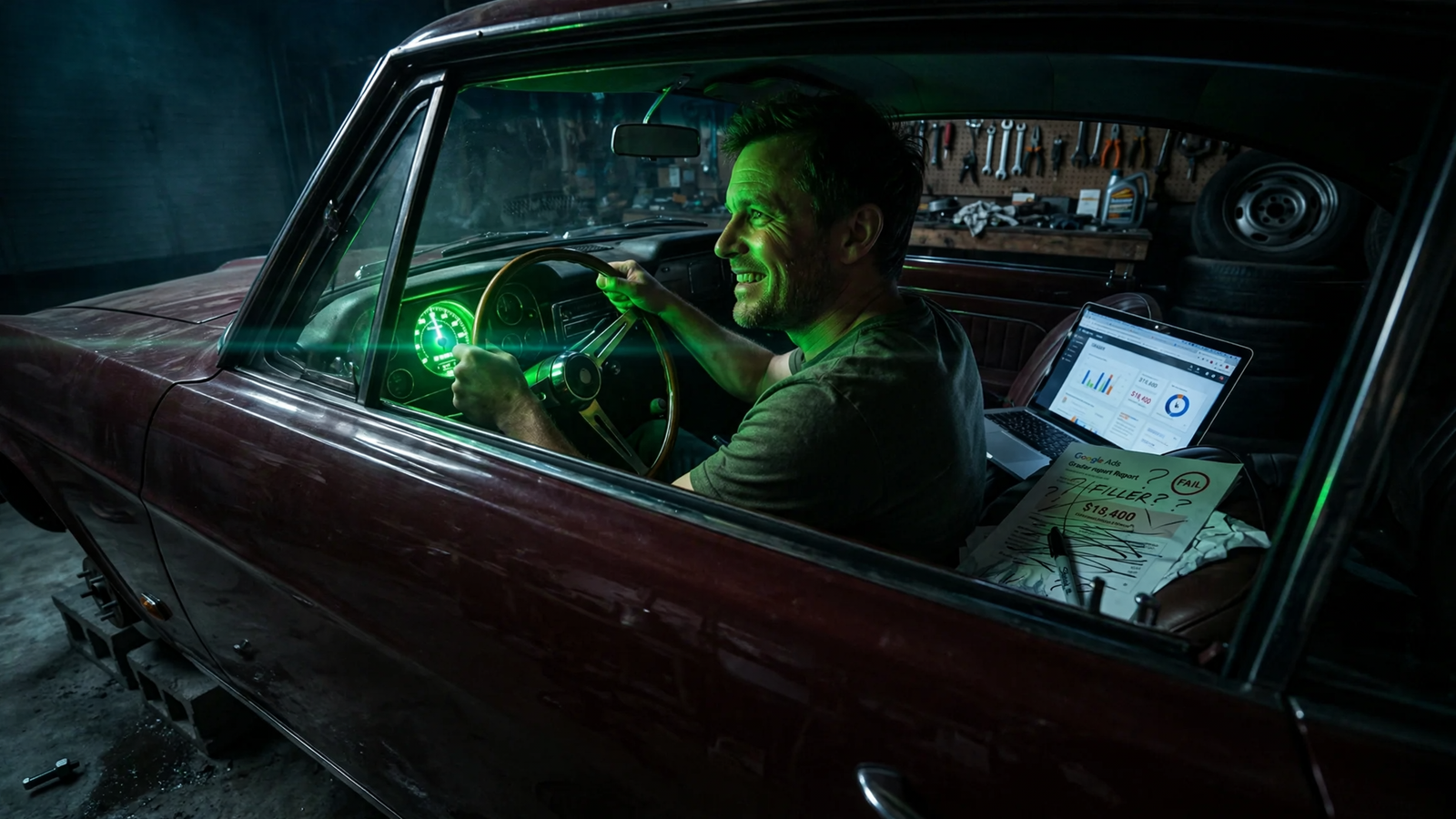
A big green Brand Mention Score can make an AI visibility report look like progress before you have read a single answer. I’m taking apart the familiar 12-page report: ChatGPT, Gemini, Perplexity and AI Overviews logos across the top; a prompt list, share of voice chart and sentiment gauge inside; an “opportunities” page at the end. I chose it because the format has the same flaw as a vanity Google Ads report from 2017. It grades you on prompts the vendor picked, counts passing mentions as wins, then calls an upward wiggle progress.
I have watched impression share get abused the same way. The number looked good in a deck and told you little about cost per acquisition. Here, the useful questions are narrower: Did an answer cite a page that could help a buyer, and did it do so on a prompt that resembles a real enquiry? I’ll walk through the report in the order you encounter it, then show you how to test those questions yourself.
The prompt list: 150 questions your buyer may never ask
Turn to page two and you find the foundation of every score that follows: a list of 100 to 200 prompts. Best CRM for small business. Top 10 project management tools. What is the best accounting software for startups? The report rarely says where those prompts came from, whether buyers use anything like them, or whether they carry intent to buy. That omission matters more than the size of the list.
A standard GEO dashboard can become an observation layer dressed as a strategy tool. It can show a 14% versus 31% gap without telling you whether content structure, entity coverage, freshness or authority explains it. A prompt set divorced from buyer language makes that gap harder to interpret still.
I used to build Google Ads structures the lazy way: load up on broad generic keywords because they produced volume, then report impressions as though they proved demand. Vendor prompt sets can reward the same habit. Generic questions are easy to run and easy to fill with brand names. The questions worth studying often sound less tidy. They come from sales calls, lost deals and buyers trying to choose between options under specific constraints.
Ask which prompts came from real buyer language and who approved them. If the report cannot identify even 20, I treat the scores built on top as ungraded homework. Verdict: keep the prompt list, but reject a vendor-picked list you cannot inspect or challenge.
Mention rate: a name in an answer is not a cited page
The next number is usually mention rate. A mention counts when your brand name appears in an answer; a citation counts when your page appears as a cited source. Your brand can be named without your site being cited. Your page can be cited without your brand being recommended. And neither event, on its own, proves somebody made an enquiry.
Read the answers rather than just the percentage. “Brand X also offers this feature” is a mention. It is not a reason to book a demo. A healthy average can also conceal where the visibility comes from. As one dashboard critique points out, a good average may hide that only two pages do the work. An OtterlyAI analysis of over 1M citations found brand-owned domains earned 47.5% of citations; third-party and community sources took the other 52.5%. Looking only at mentions of your brand misses that split.
For each answer, ask for the exact cited URL and what the answer said about you. If the same two blog posts carry the score and neither helps with the buyer’s question, the number describes coverage, not a useful recommendation. Verdict: keep citations by URL and the answer text; do not treat blended mention rate as a business result.
Share of voice: one score flattens four different engines
Next comes the share of voice chart. It sounds rigorous until you read the formula. Ahrefs defines AI share of voice as responses mentioning your brand divided by responses mentioning any tracked brand, multiplied by 100, and describes weighting it by estimated platform traffic. Under that approach, the same raw mentions can read as 67% unweighted and 31% weighted when the wins sit on lower-volume platforms. Before comparing months, you need to know which calculation the report uses.
You also need to know what its average conceals. The engines do not cite the same mix of pages. In an October 2026 test of 31 buyer prompts, ChatGPT with web search cited brands’ own sites for 119 of 210 citations, about 57%. Perplexity cited listicles for 395 of 561, about 70%. Another analysis reports around 22 citations per Perplexity answer versus around 8 for ChatGPT, while a Profound analysis of 100,000 prompts found only 11% of cited domains appeared on both.
Those findings do not tell you what will happen on your prompts. They do show why one combined score is a poor work order. If your own pages are missing from one engine while third-party roundups dominate another, those are different problems. Verdict: demand citation results by engine before deciding whether to work on your pages or on third-party coverage.
Sentiment: polite words are not preference
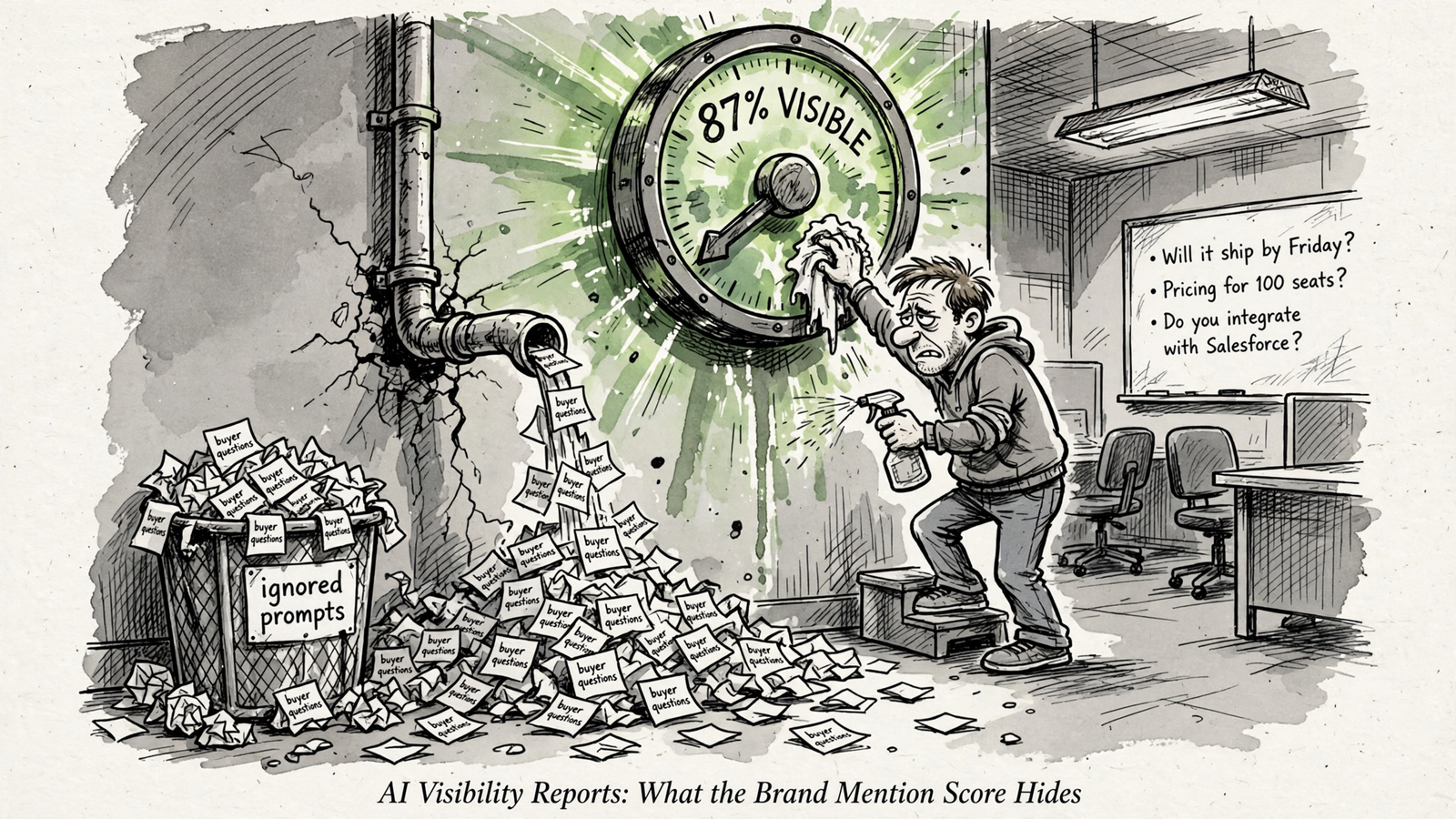
The sentiment gauge grades the language around your brand as positive, neutral or negative. It does not tell you whether the answer recommended you. A model can describe your product kindly for a paragraph and still name a competitor as the better fit at the end. A high positive score would miss the part the buyer remembers.
I used to tell clients a high click-through rate meant an ad was working. I was wrong in the same way. CTR measured curiosity, not intent to buy. Sentiment measures the tone of a mention, not whether the answer chose you. It can flag a genuinely negative description worth investigating, but it should not sit beside citations as a performance metric. Verdict: keep sentiment as a risk flag, not a victory lap.
The opportunities page: a to-do list is not the work
The final page tends to read like this: add FAQ schema, build a comparison page, get listed in G2 roundups. Some suggestions may be useful. The problem is that a monitoring tool can recommend them without changing a page or earning a reference. The fee buys a diagnosis, not necessarily the fix. Check what the vendor actually ships before calling the list a plan.
The distinction matters because the report can make special formatting sound like a requirement. As this account of Google’s guidance explains, there are no additional requirements or special optimisations needed to appear in AI Overviews or AI Mode; a page must be indexed and eligible for a snippet. That does not mean page structure is irrelevant. The same article describes a controlled study of 200 articles across 377 queries in which restructuring alone lifted citations 17.3%. The mechanism is less mysterious than the dashboard makes it sound: put an answer on the page in a form that can be retrieved and quoted.
If the opportunities page cannot connect a recommendation to a prompt, an answer and the page you would change, it has not earned its place at the back of the report. Verdict on the artefact so far: keep the cited URLs and per-engine split; cut the blended score as a substitute for action.
The missing page: what a fetch can tell you
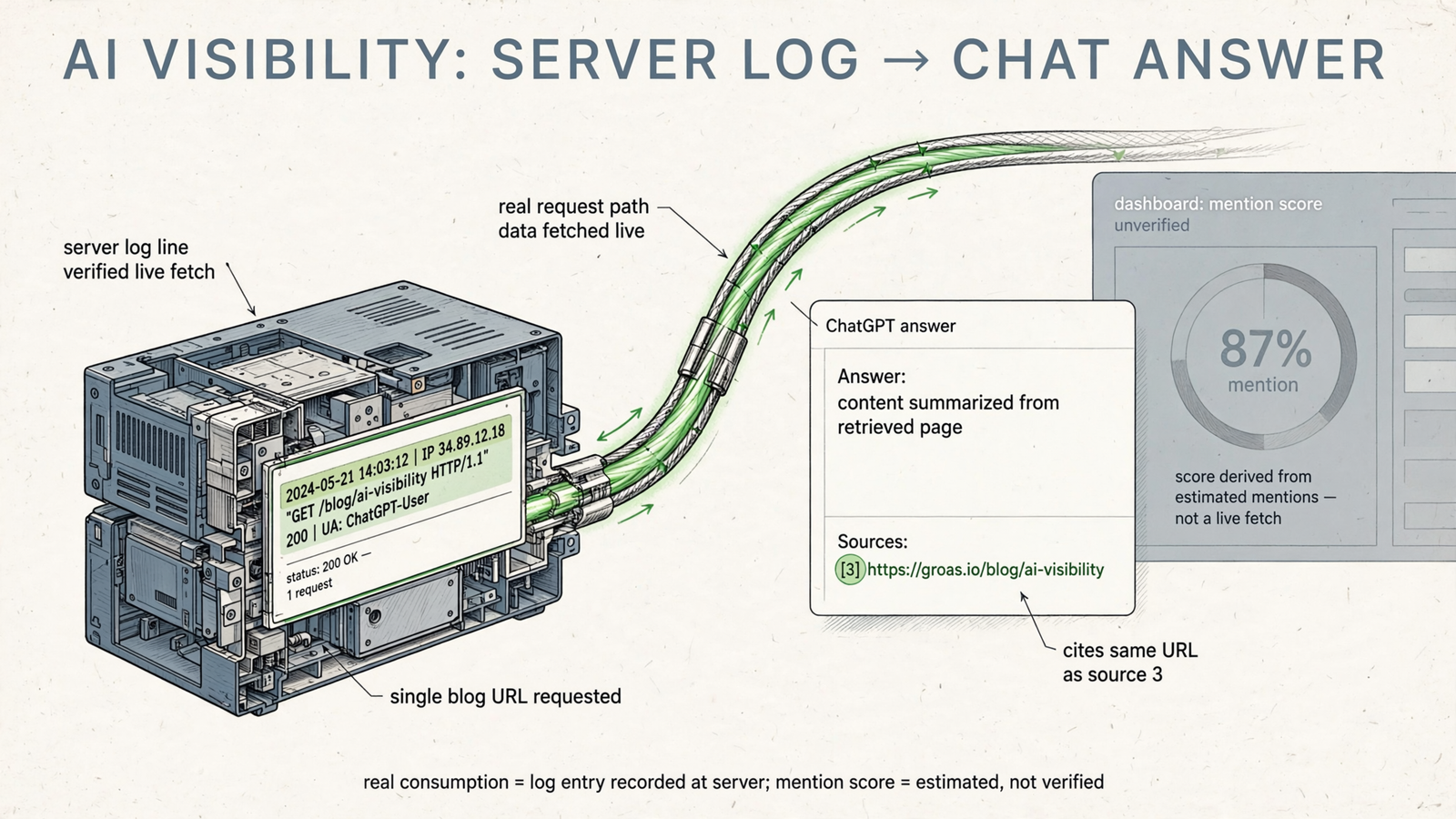
There is a useful check the PDF often leaves out: whether an AI service requested your page. A mention tells you the model produced words about you. A server-log fetch tells you a service requested a URL. Neither, alone, proves the page persuaded a buyer, but a fetch gives you something more concrete to investigate than a green gauge.
OpenAI distinguishes three crawlers: GPTBot for training data, OAI-SearchBot for search indexing, and ChatGPT-User for requests connected to a live user interaction. Those are different events. Do not bundle them into one “AI consumed this page” count, and do not assume every ChatGPT-User request means your page was cited in the final answer. Match a relevant fetch against the answer and its citation before drawing that conclusion.
This is where the report should bring the evidence together. Which URL was requested? Which answer cited it? Did that page address the buyer’s question in a form the answer could use? Verdict: use logs to investigate citations, not to manufacture another visibility score.
Run the control: a two-week prompt and citation test
Here is the lab-notebook part. Question: which buyer prompts produce citations you could realistically improve, and does the answer differ between ChatGPT and Perplexity? Set the test up before buying a tracker. My expectation is that your own clear pages will matter more often in ChatGPT, while roundups and other third-party pages will matter more often in Perplexity. The cited engine comparisons suggest that split; your prompts may not follow it. The point of the test is to find out.
The control is the prompt set. Keep its wording, the engines you use and the fields you record consistent across both weeks. Do not swap in easier questions halfway through and call the resulting movement progress. If you want a starting point, use the approach in Before You Buy an AI Visibility Tracker, Run This Two-Week Test.
1. Build 20 prompts from buyer language
Pull from your last 10 sales calls, support tickets and lost-deal notes. Write 20 prompts in the language buyers used, not the language of an SEO brief:
- 7 definition prompts: what something is or how it works for a particular buyer.
- 7 comparison prompts: one option versus another for a specific use case.
- 6 selection prompts with constraints: the best fit for a particular job, team or budget.
A selection prompt might ask for a CRM for a five-person HVAC company using QuickBooks. That constraint is the point. It gives you a way to judge whether the answer helped someone choose, rather than merely name-dropping a category.
Run each prompt two or three times per engine in fresh sessions. Repeat the full set in week two. Keep the exact wording so a change in the answer is not just a change you made to the question. Do not grade a vendor on prompts its own vendor list invented.
2. Keep the engines and the evidence separate
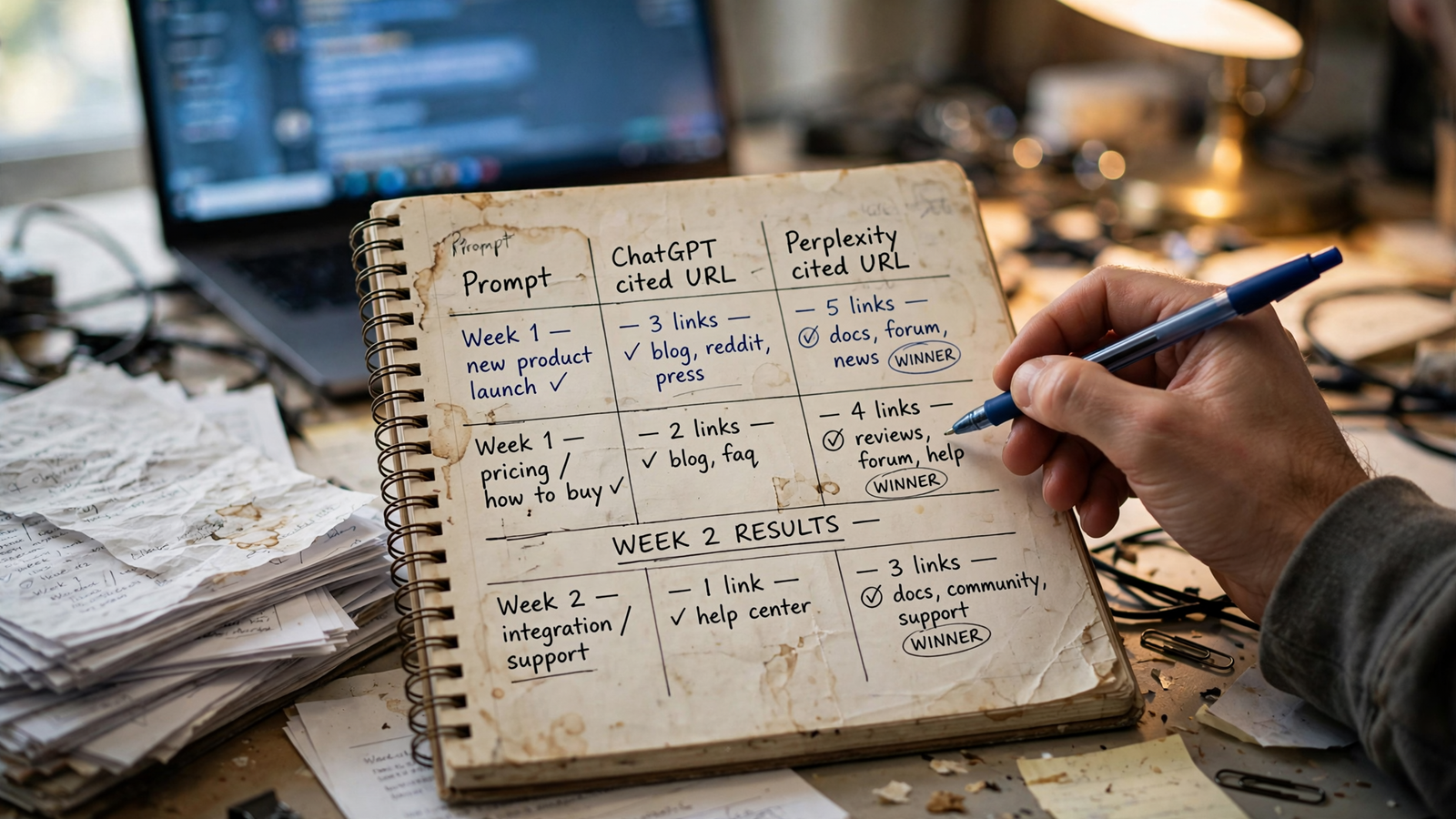
Run the same 20 prompts in ChatGPT with browsing and in Perplexity. Give each engine its own scorecard; an average will hide the difference you are testing for. Log the evidence for every run:
- Prompt text, engine, date and whether it is a fresh or repeat run.
- Whether your brand was named and whether your site was cited.
- The exact cited URL and its position in the source list.
- One line on what the answer actually recommended.
That sheet is your tracker. It lets you distinguish an answer that recommends you and cites your page from one that mentions you in passing while sourcing a roundup. It also gives you an answer to show whoever will make the change. “Our visibility fell” is hard to act on. “This buyer question now cites this other page” is a work order.
3. Decide what each result would change
In week two, look closely at prompts where a citation appeared, disappeared or moved. Ask whether the cited page could answer the question without a rewrite. A prominent citation to a page that answers it is an asset to watch. If an answer names you without citing your site, inspect what it cites before deciding whether your page, the third-party description or both need work. If a roundup describes you incorrectly, the problem is off your site.
You can use the sheet described in Build an AI Visibility Tracker That Measures Mention Rates, Not Screenshots. The test will not prove how many enquiries AI sent you. It will tell you which buyer-language answers cite you, which pages they use and where a change might matter. If ChatGPT and Perplexity point to different sources, split the work accordingly. If neither cites a useful page, stop celebrating mentions and work on what the answers can actually use. If a result would not change what you publish or pursue next week, stop tracking it.
Verdict: keep the evidence, not the green score
I would keep three parts of this report: the buyer prompt list with dates and engines, citations by exact URL and position, and movement on prompts with real buying intent. I would cut blended share of voice as a headline result, sentiment as a performance claim, and any opportunities page that cannot connect its advice to work somebody will do.
That is also the dividing line in AI Citation Trackers Ranked: Which Ones Help You Win Prompts?: diagnosing a missing mention is not the same as making a page easier to cite, cleaning up the information around a brand or earning a relevant third-party reference. At groas, the point is to run that execution, not rent you another dashboard and leave the to-do list on your desk.
The report is worth keeping where it shows the prompt, the answer, the cited page and the change in front of you. Without those, a Brand Mention Score is mostly a number prepared for the renewal conversation. I would keep the evidence and make the score defend itself.