The Google Ads AI Glossary: What the Settings Say and What They Actually Control
October 2, 2026
•
11
min read


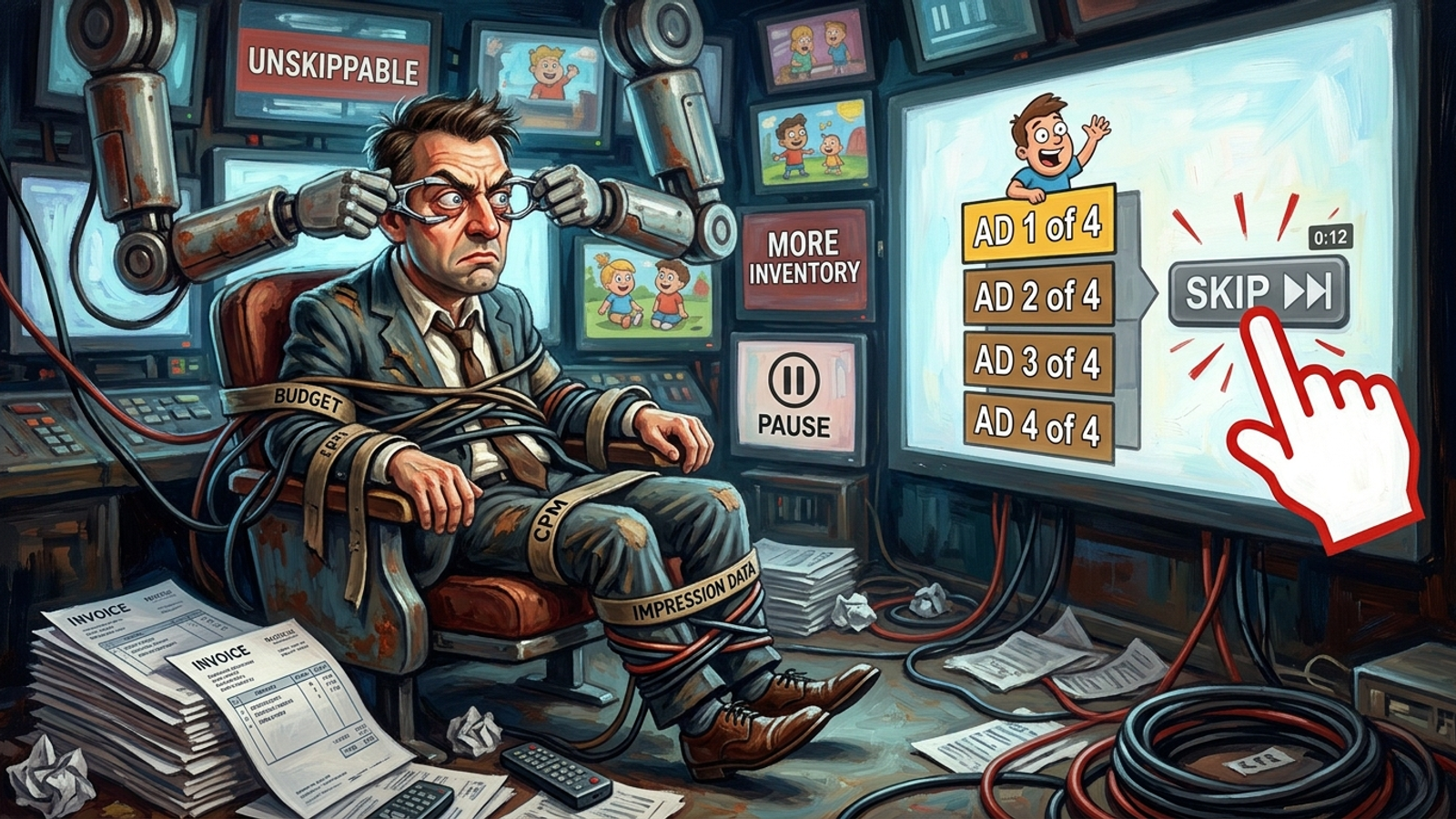
YouTube’s ad bloat is making advertisers pay to be ignored. Viewers lose a few minutes; brands buy impressions from people who have already reached for the remote. That is the part I find harder to shrug off.
People are asking whether YouTube increased its ads in 2026. In an Android Authority community survey, 89% of respondents said they had noticed a surge in ad frequency and unskippable runtimes. Viewers call it an annoyance. I call it a billable annoyance, sent to the advertiser.
You put on a ten-minute video while folding laundry. Before the creator finishes the intro, two unskippable ads arrive. Five minutes later, another break. On r/youtube, viewers report breaks as often as every two minutes. On Connected TV, people describe keeping a remote handy while doing the dishes so they can skip an ad before it outlasts the video they meant to watch.
I understand why an advertiser wants the living-room screen. It is large, prominent, and hard to miss. But hard to miss is not the same as welcome. Add enough interruptions and the person watching stops treating each ad as a message. The whole break becomes one obstacle between them and the thing they chose.
This is not just an unlucky run of placements. In March 2026, Google made Video Reach Campaigns Non-Skip generally available across Google Ads and DV360, combining six-second bumpers, 15-second ads, and 30-second non-skippable ads for Connected TV. YouTube Pause ads put an ad on the screen when playback stops. As reporting on the rollout makes clear, that is another place to sell an impression, not a replacement for the ads already in the video.
The viewer knows exactly what happened: even the pause button now has a sales target. More places to put an ad do not create more attention to give it.
Ask a traditional media agency what it thinks of the extra inventory and you may get a slide showing lower CPMs and more impressions. The slide will call it scale. I would ask what happened after those impressions.
When YouTube adds slots to the same viewing session, it has not added minutes to the viewer’s day. It has divided those minutes into more things competing for attention. Your ad might run after two others, while someone hunts for the skip button or walks back from the kitchen. The impression is real as a delivery event. Its commercial value is another question.
I have spent enough time in Google Ads accounts to respect what good media buying takes. That is why this irritates me. An operator can spend hours improving an opening hook, tightening targeting, and cutting weak creative, then let the campaign buy a beautifully reported impression in a break the viewer has mentally left. The dashboard records delivery. It cannot make the viewer come back from the kitchen.
A lower price per impression is not a bargain if each impression has less chance to do its job. If acquisition costs rise while the reach chart looks terrific, stop admiring the reach chart. Ask whether the extra delivery reached useful people or simply found more ways to interrupt the same ones.
An ad slot has value because a person might notice it and care. Put more slots in front of that person, more often, and each advertiser has to fight through the irritation left by the last one. This is inventory inflation: more billable impressions drawn from the same finite stretch of viewing.
Think of your video landing third in a stack of four. You paid for the ad to appear. You did not buy a fresh audience, a fresh mood, or a fresh thirty seconds of patience. By then, your logo may be less a brand cue than a signal that the creator still is not back.
That distinction matters because impressions are easy to count. Attention is not. When the two get treated as interchangeable, the advertiser pays for the neat number and discovers the messy outcome later.

Frequency is useful until it stops building familiarity and starts teaching avoidance. The material on ad recall lift is worth reading alongside your own campaign results, but no universal exposure count will tell you when your audience has had enough. Format, creative, and context all matter.
The reflex itself is familiar. A viewer’s eyes go to the countdown in the corner, not the opening line you argued over for a week. The value proposition plays while they wait for the button to light up. Spend $40,000 producing that video and the most memorable element may be a grey rectangle turning clickable.
Do not confuse repeated delivery with repeated persuasion. Watch what frequency does to response, not just whether the platform can find the same person again. If the response fades, another impression is not automatically another chance.
The pitch for more inventory sounds tidy: more available slots give advertisers more chances to reach people. But if those slots come from piling ads into the same sessions, the platform can sell more without the person on the couch becoming any more interested. Ad inventory is not grain. Doubling the pile does not make dinner bigger.
Pause ads make the absurdity particularly clear. The viewer stops the video, perhaps to grab a drink. A new ad appears in the moment they chose not to watch. It may be a valid placement for some campaigns. It is still a strange thing to celebrate as proof that more attention has appeared.
Then there is the inventory an advertiser would never have chosen with the full context in front of them. A TrueClicks analysis of Google Ads accounts describes video spend reaching more than 30,000 kids channels. Picture a B2B software ad playing during a toddler’s video. The child cannot buy the software. The parent may not be in the room. The campaign can still record a delivered ad.
I am not arguing that every Connected TV impression is worthless, or that every kids-channel placement is a mistake for every brand. I am arguing that an impression needs a plausible path to a customer. When a report flattens a prospect watching with interest and a toddler watching cartoons into the same unit, the advertiser has to put the distinction back.
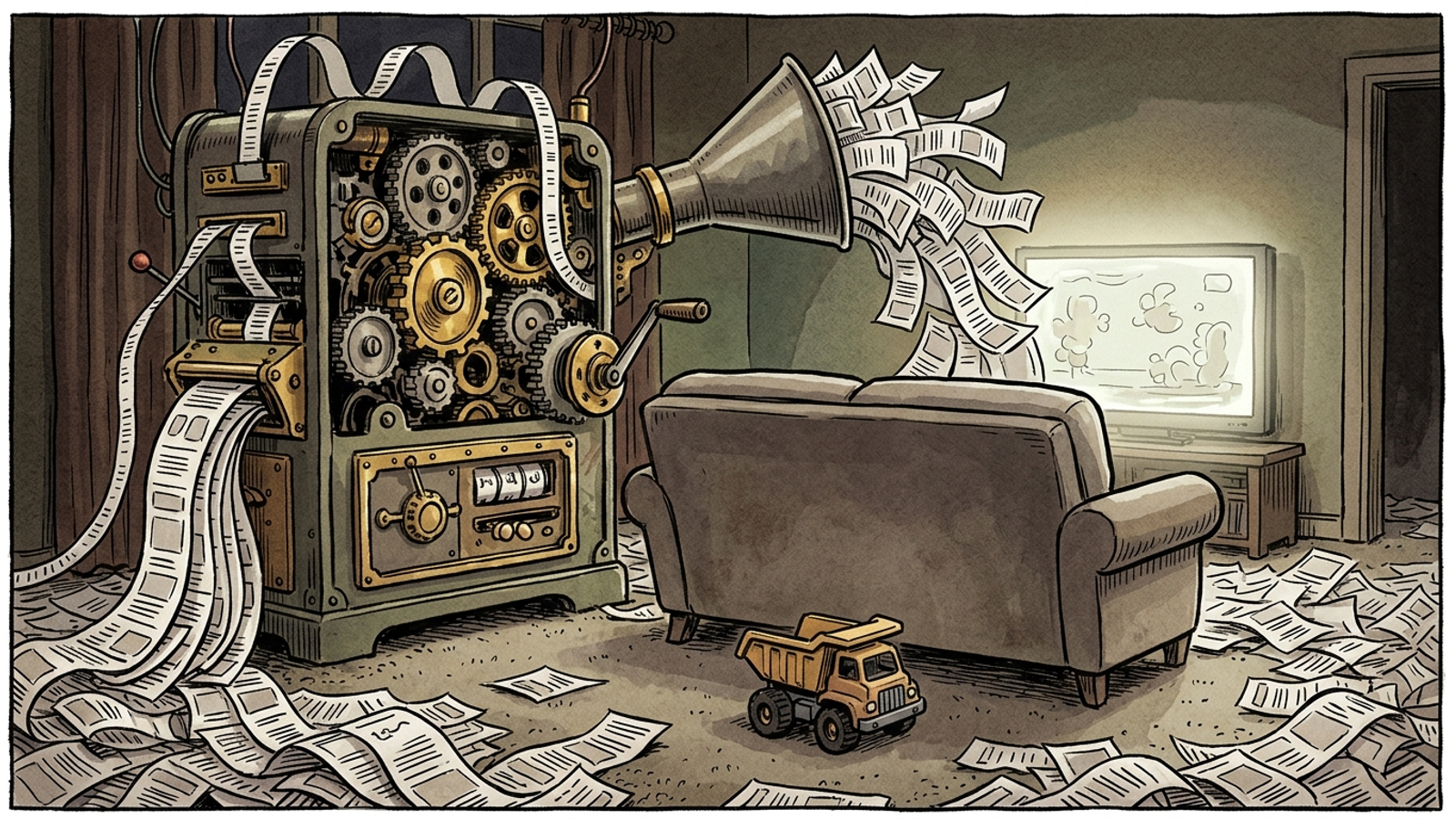
Google can sell the extra slots. An agency that charges a percentage of spend can bill more as the budget grows. Neither arrangement guarantees that an additional impression helps the advertiser. That is the incentive problem, and a cheerful CPM slide does not solve it.
Not every agency works this way. I know how much care a good media buyer can put into an account. But the percentage-of-spend model asks the client to trust that the person paid more when spending rises will be equally eager to turn off waste. Some will. The fee structure is still doing them no favors.
The viewer gets another interruption. The brand gets another charge. If the agency’s answer is a prettier report, the wrong person is being asked to adapt. I would rather see a smaller bill and a reason for every placement left running.
I do not want a ceremonial audit followed by a deck marked optimisation opportunities. I want fewer paid appearances in moments where nobody is likely to care. Three defaults deserve a challenge now.
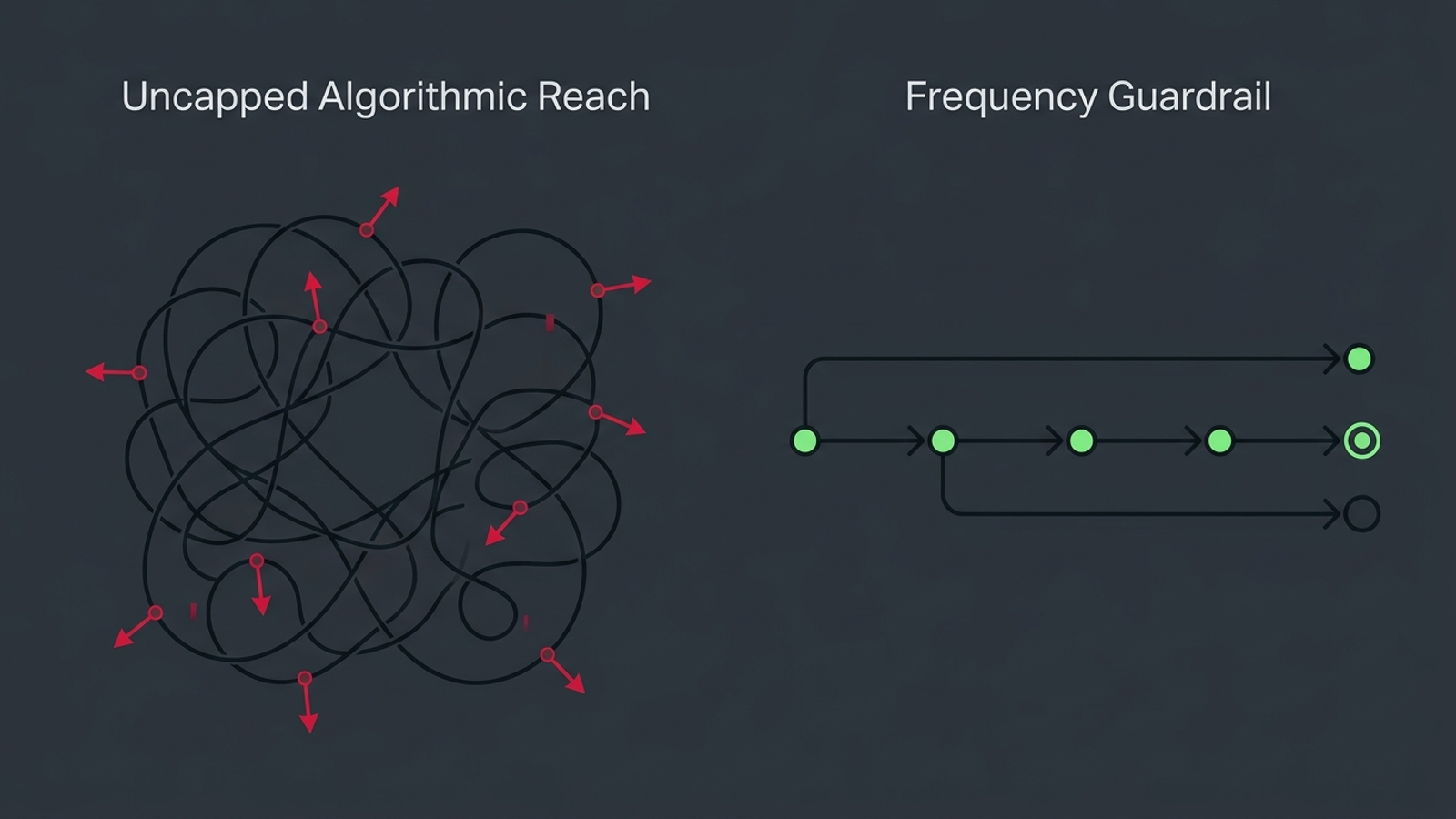
Check how often the same people see your campaign, then set a cap you could defend to someone who has to sit through the ad. Start with a frequency guardrail; adjust it against actual response. Three or four impressions a week may be a sensible starting point for a campaign, not a law that fits every audience or objective.
Without a ceiling, delivery can keep returning to people who are easy to reach. That may make impression buying look efficient while the message gets less welcome each time. If performance weakens as frequency climbs, paying to repeat yourself harder is not the clever fix. Decide what would make you lower the cap before the next reach report tries to talk you out of it.
Open the placement report and sort by cost. Look for channels and content that make no sense for the offer. A B2B campaign spending against toddler entertainment deserves a conversation, not another month of passive observation. Build exclusions where the mismatch is clear, and keep checking because inventory does not sit still.
Look at the Connected TV split, too. If the offer needs someone to fill out a form or check out immediately, ask what job that TV impression is doing. It might have a role earlier in the buying process. If nobody can explain that role or connect it to an outcome, cheap reach is not an explanation.
You cannot use a placement report to identify every ad that ran fourth in a pod. You can use it to challenge where the money went, cut obvious mismatches, and set clearer rules for where it goes next. Start with the spending you would struggle to justify out loud. The mechanics sit in our guide to YouTube ad frequency, formats, and strategy.
Do not default to a 30-second non-skippable ad because a deck calls it uninterrupted brand equity. Sometimes it is thirty uninterrupted seconds of someone resenting your brand. Test skippable in-stream with an opening that tells the right viewer why to stay. Let the wrong viewer leave.
Billing depends on the campaign and format, so do not build the budget around a blanket promise that every early skip is free. Build it around the more important question: who chose to keep watching, and what did they do afterward? That is a better test than whether you managed to hold someone’s screen hostage.
Those three changes all demand the same thing: active control over where the budget goes. The old workflow checks placements on Thursday, reviews frequency at month-end, and explains the damage in a quarterly PDF. YouTube serves ads all day. Waste does not wait for the next meeting.
That is the fix I want: always-on execution with a person accountable for the rules. At groas, autonomous management across paid search and video applies guardrails and steers spend toward qualified pipeline and revenue, while a named strategist owns the direction. Our flat monthly fee does not rise just because the platform found more places to put an ad. That matters when the problem is too much inventory masquerading as progress.
Viewers are right to complain. Advertisers should be angrier. The next time an impression report celebrates another cheap interruption, ask whether anyone on the other side wanted to see it.
If not, you did not buy attention. You bought the right to be skipped.
Yes, many viewers say so. In an Android Authority community survey, 89 percent of respondents said they had noticed a surge in ad frequency and unskippable runtimes, and Reddit users report breaks as often as every two minutes.
No. Adding slots to the same viewing session divides the viewer's limited attention among more interruptions, so each ad competes with the irritation left by the previous one. More places to put an ad do not create more attention to receive it.
Not necessarily. Lower CPMs and impressive reach charts often reflect inventory inflation, meaning the same viewers are interrupted more often. A low price per impression is not a bargain if each impression has less chance to do its job, which can drive acquisition costs up despite great-looking reporting.
Yes. Frequency builds usefulness only until it starts teaching avoidance, so viewers' eyes go straight to the countdown timer instead of your message. Repeated delivery is not the same as repeated persuasion, so watch what frequency does to response and consider capping it.
Yes. A TrueClicks analysis of Google Ads accounts found video spend reaching more than 30,000 kids channels, meaning business ads played during children's videos where neither the child nor possibly the parent represents a potential customer. Review your placement report and exclude obvious mismatches.
Agencies charging a percentage of total spend benefit financially as advertising budgets grow, giving them little built-in motivation to cut wasteful placements. Percentage-based compensation also means rising platform ad loads boost agency bills without guaranteeing that extra impressions help clients.