

 LinkedIn

A homeowner scrolls past your clean truck, your logo and your “call today” headline. Then they stop at a photo of a ceiling stain that looks exactly like theirs. Most home service Meta ads fail at the creative, not the targeting: they show the business to someone who has no reason to call yet. I used to run the van ad myself. This list is for roofers, HVAC shops and plumbers running Facebook and Instagram lead ads, or about to start. Each idea meets a homeowner at the moment they notice a problem, then pairs the hook with a form or page that makes the resulting call worth taking.

1. Show the symptom and ask, “Is this normal?”
Start with a close phone photo of the problem, not the finished job: a brown ceiling ring, ice on an outdoor unit, rust around a water heater base or black gunk at a drain. The headline asks what the homeowner is already wondering: “Is this water stain normal, or is my roof leaking?”
I used to tell clients to lead with the finished job. I was wrong. A pristine roof means little to someone who has not admitted they might need one. Recognition stops the scroll before credentials do. On Google, someone can type “emergency plumber near me” with water on the floor. On Facebook, they may be halfway through a kid’s birthday video. The stain gives your ad a reason to interrupt.
This works year-round across all three trades, particularly for plumbing slow leaks and roof stains in spring and fall. Pair it with an Instant Form asking for name, phone and one qualifier: “Where is the stain, and when did you first see it?” Extra fields add friction; each additional field can cut form conversion 10–15%. First step: ask a tech to shoot five real symptom photos this week. Do not stage them.
2. Put the before, after and price in the same frame
Show a filthy coil or old furnace beside the cleaned or installed result. Overlay an actual range you can stand behind, such as “Full system changeout: $7,800 to $11,200 depending on size.” For roofing, use the same format after storm season with a replacement range that fits the work you actually quote.
The change catches attention; the price does the filtering. A homeowner who sees the range before clicking can decide whether to ask for a quote. That may mean fewer leads, but the number to protect is cost per booked job, not cost per lead. Before-and-after images have produced low CPL for home services on Meta, but a cheap lead who will not book is not a win.
A 58-contractor review of long-running ads found priced entry points such as a $59 tune-up, $49 drain clear or free roof inspection among the ads that lasted 90-plus days. That does not prove every priced ad will work. It does give you a better starting point than “call for details.” Use an Instant Form for the small entry offer and a landing page for a big-ticket quote. Instant Forms tend to cost less; landing-page leads cost more but show up at higher rates. First step: pick three common jobs and write ranges you would be comfortable explaining on a call.
3. Offer the seasonal check before the first breakdown
A $59 furnace tune-up in late September. An AC check in late April. A hose-bib and water-heater check before the first freeze. The hook is not “limited-time savings.” It is timing: “First 45-degree night is Thursday. If your furnace has not run since March, this is the week.”
The forecast creates the worry window. Your ad gives the homeowner something to do before the house gets cold or the AC fails. That makes this strongest for HVAC, useful for plumbing and adaptable to roofing in fall gutter season. Sell the check while the problem is plausible, not after it becomes an emergency.
Pair the offer with an Instant Form. Ask whether the person owns the home and whether Thursday or Friday morning or afternoon works. Then follow up immediately: a lead contacted in five minutes is 10 times more likely to convert than one contacted in 30. First step: lock one date-bound offer for the next relevant season. When the date passes, turn the ad off.
4. Post the storm inspection while the street remembers the storm
After hail or wind, shoot a phone video from the truck. Show the street sign, the date and lifted shingles on that street. Offer one thing: a free 20-point storm inspection with photos. This is a roofing ad for spring and summer storm season, not an evergreen brand video wearing a weather headline.
The mechanism is proximity plus urgency. The homeowner has just watched the same storm hit their house; now they can see what it did nearby. In the 72-hour post-hail window, storm-response roofing ads have drawn $10 to $22 CPL against $40 to $80 for always-on campaigns. I ran one for a roofer with an iPhone clip and a ZIP list. It beat the polished brand ads we had.
Ask for name, phone, address and whether the homeowner sees missing shingles or ceiling spots. Keep the service area close to the storm path, within the targeting options available to the campaign. First step: pre-write the ad with blanks for the date and neighborhood, so you can post the morning after rather than wait for a designer.
5. Let the technician explain one warning sign on camera
Put one tech in front of a phone for 20 seconds. Give them one specific symptom to discuss, such as a kitchen sink that gurgles when the washer runs or an AC unit making a new noise. They can say what they would check. They should not diagnose a house they have not visited. End on the person who may show up at the door, not an animated logo.
The face lowers the stranger-at-my-door barrier. Short walkthroughs and real-work videos let a homeowner hear how the crew explains a problem before booking. Contractor ad guides point to crew walkthroughs and before-and-after installs for the same reason. This fits all three trades, especially HVAC noises and plumbing drains, year-round.
Use an Instant Form with one qualifier: “Are you the homeowner?” Turn on the Higher Intent review step; it can cut junk leads by 20–30%. First step: shoot three clips in the shop parking lot. Bad lighting is fine. Reading from a script is not.
6. Name the price range that filters out the wrong calls
This is the price ad without the transformation photo. Put the range in the headline: “Drain clear: $149 to $289. Camera inspection included.” Or “AC tune: $59. Full changeout: $7,800 to $11,200.” Use numbers that reflect your offer; the point is to stop making every shopper call to learn whether they can afford it.
A vague “call for pricing” sends the wrong people into the same queue as ready-to-book homeowners. A range lets someone rule themselves out before your dispatcher spends time on the call. That matters when HVAC and plumbing leads can run $35 to $80 and roofing leads $80 to $120-plus.
For a job over about $3,000, I would test a landing page even if its CPL is higher. Repeat the range there, explain what changes the quote and ask for homeownership, timeline and system or roof age. For a smaller service job, keep the Instant Form short. First step: choose the job you hate quoting blind and put its honest range in an ad this week.
7. Lead with the payment on a big replacement
For a large HVAC or roofing job, show the installed system or finished roof in a real home and lead with an available payment example rather than a brochure shot of a unit. The draft version of this ad might say, “New system from $129 a month, 12 months same as cash, install in 48 hours.” Those terms belong in a live ad only if your lender and your operation can support every word.
A homeowner facing an $11,000 changeout or $18,000 roof may be deciding whether a payment fits, not comparing equipment photos. Put the decision they face in the creative. Then give them a landing page with the down payment, term and APR details rather than asking them to submit an Instant Form on a payment headline alone.
Financing creative also needs a compliance check before launch. Meta may apply restricted housing-related targeting or financial-products rules and disclosures. Do not build the campaign around a narrow audience you may not be allowed to use. First step: ask your lender for two payment examples and the terms that must accompany them. Get those approved before anyone designs the ad.
8. Use a real review, including its imperfect wording
Screenshot a review that names a problem, a time and the person who solved it. If a customer describes a furnace dying on Sunday night and heat returning Monday morning, make that the ad. The headline can supply the context: “This is why we answer Sundays in January.” Do not rewrite the customer into a copywriter. Blur identifying details you do not have permission to use.
A review works because it answers a different question from an equipment photo: Will these people show up and fix this without drama? Local proof was one of the recurring patterns in that set of long-running contractor ads. It is useful for all three trades, particularly plumbing and HVAC when the review mentions speed or cleanliness.
Keep the form to name, phone and “What do you need help with?” Let the homeowner describe the problem, then call quickly. Do not make someone who just read a review about prompt service wait hours for yours. First step: find three genuine reviews with a specific problem and outcome, and request permission where needed to use them in ads.

9. Make the carousel ask your dispatcher’s three questions
Build three swipe cards around the questions your best dispatcher asks before sending a truck. For an HVAC replacement, those might be: How old is the system? Gas or electric? Do you own the home? Make the final card the offer: a free 15-minute check with photos.
The cards give the homeowner a useful way to think about the problem before the pitch. They also surface information you need to book the right visit. Someone who cannot approve work at the property can see that before submitting a form. Teach for a few seconds, then ask for the appointment.
This fits HVAC changeouts and roof replacements, where a poorly qualified visit can eat half a day. Send the carousel to a landing page that repeats the questions and explains the check. On a big job, the added friction can be worth testing against the higher landing-page CPL if more people show up. First step: ask your dispatcher for the three questions they would never skip, then use their words on the cards.
10. Sell the next visit to customers who already know the crew
Show a maintenance-plan ad to past customers and relevant video viewers rather than treating them like strangers. The message can be as plain as: “You had us out in March for the AC tune. Fall furnace check is $79 for members, with priority booking before Thanksgiving.” With permission, use a photo of your tech at a customer’s door.
The homeowner has already met the crew, so the ad does not need to establish trust from zero. A $179-a-year plan with two visits gives them a reason to book the next check instead of putting it off until winter. This is HVAC- and plumbing-first, with pushes in September and April. Do not pay to collect a lead you already have in your CRM. Send these clicks to Messenger or a simple booking page, not another lead form.
First step: upload the last 24 months of install and tune customers as a separate audience. Keep the message tied to the service they received and cap it at one ad per week.
11. Tell one street what you finished on their street
Photograph yesterday’s job as the crew packs up. Put the street name in the headline: “Just finished a full replacement on Maplewood Drive. We’re in the neighborhood Thursday for free 10-minute roof checks.” No stock image. No van glamour shot. Get permission to use the job photo and street name before it goes live.
Distance feels like risk when a homeowner is choosing someone to work on their house. A finished job nearby makes the offer concrete: you were here, you did this work, and you can come back. This is strongest for roofing and HVAC replacements wherever you already have jobs close together. Pair it with an Instant Form asking for name, phone, address and whether Thursday or Friday morning works. Keep the campaign within the service area and targeting options you can use.
If someone else runs your ads, hand them this list but do not ask them to launch all 11. Test two creatives on one budget and one form, with homeownership and timeline as qualifiers. Judge them on cost per booked job, not CPL after two days. If you want that testing managed, groas Meta Ads runs Facebook and Instagram campaigns at a flat $1,499 a month, with no cut of spend and month-to-month cancellation.
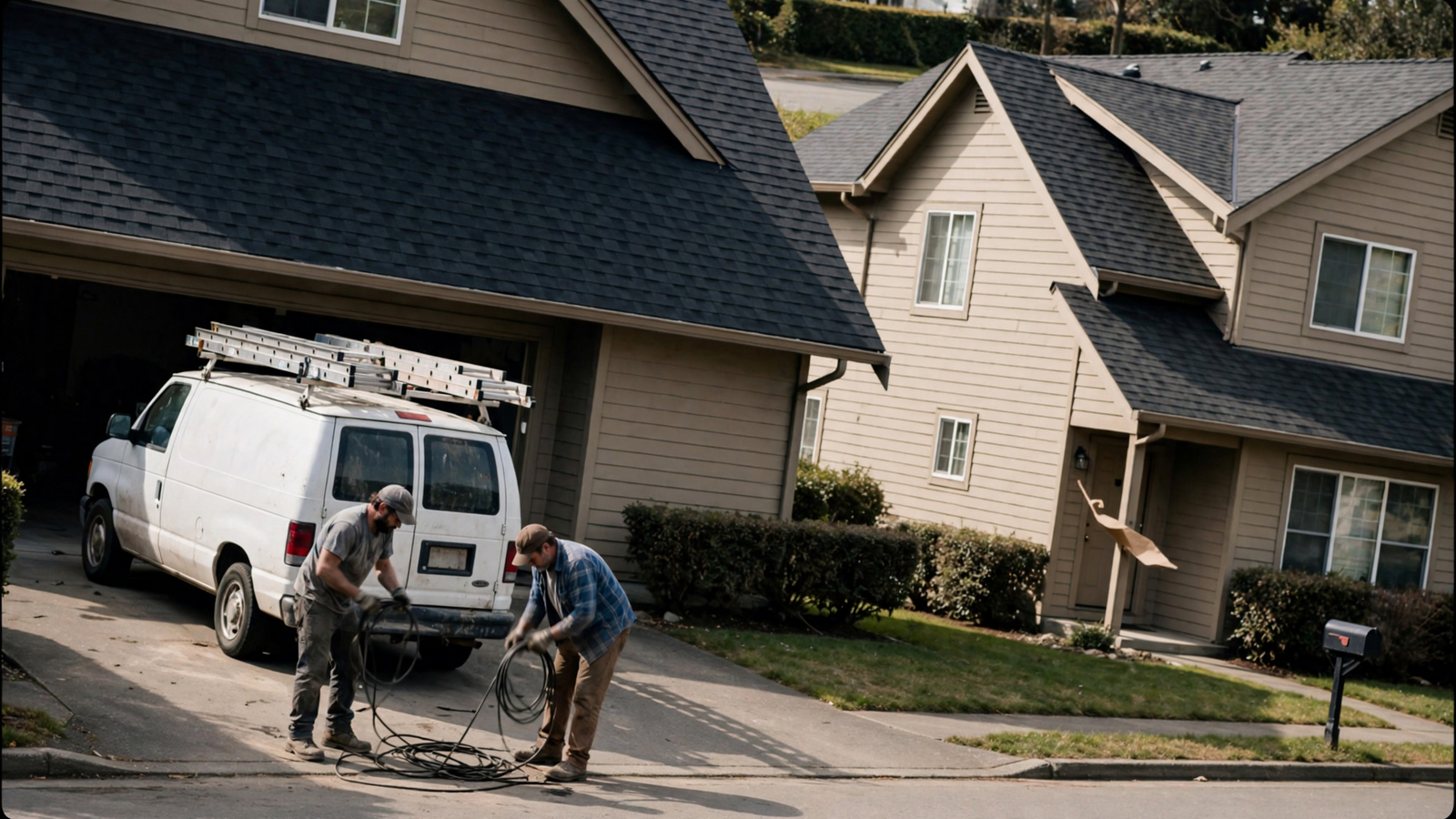
First step: after the next install, get one phone photo and written permission to use the street name. This is the ad I would start with: the homeowner can recognize the place, the work is already done, and the competitor cannot claim they finished that job yesterday.


