

 LinkedIn

GA4 confirmed just 39% of the ChatGPT Ads conversions reported for one ad group. In two other ad groups from the same advertiser, using the same UTMs, it confirmed 63.5% and 97.2%. Show me an agency CPA without those counts reconciled, and I still do not know what the agency earned you.
I have managed enough Google Ads accounts to expect disagreement between systems. But a gap that varies this much inside one account changes the question. Before I ask whether an agency lowered cost per conversion, I want to know which conversions made it into the denominator. Otherwise, the reported CPA is not comparable evidence. It is a number produced by one counting system.
Three ad groups, one account, no stable match rate
The advertiser compared ChatGPT Ads Manager with GA4 after using identical UTMs across the account. About 70% of clicks registered as a page-view conversion through OpenAI’s pixel. That does not prove the other clicks failed to reach a loaded page; it tells us they did not register as that pixel event. The conversion comparison varied even more sharply by ad group.
| Ad group | Platform conversions, indexed | GA4 conversions, indexed | GA4 as share of platform |
|---|---|---|---|
| Best-matching group | 100 | 97.2 | 97.2% |
| Middle group | 100 | 63.5 | 63.5% |
| Weakest-matching group | 100 | 39.0 | 39% |
Source: advertiser-reported ChatGPT Ads Manager and GA4 comparison. Each platform count is indexed to 100 to make the ratios visible. These are not the advertiser’s total conversion counts.
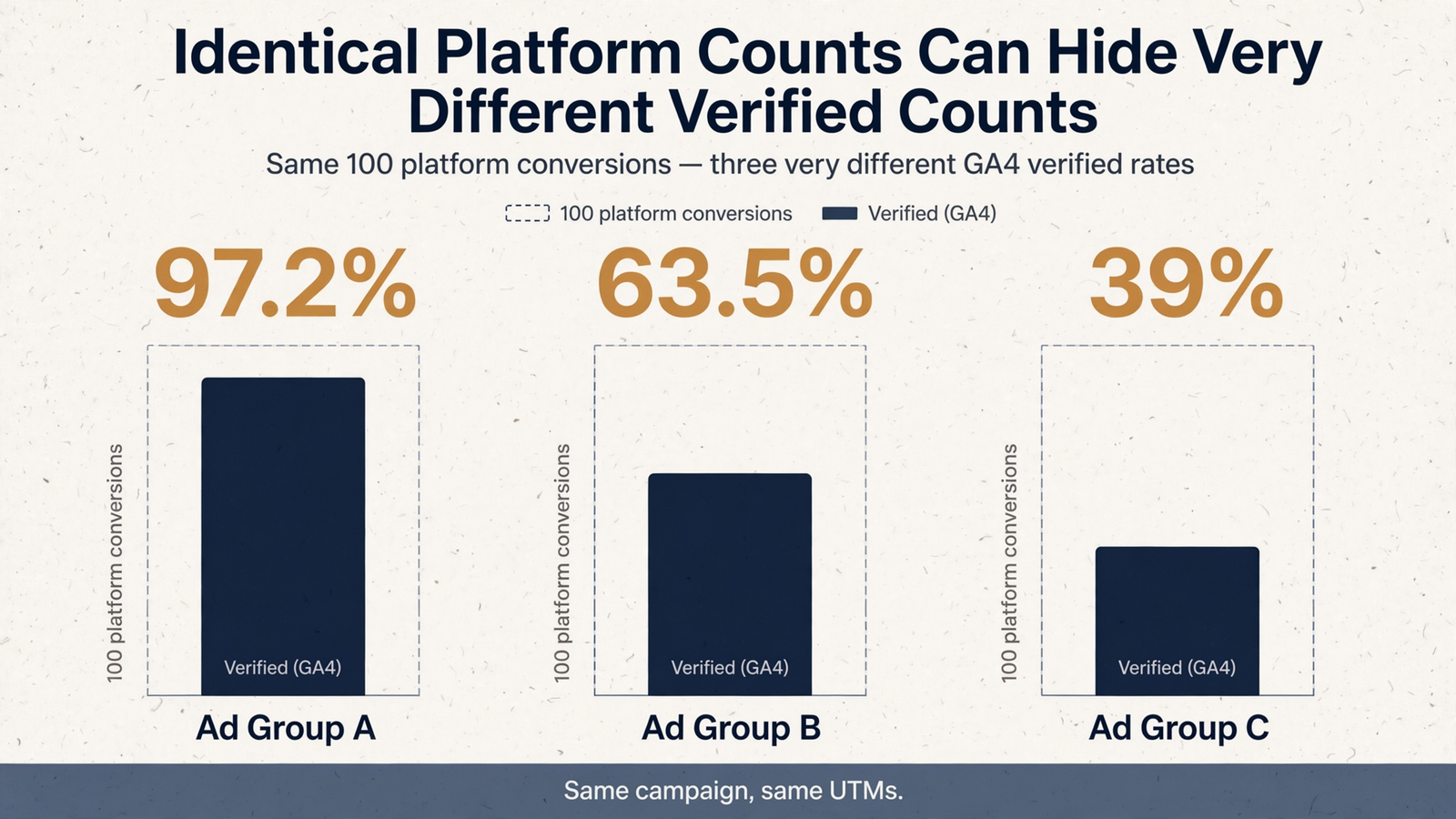
Those ratios do not tell me which system is right. ChatGPT Ads may count conversions GA4 cannot see; GA4 may miss tagged activity; both may contribute to the difference. Nor does one account establish a typical match rate. It establishes something narrower and more useful for a buyer: a single account can contain very different measurement gaps. An agency cannot make those gaps disappear by putting one blended CPA on a slide.
The steps between a click and a GA4 record explain why I would inspect the path before judging the campaign. A click registers at the ad. The page-view pixel has to run on the site. For GA4 to record the visit with the intended attribution, its tag must run with the necessary permission and the identifying parameters must survive. Someone can back out before the page renders; a blocker or denied consent can stop a tag; a redirect or router chain can strip UTMs or the oppref click reference. The advertiser’s working hypothesis was a redirect or router in front of one landing page. It fits the uneven pattern, but it remains a hypothesis, not a proven diagnosis.
That is my first checkpoint: find where the counts part company before calling the gap a performance change.
The same spend can print three different CPAs
Here is the denominator problem without any extra campaign assumptions. Suppose you spend $20,000 in a month and Ads Manager reports 100 conversions. Its CPA is $200. Apply each observed GA4-to-platform ratio to that indexed count, holding spend fixed, and the arithmetic changes:
| Count used for the illustration | Conversions | CPA on $20,000 spend |
|---|---|---|
| Platform-reported count | 100 | $200 |
| GA4 count at the best-matching ratio | 97.2 | About $206 |
| GA4 count at the middle ratio | 63.5 | About $315 |
| GA4 count at the weakest-matching ratio | 39 | About $513 |
The spend and 100 platform conversions are illustrative, not reported results. The GA4 ratios come from the advertiser’s comparison; the CPAs are spend divided by each indexed count.
I am not suggesting GA4’s $513 illustration is the true CPA for that ad group. I am showing how much the answer depends on what you count. I used to tell clients a platform number was close enough for an early look at a new channel. I was wrong when the unresolved gap is large enough to change the reading this much.
Reconcile definitions before you reconcile totals
Ads Manager and GA4 use different counting rules. Ads Manager defaults to a 30-day click window and a 1-day view-through window, with selectable click windows of 7, 14 or 30 days. It dates conversions to the ad event by default and can include modeled conversions. GA4 cannot see impressions, uses its own attribution model and misses users whose consent choices prevent its tag from recording them. A difference between the systems is therefore not, on its own, proof that either is broken.
Before comparing their CPAs, I would check the following in order:
- Event definition: Are both reports counting the same action, or merely using the same label?
- Attribution and dates: Are the windows and reporting days aligned closely enough for a useful comparison?
- Tagging and consent: Do the GA4 tag, custom UTMs and click reference survive the path through each landing page?
- Reporting lag: Has each system had time to count the conversions its window permits?
Then I would compare trends across matched dates, not demand that two differently designed totals tie exactly. The aim is an explained difference. “The dashboard says so” is not an explanation.
There is a separate attribution trap. ChatGPT ads append an oppref click reference by default, not a source label. Without custom UTMs, paid visits can appear in GA4 as chatgpt.com referrals alongside free citations. One report described a 5x rise in apparent organic ChatGPT traffic during a campaign, followed by a drop when the ads paused. If you skip tagging, you can credit the wrong channel before you even reach the conversion audit.
Context Hints do not rescue an uncertain CPA
Measurement is only one uncertainty. The next is what the ads reached. In a separate B2B test, Workshop Digital reported spending $2,319 of its own budget for 69,630 impressions and 739 clicks. Its reported CTR was 1.1%, CPC was $3.14, and the ChatGPT campaign produced zero MQLs. Google Search produced two MQLs at $6.76 CPC over the same period. Those are observations from one test, not a channel-wide verdict, and they do not supply a ChatGPT MQL CPA: there were no ChatGPT MQLs to divide spend by.
Within that test, keyword-based Context Hints drew a 1.2% CTR versus 0.9% for conversational phrasing, with almost no CPC difference. I would write that down as a creative observation. I would not tell a client the hint edit caused better performance. Delivery was bursty, budgets were small, and intent was not held constant. A higher observed CTR is not evidence of a lower CPA, particularly when the test produced no MQLs.
A larger placement study gives that caution some context. SE Ranking tested 50,006 commercial prompts and found ads on 25.94% of them. It classified 14.35% of placements as no more related than a random pairing, with mismatch above 50% in Relationships and News and Politics. That describes the prompts and placements it tested, not the relevance of any particular advertiser’s campaign. But it is enough to make me wary of a confident story about which conversations a hint reached.
Advertisers cannot see the queries that triggered their ads, and Context Hints guide matching without guaranteeing placement. OpenAI calls the product a beta, offers no cross-advertiser benchmarks and warns that delivery and spend fluctuate. The agency pitching a neat before-and-after result has to contend with all of that. It must explain both what it counted and what else could have moved while it was changing the hints.
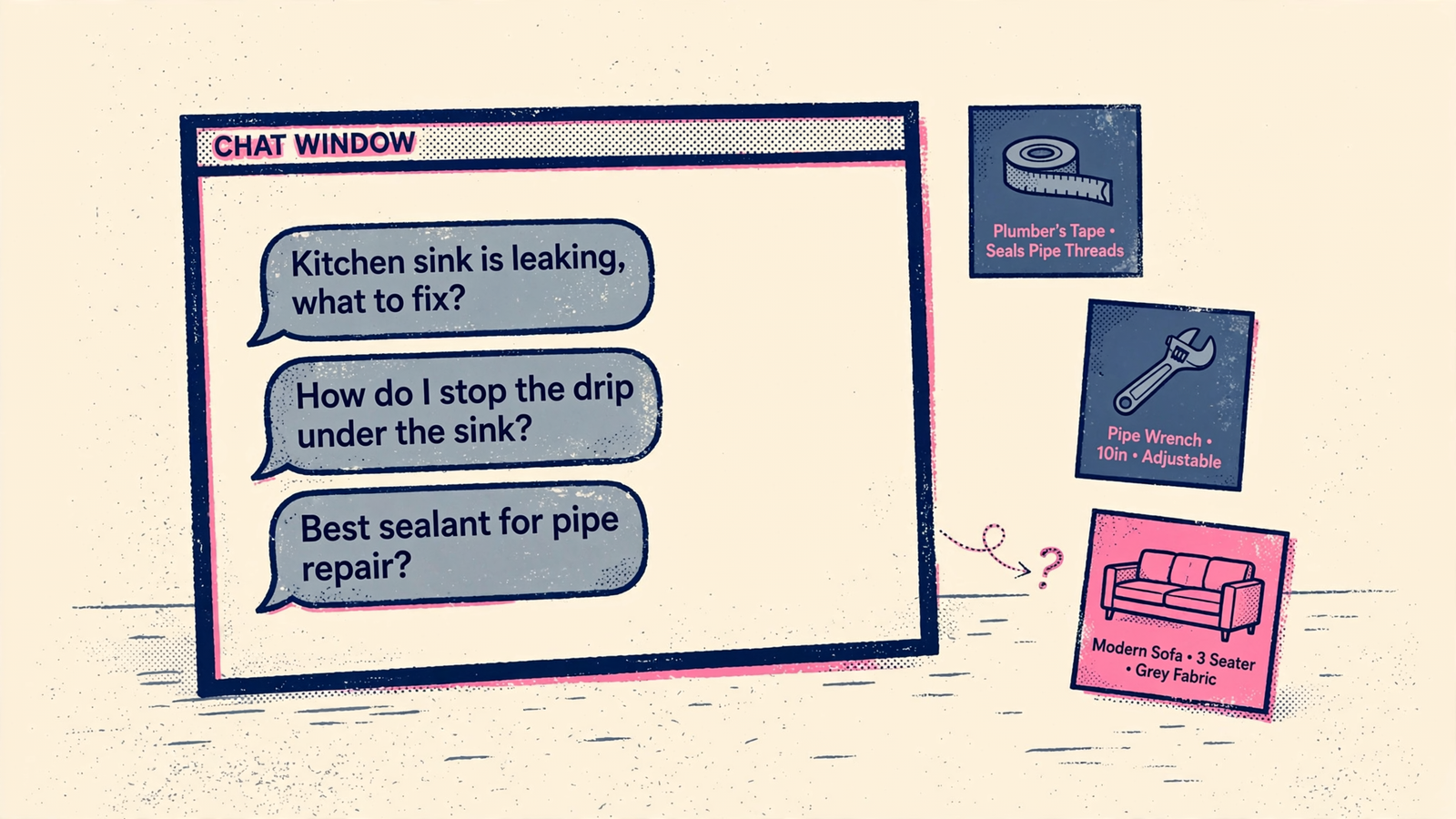
My takeaway is blunt: treat a hint change as an observation until the conversion definition and delivery picture support a stronger claim.
What I would ask an agency to show me
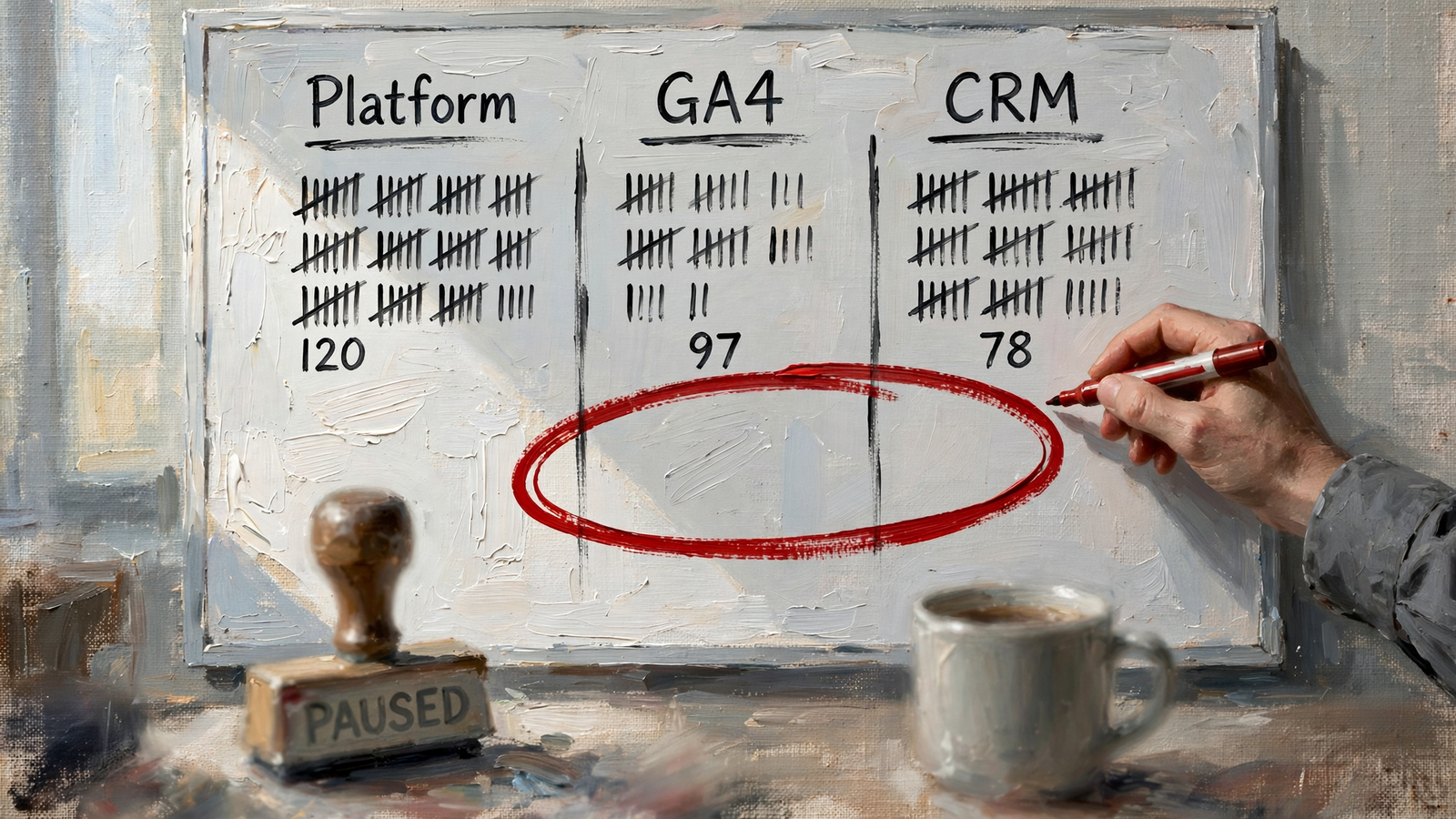
For a SaaS demo-booking campaign, I want a reconciliation table before a CPA slide. Put the same date range and conversion definition beside three counts: Ads Manager, GA4 and CRM. If they differ, tell me how and where. If the agency cannot explain the difference well enough to make a decision, it does not have a result yet. It has homework.
The CRM count matters because a form fill is not necessarily a held demo, a qualified opportunity or closed-won revenue. I learned that lesson fixing Google Ads conversion tracking to connect ads with real pipeline. The useful work was not finding a new keyword. It was connecting the platform’s signals to the outcomes the business actually cared about, so bidding had a cleaner target.
A separate advertiser’s six-week account shows why I would also ask about visit quality. It spent $477 for 19,154 impressions and 370 clicks with zero conversions; GA4 confirmed the visits were real. In that window, organic ChatGPT referrals stayed 443 seconds versus 37 seconds for paid visits, viewed 2.18 versus 1.09 pages, and produced five sales versus zero for paid. That comparison cannot tell us why the paid visitors behaved differently. It does tell us that a click count alone would have concealed the distinction. Separately, another tester saw lead forms arrive while Ads Manager still reported zero conversions two weeks later. One example concerns visitor behavior; the other concerns reporting. Neither justifies treating the platform count as the final answer.
I would also request a dated change log. “We switched hints from conversational to keyword phrasing and observed CTR rise from 0.9% to 1.2%” identifies an observation in the Workshop Digital test. “That switch lowered CPA” is a different claim. It needs the spend, delivery and conversion definition around the change to support it. When delivery fluctuates on its own, a line moving after an edit does not establish cause. The agencies I trust record what changed, when, and what else changed that week. The rest tell stories about squiggles.
That discipline also makes it possible to shift optimization from form fills toward qualified pipeline, rather than rewarding whatever the platform happened to count.

Where groas fits, and what that does not prove
I will put my bias on the table. groas offers Search Ads across Google, Bing and ChatGPT for a $1,499 monthly flat fee, month to month rather than as a percentage of spend. Its model is continuous work on bids, keywords and budgets, with a landing page for every ad group and a named human strategist setting direction and guardrails. That is a better operating fit for this problem than paying for a monthly CPA deck. A broken redirect or an untagged click needs attention while the campaign runs, not after the report goes out.
But an operating model is not a ChatGPT Ads performance result. A flat fee and continuous execution do not establish what your CPA will be; there is no cross-advertiser benchmark here to anchor that promise. What the model changes is who owns the work of checking tags, inspecting the gap and connecting the count to the business outcome. That is why I think continuous execution beats paying a traditional retainer for periodic recommendations. The point is not to produce another confident number faster. It is to catch the denominator problem before spend scales.
My verdict: hire the operator who can explain the gap
Do not hire the agency with the lowest CPA slide. Ask for one page containing:
- Spend, dates and sample size.
- The exact conversion definitions and attribution windows in Ads Manager and GA4.
- Platform, GA4 and CRM counts side by side, with the differences explained.
- Confirmation that custom UTMs and the click reference survive each landing-page path.
- A dated change log that separates observations from claims of cause.
The advertiser behind the 97.2%, 63.5% and 39% match rates published the miss. Most pitches will not volunteer their weakest-matching ad group. Ask for it. Ask what the agency checked, what it fixed, and whether CRM-confirmed demos held and qualified opportunities support spending more. The operator worth paying can answer those questions. Everyone else is selling you their denominator.


