

 LinkedIn

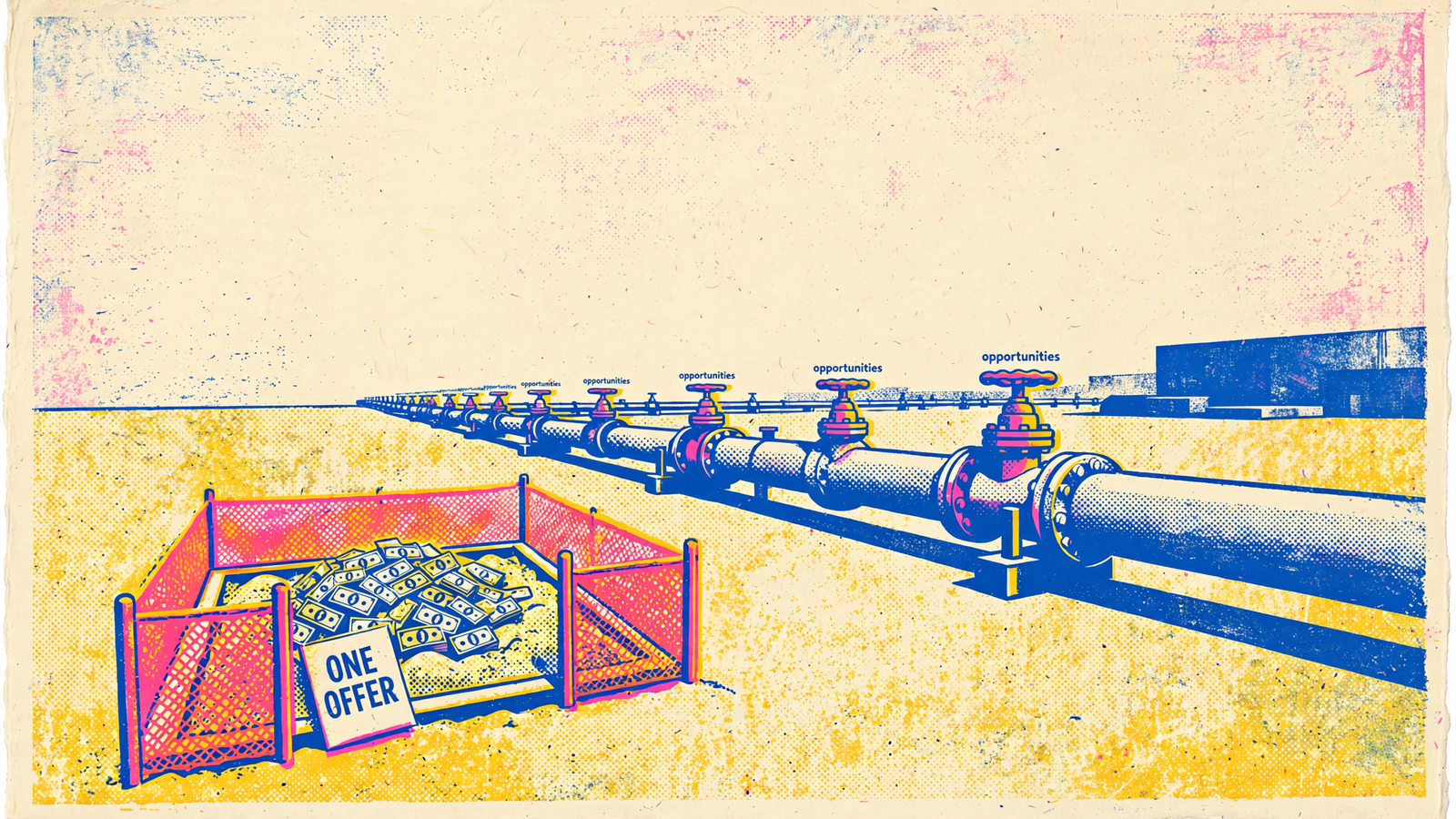
$5,000 in media, 90 days, one offer: that is the entire ChatGPT Ads pilot. If it ends with a claim that the channel has proved closed-won revenue, I would not trust the claim. The $5,000 is an illustrative ceiling that forces focus, not a platform minimum or a promise of results; self-serve ChatGPT Ads carry a $25/day campaign minimum and no account minimum. Management sits outside the cap. Search Ads at groas run $1,499 a month for Google, Bing, and ChatGPT Ads together, so the media math stays clean: none of the $5,000 goes toward a percentage-of-spend fee.
A long B2B cycle will not reliably give you a closed-won verdict in 90 days, no matter what an agency deck says. The median B2B SaaS cycle is 84 days, with mid-market deals at 60 to 90 days and enterprise deals over $100k at 90 to 180+ days. Month-one clicks may become month-two opportunities and revenue much later. So I would ask a narrower question: did we establish tracking we can trust, reach real target accounts, and create qualified opportunities worth following up? If yes, consider the next capped tranche. If no, identify what broke before buying more clicks.
1. Before day 1: Verify you can buy the inventory
Media cost: $0. What it buys: a reason to proceed, or a reason to stop before spending. I have watched B2B teams build a forecast on inventory they cannot buy, then blame the channel. ChatGPT Ads show only to logged-in adults on Free and Go plans; Plus, Pro, Business, Enterprise, and Edu users see no ads. New accounts may also be limited to their home country until verification and a spend threshold clears. If your buyers live inside Enterprise seats, your reachable audience is smaller than your TAM slide suggests. Confirm eligibility before committing the cap.
The inventory is narrower than Google Search, too. Ads appear as labeled sponsored units below the answer, not inside it, sold through Ads Manager on CPM or CPC, with reported US CPMs around $25–$45 and starting CPC bids around $3–$5. There are no keywords, only plain-language context hints at ad-group level, plus country, platform, and custom audiences that need at least 25,000 matched users. Measurement uses the OpenAI Pixel and Conversions API. There are no published benchmarks here to settle your investment question for you.
What gets cut: three offers, five geos, and lookalike sprawl. Keep one offer, one country, and one landing path. A small pilot cannot tell you which change worked if you change everything at once.
2. Before day 1: Write the question sales will answer
Media cost: $0. What it buys: a verdict the pilot can actually deliver. Write one sentence and make the agency agree to it: will $5,000 over 90 days produce the agreed number of sales-accepted opportunities from defined target accounts for one named offer, at or below an agreed cost per accepted opportunity, with click-to-CRM evidence attached? Set the number and cost threshold before launch. Do not choose them after seeing the leads.
I used to let clients start with “test ChatGPT Ads and see what happens.” I was wrong. That phrasing lets the account optimize toward form fills while sales ignores every lead. Put the account criteria, offer, target titles, company size, and two or three hard disqualifiers on the same page. Agree on MQL and SQL definitions with sales. Map a demo request and a content download to different stages; otherwise, a download can start looking suspiciously like an opportunity in the final report.
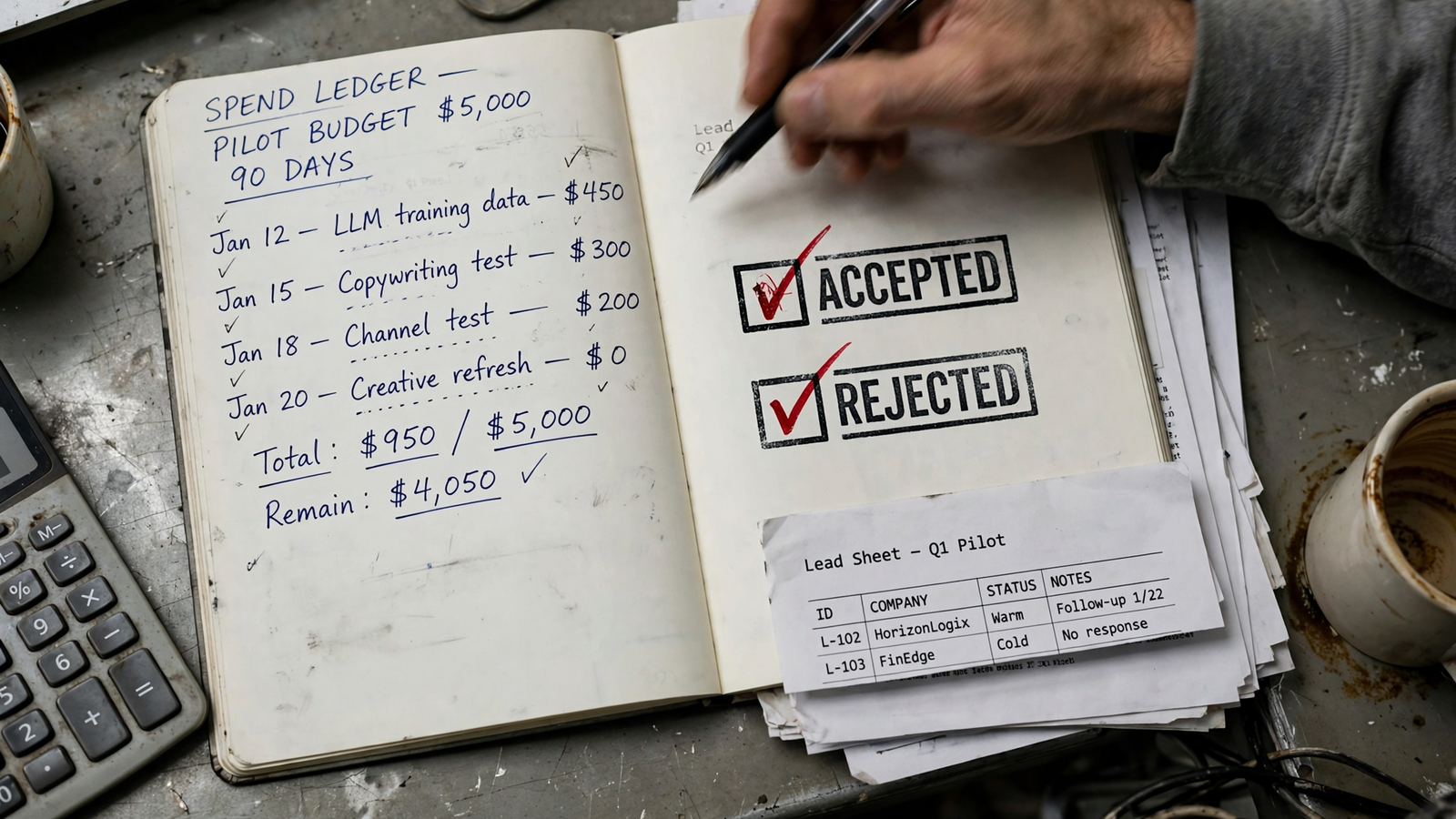
Record the current Google and Bing baseline for that offer as context, not as a control group. Then agree in writing that the media ceiling is $5,000, name who can approve a later increase, and rule out an increase mid-flight. The working allocation is $700 for tracking and launch, $3,300 for the main test, and $1,000 for the final observation period. That totals $5,000. If those lines feel like paperwork, skip the pilot. The paperwork is what stops the verdict moving after the spend.
3. Days 1–14: Spend $700 proving the meter works
Media cost: up to $700. What it buys: evidence that a click can become a CRM record you trust. Set up the OpenAI Pixel and Conversions API for lead and signup events, then check that source information follows a lead through to opportunity creation. Submit a test lead yourself, wait 24 hours, and confirm what appears in both Ads Manager and the CRM. Check the event, source, and timestamps rather than assuming a platform lead count tells the whole story.
This matters because click-based offline conversions must arrive within 90 days of the last click and enhanced conversions for leads within 63 days. A slow deal may mature outside those windows. Import earlier milestones such as qualified lead or proposal, not only closed-won, and keep first touch, opportunity creation, and stage dates in separate fields. If a test click cannot make the trip into a usable CRM record, pause media. You are not buying learning while the meter is broken.
Clean the list before it flatters you. Deduplicate contacts into accounts, tag contacts tied to open opportunities, and exclude converted contacts and existing customers from prospecting. My rule is simple: a ChatGPT Ads lead from an account already in pipeline gets labeled contamination, not a new-account win. Keep it visible for reconciliation, but remove it from the pilot’s new-opportunity count.
Platform and CRM totals will still disagree. Multi-touch reporting counts contributing touches while CRM first-touch assigns one origin; platforms may count by click date while the CRM counts by stage-entry date. Publish both counts side by side, with their date rules attached. What gets cut: any success report built from platform totals alone. By day 14, you need a working route from ad interaction to account record, not a slide of leads nobody can identify.
4. Days 15–60: Spend $3,300 on sales feedback
Media cost: up to $3,300, roughly $70 a day across this stretch. What it buys: a bounded read on lead quality, not scale. Check spend pacing first, landing-page behavior second, and sales acceptance third. If spend will not pace, loosen one context hint rather than five. If clicks arrive but visitors do not get past the hero, inspect the offer page before blaming the bid. Change one major variable at a time where practical: the context hint, landing angle, or bid basis. Small budgets cannot teach much when every lever moves together.
Give sales a short, repeatable way to reject or accept each lead against the definition from step 2. Was the account in the target set? Was the contact relevant to the offer? Was it already an open opportunity? Those answers matter more here than a prettier CPC. Review them while there is still time to adjust the pilot, not for the first time at day 90.
What gets cut: four simultaneous variants launched to look busy. Say you already spend $20k a month on Google. This $5,000 ChatGPT test does not get to rewrite that engine. It gets to show whether it can hand sales clean, new-account conversations under the rules you agreed in advance. A low CPC from the wrong accounts does not earn more money.
Stop rules matter more than optimization tricks at this volume. Pause for broken measurement or a persistent mismatch, not one bad day. If the Pixel stops firing, pause. If, after two weeks, every lead is a student, a job seeker, or an existing customer, pause and fix the targeting or landing-page promise. Do not keep spending merely because the calendar says the pilot lasts 90 days.
This is where groas earns its place over a consultant with a deck: always-on search execution and a named strategist give the account someone to answer for sales acceptance, not just clicks. I want the changes logged, including context-hint and budget decisions, so the final read has a trail back to what actually happened. The purchase in this phase is honest sales feedback on lead quality. A lower CPC is useful only if it helps produce that feedback from the right accounts.
5. Days 61–90: Spend the last $1,000, then reconcile
Media cost: up to $1,000. What it buys: a final, capped observation period under the same offer and qualification rules. Reconciliation is management work outside the media ceiling; it does not consume the $1,000. Do not empty the remaining balance into a new offer or country to make the last month look active. Keep the test comparable, and pause the remaining media if the stop rules still apply.
Pull two reports and refuse to blend them. Report one is what Ads Manager claims by click date. Report two is what the CRM shows by stage-entry date for new-account opportunities, with contamination tagged and removed. Show pipeline stage and any revenue that exists, but do not judge the pilot by lead volume. Show periods 60 to 90 days old alongside the current month so late-stage movement does not masquerade as a sudden current-month win. For the broader cost picture, see the real cost of a ChatGPT Ads test with a 90-day B2B cycle.
If the platform says 40 leads and the CRM says six accepted opportunities from three new accounts, report three accounts and six accepted opportunities. Do not call the platform’s 40 leads pipeline. Do not call all six opportunities incremental, either.
A pilot this size is not causal proof. A shop closing 30 deals a month cannot run a valid two-week user-level lift test. A larger holdout, a longer window covering the sales lag, a geo test, or a pre-specified proxy such as qualified leads with a known demo-to-close rate asks a different, better-equipped question. Statistical power scales with 1/lift-squared, so small pilots struggle to detect small lifts. Geo holdouts can be stricter still, targeting 2–5% minimum detectable effect with 10–15 matched markets. Most $5,000 pilots will not clear that bar.
What gets cut: an incrementality claim nobody designed the pilot to support. Unless you planned a powered holdout from day one, label the result observational. Say what the account records show and what they cannot show. That is enough to make a responsible next-spend decision.
6. Day 90: Choose the next cap, not a revenue verdict
Media cost: $0 at the decision gate. What it buys: permission to stop, repair, wait, or fund a defined next test. Ninety days does not close every B2B deal. I set a second read one full sales cycle after first touch, so clicks from days 15–60 have time to move through the pipeline. For the longer version of that discipline, read ChatGPT Ads for B2B: Build the Pipeline Test Before You Buy Clicks.
Make one decision in writing, with its next cap attached:
- Stop. Clean tracking and corrected targeting produce zero sales-accepted opportunities from target accounts. Next ChatGPT Ads media spend: $0. Keep following the CRM cohort for learning.
- Repair. Tracking gaps, duplicate records, or sales rejection reasons reveal a definition problem. Next media spend: $0 until a test lead traces cleanly. Approve only a capped fix budget outside media.
- Extend observation. Three to six accepted opportunities exist, but they have not moved stages yet. Next media spend: $0. Give sales 60 days of follow-up, then read the same cohort by stage-entry date.
- Approve the next capped tranche. Repeated accepted opportunities from new accounts meet the agreed cost threshold. Next media spend: another fixed amount, say $7,500 over 60 days, with one offer and the same contamination rules.
Before approving anything, demand the execution log: each bid, budget, context-hint, and landing-page change, with its date, reason, and observed result. Put the unresolved questions beside it. Which hints brought accepted opportunities? Which brought noise? Where do platform and CRM records still disagree? That is the reconciliation work behind How A SaaS Company Fixed Google Ads Attribution And Turned Budget Into Pipeline, not an invitation to turn attribution into a better-looking slide.
When the constraint lifts, expand in one direction only: a second offer or a second country, never both at once, each with its own cap. Keep media separate from management. A flat fee and a named strategist give groas the better fit here than a percent-of-spend shop: the next question remains whether the spend reaches accepted pipeline, not whether a larger budget produces a larger fee.


