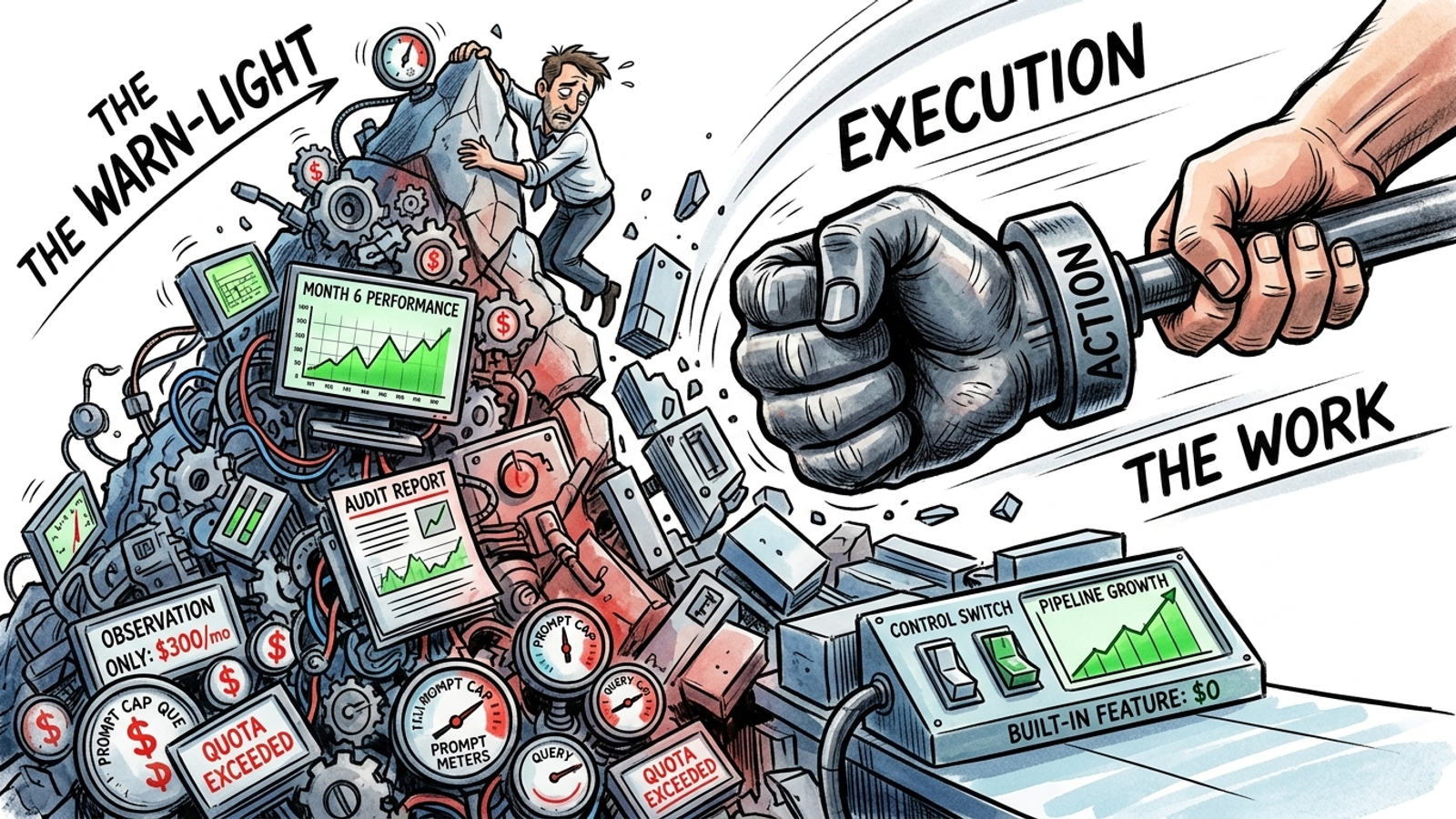
By December 31, 2027, the software you pay $300 a month to check whether ChatGPT, Claude, or Perplexity mentions your brand will cost nothing or arrive as an unbilled checkbox inside a platform you already use. The budget will move from watching AI answers to changing what the engines fetch and cite.
Right now, the median standalone AI visibility tracker charges around $99 a month, with industry averages near $337 and enterprise tiers above $700. Many plans ration 25 or 50 prompt queries, limit seats, and display a line chart of synthetic share of voice. Entry plans can bill $0.66 to $9.95 per prompt run to ask an LLM a question, check whether your name appears, and log the answer.
I have watched this margin curve before. When I managed search campaigns by hand, rank-tracking software charged agencies hundreds of dollars a month to check daily keyword positions. Then general SEO suites bundled the feature, and the standalone bill got harder to defend. Answer engine optimization, or AEO, is on the same path. More than 60 dedicated AEO monitoring platforms entered the market in eighteen months, many selling variations on the same prompt checks and gradient graphs.
A dashboard can tell you Claude omitted your product on Tuesday. It cannot, by itself, remove the technical blocker or publish the page that gets cited on Thursday. Our own edge logs already show live-answer bots fetching pages during active conversations. That is more useful to an operator than a weekly screenshot. Here are five predictions, and what would prove each one wrong.
Prediction 1: Prompt-mention tracking goes free or bundled by the end of 2027
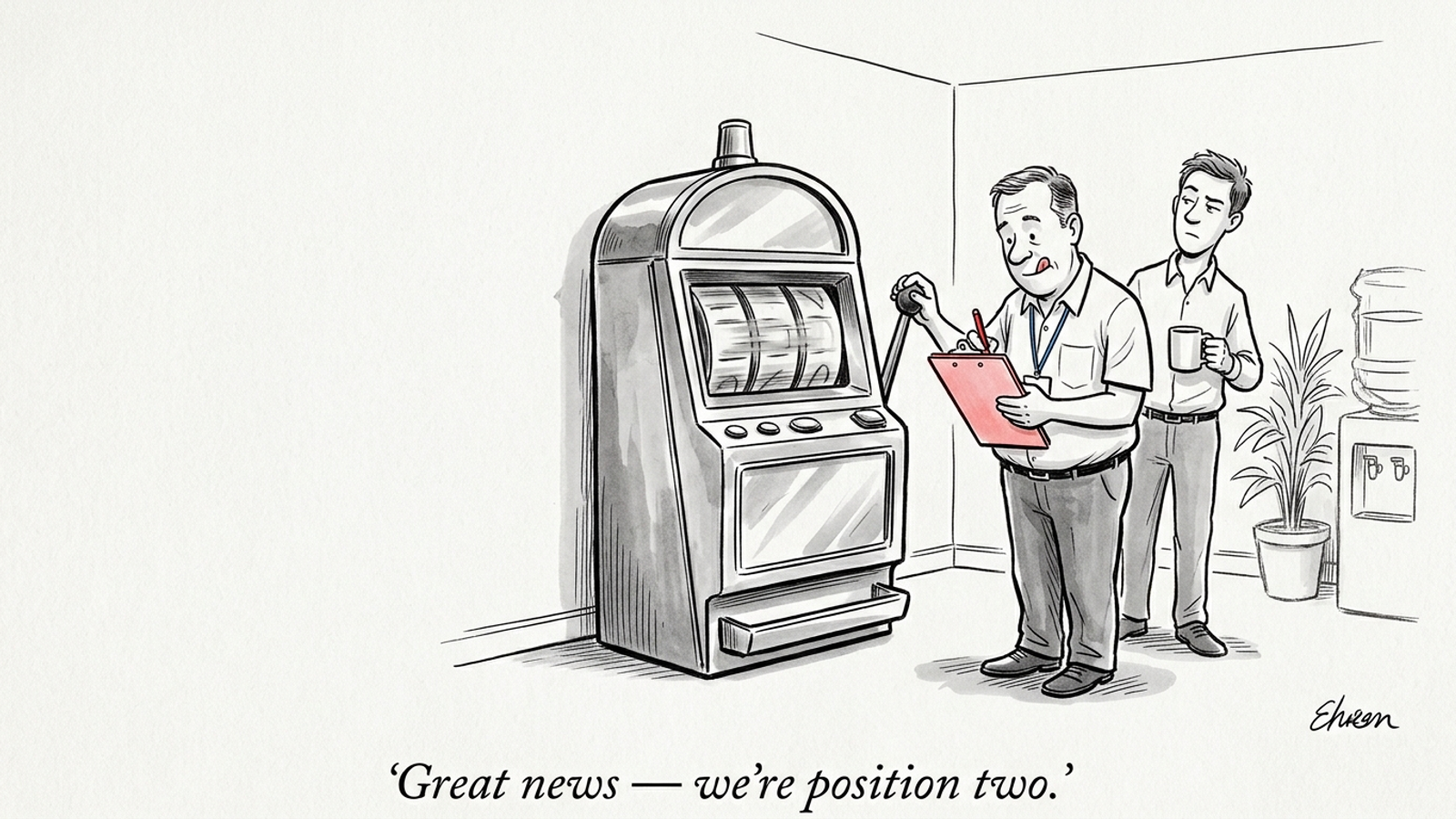
The core feature AEO platforms sell today is simple: run a set of prompts and record whether a brand appears in the responses. That observation is not a durable premium product. Prompt evaluations are cheap to run, while vendors charge hundreds of dollars a month and package the results as though an AI answer were a stable Google results page. It is not.
In an analysis of 2,961 prompt runs across major engines, researchers at SparkToro and Gumshoe.ai found less than a 1% chance of getting the same brand list twice for identical prompts, and less than a 0.1% chance of reproducing the same order. In agency discussions, operators describe clients spiraling over weekly drops that may reflect ordinary sampling variation rather than a change anyone can fix.
As established SEO suites and edge hosts fold prompt sampling into baseline subscriptions, a standalone $300 monthly fee becomes difficult to justify. Pure observation tools will have to bundle the feature, give it away to retain subscribers, or find work beyond monitoring. The practical takeaway: do not treat a change in one week’s prompt chart as an instruction to rewrite your site.
What would prove me wrong
I will concede this prediction if standalone prompt trackers keep their $99 to $400 monthly base pricing into 2028 without adding automated execution. A more fundamental reversal would be leading AI engines adopting deterministic retrieval indexes where a brand reliably holds the same position across thousands of identical sessions. Until then, paying a premium to track a fixed AI rank means paying for something the system does not reliably produce.
Prediction 2: Live-answer fetches matter more than training crawls
Marketers often talk about AI visibility as though the only question is whether a model absorbed their site during training. That misses the request happening now. AI labs distinguish between bots that collect material for offline training and bots that fetch pages for a live answer. OpenAI separates GPTBot from ChatGPT-User; Anthropic distinguishes ClaudeBot from Claude-User and Claude-SearchBot. A training crawl and a live-answer fetch create different opportunities.
Our edge logs make that distinction concrete. Across a recent 30-day window, offline training bots barely registered beside live-answer bots: Claude-User recorded 1,156 hits checking robots.txt and citation pages, while ChatGPT-User hit our homepage 962 times during active user conversations. Those hits do not prove we earned a citation. They do show that a page’s response to a live bot matters while an answer is being assembled.
Block ChatGPT-User while trying to stop training crawls, and you may also block a route by which a buyer’s live question reaches your site. Before debating what an AI model remembers, check what its user-facing bot can fetch today.

What would prove me wrong
If AI developers abandon external web retrieval and their engines answer entirely from model weights, live fetchability loses its importance. Until that happens, historical training-crawl totals are a poor substitute for knowing whether your pages respond when a live-answer bot asks for them.
Prediction 3: Content-gap reports become an unbilled feature
The second pillar of early AEO software is the prompt-gap report. A vendor queries an LLM with category prompts, checks which competitors appear in citations, compares their pages with yours, and produces a table of missing topics. It might tell you a competitor’s documentation includes pricing tiers and security compliance tables that your page lacks. Useful diagnosis. Then someone still has to research, draft, code, verify, and publish the fix.
When teams ask which tools can show gaps keeping them out of AI answers, the report looks like a solution because it names a problem. The expensive work starts after the export. A basic prompt-chaining script can produce a diagnostic; it cannot make a missing page worth citing. Broader suites such as Semrush and Ahrefs have already folded baseline prompt tracking and brand-radar features into their environments. Content-gap reporting followed a similar path in organic search: what once supported a separate subscription became a tab in a larger tool.
By 2027, I expect mainstream CMS, content, and analytics platforms to surface missing citation topics as background alerts. Value will sit with the systems that produce, verify, and publish the missing material, not with the alert that points at an empty paragraph. Before buying another gap report, identify who will clear the gaps it finds.
What would prove me wrong
I will concede this prediction if standalone gap-auditing companies build substantial enterprise revenue beyond 2027 solely from generating audits, without content creation or site execution. If teams keep paying for static spreadsheets while their implementation backlog grows, I will have misjudged their tolerance for unfinished work. That is possible. I would not budget around it.
Prediction 4: Technical fetchability becomes the first citation filter
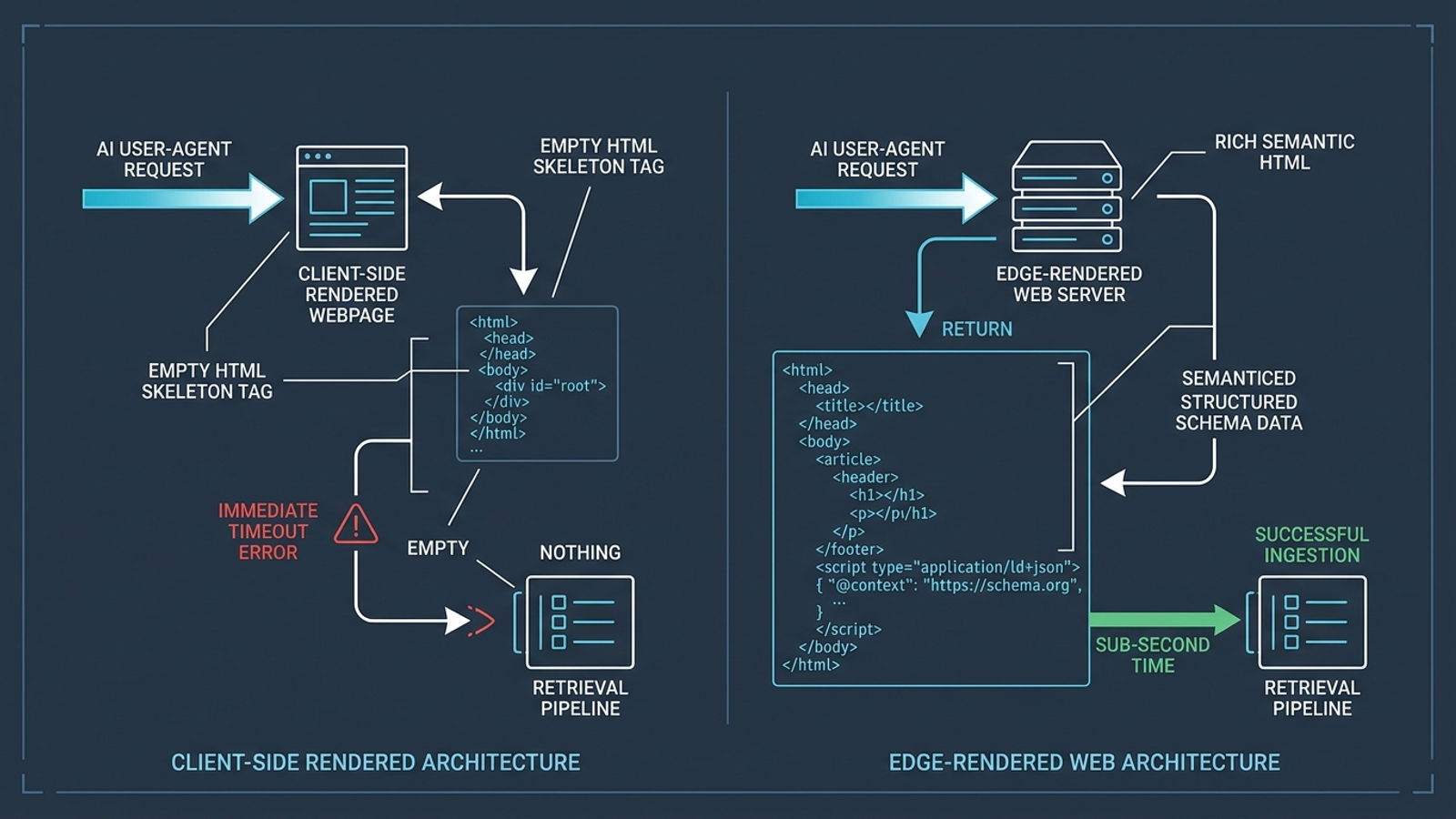
A page cannot persuade a retrieval bot that cannot read it. Marketing teams can spend weeks debating prompt framing while the server sends the bot little more than <div id="root"></div>. In an analysis of more than 500 million AI crawler requests, Vercel reported that major AI retrieval and training bots do not execute client-side JavaScript. Independent testing likewise found that ChatGPT-User, Claude-User, and PerplexityBot extract content from raw HTML rather than rendering it as a browser would.
The mechanism is straightforward. A live-answer bot needs a response while someone waits for an answer; a client-rendered page may give it an empty shell instead of the pricing, product details, or case study a human eventually sees. Before paying an agency to draft hundreds of pages for generative discovery, check whether AI can read your site in the server response. If the useful text is absent from the HTML the bot receives, better prose on the rendered page will not fix that fetch.
By 2027, I expect fast delivery, clean semantic markup, explicit entity schema, and content available without client-side hydration to act as an early citation filter. That does not guarantee a recommendation. It gives the engine something to evaluate in the first place. Test the raw response before commissioning the next content batch.
What would prove me wrong
If OpenAI, Anthropic, and Perplexity routinely render arbitrary client-side JavaScript on live fetches without slowing answers or making those requests uneconomical, static fetchability will matter less. Until then, assuming a bot sees what your browser sees is an avoidable gamble.
Prediction 5: AEO pricing moves from prompt caps to execution
Seat limits and prompt quotas make sense for a vendor when customers have no cheaper way to get the information. They make less sense when the underlying observation becomes a bundled feature. Today, standalone AEO plans can cap tracking at 50 queries and charge more when a team wants to monitor 200 variations across three engines. It resembles keyword rank-tracking packages from 2012, with the meter attached to the report rather than the work that follows it.
By late 2027, serious search buyers will pay for action and accountability, not a larger prompt allowance. Say you spend $20,000 a month on search acquisition. Your leadership team does not need a synthetic visibility score six points higher on a vendor’s index. They need to know whether qualified pipeline expanded, acquisition cost declined, and buyers who found them through search converted.
That is the distinction behind groas. Our engine is built around autonomous execution across paid search and organic visibility, with specialized models doing continuous work under a named human strategist and a flat monthly fee. The point is not to hand your team a longer audit chore. It is to connect the work of changing search visibility to commercial outcomes. When comparing contracts, ask what the platform does after it detects an omission. A more generous prompt cap is not an answer.
What would prove me wrong
If seat licences and 50-query prompt caps remain the dominant billing model across search optimization software by December 2027, I will admit I misjudged procurement. The same goes if growth leads keep protecting costly stacks whose only output is a report nobody acts on. When budgets face scrutiny, I expect the observation-only bill to be the easier one to cut.
What to do now: buy the work, not the warning light
Before signing an annual agreement for AI visibility software, put four questions to the vendor. Price the work left on your team’s desk, not just the subscription.
- Does it publish to your site or export a task list? If it only exports recommendations, include the engineer, writer, and strategist needed to act on them in its true cost.
- How does it check what live-answer bots receive? Ask how the product identifies pages that depend on client-side rendering and verifies the server response seen by
ChatGPT-UserorClaude-User. - Can it connect paid and organic search work? Organic citations can take weeks to establish in a competitive category. Ask what the system does with existing search demand in the meantime.
- What happens when your prompt list grows? If monitoring 500 prompts costs five times as much as monitoring 100, find out what additional work that bill buys besides a larger meter.
Who should still buy standalone monitoring?
There is a buyer for an observation-only dashboard: an enterprise marketing team with dedicated engineers, technical writers, and search specialists who can act on a centralized feed of omissions. If that team already researches schema, fixes rendering, builds citation-worthy pages, and pushes CMS updates, $99 to $400 a month for alerts can be a reasonable operating expense. The dashboard is useful because the execution capacity already exists.
If your team lacks that capacity, the same purchase is an uncleared backlog with a login. I watched rank tracking lose its premium when checking positions became easy; the operators who mattered still fixed landing pages, restructured accounts, and drove revenue. AI visibility dashboards are headed down that road. Check what live bots can fetch, assign someone to fix what they cannot, and put the budget behind the people or systems that change what gets cited. Stop renting a tally of your absence.
Frequently asked questions
Will AI visibility tracking tools be free in the future?
The prediction is that standalone prompt-mention tracking will be free or bundled into platforms you already use by December 31, 2027. As established SEO suites and edge hosts fold prompt sampling into baseline subscriptions, a standalone fee of around $300 a month becomes hard to justify. Pure observation tools will then have to bundle the feature, give it away, or find work beyond monitoring.
Why shouldn't I panic when my AI visibility dashboard shows my brand dropping?
Because AI answers are not stable. Researchers at SparkToro and Gumshoe.ai analyzed 2,961 prompt runs and found less than a 1% chance of getting the same brand list twice for identical prompts, and less than a 0.1% chance of reproducing the same order. A weekly drop may reflect ordinary sampling variation rather than a change you can fix, so do not rewrite your site over one prompt chart.
What is the difference between AI training crawlers and live-answer bots?
Training bots like GPTBot and ClaudeBot collect material for offline model training, while user-facing bots like ChatGPT-User and Claude-User fetch pages during active user conversations. Blocking the live-answer bots while trying to stop training crawls can cut off the route by which a buyer's live question reaches your site. Check what a bot can fetch today before debating what a model remembers.
Are content-gap reports for AI answers worth buying?
A gap report is useful diagnosis because it names missing topics, but the expensive work starts after the export: someone still has to research, draft, code, verify, and publish the missing pages. By 2027, gap alerts are expected to become a background feature of CMS, content, and analytics platforms. Value sits with systems that produce and publish the fix, so identify who will clear the gaps before buying another report.
Do AI crawlers execute JavaScript when reading my site?
No. Vercel's analysis of more than 500 million AI crawler requests found that major AI retrieval and training bots do not execute client-side JavaScript, and independent testing found that ChatGPT-User, Claude-User, and PerplexityBot extract content from raw HTML. If your useful text is missing from the server response, a client-rendered page gives the bot an empty shell, and better prose on the rendered page will not fix that fetch.
How will AI search optimization pricing change by 2027?
The prediction is that serious search buyers will pay for action and accountability rather than larger prompt allowances by late 2027. As prompt tracking becomes a bundled feature, seat limits and query caps lose their justification. When comparing vendors, ask what the platform does after it detects an omission and whether it connects work to qualified pipeline and acquisition cost, not a higher synthetic visibility score.
Who should still pay for a standalone AI visibility dashboard?
An enterprise marketing team with dedicated engineers, technical writers, and search specialists who can act on a centralized feed of omissions. For that team, $99 to $400 a month for alerts can be a reasonable operating expense because the execution capacity already exists. If your team lacks that capacity, the same purchase is an uncleared backlog with a login.