LinkedIn

By November 2027, more marketing MCP buying checklists will ask whether an agent can explain, from current account evidence, why it left a profitable campaign alone. If those checklists still prize write access and don’t ask what the agent refuses to touch, I’m wrong.
I used to tell clients the opposite. When I managed Google Ads by spreadsheet, the safest-looking tool promised action everywhere: new negatives, new bids, new structure, always something to report. What changed my mind was how cheap action became. An agent can rebuild a campaign in seconds. The cost of making an unnecessary change has gone down. The cost of living with it hasn’t. In a normal week, you might have time to recover. In peak week, when traffic is expensive and the window to judge a change is short, you might not.
A seller looking for experienced PPC help on r/AmazonFBA framed the job around protecting results into peak, not rebuilding everything. I read that as a buying objection, not as evidence about Google or Meta performance. Different auction, same uncomfortable question: if an agent touches a winner two weeks before Black Friday, who proves the change earned its keep?
The demo will show you 40 changes made, 12 negatives added, three budgets moved. Fine. A change on 15 November followed by a Black Friday lift doesn’t tell you what caused the lift. I’ve seen the human version for years: the account gets “optimized,” the report looks thorough, and nobody can separate the operator’s work from the calendar.
“Can it actually make changes?” is still a fair question. I’m betting it stops being the question that settles the purchase. Here are three ways to score that bet.
Prediction 1: By November 2027, buyers will ask which campaigns they can protect
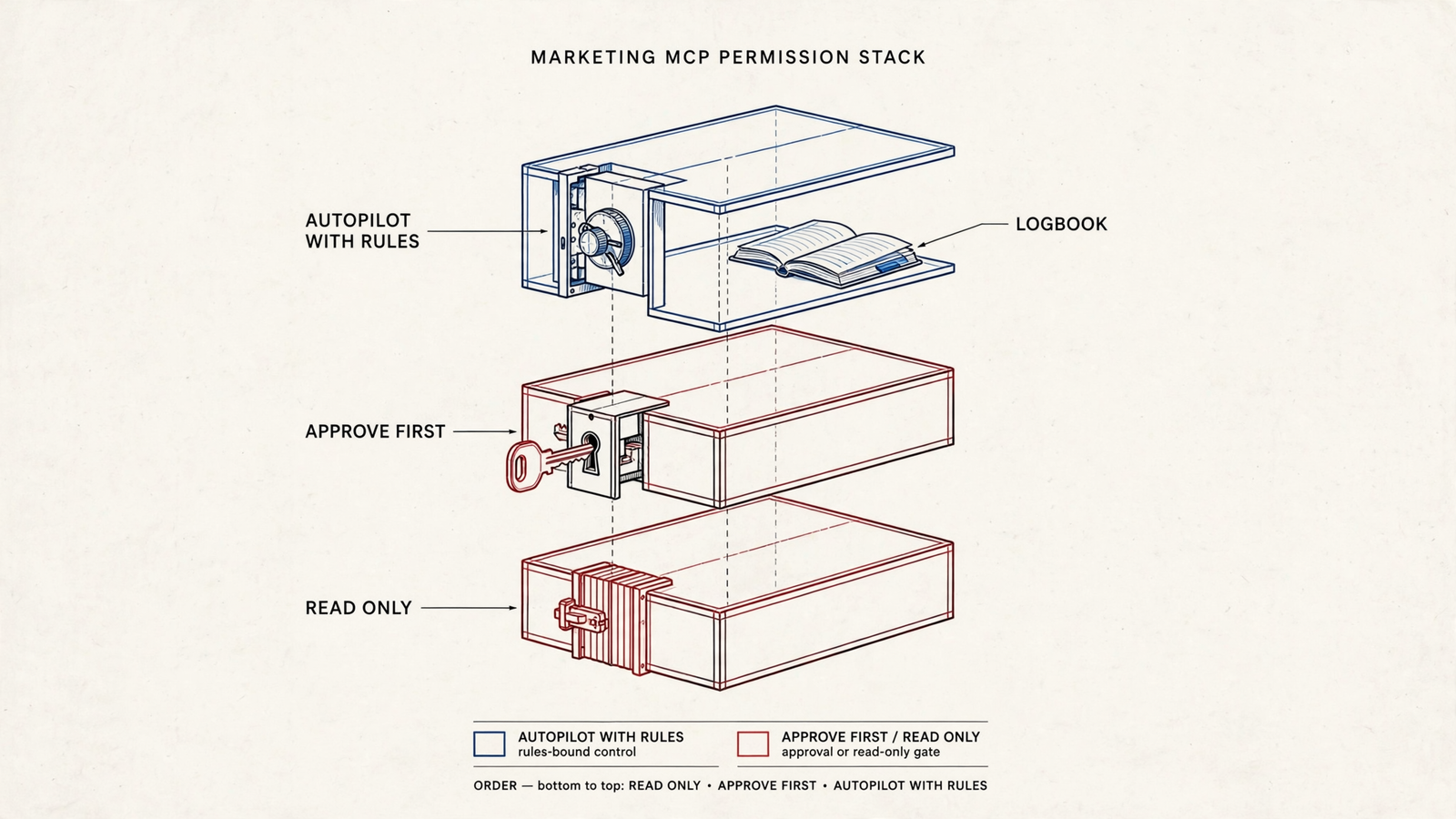
The market already gives buyers three answers to who gets to act. Google’s own Ads MCP server is read-only: it can’t modify a bid, pause a campaign, or create an asset. Approval-based tools can prepare changes but leave the decision to a person. Meta’s write-capable Ads AI Connectors added rules governing what agents can do on an account. What I don’t see clearly answered on most sales pages is simpler: which campaigns can I put off-limits, and can I freeze structural changes on them?
When changing an account meant opening an editor, resizing a spreadsheet, and pasting a change, the friction filtered out some marginal ideas. Take it away and every weak signal becomes a candidate for intervention. A search term with a few clicks and no conversions looks like waste. A campaign below target for three days looks like a bidding problem. A small conversion dip looks like a reason to rewrite a landing page. Any of those might deserve a look. None automatically deserves an edit.
That distinction gets expensive before peak. Optmyzr’s Black Friday checklist allows one to two conversion cycles for Smart Bidding to adjust to a target change and advises stopping structural changes well before peak. Launch late and you’re paying peak CPCs while the campaign learns. A protected campaign lets you take a structural change off the table before a weak signal starts an argument.
What would prove me wrong: Pick five marketing MCP tools you’d actually consider, including a read-only connector, an approval-based tool, and a rules-bound autopilot. Record which ones document campaign-level protection or structural freezes. Then check the same tools and your buying checklist in November 2027. If protection is no more common in the docs and still doesn’t make the checklist, this prediction fails. Don’t count read-only access as a campaign-level protection setting: it can’t write to any campaign in the first place.
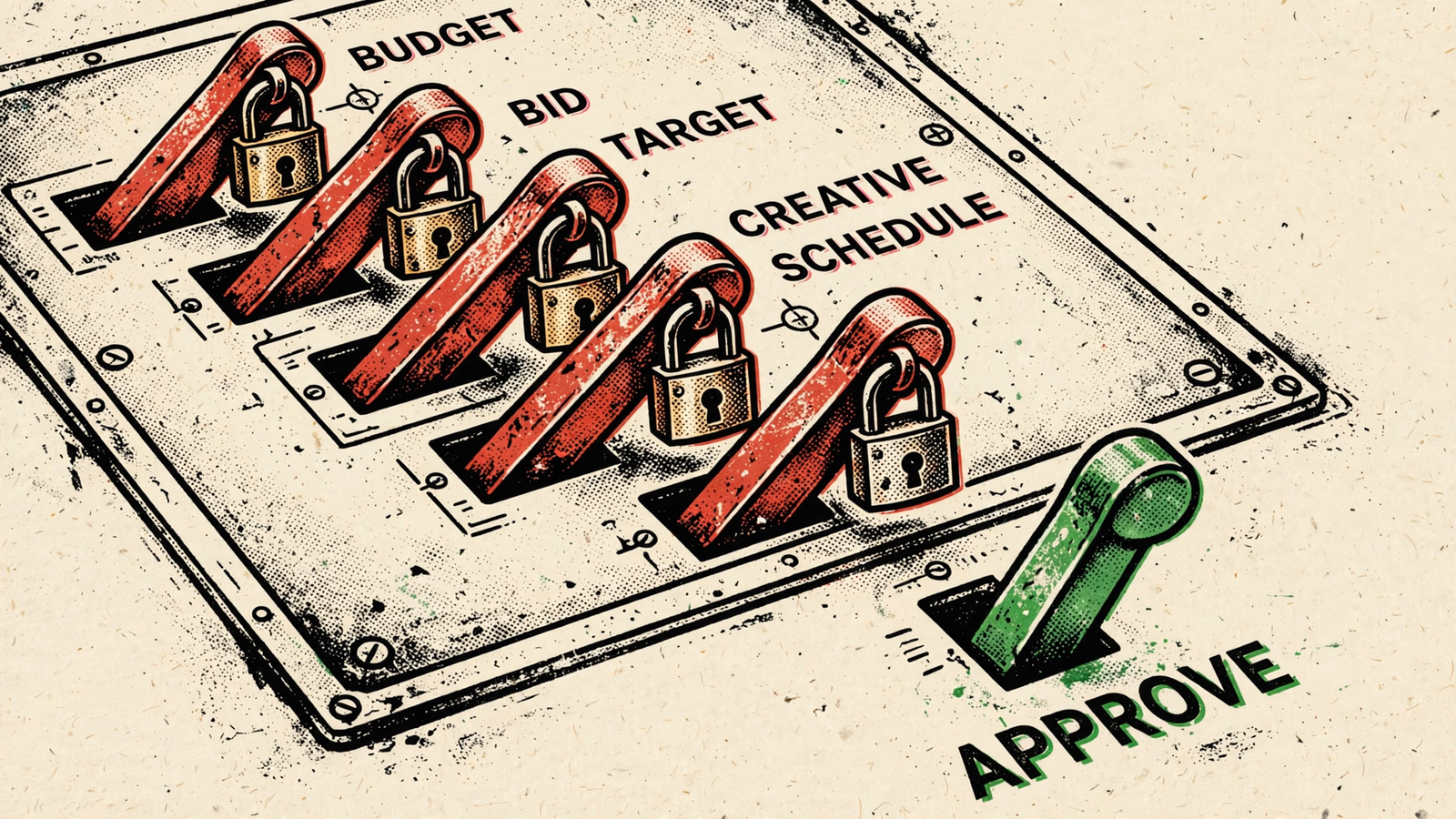
For now, ask your AI: “List the campaigns you would leave unchanged and the evidence for leaving each alone.” Then check whether the tool’s documented controls can enforce that decision. Naming a campaign and protecting it are two different jobs.
Prediction 2: By November 2027, buyers will ask for hold reasons alongside change reasons
A change log tells me what happened. Even a good one doesn’t tell me why the rest of the account stayed put. That distinction sounds academic until an agent sees a no-conversion search term with a handful of clicks and decides it has found waste.
One PPC practitioner laid out the synthetic test cases I’d want an Ads tool to pass:
- Flag that a no-conversion term has too few clicks to support a decision instead of automatically excluding it.
- Investigate a possible conversion-tracking problem before calling the traffic waste.
- Explain a proposed negative’s match type and scope, including which useful traffic it could block.
The output should name the actual query, the campaign and ad group IDs, the dates, the evidence, and the proposed action. I’d give the reason to withhold action its own place in the record. A hold needs evidence, not just an empty change log.
Another PPC operator using Claude Code and Codex makes the case for staging writes, logging them, and giving a reason for each one, especially when negatives, budgets, bids, or conversion settings are involved. The operator also names the skill underneath the tooling: somebody has to know what not to touch, when a Google recommendation makes no sense, and when the model is too sure of itself. I want to see that judgment in the output, not infer it from the absence of a change.
There’s an early version of this in Adsby’s change preview: it shows before-and-after values for proposed changes and gives reasons for skipped items, such as a negative that’s already in place. That’s narrower than defending a decision to leave a profitable campaign alone, but it makes a skip visible instead of burying it.
What would prove me wrong: Ask each shortlisted tool for one hold decision this week. I want the specific campaign, the threshold, the data window, and what would make the agent reconsider. In November 2027, check whether hold reasons show up alongside change reasons in the buying criteria. If buyers still take activity counts, screenshots, and weekly summaries as sufficient evidence of useful work, this prediction fails.
The prompt I’d run today is: “Do not change anything. Show which proposed interventions lack enough evidence.” If the answer could have been written without looking at the account, don’t give it credit for restraint.
Prediction 3: By November 2027, peak-week permissions will be narrower than ordinary permissions
Protecting a campaign answers what an agent can touch. Peak-period permissions answer when it can touch anything else. A bid tweak in February has time to prove itself. The same tweak on 24 November has a much shorter window, with more expensive traffic to pay for any learning it triggers.
That’s why the peak-season checklists are more useful here than the sales decks. Meta peak-season guidance favors scheduling budget increases ahead of time over making manual edits on the day. On the Google side, Optmyzr’s Black Friday checklist recommends stopping structural changes two weeks out. In the last 48 hours, it narrows the list to price, availability, disapproval fixes, and budgets on campaigns that are earning. Different platforms, same arithmetic: a late change has less time to earn back its cost.
I expect peak restrictions to become a dated, enforceable setting, not a note in a chat. Look for approval requirements that tighten during a defined window and temporary restrictions that revert automatically. The building blocks are already visible. Koast’s MCP separates read, write, and publish permissions and hides publishing tools until a spend ceiling is set: “No ceiling, no publishing, however the conversation goes.” That’s a permission gate, not a peak calendar. It shows the difference between asking an agent to be careful and making an action unavailable until a condition is met.
What would prove me wrong: In November 2027, check your shortlist for documented rules that change what an agent can do during a defined peak window. If tools still sell the same permissions for routine weeks and peak periods, and buyers still accept them, this prediction fails. A permanent spend ceiling doesn’t count. Neither does a standing campaign exclusion. I’m looking for permissions that get tighter because of the dates.
Before peak, ask your AI: “Draft peak-period rules that protect these campaigns and require my approval for structural changes.” Then check whether the tool can enforce the dates and the approval requirement. If all you get back is nicely formatted advice, you don’t have a permission setting. You have a hope.
What I’d buy this week
Buy for the job you actually need done, not the longest list of write permissions. The three models belong on the same shortlist because they solve different problems:
- Read-only: Use this when analysis is the whole job. Google’s Ads MCP can help your AI read the account and draft a plan without giving it the ability to change a bid at 2 a.m. I wouldn’t buy it to take execution off my plate. That isn’t the job it does.
- Approval-based execution: Use this when you want the AI to prepare changes but want to make each decision yourself. Markifact, Optmyzr, Pipeboard, and AdKit take different routes: approval first, staged change requests, or campaigns created paused or in draft. You get the speed of drafting without handing over the decision to commit.
- Rules-bound autopilot: This is where groas goes on my shortlist, and it’s the one I’d test first. Connect your ad accounts and website once and use the AI you already work with. Autopilot stays off until you switch it on. When enabled, it runs under the goals, budget limits, and rules you set. Every change is logged with its reason and can be undone in one step. I’d start here because I can test the AI’s judgment before turning on autopilot, without picking a new tool when I’m ready for ongoing execution. It’s $19 a month for the whole team, with unlimited teammates, ad accounts, and websites.
I’d run the same Google Ads acceptance test before committing: evidence standards, hold behavior, approval flow, and undo. Judge each tool against the work you’d actually give it. A read-only connector doesn’t need to undo a change it can’t make. It still needs to show its work when it recommends leaving a campaign alone. And a write-capable tool doesn’t pass the hold test just because it explains every change it did make.
Put the November 2027 scorecard on the calendar
Write down the shortlist and the pass/fail criteria now. Name the five tools, record what their docs say, and set a date to revisit them in November 2027. Keep the definitions fixed:
- Campaign protection is a control you can point to in published docs, not a promise from a sales call.
- A hold reason cites current account evidence and tells you what would change the decision.
- A peak-period limit is an enforceable rule with dates, not a suggestion to be careful in November.
None of this proves better CPA or revenue. A tool can win the checklist and still lose money. A tool can lose the checklist and still be right for a small account. I’m scoring what buyers learn to ask for, not whether the winners make them money.
If November 2027 rolls around and the pitch is still “it can make changes,” with nothing about what it refuses to touch, I was wrong and I’ll write that. If protected campaigns, documented holds, and narrower peak permissions make the checklist, the thing buyers learned to pay for wasn’t faster hands. It was knowing when to keep them still.
Start the scorecard this week. Apply for the free trial, connect one account, and keep autopilot off. Make the tool prove it knows what not to change before you let it change anything.