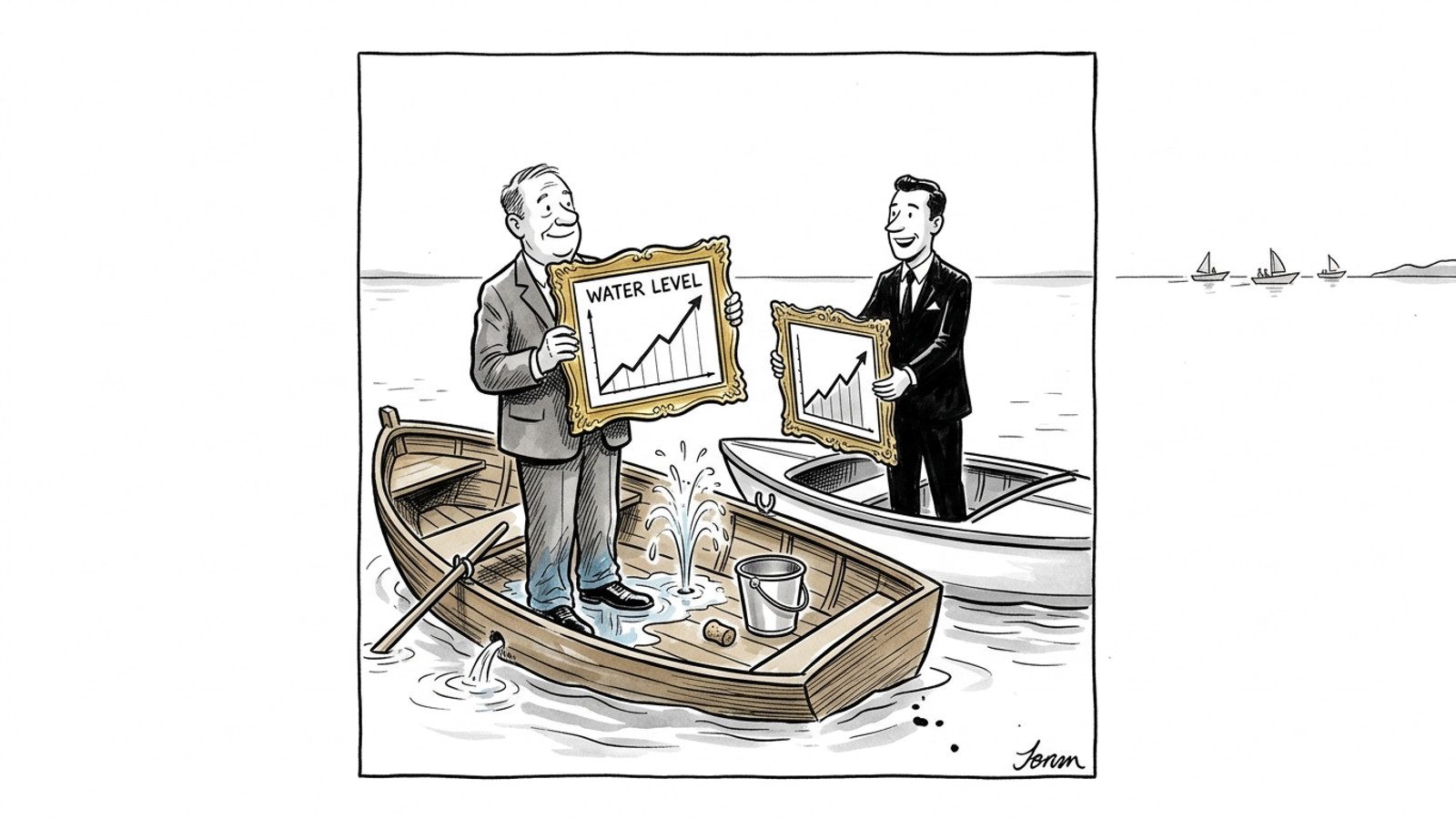

A $500 monthly dashboard cannot tell you whether your AI visibility is improving if you never measured where you started. In paid search, I would not buy bidding software before checking the raw conversion data; for AI search, I would start with a fixed prompt set, a control, and a spreadsheet.
How can my business measure brand visibility across ChatGPT, Gemini and Google AI Overviews?
Start by dropping the idea that visibility is a single yes-or-no metric. An answer engine can give your brand a mention by naming it in the response, a citation by linking to your domain or an external article about you, or a recommendation by telling the user to pick you. Those are different outcomes. As Octoparse’s tracking breakdown notes, brands often earn citations on third-party comparison sites and directories before an engine recommends them unprompted. Put all three in one score and you will struggle to tell whether you have a source, authority, or persuasion problem.
One result is not a baseline, either. Enter a commercial question into ChatGPT once, see your brand, and you have observed one answer, not established visibility. Testing from Visiblie recommends repeating each prompt at least three times because responses vary. In PPC, I would not double a budget because an ad converted once in three impressions. Give each prompt repeated runs, record what happened, and keep the prompt wording fixed so the next check is comparable.
What to record: Give mentions, citations, and recommendations separate columns. Run each prompt three times, then note whether your brand appeared in at least two of them. Keep the individual results, too; a tidy label should not hide the underlying answers.
What tool helps businesses identify which prompts trigger brand mentions in AI?
I would start with tools you already have: your Google Ads Search Terms report, your CRM’s closed-lost notes, and customer support tickets. A paid prompt discovery tool can generate a long list of plausible questions. Plausible is not the same as a question your buyers ask.
People using ChatGPT or Google AI Overviews may ask messy, multi-clause questions: ‘What are the trade-offs between [Competitor A] and [Competitor B] for an 80-person logistics firm?’ or ‘Which inventory software integrates cleanly with QuickBooks without an enterprise plan?’ Build a 30-to-50-prompt index from buyer language. Pull your top 20 converting long-tail search terms, ask sales reps for the five comparison objections they hear most, and include your top three direct competitors’ names where they naturally belong.
Then balance the list:
- Branded prompts, capped at 10% to 15%: ‘What does [Brand] do?’ or ‘[Brand] pricing.’ Lemniscate Growth’s research makes the reason clear: if you supply the brand name, a mention tells you little about whether an unprompted buyer would find you.
- Category prompts, about 40% to 45%: ‘Best B2B invoicing tools for mid-market manufacturing’ or ‘Top commercial HVAC repair companies in Dallas.’ These test whether the engine treats you as a market option.
- Problem-aware prompts, about 40% to 45%: ‘How to reduce unbilled overtime in electrical contracting’ or ‘Why does my refrigeration compressor overheat in summer?’ These catch buyers before they know which vendors to consider.

A hand-curated sheet of roughly 40 questions does more than save the subscription fee. It teaches you which questions matter and which sources appear in the answers. Kumail Kazmi’s tracking guide makes a similar point about learning from the underlying forums, review hubs, and other sources rather than relying only on a dashboard’s headline number.
Build the list before buying discovery software. If a generated prompt does not resemble a real search term, sales objection, or support question, it does not earn a row just because it sounds polished.
How can a small business automate brand monitoring in AI search in-house?
You can automate part of it without enterprise data engineering. A common DIY setup connects Google Sheets to Make or n8n and uses API keys to run prompts. The n8n AI brand tracking workflow shows how to send each prompt through three sample runs, then use a second model to turn the responses into structured rows: whether the brand appeared, its position, sentiment, and named competitors. That is more useful than pasting three walls of text into a sheet every week, and the API calls can cost pennies.
Here is the catch: an API result is not the consumer answer. In an experiment across 13,779 prompt answers, SurferSEO found that brand-mention and citation overlap between developer APIs and live consumer interfaces topped out at 30%. TryAnsly explains some of the difference: consumer interfaces can involve live retrieval, query rewriting, chat history, and routing that a straightforward API call does not reproduce. If all your rows come from an API, label the sheet accordingly. Do not tell yourself it is a perfect view of what a prospect saw in a browser.
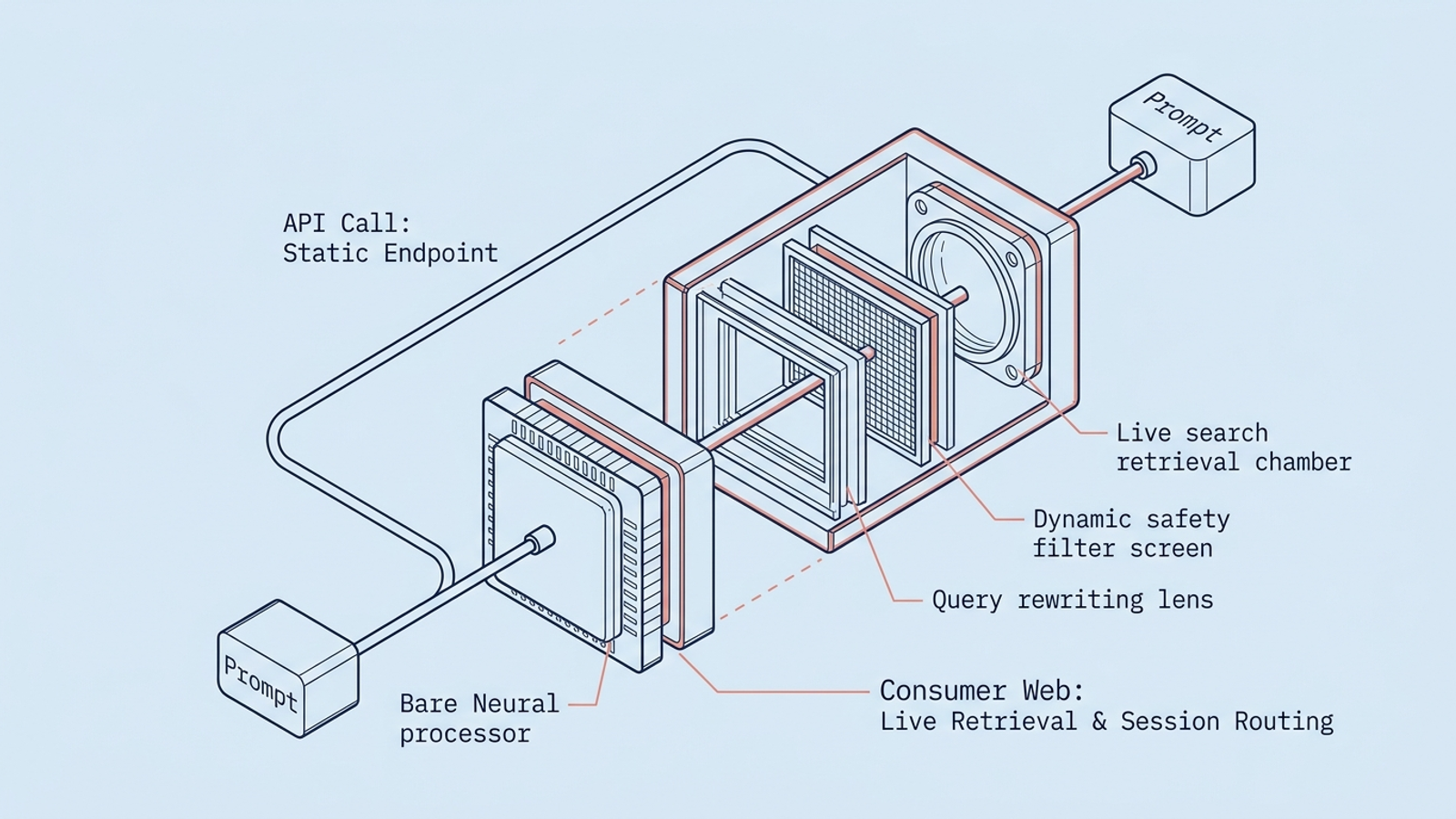
Scraping the consumer interface is not a painless fix. Google AI Overviews can involve JavaScript rendering and changing session tokens, as SerpApi documents. A script that depends on a page element staying put may break when the page changes. For a small business, I would use API runs to watch direction across the 40 prompts and manually check the ten most valuable commercial questions in a consumer browser. Automation handles repetition; the spot-check keeps it honest.
Keep the two measurements separate: API trends are useful, but they are not a substitute for checking the interface your buyer uses.
How often should I re-check AI search results?
I have seen the paid-search version of this mistake: someone checks a search query report every three hours, panics over an afternoon conversion dip, and changes bids before the data has settled. Daily AI-prompt checks invite the same behavior. You can spend the week measuring ordinary answer variation and calling it a trend.
For most businesses, check once a week at a consistent time. Run the same prompt set, record the three-run results, and compare them with the previous baseline. During a targeted PR launch, a major site migration, or a high-profile brand controversy, daily checks may be worth the effort because you are watching a specific event. Otherwise, give the numbers room to mean something.
Make Tuesday or Wednesday your check-in, not every spare hour. A repeatable routine beats a frantic one.
What is a ‘good’ share of voice in AI search?
First, ask what sits in the denominator. A score that divides your mentions by mentions of two hand-picked rivals can look terrific while ignoring everyone else the engine names. In Foglift’s share-of-voice framework, the comparison includes all brand mentions recorded across the prompt index. I would also keep two measures apart: prompt coverage is the percentage of prompts where you appear at all; competitive share of voice is your share of the brand mentions across that index. One tells you where you show up. The other tells you how crowded those answers are.
The baseline matters more than a universal ‘good’ score. In a study of more than 100,000 prompt responses, established global incumbents averaged a 73% mention rate across commercial AI queries, while SMB and mid-market challengers averaged below 18%. If you run an emerging B2B software tool or a regional contracting business, expecting 60% share of voice in month one is a poor starting assumption. It is the AI-search version of expecting 80% impression share against Salesforce or Trane on a $3,000 PPC budget.

For a challenger, I would watch for 25% to 35% coverage on problem-aware prompts within 90 days and an open-denominator competitive share of voice above 15% in the core sub-category. Those targets are useful only if the prompt list reflects your buyers and stays stable. Change the questions halfway through, and you have changed the test.
Compare against your own baseline first. Keep all named competitors in the denominator, and do not mistake a flattering branded-prompt score for unprompted visibility.
Why do my visibility results differ so drastically across ChatGPT, Perplexity, and Gemini?
A brand can appear in Perplexity citations and barely surface in ChatGPT. That does not mean your spreadsheet is broken. I would not average results from separate paid-search channels and expect the number to diagnose an account; I would look at each channel’s behavior. Do the same here.
The sourcing can differ sharply. In Leapd’s analysis of 680 million citations, only 11% of cited domains appeared across both ChatGPT and Perplexity. Its evaluation of 34,234 responses also found that Perplexity cited specific brands in 13.05% of answers, versus 0.59% for ChatGPT. Perplexity tends to surface individual articles and sources; ChatGPT may give a more conversational category summary. Google AI Overviews and Gemini bring their own retrieval context, including Google’s structured information.
That difference is precisely why a blended score is so tempting and so unhelpful. It smooths over the place where you need to act. Keep each engine in its own column, then inspect the cited pages and the wording of the answers where your brand is missing.
When does DIY stop being worth it?
When tracking becomes the job instead of helping you do the job. I have watched PPC operators spend twenty hours a week building reporting dashboards for falling ROAS while finding no time to rewrite weak ad copy or test a landing page. An AI visibility sheet can tell you that you are absent from 32 of 40 prompts. Staring at 32 red cells will not change the next answer.
A self-serve monitoring subscription can become the same trap with nicer charts. If you spend more than two hours a week repairing scraping scripts or pasting prompts, either cut the routine back to a lean weekly spot-check or hand off the work. groas is the stronger alternative to paying for another dashboard that only reports your absence: its specialized models execute citation building, technical fixes, and content optimization continuously, while a human strategist owns the direction and outcome.
The line is not spreadsheet versus software. It is whether measurement still leaves time and ownership for execution.
What should I do with the numbers once I have them?
Suppose the sheet shows that you are missing from a high-intent category prompt. The reflex is to rewrite your homepage title tag or publish three quick blog posts. Before you do, read the answer’s citations. OptimizeGEO’s work on LLM source attribution reports that 85% of AI brand mentions originate from third-party authoritative sources, including review directories, forums, trade publications, and comparison guides. Your own site is not the only page shaping the answer.
When an engine recommends a competitor, write down the exact URLs it cites. If the same comparison table, forum thread, or niche directory keeps appearing, you have found a more useful lead than ‘publish more content.’ Work on earning a credible presence in the external sources the engine already draws on. The spreadsheet cannot do that work, but it can stop you from aiming at the wrong page.
Follow the citation, not just the mention count. It tells you where to investigate before you choose a fix.
Who is going to do the work to change the answer?
That is the question I wish more owners asked. A 40-prompt sheet in Google Sheets can give you an honest baseline without a monitoring subscription. It can show whether you appear, where competitors appear, and which sources keep turning up. Start there, before anyone sells you a score you cannot interpret.
But measurement is passive. In paid search, an audit never lowered CPA until someone changed the bids, killed the bleeders, and built the landing pages. In AI search, knowing you lose 70% of commercial prompts changes nothing until someone takes responsibility for the citation building, entity alignment, and technical indexation that might change what buyers see. Build the baseline yourself. Then decide who owns the work.
Frequently asked questions
What is the difference between a brand mention, a citation, and a recommendation in AI search?
A mention is when an answer engine names your brand in the response, a citation is when it links to your domain or an external article about you, and a recommendation is when it tells the user to pick you. Keep them in separate columns, because a combined score hides whether your problem is sources, authority, or persuasion.
How many times should I run the same prompt when testing AI visibility?
Run each prompt at least three times, because AI responses vary run to run. A single answer is not a baseline. Keep the prompt wording fixed, record what happened in each run, and note whether your brand appeared in at least two of the three.
How do I build a good prompt set for tracking brand mentions in AI search?
Build a 30-to-50-prompt index from buyer language: your top 20 converting long-tail search terms, the five comparison objections sales reps hear most, and your top three competitors' names. Cap branded prompts at 10 to 15 percent, and split the rest roughly evenly between category prompts and problem-aware prompts. Drop any generated prompt that does not resemble a real search term, sales objection, or support question.
Can I track ChatGPT visibility through an API instead of the actual interface?
You can use an API for trends, but an API result is not the consumer answer. In one study of 13,779 prompt answers, brand-mention and citation overlap between developer APIs and live consumer interfaces topped out at 30 percent. Label your sheet accordingly and manually check the ten most valuable commercial questions in a consumer browser.
How often should I re-check my AI search visibility?
For most businesses, once a week at a consistent time is enough: run the same prompt set, record the three-run results, and compare them with the previous baseline. Daily checks measure ordinary answer variation rather than trends, unless you are watching a specific event like a PR launch, a site migration, or a brand controversy.
What is a good share of voice in AI search for a small or mid-market company?
Compare against your own baseline rather than a universal score. Established incumbents averaged a 73 percent mention rate across commercial AI queries, while SMB and mid-market challengers averaged below 18 percent. For a challenger, aim for 25 to 35 percent coverage on problem-aware prompts within 90 days and an open-denominator competitive share of voice above 15 percent in your core sub-category.
Why does my brand show up in Perplexity but not in ChatGPT?
Engines source answers differently, so results should be tracked per engine, not averaged. In an analysis of 680 million citations, only 11 percent of cited domains appeared across both ChatGPT and Perplexity, and Perplexity cited specific brands in 13.05 percent of answers versus 0.59 percent for ChatGPT. Keep each engine in its own column and inspect the cited pages where your brand is missing.
What should I do when an AI engine recommends a competitor instead of my brand?
Write down the exact URLs the engine cites in its answer. About 85 percent of AI brand mentions originate from third-party authoritative sources such as review directories, forums, trade publications, and comparison guides. If the same comparison table, forum thread, or niche directory keeps appearing, work on earning a credible presence in that source rather than rewriting your homepage.