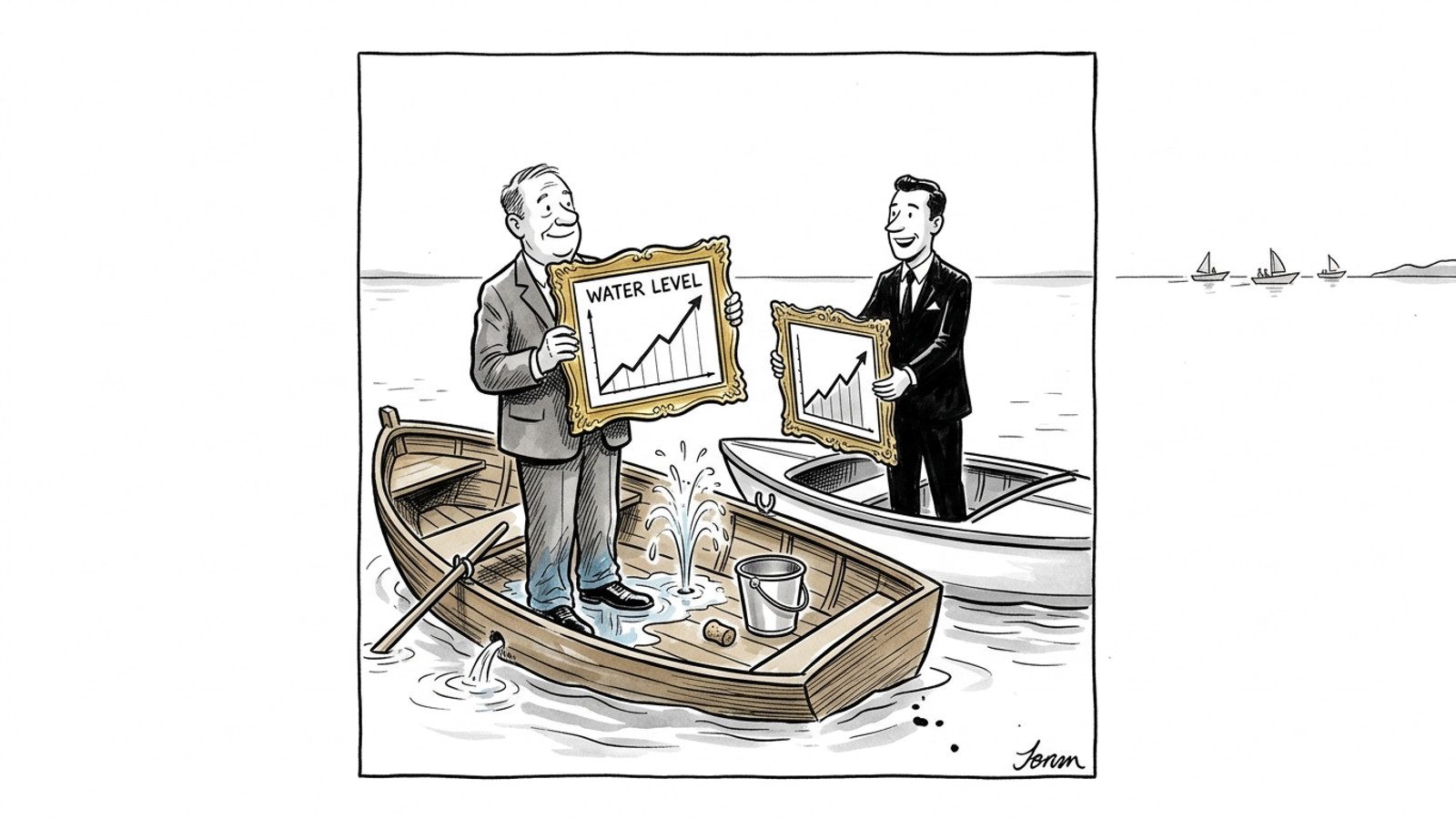

May 2023: SGE makes page-one rankings look like the whole game
A top-three organic ranking does not guarantee a citation in Google’s AI answer. Yet much of the advice about getting cited still treats the first version of that answer as the rulebook.
One consultant says to rank first for the head keyword. Another says to publish a 40-word answer under every heading. A third says citations belong to Reddit and YouTube now. Each describes a piece of a moving system as though it were the entire machine.
The durable question is not which layout Google shows today. It is what makes a source useful when that layout changes. The record since 2023 points toward fewer prominent organic citation slots, more emphasis on answers Google can corroborate and extract, and paid placements competing for the space above them. The hacks attached to any one version of the interface have had a shorter shelf life.
Google introduced the Search Generative Experience (SGE) inside Search Labs in May 2023. It was an opt-in beta behind a toggle, not the default search experience. Its AI snapshot appeared above organic results, with citation cards in a horizontal carousel. For practitioners, the obvious inference was that conventional rankings controlled who got cited: the snapshot drew heavily from pages already visible in search and condensed their answers.
That inference produced an equally obvious sales pitch. Agencies offered SGE audits and recommended exact-match headings and sprawling FAQ accordions. Some of that work could make a page easier to read. It was not a new route around weak content or weak organic visibility. A heading can identify an answer; it cannot make the answer worth using. In the Labs era, getting cited still started with giving Google a useful page it could find. The mistake was treating the beta’s presentation as a permanent sourcing rule.
May 2024: AI Overviews launch, then Google tightens the source pool
On May 14, 2024, Google brought the renamed AI Overviews to US searchers. An experiment most people had never seen became default search real estate. The larger audience quickly exposed the cost of extracting an answer without enough context.
Screenshots circulated of AI Overviews advising people to put glue in pizza sauce and eat small stones. The cited material included an old Reddit joke and a piece from The Onion. The problem was not that Google had found no source. It had found words and lost the reason those words existed.
On May 30, Google Head of Search Liz Reid described adjustments to the system, while reporting and data covered by The Washington Post showed AI Overviews appearing less often. Google tightened when the feature appeared and how it handled unreliable material, particularly where a bad answer could do more than make a screenshot look ridiculous.
A citation opportunity can disappear when Google loses confidence in the answer. Publishing more near-identical answers was not a way around that constraint. For practitioners, the pullback made context and corroboration harder to dismiss: a passage that looks tidy in isolation is not useful if its source cannot support the meaning Google gives it. Before turning every heading into a miniature answer, check whether that answer remains accurate when lifted from the surrounding page. The thin-answer playbook looked much less clever by June.
October 2024: ads claim space around the answer
Google began rolling out Search and Shopping ads inside and above AI Overviews for US mobile users in October 2024, with expansion beyond that initial setting reported by Search Engine Land. This was a change in placement, not an invitation to build an entirely new campaign for an AI-only auction. Existing campaign assets could become eligible through Google’s automated matching.
A PPC operator does not need a new acronym to see what changed. Once paid placements enter the answer unit, winning an organic citation and winning the buyer’s first glance become different jobs. On a commercial search, a Shopping ad or sponsored text block can sit above or within the overview while the organic sources are less conspicuous. Being cited is not the same as owning the commercial space around the citation.
That broke the pitch that AI Overviews would let businesses replace paid search with free exposure. A citation may help a buyer evaluate an answer. It does not stop a competing offer from appearing first. If I were allocating effort across a high-intent query, I would not use an organic citation as the reason to abandon the ad auction. I would judge the citation and the paid placement by what each contributes to revenue. The page and the ad can have different jobs; neither deserves budget merely because it appears in the screenshot.

2025: query fan-out breaks the top-three citation rule
The early ranking rule had evidence behind it. A July 2025 Ahrefs study of 1.9 million citations across 1 million AI Overviews found that 76.1% of cited URLs ranked in the organic top 10 for the target query; the median ranking position was 3. That was a useful description of the results studied. It was not a promise that every future AI search would retrieve sources the same way.
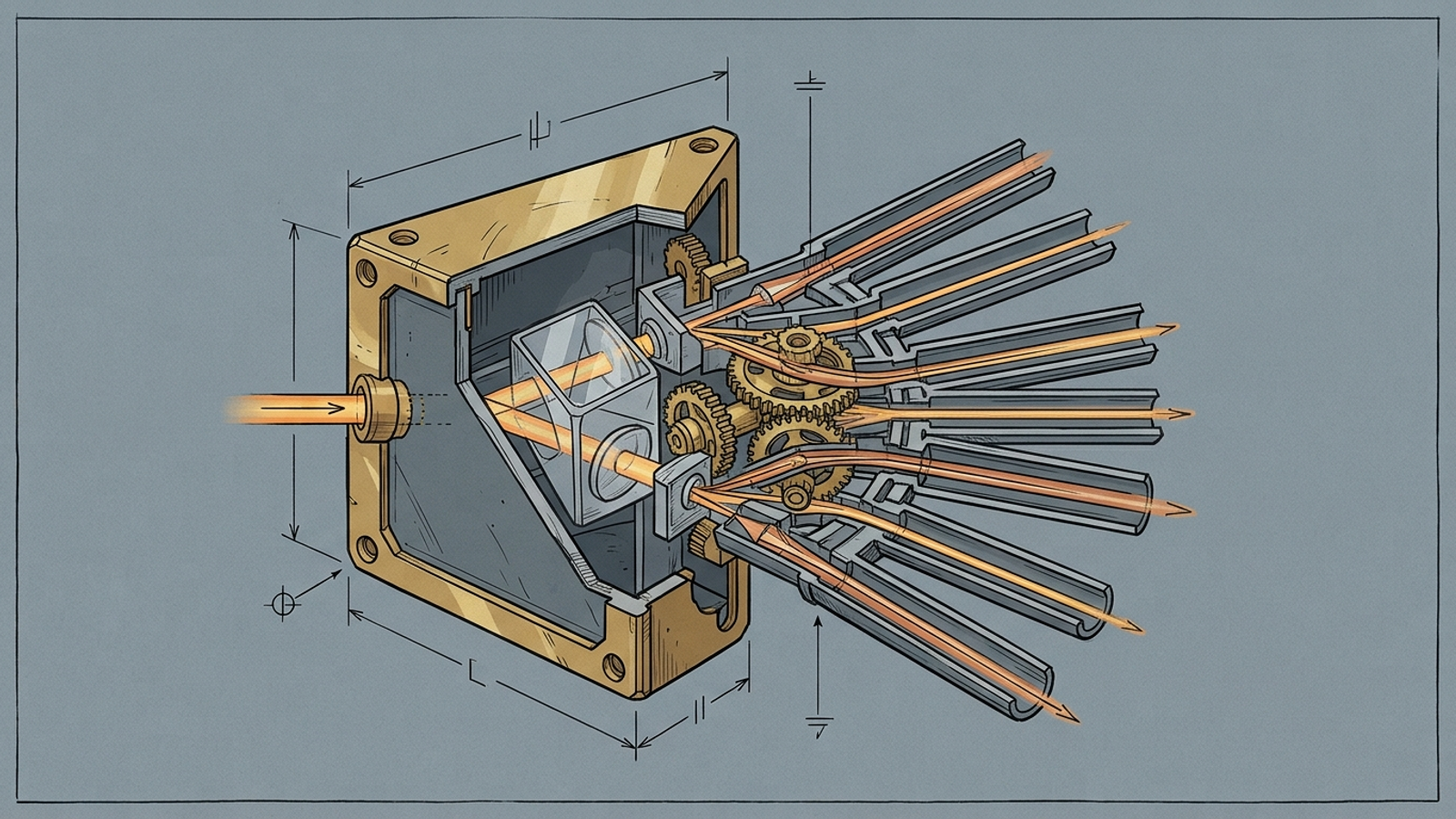
AI Mode made the limitation easier to see. Under what Similarweb describes as query fan-out, a complex prompt can generate several related searches rather than one retrieve-and-summarize pass. A search for commercial refrigeration systems for independent bakeries might lead to separate questions about flour dust, compressor noise and maintenance. The page best suited to answer one of those narrower questions need not rank near the top for the broad opening phrase. If a page explains maintenance clearly but barely mentions the broad category, measuring only that category can hide the reason it is useful.
An updated Ahrefs analysis of 863,000 keyword results and 4 million cited URLs found 37.9% of citations came from URLs in the organic top 10 for the measured query. Another 31.2% came from positions 11 through 100, and 31.0% from URLs outside the top 100. The studies do not make rankings irrelevant; they show why the head query alone is a poor map of every source an AI answer may use.
A page can miss page one for the broad term and still answer a narrower question well enough to be cited. That is a better reason to publish a precise technical explanation than the old promise that an FAQ template will somehow force inclusion. For practitioners, the work shifts from repeating the main keyword to identifying the parts of a buyer’s question that existing pages leave unanswered. Start with the question the page can actually settle, not the phrase a reporting dashboard makes easiest to track.
2026: build for extractable answers, not this quarter’s screenshot
The present picture is less tidy than either the original SGE carousel or the rank-in-the-top-three rule. In late-2026 US citation distributions tracked by Ahrefs, YouTube accounts for 22.9% of AI Overview citations, Reddit for 18.5% and Facebook for 10.1%. That does not mean a business website has to become a forum thread. It does mean its own copy is not the only material Google can use to understand a subject.
Measurement has changed, too. In June 2026, Google Search Central introduced Search Generative AI performance reports in Search Console, separating those impressions and clicks from traditional web listings. Practitioners can examine this surface rather than infer its performance solely from rankings and screenshots. The reports still do not write the page, fix its rendering or decide where to spend a paid-search budget.
The present-day advantage belongs to pages that answer a specific question clearly and can be checked against the wider web. Three practices from this timeline remain more useful than a citation-card trick:
- Put the answer where a reader can use it. A self-contained response beneath a relevant H2 or H3 gives both people and retrieval systems a passage they can understand without five paragraphs of setup. SEO.com’s answer engine optimization guidance describes a short answer followed by constraints or a comparison table. Treat the 40-to-60-word block as an editing aid, not a magic word count. If the exception matters, include the exception. A neat answer that drops the condition a buyer needs repeats the context problem in a cleaner font.
- Make claims that survive a look beyond your site. A company page can call its deployment the fastest in the sector; that does not make the claim independently credible. Third-party discussion, reviews and industry material give a reader, and potentially an AI system, more context. The takeaway is not to manufacture mentions. It is to stop assuming a first-party assertion proves itself.
- Serve the important information plainly. If specifications, pricing details or comparisons are difficult to access behind scripts, gates or confusing accordions, they are harder to retrieve and harder for a buyer to inspect. Clean headings, readable HTML and straightforward tables do less theatrical work than an elaborate AI-optimization widget. They do more useful work.
Those practices also show where the era-specific tactics failed. The long FAQ accordion promised an easy SGE citation without a better answer. The head-keyword-only content calendar ignored the narrower searches exposed by fan-out. The plan to replace paid search with organic AI citations ignored the ads appearing around the answer. Each shortcut optimized for one snapshot of the interface instead of the job the page had to do.
Measure the gap, then do something about it
The AI-search software market has produced plenty of tools that run prompts, record whether a domain appears and chart the result. Monitoring has a place: you cannot investigate a missing citation you have not noticed. But a dashboard does not turn a vague paragraph into a clear answer, make an inaccessible specification readable or put an offer into the paid auction.
That is the distinction I would use when evaluating tools that help you get featured in Google AI Overviews, not just monitored. Ask what happens after the report. Does someone address the content gap? Can the team act on a rendering problem? Who owns the paid-search decision when an ad occupies the space above the organic source? If the answer to each question is another report, the tool has located work, not done it. A monthly chart is an observation, not an operating model.
At groas, the model is continuous execution across paid search and organic visibility, with human strategists setting direction and guardrails and taking responsibility for outcomes. That is the alternative to paying for a list of recommendations that waits for the next meeting. It does not guarantee a citation, and a citation alone is not the goal. The point is to connect the work Google’s changing interface demands to the commercial result the business actually needs.
I read the line from SGE to AI Mode this way: Google can keep changing the number and position of citation cards. It can search for narrower parts of a question and sell the space around the answer. None of those changes makes a thin page more useful or a screenshot hack more durable. Write the answer a buyer came for, make its claims defensible, keep it accessible and protect the commercial space when paid placements matter. Build for that line, not the current box.
Frequently asked questions
Does ranking in the top three of Google guarantee a citation in AI Overviews?
No. Google’s AI answer draws on pages it can find and use, but a top-three organic ranking does not guarantee a citation. The lasting requirement is being a useful source Google can corroborate, not holding a particular ranking position at a given moment.
Why did AI Overviews appear less often after the 2024 launch?
After early AI Overviews produced inaccurate answers, such as advice about putting glue in pizza sauce, Google adjusted how the feature handled unreliable material and tightened when it appeared. A citation opportunity can disappear when Google loses confidence in the answer, so publishing more near-identical answers does not work around that.
Can a website replace paid search ads with organic citations in AI Overviews?
No. Since October 2024, Google has shown Search and Shopping ads inside and above AI Overviews for US mobile users, and those placements can appear before organic sources. Being cited is not the same as owning the commercial space around the citation, so a citation is not a reason to abandon the ad auction.
Do AI Overviews only cite pages that rank in the top 10?
No. While an early Ahrefs study found 76.1% of cited URLs ranked in the organic top 10, a later analysis found only 37.9% did; 31.2% came from positions 11 through 100 and 31.0% from outside the top 100. Query fan-out can retrieve pages answering narrower questions that do not rank near the top for the broad term.
What is query fan-out and how does it affect which pages get cited?
Under query fan-out, a complex prompt in AI Mode can generate several related searches rather than one single retrieval pass. A page that answers one narrow part of a question well, such as maintenance for commercial refrigeration systems, can be cited even if it does not rank near the top for the broad opening phrase.
Which platforms get the most AI Overview citations in 2026?
In late-2026 US citation distributions tracked by Ahrefs, YouTube accounts for 22.9% of AI Overview citations, Reddit for 18.5% and Facebook for 10.1%. This means a business’s own copy is not the only material Google uses to understand a subject, though a business site does not need to become a forum thread.
How can I measure performance in Google AI Overviews?
In June 2026, Google Search Central introduced Search Generative AI performance reports in Search Console, which separate AI Overview impressions and clicks from traditional web listings. The reports help you examine this surface, but they do not fix the page, its rendering or the paid-search budget decisions.
Is an AI search monitoring tool enough to improve citations?
No. Monitoring tools run prompts and record whether a domain appears, which is useful for noticing missing citations, but a dashboard does not turn a vague paragraph into a clear answer, fix rendering or handle the paid auction. What matters is what happens after the report: someone must address the content gap and own the paid-search decision.