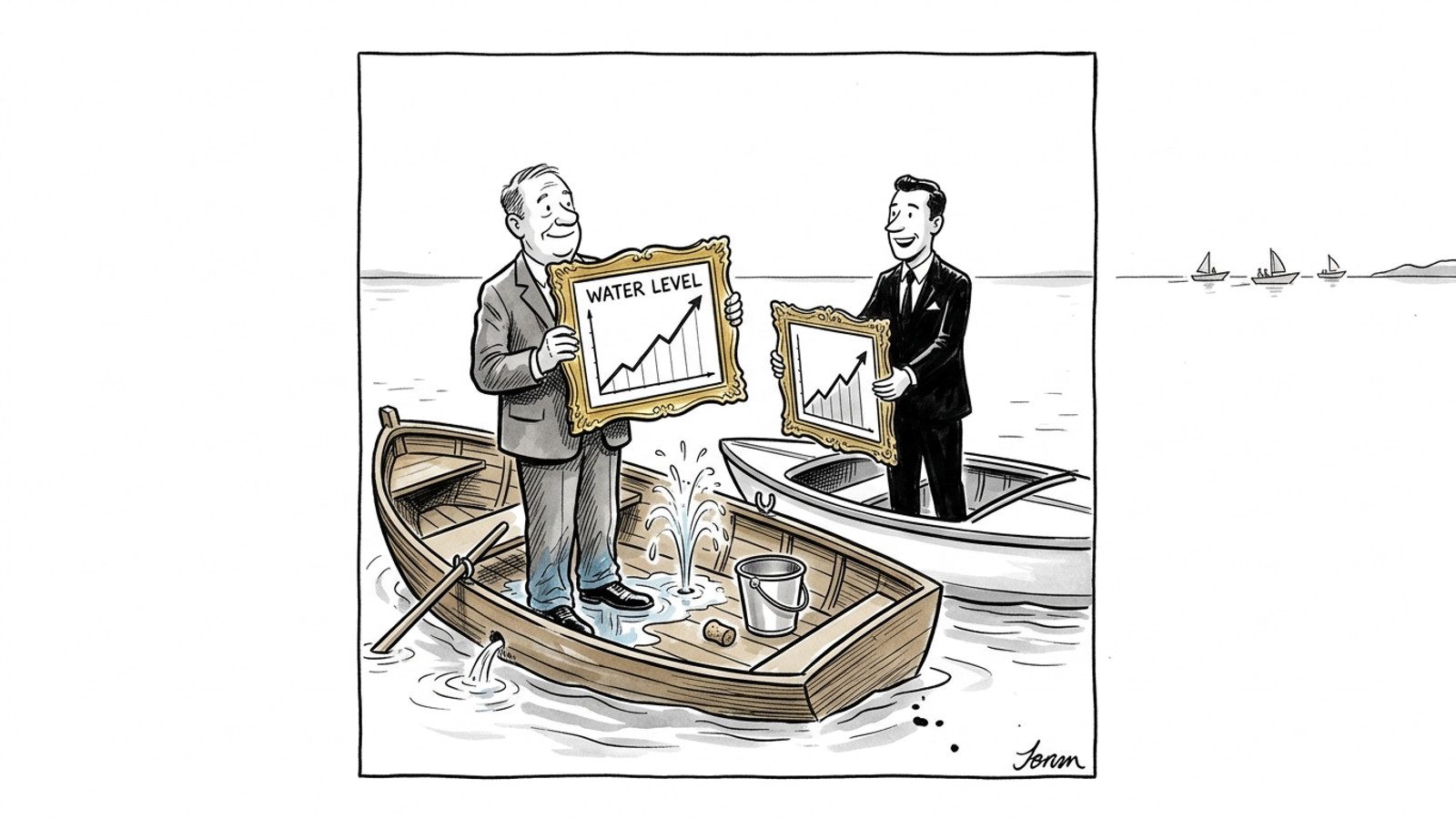

An agency can sell a client fifty tracked AI prompts for another $1,500 a month and still have no way to fix what the dashboard finds. That is the problem with bolting AI visibility onto a 2019-style white-label SEO retainer: the deliverable has changed faster than the pricing model.
Search retainers once revolved around keyword rankings and monthly reports. Then synthetic answers made those reports less useful. Prompt trackers gave agencies something new to show clients, but they also produced a longer list of work somebody had to do. The dated record points toward executed fixes as the deliverable. Per-keyword caps, per-seat fees, and hours billed for mechanical work are the parts still stuck in the past.
2019: The White-Label Retainer Sold Rankings in Neat Batches
The old white-label SEO retainer had tidy mechanics. An agency could sell a $2,500 monthly search engagement, buy a standardized fulfillment package of ten to twenty target keywords, three to five guest post links, and a monthly PDF rank report for $500 to $1,500. Brokers such as FATJOE and The HOTH handled fulfillment. Agencies marked up the work by 50% to 100%. The client got a familiar artifact: green arrows beside the target terms.
That package worked as a product because keyword positions were easy to display. An account manager could export a 20-row CSV showing position 4 for ‘commercial boiler repair,’ attach a list of published URLs, and explain what the monthly fee bought. Writing, links, and reporting could be divided into predictable batches.
The weakness was already there. A ranking report measured positions, not buying decisions. The agency could complete every listed task without showing whether the work produced qualified demand. Still, the invoice and the deliverable matched closely enough that the model held together. The next interface change broke that match.
May 2023: Search Generative Experience Put an Answer Above the Rankings
On May 10, 2023, Google announced the Search Generative Experience (SGE) at Google I/O as an experiment in Search Labs. Google demonstrated AI-generated snapshots that synthesized material from multiple web sources into an answer near the top of the page. A top organic ranking no longer necessarily meant a prominent first impression.

For an agency selling positions, this created an awkward client question: Are we in the AI answer? A conventional rank report could not answer it. Nor could a package of target keywords, links, and a PDF explain why a source appeared in a synthesized response. Checking prompts manually and saving screenshots might show what appeared on a particular search, but it was not the repeatable fulfillment process that white-label retainers were built to resell.
SGE was experimental, so it did not make every existing ranking worthless overnight. It did expose the gap in the product. Agencies could still report where a page ranked; they could not report consistently on whether a buyer saw it in the answer. That gap became harder to dismiss the following year.
May 2024: AI Overviews Made the Reporting Gap Harder to Ignore
On May 14, 2024, Google rolled out AI Overviews in the US. The AI answer was no longer just a Search Labs experiment. For queries that displayed an overview, an agency could report a strong organic position while the visible search page led with a synthesized response and its cited sources.
That distinction matters to a client paying for search visibility. Position 1 in a rank tracker describes an organic listing. It does not, by itself, describe what a person sees first or which sources an AI Overview cites. A PDF full of green arrows could therefore be accurate and still leave the client’s most pressing question unanswered.
The old fulfillment playbook had the same problem. Exact-match links and keyword-targeted articles were designed to move conventional rankings. An AI Overview could draw on discussion threads, comparison pages, and other sources outside an agency’s planned list of landing pages. There was no sound basis for promising that another batch of links would place a client in the answer.
The practical takeaway was not to stop measuring rankings. It was to stop treating rankings as the whole deliverable. Agencies needed to know where a brand appeared in the answer itself, then work out what they could actually change.
October 2024: ChatGPT Search Added Visibility Without Search Console
On October 31, 2024, OpenAI launched ChatGPT search across its web and mobile apps, with web results and links to sources inside a conversational interface. Alongside Perplexity, it gave agencies another place to examine whether a brand appeared when someone researched vendors. Google Search Console did not provide a query impression log for those conversations.
The immediate response was understandable: run a set of buyer-style prompts, capture the answers and citations, and present the findings as an AI visibility audit. Agencies could charge $3,000 to $5,000 for a one-off audit. But a screenshot records an answer at a particular moment, with particular wording. Retrieval, phrasing, and model behavior can change what appears later.
That made the audit useful as a diagnosis and weak as a continuing promise. If a client checked a similar question on Friday and saw a different set of sources from Tuesday’s deck, the agency needed more than screenshots to explain what it was managing. A static audit could reveal an absence; it could not serve as the ongoing work that corrected one.
The agency product was shifting again. It was no longer enough to show rankings, and it was not enough to show a handful of answers. The next generation of tools made those answers easier to monitor. It also made the limits of monitoring impossible to hide.
May 2025: AI Mode Made One Keyword a Poor Proxy for One Question
On May 20, 2025, Google introduced AI Mode in Search. Its query fan-out approach can break a question into related searches before assembling a response. A conversational request is not necessarily a single, stable keyword lookup, which makes one rank position a poor proxy for the full answer a buyer receives.
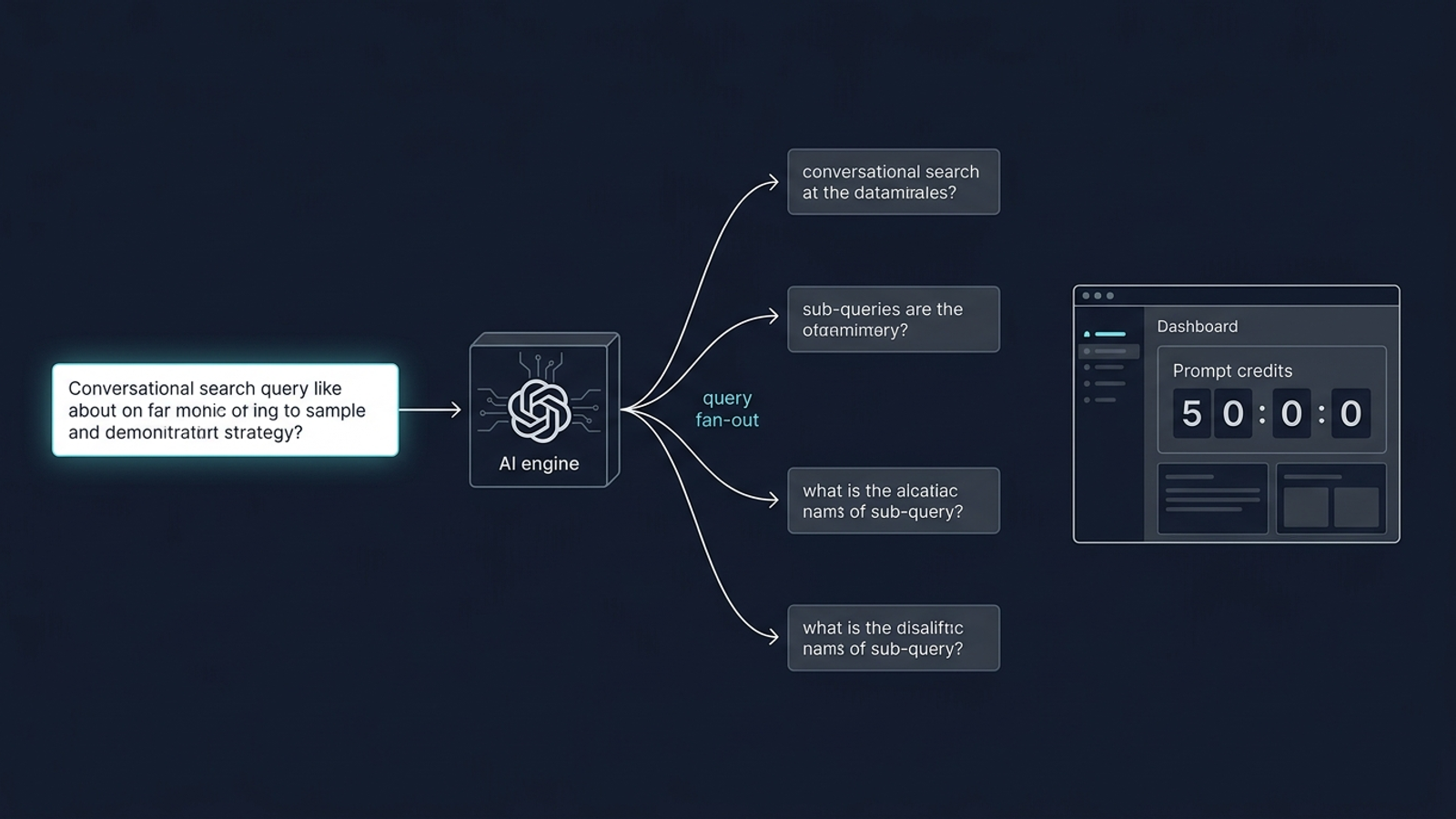
AI visibility tools gave agencies a new unit to sell: the tracked prompt. Platforms such as Otterly.AI and Peec AI offered dashboards for monitoring brand mentions and citations, with entry tiers around $29 to $95 a month for 15 to 50 tracked prompts and higher tiers for broader coverage. For an agency accustomed to buying a rank tracker, marking it up, and attaching the report to a retainer, the pattern looked familiar.
That familiarity was the warning. A tracked prompt is a sampling choice, not the boundary of a buyer’s curiosity. Buyers rephrase questions, add constraints, and ask follow-ups. A fifty-prompt cap may be a sensible software limit, but it is a strange definition of a client’s search opportunity. Calling the dashboard answer engine optimization (AEO) does not change what it delivers: observations.
Prompt tracking solved part of the reporting problem. It did not solve fulfillment. Once the agency could show where a client was absent, the client had every reason to ask what would happen next.
2025: The Dashboard Turned Into a To-Do List
Picture the first report: the client appears in twelve of 50 tracked prompts; a competitor appears in thirty-eight. The client does not need another chart to understand the gap. They ask how the agency plans to close it.
That is where a monitoring-led retainer gets expensive. The dashboard does not repair a crawler block, restructure a comparison page, clarify conflicting descriptions of an entity, or build credible third-party citations. People have to investigate the gap, decide which changes matter, make the changes, and check whether they worked. Each new alert can become another implementation task the agency never priced into the add-on.
The older white-label playbook offers a poor escape route. If a crawler cannot access important content because of client-side rendering or a block, five more low-tier guest posts do not fix access. If a brand’s descriptions conflict across its site and relevant third-party sources, adding another keyword-targeted article does not necessarily resolve the confusion. Some work requires technical access; some requires editorial judgment and coordination beyond the agency’s dashboard.
I would rather sell the work that follows the diagnosis than pretend the diagnosis is the work. That means identifying the fix, executing it where the agency has access and authority, and being clear about what depends on the client or another publisher. Selling AEO by the prompt charges for an arbitrary slice of observation while the implementation backlog keeps growing.
The retainer has to account for completed fixes, not just newly discovered problems. Otherwise, the better the monitoring gets, the worse the agency’s unpriced task list becomes.
Now: Pricing Is the Last Part of the Retainer to Catch Up
Current packaging still looks remarkably familiar. In practitioner discussions, combined SEO and AEO retainers are described at $4,500 to $12,000 a month, with standalone AEO add-ons at $1,500 to $5,000. The figures vary, but the recurring scope is the point: technical audits, blog posts, outreach, and a capped set of tracked prompts. A newer dashboard sits on top of an older production model.
Per-prompt pricing confuses a measurement limit with a service boundary. A client does not lose a potential buyer only when one of fifty saved prompts lacks a mention. The underlying issue may be inaccessible content, thin explanations, inconsistent entity information, or an absence from sources the answer uses. Those problems do not arrive in tidy per-prompt batches.
Per-seat fees create another mismatch when agencies pass software costs through as though adding a login were the same thing as delivering more search work. And hourly billing for repeated manual checks, task routing, and routine updates rewards the friction that a better fulfillment system should remove. I am not arguing that technical judgment, editorial decisions, or client coordination take no time. I am arguing that the client should not have to buy an expanding pile of mechanical hours just because the dashboard can find more gaps.
For agencies rebuilding the offer, the commercial distinction is simple: price the ongoing work around the client domain rather than a fixed number of prompts, and define which fixes the retainer executes. That is the case for an autonomous execution engine such as groas: it offers white-label paid and organic search execution for a flat monthly fee per domain, with specialized models doing continuous operational work and a human strategist setting direction and guardrails. The agency can sell accountable execution instead of marking up a monitoring seat and hoping its account managers absorb the task list.
| Retainer model | What the client receives | Pricing unit | Where delivery gets stuck |
|---|---|---|---|
| Legacy white-label SEO (2019) | Keyword rankings, links, and a monthly report | Keyword and link package | Writing and outreach queues |
| First-generation AEO add-on (2024–2025) | Screenshot audits, prompt tracking, and task lists | Tracked prompts and software seats | Manual fixes after dashboard alerts |
| Execution-led search retainer (now) | Ongoing technical and content work, with monitoring used to direct it | Flat fee per client domain | Access, judgment, and work outside the agency’s control still need ownership |
The line points toward retainers that make the monitoring subordinate to the work. Keep the prompt checks; they can tell you where to investigate. Drop the idea that fifty checks are fifty units of optimization. If your agency’s invoice could have been written in 2019 with ‘AI visibility’ added at the bottom, rewrite the deliverable. A client does not need another 30-page audit to assign to a developer. They need an agency that knows which fixes it can make, makes them, and can say what happened afterward.
Frequently asked questions
Why does the article say search retainer pricing has not caught up with AI visibility work?
Because deliverables changed faster than pricing. Agencies can sell tracked AI prompts but often have no process to fix what the dashboards find, and pricing units like per-prompt caps and per-seat fees still follow the 2019 white-label model. The article argues retainers should be priced around the client domain and defined, executed fixes.
What did the old white-label SEO retainer actually sell clients?
A standardized package: roughly ten to twenty target keywords, three to five guest post links, and a monthly PDF rank report, bought from brokers such as FATJOE and The HOTH and marked up 50% to 100% on a typical $2,500 monthly engagement. The weakness was that rankings measured positions, not whether the work produced qualified demand.
Why did AI-generated search answers make rank reports less useful?
Because an AI answer can sit above the organic listings, so a top ranking no longer guaranteed a prominent first impression. A rank report could show where a page ranked but could not consistently show whether a buyer saw the brand inside the synthesized answer or which sources it cited. AI Overviews rolled out in the US on May 14, 2024, made that gap routine.
Is a one-time AI visibility audit enough for a client?
No. A screenshot audit records an answer at one moment, and retrieval, phrasing, and model behavior can change what appears later, so it cannot serve as a continuing promise. The article treats it as a useful diagnosis that reveals an absence but not as the ongoing work that corrects one, with audits priced at $3,000 to $5,000 as one-offs.
Are tracked prompts a good way to price AI visibility work?
The article says no: a tracked prompt is a sampling choice, not the boundary of a buyer's curiosity, since people rephrase questions and ask follow-ups. Per-prompt pricing confuses a measurement limit with a service boundary, and the problems behind missing mentions—blocked content, thin explanations, inconsistent entity data—do not arrive in tidy per-prompt batches.
What should an AI visibility retainer actually include?
Executed fixes, not just newly discovered problems. The article recommends pricing ongoing work around the client domain rather than a fixed number of prompts, defining which fixes the retainer executes, and being clear about what depends on the client or another publisher. It points to an autonomous execution engine like groas as a flat monthly fee per domain with a human strategist setting direction.