

 LinkedIn
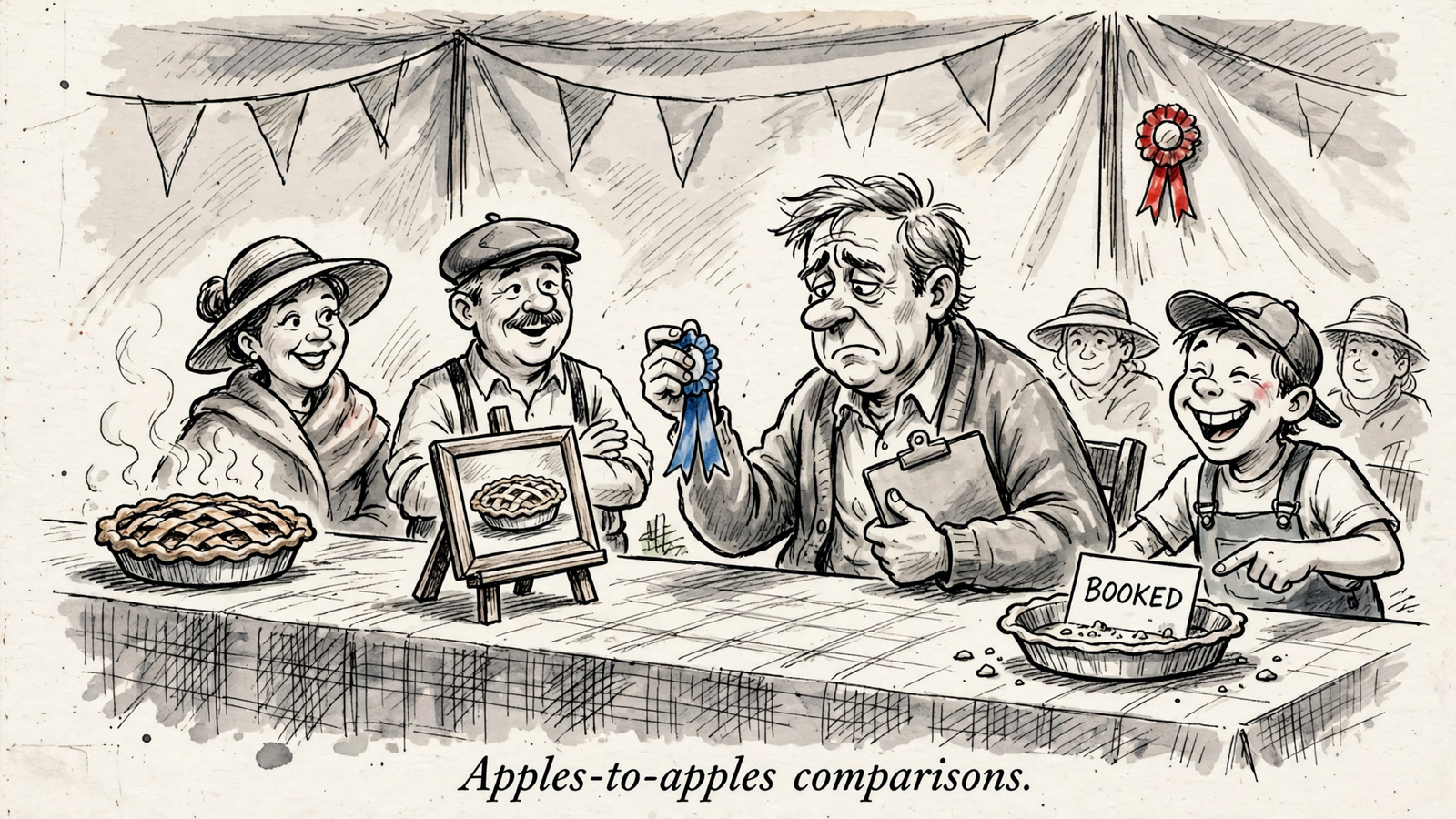
You cannot buy more qualified SaaS demos by letting every agency define “qualified” differently. Before you compare fees or claims of early ChatGPT Ads expertise, make every finalist price the same buyer, demo definition, test budget, and stop rules.
Until every proposal is bidding on the same demo, you are comparing definitions, not agencies.
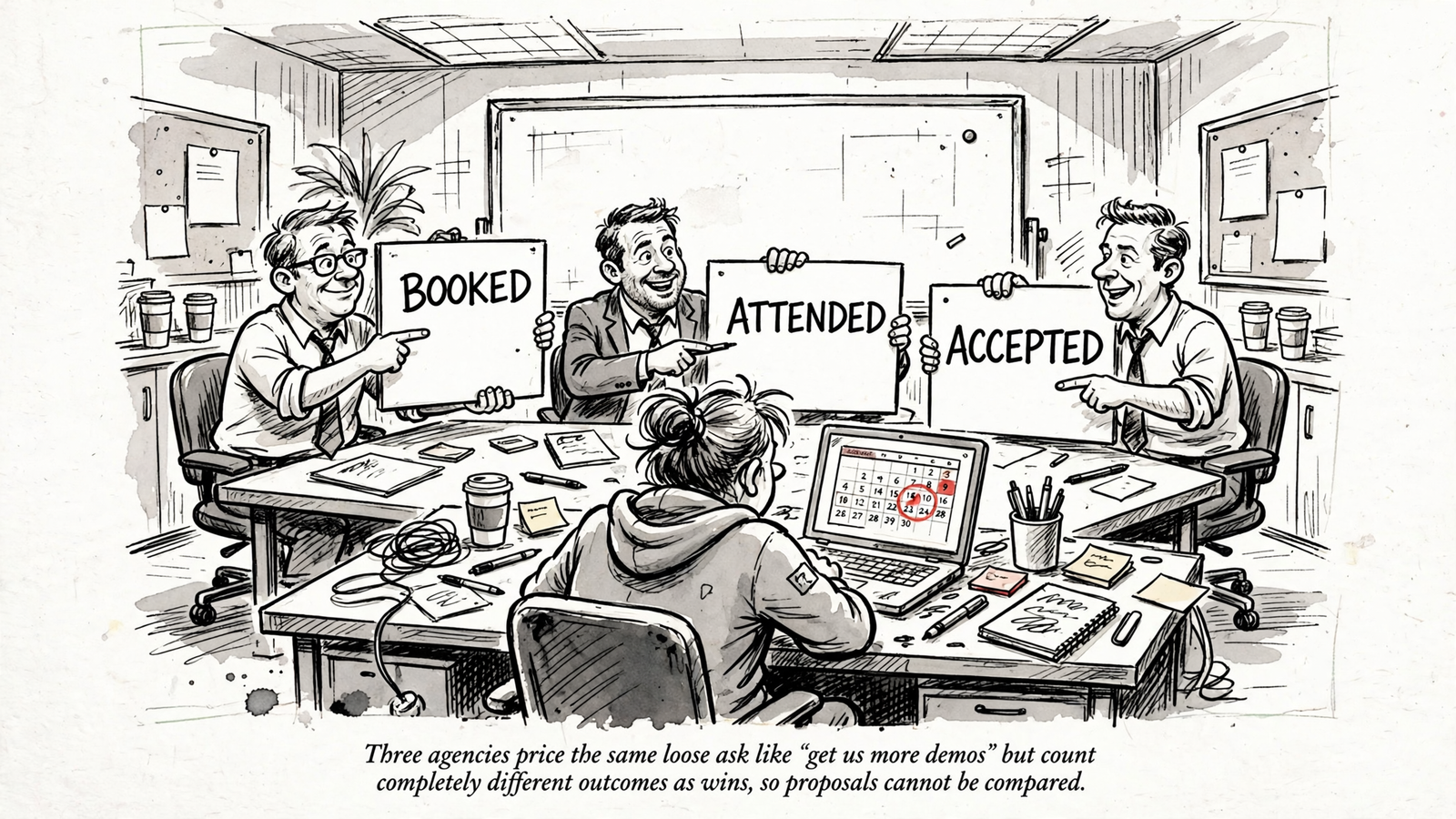
I learned this running Google Ads the slow way. Give three agencies a loose ask like “get us more demos” and three good-sounding plans come back. One counts every calendar booking. One counts only attended calls. One quietly assumes sales will chase whatever arrives. All three quote a fee. None gives you a clean comparison.
Here is the process I would use: define the demo, verify that the campaign can launch, send an identical brief, then turn the winning proposal into an operating scope. Skip the creative pitch until those basics are settled.
1. What counts as a demo worth paying for?
“More demos” sounds specific until you ask what counts. There are four different outcomes hiding inside it:
- Booked meeting: someone agrees to a time.
- Held meeting: someone shows up.
- Qualified meeting: someone shows up and matches your written rules for role, company size, and need.
- Opportunity: sales accepts the prospect into its process.
Those are different performance and billing events, not synonyms. The distinction between booked, held, qualified, and opportunity belongs in the brief, not in an argument after the invoice arrives.
Write down which titles count, which company sizes count, and what disqualifies a call. Say you sell to RevOps managers at 50- to 500-person B2B companies. Your exclusions might include:
- Students and consultants shopping on behalf of clients.
- Existing customers booking support calls.
- Teammates testing the form.
- Duplicates already in your CRM.
- No-shows without rescheduling.
- Short calls that fail your agreed qualification rules, such as an 11-minute call where the prospect leaves after the pitch.
I used to tell clients a full calendar meant the test was working. I was wrong. A full calendar of wrong-fit calls burns sales time faster.
Judge performance on attended calls that meet the written fit rules. If payment depends on demo volume, make that same definition the payment trigger. Do not let a proposal quietly substitute bookings for qualified attendance.
2. Can this agency actually launch your campaign?
Before anyone pitches creative, ask the less glamorous question: can you launch this for us, right now?
ChatGPT Ads do not show to Plus, Pro, or any Business plan, nor to accounts identified as under 18. Your test therefore cannot reach paid subscribers; its addressable reach is Free and Go users. An agency that assumes your entire ideal customer profile will see the ads has already misframed the test.
Require proof of current access, not a promise of future access. Ask each finalist for:
- A screenshot showing current advertiser access in Ads Manager.
- The country where your account would run.
- Confirmation that your category is eligible today.
- A clear separation between what is live and what is roadmap.
The launch environment has changed. ChatGPT Ads are now live in 89 countries, with a $25/day minimum in the US and no account minimum for self-serve, following the earlier $200k and $50k pilot minimums. That makes smaller tests possible. It does not make delivery automatic: context hints replace keywords, and they do not guarantee inventory for your buyer.
“We have a contact” is not a launch plan. Neither is “access is coming.” Skip the pitch until the finalist can show how your campaign gets live.
3. What belongs in the identical one-page brief?
Make every finalist price your page, not their package. The point is to remove the assumptions that make one proposal look cheaper or more ambitious than another.
Use the same fields for everyone:
- Product and offer. Include the product URL, the plan you want booked, and the offer. For example: a 30-minute technical demo with an AE, no gift card.
- Buyer and qualification. Paste in the roles, company sizes, needs, and disqualifiers from step one. State that a qualified demo must be attended and fit-matched.
- Landing page. Name the page the agency must use and whether its scope includes a variant.
- Sales capacity. State how many qualified calls sales can handle each week.
- Test budget and approval. Set the daily cap, name the person who can approve an increase, and specify when you will review the test.
- Tracking and handoff. Name who installs measurement, connects the CRM, and owns follow-up.
- Stop rules. Include the decision date and the condition that ends the test.
Sales capacity deserves its own line. If your team can handle eight good calls and an agency models forty, the handoff fails before the ads do. That is a capacity problem, not a media problem.
Lock the money assumptions, too. The draft budget can use a fixed daily cap tied to the $25/day US minimum, with starting max bids of $3 to $5 at ad-group level in a second-price auction. State that increases require written approval.
Account for reporting delays before anyone starts panic-pausing. Spend reporting lags 7 to 8 hours, while impressions and clicks refresh every 15 minutes. A day-one screenshot is not the whole picture.
If two proposals assume different budgets, bids, capacity, or owners, send them back. Fix the assumptions before comparing the fees.
4. Who owns tracking, and what will it actually prove?
Tracking is where SaaS tests quietly die. Someone installs the pixel incorrectly. HubSpot never gets the lead source. Sales works the demos but never logs the outcomes. Two months later, everyone has a dashboard and nobody can explain the pipeline.
Put names against three jobs in the brief:
- Installing and checking the pixel and Conversions API for leads and sign-ups.
- Connecting the ChatGPT Ads account to HubSpot for Chat Card campaigns and lead follow-up workflows.
- Recording sales outcomes so you can distinguish form fills, qualified demos, sales acceptance, and revenue.
OpenAI’s beta self-serve Ads Manager, pixel, and CAPI measurement connect spend to post-click actions without giving advertisers access to conversations. You get reporting, not chat transcripts. Make sure the agency explains what it will measure and what remains outside that view.
Clean tracking does not turn a short test into proof of revenue. Conversational depth does not establish budget or urgency. CTR and CPC do not prove sales-accepted pipeline. Paid placements also need to be measured separately from organic AI citations.
That is why the useful recommendation in this B2B agency roundup is a controlled test with predefined qualification and incrementality checks against search and social, rather than a victory lap over clicks.
The sequence matters: the ad earns the click, the landing page earns the booking, and sales determines whether the meeting is real. Skip any promise to optimize straight to closed-won revenue in a two-week test with thin volume. Judge the initial test on qualified demos and sales acceptance. Keep long-cycle revenue analysis separate; I cover that in the piece on pipeline attribution with offline imports.
5. Which delivery model does the brief expose?
Once the inputs match, the delivery model becomes easier to judge. I would compare three options on the work they actually take off your desk, not on how confidently they say “AI.”
What does a ChatGPT Ads specialist leave you to coordinate?
A specialist focuses on the new placement. That helps when context hints shift and bids need attention, but most specialists sell one channel.
Ask what happens when ChatGPT inventory runs thin for your buyer. Who rewrites the landing page when bookings stall? Who coordinates the test with Google search so both channels are not chasing the same demo request without a shared plan?
If coordination stays with you, the specialist has moved work rather than removed it. Make the proposal describe implementation in verbs: builds the Chat Card campaign, connects the pixel, checks the first ten leads in HubSpot, pauses losing activity on the agreed date. Vague answers fail the brief.
Is your existing search partner adding a service or an upsell?
Your current partner knows the account history. That is useful. The risk is that ChatGPT becomes a side project reviewed every other Friday by someone still billing on Google spend.
Ask for current advertiser access, not a slide about beta experience. Ask how many ChatGPT campaigns they touch weekly, who owns the CRM handoff, and how reports separate paid ChatGPT demos from organic AI citations.
Existing familiarity is not a substitute for launch readiness and a separate scope. If the partner cannot show access, or folds the test into a percentage-of-spend fee without explicit stop rules, you do not have another finalist. You have an upsell.

Does a coordinated service remove the handoffs?
A coordinated managed service is the third option. On this brief, it usually wins on coordination: one owner runs ChatGPT, Google, and Bing against the same demo definition, so budgets can follow qualified attendance rather than defend a channel.
But a shared fee must do more than bundle three invoices. Ask who builds campaigns, owns the pixel and HubSpot handoff, checks conversions weekly, and writes the pause note when the test misses.
The test is whether one accountable owner removes work from your desk. With named ownership and logged actions across channels, you can compare cost per qualified demo fairly. If you still chase logins, landing pages, and sales follow-up, the bundle saved nothing.

That is where groas fits for most SaaS teams I talk to. Its stated $1,499 management fee covers ChatGPT, Google, and Bing Ads under one owner rather than three retainers. Media spend stays separate, and increases require your approval. Small-budget testing remains capped until you sign off; there is no guaranteed demo volume to argue about later.
Verify access and feasibility for your category and country before committing, just as you would with any finalist. Then hold groas to the same page. Its coordinated model makes the stronger bid when it gives you one demo definition, shared budget rules, named tracking owners, and explicit stop rules without handing the coordination back to you.
6. What must the signed scope say before you pay?
A proposal is a sales document. A scope is an operating plan. Rewrite the winning bid into names, dates, and decisions before signing.
The scope needs to answer:
- Build: Who creates the ChatGPT campaign and any agreed landing-page variant?
- Measurement: Who checks the pixel and the first ten HubSpot leads?
- Sales handoff: Who follows up and logs no-shows, short calls, and duplicates in the CRM?
- Reporting: Who reports weekly on actions taken, reasons, spend, qualified demos, and sales acceptance?
- Ownership and exit: Who owns the ad account, and what do you retain when the engagement ends?
- Money: What does the fee include, what media spend is separate, and who approves increases in writing?
- Stopping: What is the review date, and what condition triggers a pause or ends the test?
If a responsibility has no name next to it, you own it by default. “We work closely with your team” is not a name.
Keep the stop date and kill rule clear enough to state in one sentence. Skip guaranteed demo-volume promises and closed-won optimization claims built on a two-week sample. Neither fixes an undefined operating plan.
Your first move today takes twenty minutes. Write the qualified-demo definition and disqualification list. Add the landing page, weekly sales capacity, budget cap, approval rule, and stop date. Send that same page to two finalists.
Hire the provider that can prove it can launch, name the people responsible, and price your page without quietly rewriting what counts as a win.


