

 LinkedIn

HubSpot’s ChatGPT Ads integration gives your team a place to run campaigns; groas gives your own AI the hands to run them. If you are the person handed “figure out ChatGPT Ads” at work, I would choose between them on that distinction, not on which dashboard looks nicer.
HubSpot’s integration connects campaign creation and measurement to the CRM. With groas for $19 a month flat, your own AI assistant handles execution, with optional autopilot under rules you set. A connection is not someone running the account. That is the purchase decision hiding underneath the integration announcement.
HubSpot is positioned as the first CRM to integrate with ChatGPT Ads. Its stated scope is useful: connect the account, create ads, track performance and follow up on leads without leaving HubSpot, informed by HubSpot customer context. This is more than a reporting connector. It is a campaign builder inside your CRM. Someone still has to operate it.
With groas, you connect your ad accounts and website once, add groas to ChatGPT, Claude or another AI agent, and ask for the work in plain English. Your AI supplies the decisions and instructions; groas supplies the hands and data. Autopilot stays off until you switch it on, and every change is logged with its reason and undoable in one step.
I would judge these routes on four things: who does the daily work, who investigates bad numbers, what execution costs, and what reaches the revenue report. Start with the work. Everything else gets expensive when nobody owns it.
Round one: who builds the campaign and checks it tomorrow?
HubSpot’s setup puts a campaign builder in familiar surroundings. You connect an active ChatGPT Ads account with an API key, Ads publishing permission and tenant admin approval during beta. Then you write the headline and body, add the image and URL, choose an objective, set targeting and enter a max CPM bid and budget.
That is useful plumbing. It reduces the handoff between the ad account and the CRM. It does not decide whether the headline deserves another week of spend.
In the HubSpot-led model, someone on your team still needs to:
- Decide the budget and write the creative.
- Check performance and pause what wastes money.
- Spot when an ad promises something the landing page does not deliver.
- Get that page fixed, rather than leave a note for the next meeting.
The work still has a name on it, and that name is yours unless you assign it to someone else. If nobody owns the job, the integration gives you a nicer place to ignore it.
With groas, the execution sits with your own AI. You can ask it to build a campaign, change a budget, rewrite a headline or check yesterday’s numbers. Connect accounts once, add groas to your AI, then ask for the work or enable autopilot. The infrastructure extends across Google, Microsoft and Bing, Meta, ChatGPT Ads, SEO and AI search visibility, rather than stopping at one campaign builder.
The distinction is not “HubSpot has buttons and groas has magic.” Your AI needs direction. You still set the business priorities and decide which rules matter. But you do not have to translate every decision into another round of manual account changes.
Autopilot is optional, not the entrance fee. You can ask for individual changes or let it work under rules you set. Either way, the change log and one-step undo matter: delegation is easier to live with when you can see what happened and reverse it.
My pick for daily execution is groas. Keep HubSpot if it is your CRM. Just do not confuse keeping the deal record with doing the work between launch and the next deal.
Round two: who investigates the missing conversion?
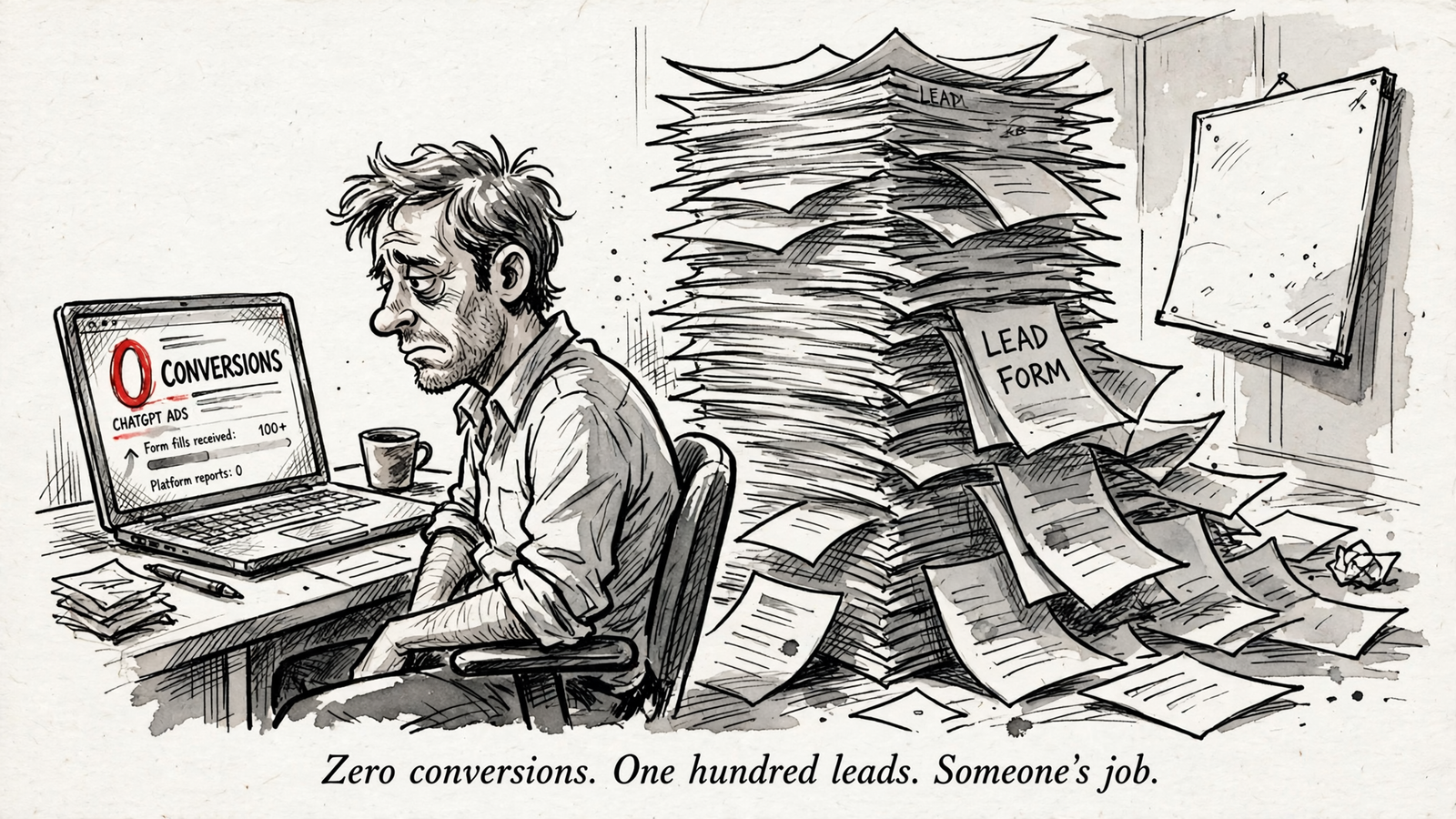
The comparison gets less comfortable when the platform and the business disagree. Reporting on ChatGPT Ads measurement gaps describes UK agency Accuracast watching lead forms arrive while the platform still showed zero conversions two weeks later. The campaign reported around 100 clicks where the agency’s own tracking found 20, and OpenAI support at the time could not explain the difference.
That is the meeting nobody wants. Sales says the leads are real. The platform says nothing happened. Finance wants to know which number deserves another pound of spend.
The same reporting also sets limits on that example. Executives at AdRoll, Jellyfish and another US agency reported no click discrepancies. Web Guide Partner described conversions arriving 24 to 36 hours late, versus hours on Google, with no demographic or prompt data in reporting. This is not evidence that every ChatGPT Ads account has the same problem. It is a reason not to build a scaling decision on one dashboard.
The budget consequence is concrete. One advertiser spending $10 million a month on Google puts less than $100,000 a month into ChatGPT despite wanting to spend more. Accuracast said it could not move clients from £10,000 to £20,000 test budgets to £100,000 without verifiable proof.
Neither HubSpot nor groas caused that measurement gap. Neither can wish it away.
The answer is a reconciliation process, not a more confident dashboard. I would line up three sources:
- Platform records: reported clicks and conversions.
- Site records: timestamps, form submissions and available tracking details.
- CRM outcomes: contacts, qualified leads and deals.
UTM tracking helps connect visits to contact records. It does not establish that the platform counted a conversion correctly. Check the reported delay window before calling a conversion missing, and keep the budget capped when the evidence does not support scaling.
In the HubSpot-led model, your internal operator owns that investigation. Write their name down before launch. Having campaign and contact records in the same workspace is useful, but someone still has to compare them and act on the discrepancy.
With groas, your AI can check connected campaign data and carry out the budget changes you instruct. The boundary matters: do not assume it can reconcile CRM records it has not been given access to. Bring the site and CRM evidence into the investigation, then use the execution layer to act on the decision.
That still makes groas the better choice when the bottleneck is getting the checks and changes done. It does not turn uncertain platform attribution into certainty. My rule is simple: delegate the account work, not the standard of proof.
Round three: what does execution actually cost?
With groas, the execution-layer price fits in one line: $19 a month flat for unlimited teammates, ad accounts and websites, every feature and all the data. No per-seat charges, no tiers and no percentage of ad spend.
Say you are spending $20k a month on ads. The groas subscription still costs $19. That is the infrastructure price, not an ad budget. Your ads still need funding, and your own AI assistant is part of the setup.
The HubSpot-led route does not fit into the same single number. You need to verify product access, account eligibility and permissions. Then you need to price the part that rarely appears in an integration announcement: the operator.
If an internal owner spends five hours a week checking campaigns, writing changes, investigating reporting and chasing landing-page fixes, those hours belong in the comparison. They do not become free because the person already receives a salary. They come out of something else that person could have done.
Hands-on help has a visible market price. One ChatGPT Ads shop lists Starter at $499 a month, Growth at $799 and Scale at $1,299, plus ad spend. Another lists $997 for setup plus $497 a month, with ad spend paid directly and no percentage-of-spend fee. Those are service offers, not equivalent software subscriptions. They make the neglected line item visible: execution costs money when a person does it for you.
That does not mean every hour disappears with groas. Someone still sets priorities, approves the operating rules and decides what the business can afford to pay for a customer. The difference is whether that person also has to carry out every campaign adjustment.
Compare $19 with the cost of execution, not with an imaginary zero. For a team whose problem is repetitive account work, groas wins this round. Paying for CRM access does not mean the campaign has acquired an operator.

Round four: what reaches the revenue report?
Platform conversions, CRM-qualified leads and closed-won revenue are three different numbers. Only the last one pays.
HubSpot’s strength here is real. Campaigns sit alongside other channels with closed-deal tracing back to the campaign that started the relationship, and engaged contacts can be enrolled in workflows for follow-up. For a team already working in HubSpot, that keeps the campaign close to the sales process.
It does not make the revenue report automatic. Someone still has to define a qualified lead, keep sales working the queue and admit when a cheap ChatGPT lead was never sales-ready. A tidier handoff is useful. An untouched lead is still an untouched lead.
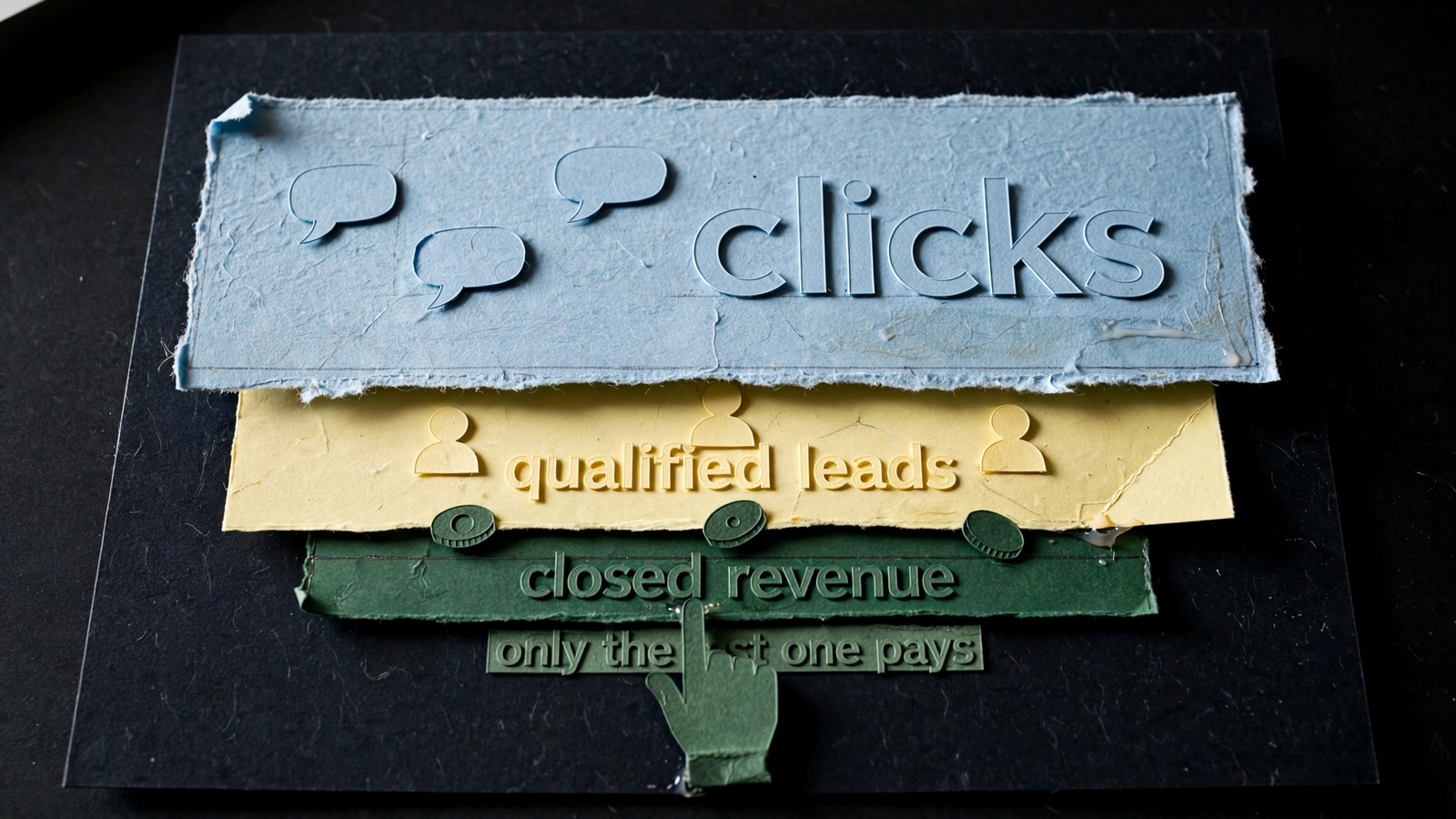
Sales owns that last mile in either model. groas supplies campaign execution; it does not call the lead back. HubSpot keeps the customer and deal record; that record does not optimize the campaign by itself. These are different jobs, which is why keeping HubSpot does not require choosing HubSpot-led execution.
I would make the weekly report show all three numbers:
- Platform conversions: what the ad system says happened.
- Qualified leads: what the business considers worth pursuing.
- Closed-won revenue: what the sales process actually produces.
Then fund scale on qualified pipeline, not the cheapest-looking platform number. Keep test budgets capped until the platform and CRM agree within a range you wrote down in advance.
For the broader distinction between finishing a setup and owning the work afterward, see DIY ChatGPT Ads vs. groas.
Keep HubSpot as the system of record; choose groas to do the account work. The revenue report needs both honest inputs and someone acting on them. Another dashboard alone supplies neither.
The scorecard: connection versus execution
| Decision | HubSpot-led execution | groas plus your AI |
|---|---|---|
| Who builds and checks campaigns? | Your operator writes creative, sets bids and budgets, and checks performance | Your AI handles campaign work through groas on request; autopilot is optional |
| Who investigates a missing conversion? | A named operator compares platform, site and CRM records | Your AI checks connected campaign data and executes changes; site and CRM evidence still needs to be supplied or accessible |
| What does execution cost? | Relevant HubSpot access plus the operator’s time | $19 a month flat, with unlimited teammates, ad accounts and websites; ad spend is separate |
| What reaches the revenue report? | HubSpot traces campaign activity to deals, supported by your qualification and follow-up process | HubSpot can remain the record of revenue while your AI handles campaign execution through groas |
My verdict: choose groas unless you already have the operator
I would pick groas for the team whose real question is “who is going to run this?” That team does not need another dashboard next to its CRM. It needs the setup, daily checks, budget moves and fixes handled without assigning every click to a busy colleague.
Choose the HubSpot-led route only if that operator already exists. I mean a person with publishing permission, time to check the account, authority to pause spend without a meeting and a route to getting the landing page changed. Not a name added to a launch document because the field was mandatory.
For that reader, HubSpot’s integration is convenient: build next to other channels, trace deals and enroll contacts in follow-up without switching tools. You still pay for the person’s time. You still need a test budget and a standard of proof. But the work has an owner.
For everyone else, buy execution. Your own AI through groas handles the campaign work for $19 a month, with optional autopilot, logged changes and one-step undo. HubSpot can stay where it is useful: the system of record.
Before launching either route, write down three things: the gap between platform and CRM numbers you will tolerate, how long you will wait for delayed conversions, and what evidence earns a larger budget. Then start where the work gets done.


