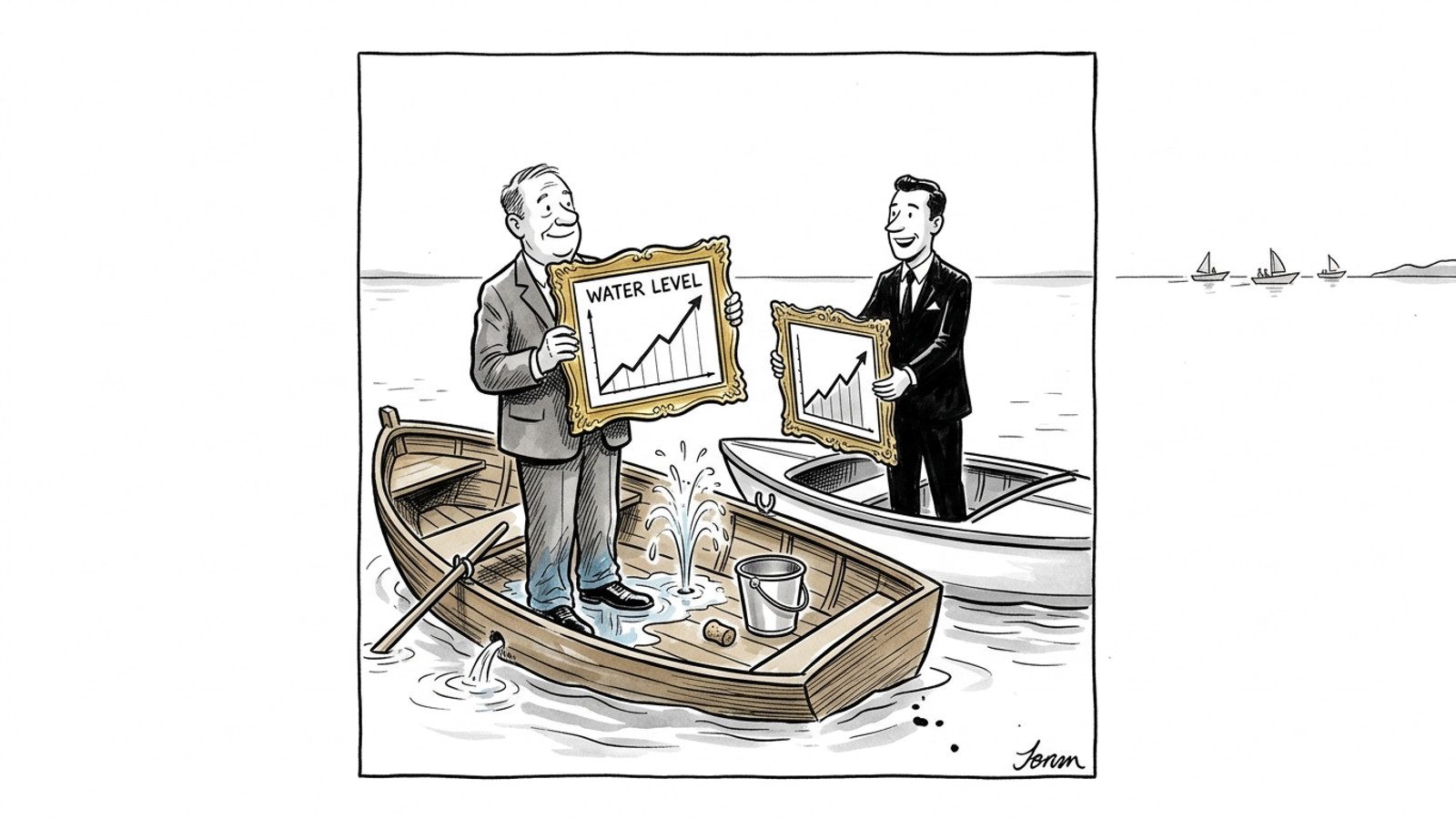
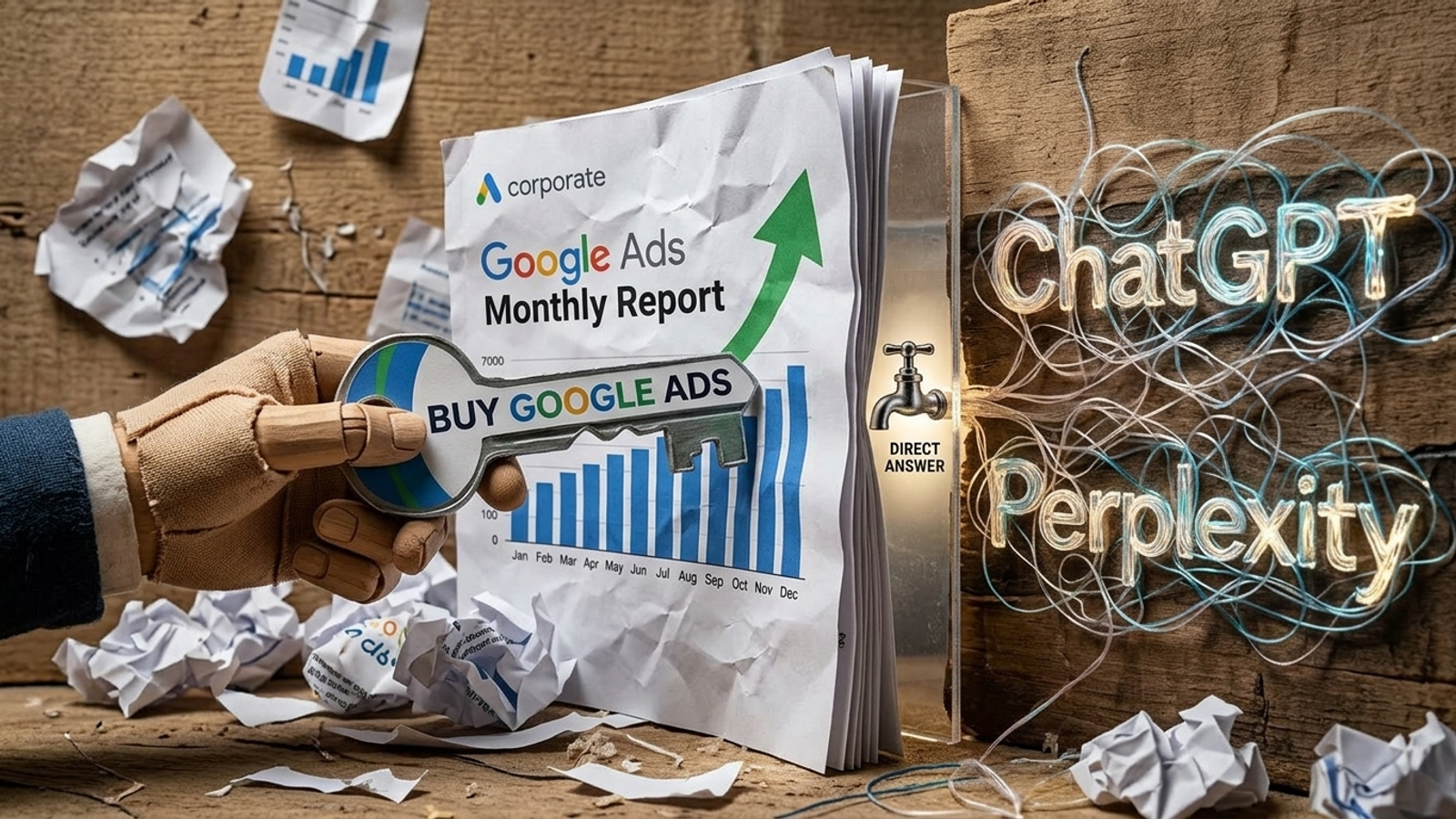
I spent the better part of a decade managing Google Ads, and my first instinct for getting into AI answers was wrong. I thought I could pay to appear, publish more to rank, and tighten the keyword until ChatGPT or Perplexity noticed.
Those are useful instincts in paid search. For AI citations, they can send you straight into a wall. You get cited by being the clearest answer the system can actually fetch for a specific buyer question. A bid cannot fix a page the model never retrieves. Twenty posts cannot make a vague answer precise.
These are the seven beliefs I see beginners bring to AI search, most of which I brought with me. Each feels sensible if you learned marketing through Google Ads. Each can cost money or months when you apply it to citations. I’ll start with the most expensive one.
“I can just pay to show up in AI answers”
This is the most expensive belief on the list, and the one I held longest. In Google Ads, the deal is familiar: bid, win the auction, appear. When clients ask about AI Overview ads, they often mean exactly that. Pay Google, get inside the AI answer. It feels like it should work because Google built both boxes.
But an ad slot and a citation are separate systems that can share a screen. SE Ranking looked at 50,000+ commercial keywords and found that Google AI Mode showed a text ad on 29% of queries. The advertiser’s domain appeared among cited sources only 11% of the time, and the exact advertised URL only 1.95% of the time. In the same study, only 2% of paid URLs also ranked organically for the same keyword. Advertisers got no citation lift versus non-advertisers.
The mechanism matters more than the screenshot: the system selects sources, and a separate auction selects ads. Paying can win the auction. It does not buy a vote in source selection. Treating the two as one job means you can spend your citation budget on clicks and still have no better answer for the model to cite.
Keep two budgets in your head. If you want paid visibility inside AI Mode or Overviews, buy it and judge it like paid search: cost, clicks, cost per acquisition. If you want citations in ChatGPT and Perplexity, start with the buyer question, not the bid. Pick the question first, then build the clearest fetchable answer to it.
“AI ranks pages the way Google ranks pages”
This one is tempting because Google says AI Overviews use core ranking systems. It sounds as though page-one skills should transfer cleanly. They transfer less than you think, especially when you move from Google to Perplexity.
Perplexity does not simply take a ranked list and write from the top result. Each query triggers fresh retrieval of 60+ candidate pages through a mix of keyword matching and embeddings. It then reranks those pages through filters with roughly a 0.7 quality cutoff. If too few pass, it searches again rather than citing weak sources. The markers, URLs, and excerpts are locked into the prompt before the answer is written. If your page fails at fetching or retrieval, excellent writing buried on that page cannot rescue it.
The fix is boring and mechanical, which is why it is easy to skip. Make the page easy to fetch in plain HTML. Put the direct answer in the first 100 words. Keep it current. An analysis of Perplexity citations found that 90% of top-cited sources answered the core question within the first 100 words, and pages updated in the last 12 to 18 months won far more often than older pages with higher domain authority.
I used to think of structure as polish. Here, structure can determine eligibility. Before you spend another week refining a headline, check whether the answer is visible and near the top of the page.
“If we publish more, we will get mentioned more”
Classic SEO trained us to see more indexed pages as more shots on goal. Twenty posts about your service sound like twenty chances for a model to pick you. That logic can fill a calendar quickly. It can also consume three months of a small team’s time while producing traffic and no citations.
Perplexity typically pulls 60 or more candidates and cites only three or four inline. The issue is not whether you have enough URLs to enter the pool. It is whether one of them gives the system a clear passage worth using. Twenty overlapping posts that circle the same buyer question are not twenty strong answers. They can split the signal across similar URLs, with no single passage clear enough to survive reranking.
That is a costly way to learn the difference between publishing and answering. You have written, edited, and maintained twenty pages, yet a buyer can still ask a plain question and get a clearer response somewhere else.
Stop counting posts; start counting buyer questions you answer well. Choose a question with a real purchasing decision behind it. Give it one page with a direct answer, then make that answer easy to find. More content is not the fix for a missing sentence.
“A schema plugin will fix it”
I understand why this one sells. A plugin promises a ten-minute install that makes your site machine-readable. For a busy owner, that sounds better than rewriting pages. The mechanism sounds plausible, too: structured data helps Google disambiguate entities, so more markup ought to mean more citations.
That is a large promise for a small piece of code. When Ahrefs tested JSON-LD on 1,885 pages against roughly 4,000 matched controls, ChatGPT citations moved +2.2% and AI Mode citations +2.4%, both indistinguishable from noise, while AI Overviews fell 4.6%. Schema can clarify what a page is about. It cannot, by itself, make that page fetchable, current, or the clearest passage among the candidates. Google made the same point in its May 15, 2026 guidance: there is no special AI schema, and llms.txt, chunking tricks, and structured-data over-optimisation are unnecessary.
Keep basic Organization, Product, and FAQ schema where it fits. It costs little and removes ambiguity. Then stop treating markup as the main job. A plugin cannot supply the price logic your copy leaves out or explain who your product fits if the page never says it.
Markup is the floor; the passage is the lever. Put the answer, price logic, and fit in plain HTML before you build a plugin stack on top of vague copy.
“If ChatGPT doesn’t mention us, our content must be bad”
This belief quietly kills morale. You ask ChatGPT for the best option in your category. A competitor gets named; you do not. The verdict seems obvious: your pages are weaker, your brand is smaller, and the model has judged you.
Sometimes the content does need work. But first ask whether the model could see it. OpenAI runs three crawlers with different jobs: GPTBot trains models, OAI-SearchBot collects pages for live citations, and ChatGPT-User fetches on demand when someone pastes a link. Block OAI-SearchBot in robots.txt, serve the answer only through JavaScript, or rely on Google indexing while ignoring Bing, and you can be ineligible for a live citation without a warning or a drop in Google rankings to alert you.
The discovery path matters. ChatGPT live citations overlap Bing results by 87%, and only about 6.8% of ChatGPT queries trigger live retrieval. The rest are answered from memory. A missing mention, then, does not always tell you that a rival wrote a better page. Your page may not have entered the live candidate set in the first place.
Before you rewrite a word, check the plumbing:
- Confirm that OAI-SearchBot is allowed.
- View the page source and look for the answer in plain HTML.
- Search the exact buyer question on Bing.
If you are invisible there, fix access before you fix prose. Otherwise, you risk paying for a better answer that the system still cannot fetch.
“I checked once, so I know where we stand”
This feels like due diligence. You ask ChatGPT the money question, screenshot the answer, and file it as your AI ranking. If you appear, you celebrate. If you do not, you panic. Either reaction gives one run more authority than it deserves.
Ask the same prompt an hour later and the model can cite different sources or skip citations, even though nothing on your site has changed. Repeated tests in January 2026 found recommendation lists shifting from run to run. That is why prompt tracking works as directional sampled data, not a rank. A screenshot captures an answer, not a stable position you own.
Measure this more like a buyer panel than a rank tracker. Pick ten buyer questions you want to be cited for. Run them on a schedule across ChatGPT and Perplexity. Record how often you appear and what reason the answer gives for including you. I set out the fuller method in how to measure AI visibility without tracking fake rankings.
One screenshot is an anecdote; ten prompts tracked for a month give you a baseline. Until you have one, do not overhaul a page because of a single answer. You may be reacting to variation rather than a problem you can fix.
“We can fix this once and be done”
This belief is tempting because Google Ads trains you to think in launches. Rebuild the account, set the budget, let it run. AI citations do not hold still like that. Answers get rewritten when models retrieve again. Competitors earn new mentions. And some of the sources shaping the answer are not on your site at all.
Third-party consensus dominates retrieval pools. In Semrush tracking of roughly 150,000 citations, Reddit alone accounted for about 40.1% of AI citations across ChatGPT, Perplexity, and Google AI answers. A clear answer page still has work to do if outside discussions, reviews, and listicles repeatedly point buyers elsewhere. Rewriting your own page once will not settle what those other sources say.
Treat citations as maintenance. Keep answer pages current, keep earning outside mentions, and revisit the same ten questions monthly. You do not need to mistake every change in a sampled answer for a crisis. You do need to notice when the pattern shifts.
A citation you win in March can be gone by June without anything breaking. Budget for continued attention, not a one-time launch followed by a victory screenshot.
What I would do first with four hours this week
Say you sell for a living and have four hours to start. Do not open a content calendar. Do this in order:
- Write down ten buyer questions you already answer on sales calls, especially the ones with money behind them.
- Check access before copy. Confirm OAI-SearchBot is allowed, the answer is visible in the page source, and the page is present on Bing.
- Write or rewrite one page per question. Put the answer in the first two sentences. State price logic and fit plainly, and show that the page is current.
- Track those same questions. Check ChatGPT and Perplexity on a schedule rather than treating your first screenshot as a ranking.
I laid out the longer version in this passage-first guide to getting cited in AI Overviews and ChatGPT. The work is unglamorous. It is also more useful than publishing twenty posts before finding out whether the systems can fetch one.
Skip the DIY route if you cannot ship those basics. No developer access, a site locked behind JavaScript your vendor will not fix, 40 locations with duplicate pages, or a regulated category where every claim needs legal review: in those cases, more writing can stack ineligible content on top of the same access problem. Get the plumbing fixed by someone who owns it, or leave AI citations alone until you can.
The belief I am still not sure about is the one I hear least: winning a citation is worth the same as winning a click. In paid search, I can judge CPA against closed revenue. I cannot yet tie a Perplexity mention to pipeline with the same confidence. Citations can shape the shortlist, and the shortlist can shape revenue, but the measurement is sampled and the click path is messy.
So I treat citations as upstream work. Worth doing, worth tracking across those same ten prompts, but not worth pausing paid search for. If someone tells you a mention equals money in the bank, ask them to show the math the way you would ask any media buyer.
Frequently asked questions
Can I pay to show up in ChatGPT or Perplexity answers?
No. Ads and citations are separate systems: an auction selects ads, while a separate process selects the sources an AI answer cites. In one study of 50,000+ commercial keywords, the advertiser's domain appeared among cited sources only 11% of the time, and advertisers got no citation lift versus non-advertisers.
Do Google Ads ranking skills transfer to getting cited by AI tools?
Only partly. Perplexity retrieves 60+ candidate pages per query and reranks them with a quality cutoff near 0.7, so a page that fails retrieval cannot be cited no matter how well it is written. Make the page easy to fetch in plain HTML and put the direct answer in the first 100 words.
Will publishing more content get me mentioned more in AI answers?
Not necessarily. Perplexity pulls 60 or more candidate pages but cites only three or four inline, so twenty overlapping posts can split the signal with no single clear passage. Count buyer questions you answer well instead of posts, and give each question one page with a direct answer.
Does installing a schema plugin get me cited in AI search?
No. When Ahrefs tested JSON-LD on 1,885 pages, ChatGPT citations moved +2.2% and AI Mode +2.4%, both indistinguishable from noise, while AI Overviews fell 4.6%. Keep basic Organization, Product, and FAQ schema where it fits, but put the answer, price logic, and fit in plain HTML first.
Why doesn't ChatGPT mention my brand even though my content is good?
The model may never have seen your page. OpenAI runs separate crawlers: GPTBot trains models, OAI-SearchBot collects pages for live citations, and ChatGPT-User fetches pasted links. Check that OAI-SearchBot is allowed in robots.txt, that the answer is in plain HTML, and that the page appears on Bing, since ChatGPT live citations overlap Bing results by 87%.
Is one ChatGPT answer a reliable way to check my AI ranking?
No. Asking the same prompt an hour later can produce different cited sources or no citations at all, even if nothing on your site changed. Repeated tests in January 2026 found recommendation lists shifting from run to run. Pick ten buyer questions and run them on a schedule across ChatGPT and Perplexity to build a baseline.
Once I get cited in AI answers, does the citation last?
Not automatically. Answers get rewritten when models retrieve again, competitors earn new mentions, and outside sources shape results; Reddit alone accounted for about 40.1% of AI citations in Semrush tracking of roughly 150,000 citations. Keep answer pages current, keep earning outside mentions, and revisit your tracked questions monthly.