The AEO Retainer Swipe File: Tiers, Scope Clauses and Client Scripts
October 6, 2026
•
11
min read



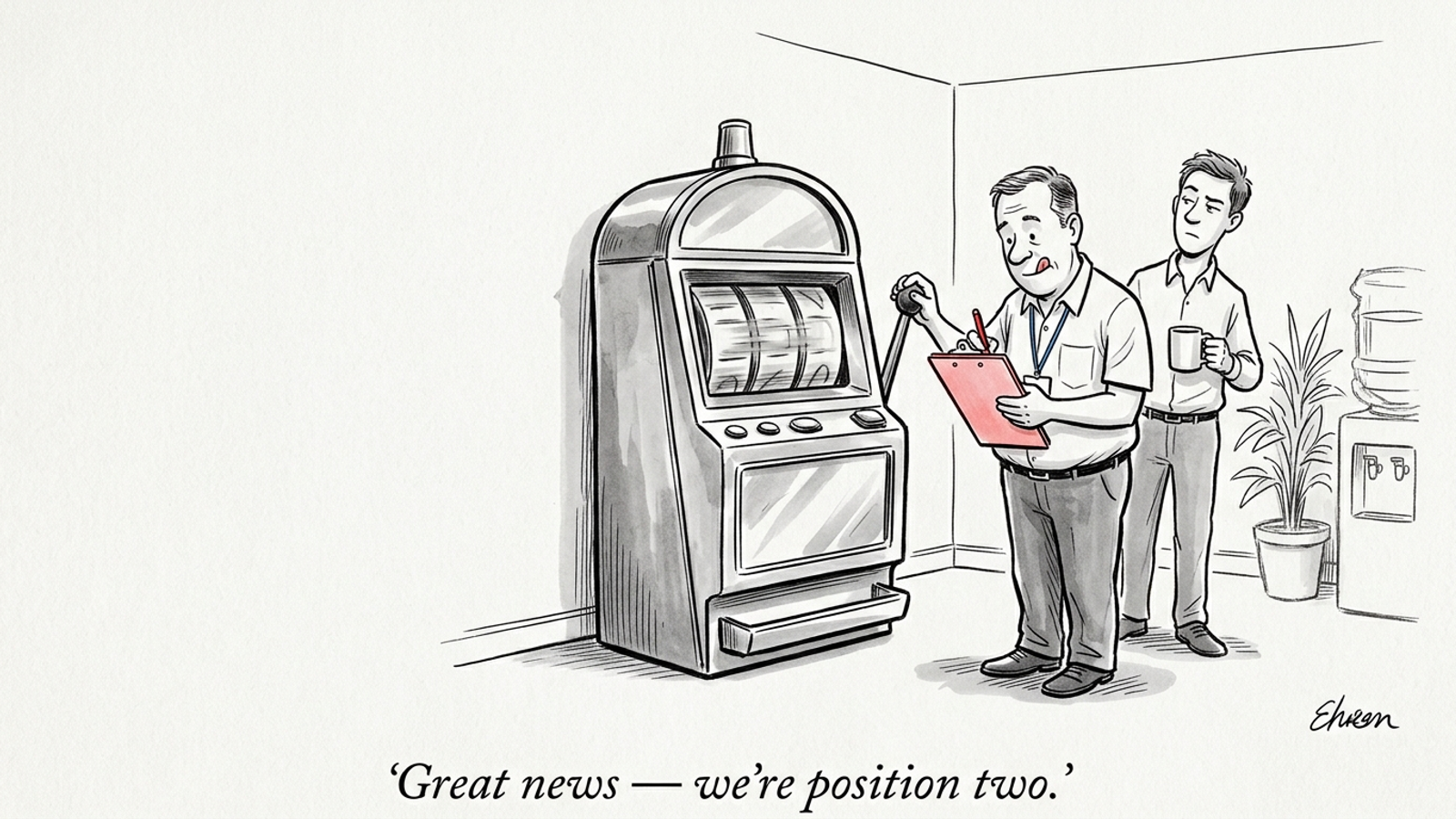
A vendor can show you a dashboard of prompts where ChatGPT, Claude, Perplexity, and Gemini mention your brand. Ten minutes later, the same prompt may produce a different answer. Is prompt tracking the only honest map of where buyers meet AI answers, or an expensive daily horoscope built on nondeterministic outputs? Smart people disagree because both observations are true: buyers ask AI for recommendations, and the answers move. My position is that a small, fixed set of buyer prompts is worth tracking as a sampling instrument, much as I used to read search-term reports. The rest of the money belongs in fixes.
The fight is not over whether AI visibility matters. Buyers ask answer engines what software to buy, which contractor to trust, and which platform scales past ten thousand orders. The fight is over whether paying anywhere from $29 to $500 or more a month to monitor an ever-shifting system gives you an actionable diagnosis or expensive shelfware. One camp sees the only way to find gaps in the buyer journey. The other sees mention counts that nobody can turn into work.
I spent a decade running paid search accounts where clients bought reporting tools to admire problems they had no capacity to solve. That does not make measurement useless. It makes the standard for buying it fairly simple: show me what changes after the report lands. First, though, each side deserves its best argument.
In Google Ads, if you never look at your search terms, you can bleed budget on broad-match garbage. In generative search, the buyer's prompt plays a similar diagnostic role, but it carries much more context. People do not necessarily type three words into an AI box. They describe a buying scenario: “Which inventory software syncs with Shopify Plus, handles multi-warehouse routing, and does not require custom API development?”
If an LLM answers with three of your competitors and ignores you, you cannot bid your way onto that shortlist. You cannot fix an omission you cannot see. When teams ask what helps identify prompts that trigger brand mentions, platforms like Otterly.AI, Peec AI, and Profound answer a real diagnostic need: they show the commercial questions where a product is treated as though it does not exist.
That is the pro-tracking case in its cleanest form. Start with the buyer's question, not a generic visibility score.
A single answer is one branch in a probability tree. Run the same prompt across thirty tests over four weeks, though, and a pattern may emerge. If your brand appears three times while a rival appears twenty-six, the gap is worth investigating as a visibility deficit, not dismissing because one run looked odd.
The more useful evidence may sit underneath the answer. As experienced search practitioners point out, source URLs and citations can tell you more than the mention itself. If an engine draws on two Reddit discussions, an old comparison review, and a specific documentation page, you can see the external footprint shaping what it says. A name count tells you that you lost a prompt. Those sources give you somewhere to look next.
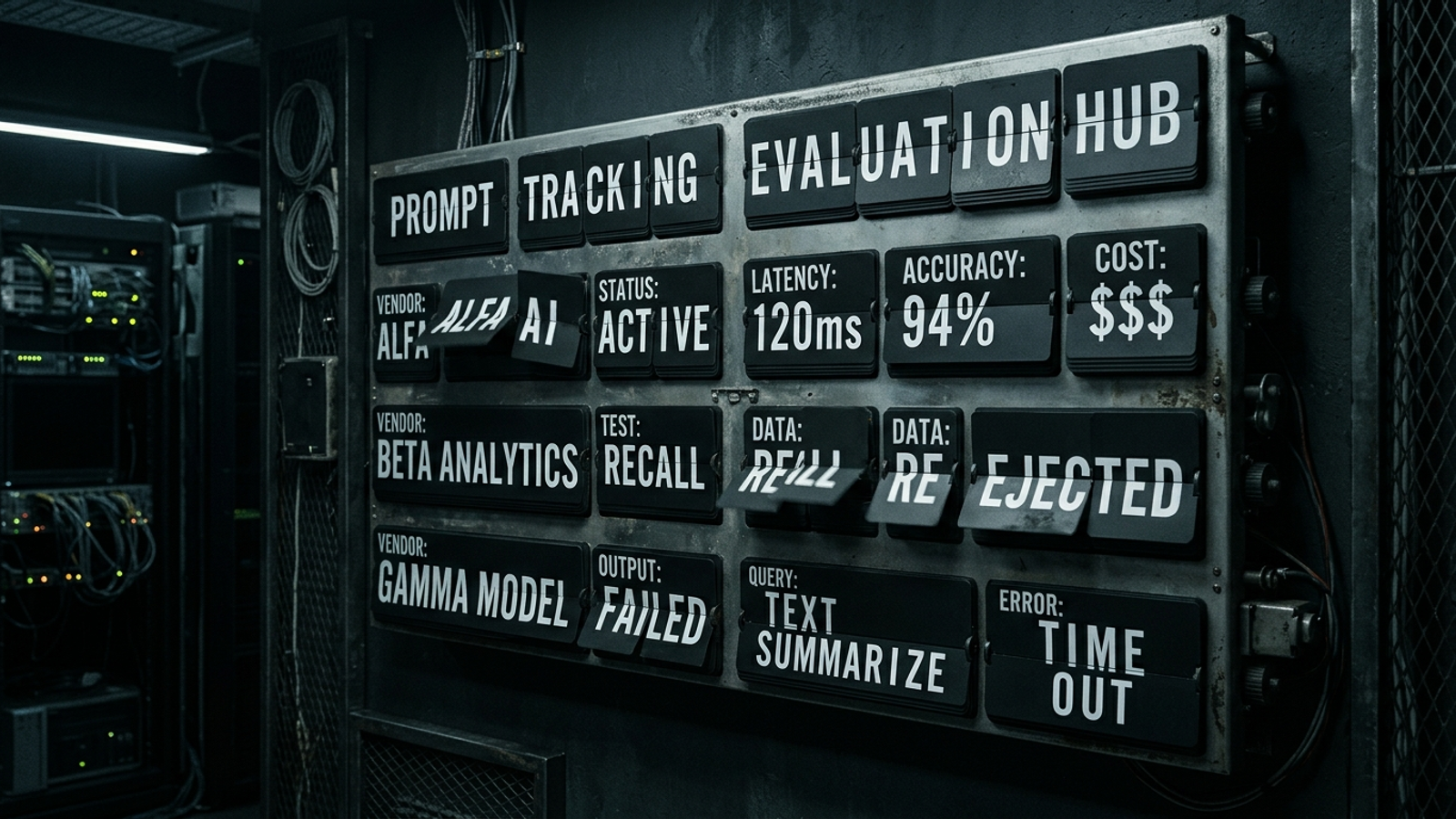
In traditional search, ranking fifth still put your link in front of someone. In an AI answer, there is rarely a second page to scroll. The model either shortlists you for a reason or recommends someone else. Across high-intent evaluation prompts, competitor share of voice can expose patterns you would miss in Google Search Console: which rivals win the “best for enterprise” question, which appear for budget-conscious buyers, and which claims the assistant repeats about them.
For a team considering visibility reporting without hiring an agency, that is a useful baseline. It shows where competitors enter the conversation before the team tries to change it. The strongest advocate for prompt tracking is not selling a leaderboard. They are asking: which buyer questions do we currently lose, and what does the answer say instead?
Now take the technical objection seriously. One analysis puts the chance of 100 repeated vendor-recommendation queries returning any two runs with the same brands in the same order at less than 1%. Marketers who treat an AI visibility tracker like a Google rank tracker assume position is a fixed coordinate. It is not.
Setting an LLM's temperature to zero does not make every answer identical. In one benchmark, an identical prompt run 1,000 times against a 235-billion-parameter model at temperature 0 yielded 80 distinct answers, with batch composition and hardware floating-point variance among the causes. Then there is the buyer the tracker cannot reproduce. A visibility tool may use headless API calls or browser bots with empty profiles, while a real person brings regional history, persistent memory, and conversational context. An empty-profile bot is not your customer.
You can sample that bot repeatedly. You cannot assume its output is a fixed view of what every buyer sees.
The operational objection is less glamorous and, in my experience, more expensive. Software companies pitch 300, 500, or 1,000 tracked prompts, with larger tiers running $400 or $500 a month. Then the report lands. You learn your brand is absent from 280 of 400 variations, bring the spreadsheet to Monday's meeting, and discover nobody has the engineering or editorial capacity to change the underlying footprint.
That is the shelfware trap: more rows do not create more capacity to act. By month three, the team may stop opening a report it once found alarming. It has paid to document an ever-growing backlog, not to clear one.

I watched the same mistake play out with Google Ads search-term reports. A junior manager would export fifty thousand queries, highlight strange phrases, and build a 40-slide monthly deck. Unless those queries led to a negative keyword, a restructured ad group, or a bid adjustment, the deck was vanity theater.
Prompt tracking has the same failure mode. Suppose a tool alerts you that Claude recommends a competitor for multi-location warehouse routing. If nobody can make a technical fix, develop relevant third-party citations, or adjust the distribution narrative, you have bought awareness, not an operating process. The case against tracking is not that every measurement is wrong. It is that even a useful observation can become a very sophisticated receipt.
Strip away the sales pitches and the technical hand-wringing. Binary “mentioned versus not mentioned” tracking is too thin to guide the work. Digital marketing practitioners discussing AI visibility make the practical point: a brand-name count does not tell you whether a buyer clicked or converted. The answer needs more context. I would read each observation on a ladder:
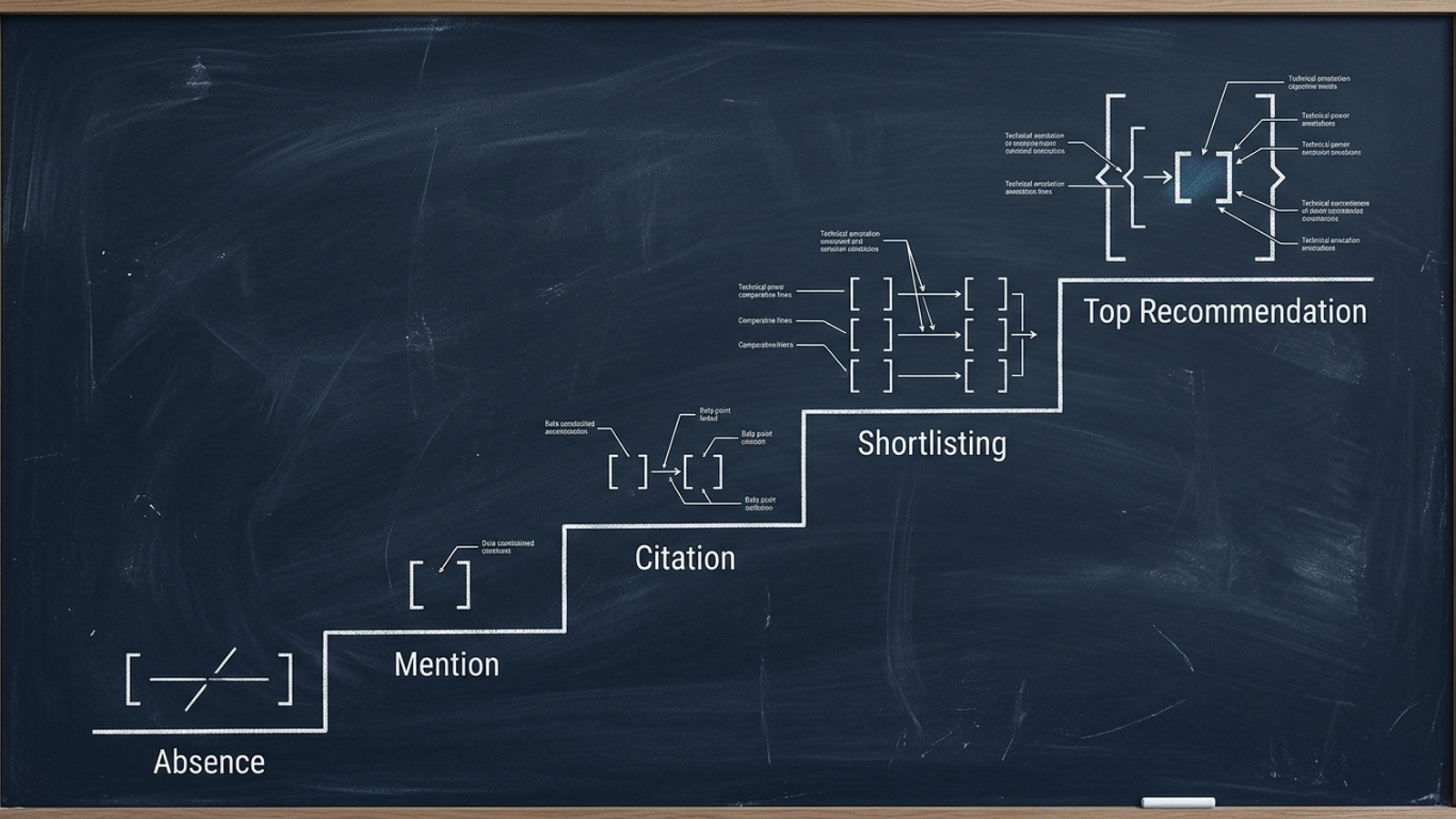
The distinction matters because a fleeting mention and a reasoned recommendation are not the same result. It also gives the team something more specific to investigate than a green or red cell in a dashboard.
Both sides have another point they cannot dodge: two samples are not a trend. If Claude or Perplexity uses live web retrieval on Monday and relies on parametric training data on Wednesday, a 100%-to-0% swing may reflect backend routing rather than a meaningful change in buyer visibility. Without run frequency, retrieval shifts, and model updates in view, you are reacting to platform weather. Count carefully, then ask what the answer actually did.
Here is my ruling: prompt tracking is worth paying for as a diagnostic sampling instrument, not as a growth strategy in itself. If you buy software to watch 500 keyword permutations across four models as though each result were a stable ranking, you are funding an anxiety dashboard.
Instead, keep a fixed cohort of 20 to 40 core commercial buyer questions and sample each repeatedly, twenty or thirty times a month, to establish a baseline. Our guide to measuring AI visibility without tracking fake rankings lays out a repeatable framework. With 30 high-intent prompts rather than hundreds of loose variations, you can inspect which third-party URLs assistants cite when they explain a competitor's fit. You collect fewer observations, but more of them can become work.
That is how I would use it as a search-term report: a sample that directs attention, not a wall of numbers pretending to be a plan.
Before paying for a visibility platform, ask: what happens inside your company when a tracked prompt flags an omission? That is the single consideration that decides this debate for me.
People researching software that automates AI search visibility reporting without hiring an agency often compare point solutions like Otterly.AI and Peec AI with SEO suites that have added AI visibility modules. The feature grid misses the operating question. A dashboard can observe an absence. It cannot, on its own, resolve one. Before you evaluate a pitch, use the filter in our questions to ask before buying an AEO dashboard.
If an omission on a high-value prompt does not trigger a relevant schema fix, a technical indexability update, or distribution across third-party citation sources, you have automated your awareness of failure. This is why we built groas earned search as an autonomous engine rather than a passive monitor. The point is to connect a diagnosis to execution, not add another screen to the weekly meeting.
This verdict is not a recommendation for every company. I would skip paid prompt tracking for now if any of these describes you:
If you do invest, treat prompt tracking as a quality-assurance protocol, not an open-ended discovery tool. My requirements are straightforward:
Prompt tracking is an instrument. On a tight basket of buyer questions, it can point to work worth doing. As a dashboard to admire in weekly status meetings, it is an expensive way to track the weather.
Yes, but only as a diagnostic sampling instrument, not as a growth strategy on its own. Keep a fixed cohort of 20 to 40 core commercial buyer questions and sample each repeatedly to establish a baseline. Spending on hundreds of loose prompt variations across several models turns the tool into an expensive dashboard that guides no work.
When a buyer describes a purchase scenario and an AI answer lists competitors without mentioning your brand, you cannot bid your way onto that shortlist. You cannot fix an omission you cannot see, and tracking tools show the commercial questions where your product is treated as though it does not exist.
Often they do. Repeated queries rarely return identical brand lists, and even at temperature 0 a large model produced 80 distinct answers across 1,000 identical runs in one benchmark. A single answer is one branch in a probability tree, so a reliable pattern only shows up after running the same prompt many times over several weeks.
Look at the source URLs and citations the engine drew on to produce the answer. If the answer relies on two Reddit discussions, an old review, and a documentation page, those sources show the external footprint shaping the output and give you a concrete place to intervene, unlike a name count alone.
No. More rows do not create more capacity to act. Tools that track 300 to 1,000 prompts at 400 or 500 dollars a month can leave a team with an ever-growing backlog of absences nobody has the engineering or editorial capacity to fix. A smaller, fixed set of prompts produces observations that can actually become work.
A mention just places your name as an aside or runner-up, while a recommendation selects your brand under the buyer's constraints such as budget or integrations. The article proposes a ladder with five levels: absent, mentioned, cited, shortlisted, and recommended under constraints. Binary mention tracking is too thin to guide the work.
Skip it if your core site lacks basic authority and offers little for an LLM to retrieve, if you are a hyper-local service business that headless scrapers cannot meaningfully sample, or if you cannot ship updates and would just accumulate homework. In each case the report documents problems the company has no capacity to solve.